
How do high pressure washing services handle waste water management and environmental concerns?
High pressure washing services manage waste water by containing, collecting and assessing runoff before it reaches drains, soil or watercourses. Operatives use suitable recovery equipment and dispose of or discharge the water in accordance with site requirements and environmental regulations, taking account of contaminants such as oil, chemicals, silt, paint and biological matter.
High pressure washing services manage waste water by preventing uncontrolled runoff, containing the wash water, recovering it where necessary, and arranging an appropriate discharge or disposal route. The process is planned around the surface being cleaned, the contaminants present, the drainage layout and the requirements of the site and relevant UK environmental regulations.
Pressure washing can remove more than visible dirt. Runoff may contain silt, oil, fuel residues, detergents, algae, paint particles, heavy metals, biological matter or construction materials. Allowing this water to enter a surface-water drain, watercourse or unprotected area of ground can cause pollution and may leave the site responsible for an unauthorised discharge. For that reason, responsible contractors assess the risks before work starts rather than treating waste water as ordinary rainwater.
Waste water management normally includes the following steps:
- Surveying the site: Operatives identify gullies, channels, soakaways, watercourses, landscaped areas and vulnerable surfaces. They also consider the slope of the work area, the expected volume of runoff and whether nearby drains carry surface water or foul water.
- Identifying contaminants: The cleaning specification is reviewed to establish whether the area contains oil, chemicals, paint, efflorescence, bird fouling, silt or other substances that could affect the disposal route. A car park, industrial yard and building façade may each require a different control method.
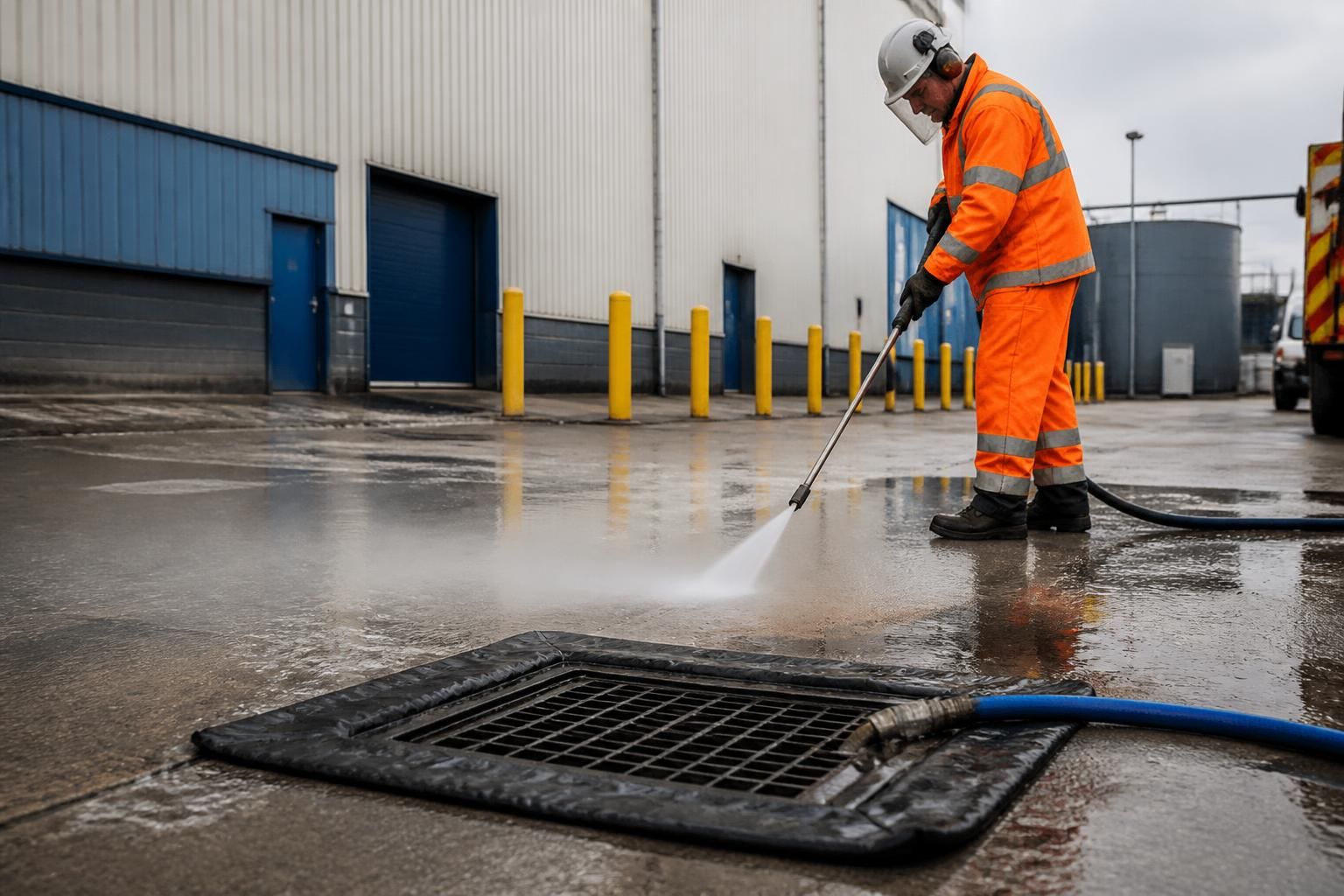
- Protecting drainage points: Surface-water drains may be covered or isolated using drain mats, inflatable drain blockers or other suitable measures. These controls must be selected and installed so that they do not create a flooding or trip hazard.
- Containing the wash water: Temporary bunds, booms, ground sheets and portable containment systems can direct runoff towards a controlled collection point. The work area is managed in sections where necessary to prevent water escaping beyond the treatment zone.
- Recovering the water: Wet vacuums, suction equipment, pumps and specialised recovery systems can collect wash water for storage, treatment or disposal. Recovery equipment is particularly important where oil, paint, chemicals or high sediment loads are present.
- Inspecting and segregating waste: Solids such as silt, sludge, paint flakes and other debris may need to be removed separately. Mixing different waste streams can make treatment and disposal more difficult, so waste is handled according to its characteristics.
Not every job requires the same level of recovery. Light cleaning of a suitable paved area may produce relatively low-risk runoff, while degreasing an industrial yard or removing contaminated coatings requires tighter containment and controlled collection. The decision should be based on the actual risk, not simply on the pressure washing equipment being used.
Disposal and discharge arrangements
Collected water is not automatically suitable for release into a drain. The contractor should establish the correct route before work begins. Where discharge to a foul sewer is proposed, permission or trade effluent consent from the relevant sewerage undertaker may be required. Surface-water drains generally lead to the environment rather than a treatment works, so contaminated wash water must not be discharged into them without an appropriate legal basis and confirmation that it is safe to do so.
Where the water cannot be discharged lawfully or safely, it is usually removed from site by an appropriately authorised waste contractor. More heavily contaminated water may need specialist treatment or handling as controlled waste. Documentation such as waste transfer information, consignment records or discharge approvals should be retained where applicable, particularly for commercial and industrial projects.
Waste classification depends on what the water and collected solids contain. Oil, solvents, hazardous cleaning chemicals, lead-based coatings and other harmful substances may change the controls required for storage, transport and disposal. Contractors should not dilute contaminated water simply to make it appear less concentrated, as this does not remove the pollution risk and may breach environmental requirements.
How cleaning methods reduce environmental impact
Environmental controls begin before water is collected. Operatives can reduce the volume and contamination of wastewater by using the lowest effective pressure, selecting a suitable nozzle, limiting detergent use and applying cleaning products only where they are necessary. Pre-sweeping or dry removal of loose debris can also reduce the amount of sediment entering the recovery system. Where appropriate, steam cleaning or other low-water methods may reduce runoff, although the resulting residue still needs to be assessed and controlled.
Cleaning chemicals should be selected for the material and contaminant, used at the correct dilution and prevented from entering drains or soil. Product safety information helps determine whether a substance presents risks to people, drainage systems or the wider environment. Biodegradable wording alone does not mean that a product can be discharged without controls.
Controls for common commercial cleaning projects
- Car parks and loading areas: Oil, fuel and tyre residues may require absorbent materials, drain protection and recovery equipment. Silt and litter should be removed rather than washed into gullies.
- Industrial yards: The operator should establish what materials are handled on the site and whether historic contamination is present. A site drainage plan and client information are important when determining the correct containment and disposal arrangements.
- Façades and cladding: Runoff may contain dirt, biological growth, old coatings or mortar residue. Ground protection and controlled collection may be needed where the building stands beside public paths, planted areas or surface-water drains.
- Graffiti and coating removal: Paint particles and chemical residues must be captured. Abrasive or chemical removal methods can create a more concentrated waste stream than ordinary washing.
- Roof and gutter cleaning: Removed moss, silt and organic matter should be collected so that it does not block drainage or wash into watercourses. Access and weather conditions also need to be considered before starting.
Operatives should stop work and reassess the controls if containment fails, unexpected staining appears, a drain becomes blocked, rain increases the risk of overflow or a previously unknown substance is uncovered. Spill kits, temporary storage and an agreed escalation procedure help the site respond promptly. Any spill or unauthorised discharge should be reported through the site’s environmental incident process and managed in line with the relevant regulatory requirements.
For a commercial project, the quotation or method statement should explain how runoff will be controlled, where recovered water will go, who is responsible for providing drainage information and what access is needed for recovery equipment. The client should disclose known contamination, chemical use, drainage restrictions and any site-specific environmental rules before work starts. On completion, the contractor can provide relevant waste or discharge records and confirm that temporary protection has been removed without leaving debris or trapped water.
Effective waste water management is therefore a combination of planning, containment, recovery, correct classification and lawful disposal. A professional high pressure washing service should be able to explain the proposed controls before cleaning begins and adapt them to the contaminants, drainage arrangements and environmental sensitivity of each Birmingham, West Midlands or UK site.
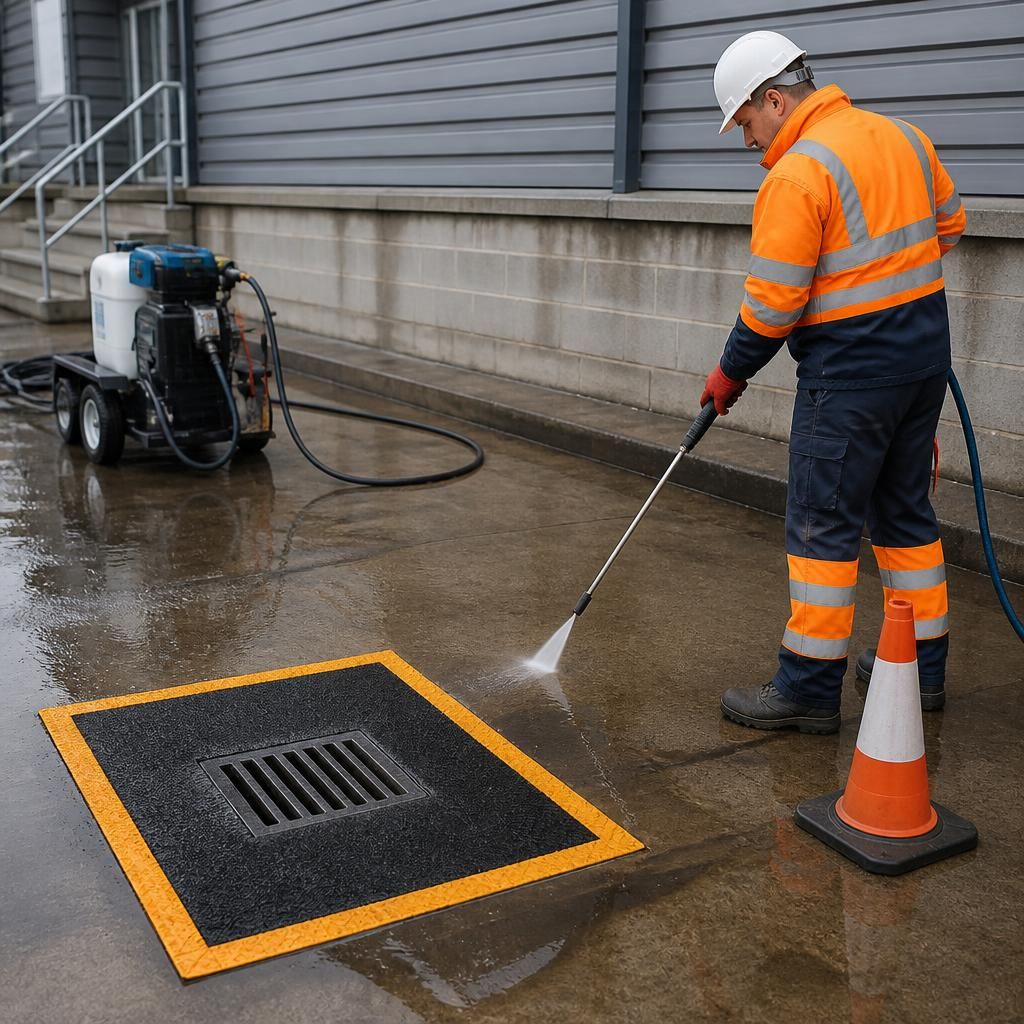
Waste water management in high pressure washing means controlling runoff so contaminated water does not enter surface-water drains, soil or nearby watercourses. Before cleaning begins, operatives assess the drainage layout, identify possible pollutants and choose suitable containment and recovery measures.
Drain mats, temporary bunds and ground protection can keep wash water within the work area, while wet vacuums, pumps or suction equipment collect it for assessment. Water containing oil, paint residue, chemicals, silt or biological matter may require controlled disposal rather than discharge. The correct approach depends on the surface, the contaminants present and the site’s drainage arrangements.