
How do high pressure washing services ensure the preservation of surface materials during cleaning?
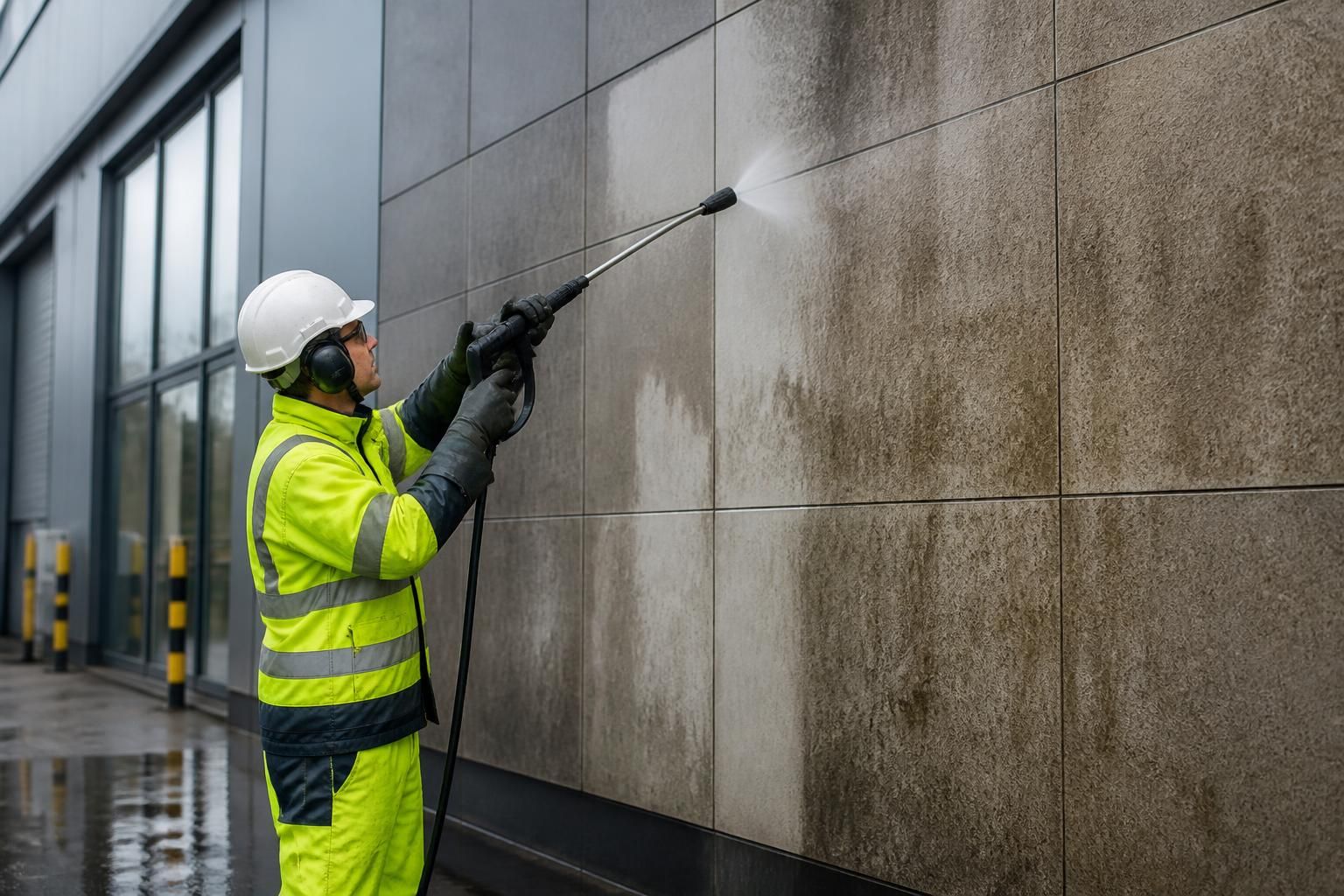
High pressure washing services preserve surface materials by assessing the substrate first, then controlling pressure, water temperature, nozzle selection and working distance to suit its condition. Operatives use test patches and adjust the cleaning method where necessary, preventing etching, surface damage, paint loss or water penetration while removing dirt effectively.
High pressure washing services preserve surface materials by matching the cleaning method to the substrate, its condition and the type of contamination present. Before work begins, operatives assess whether the surface is concrete, brick, stone, render, metal cladding, painted coating, asphalt, roofing material or another substrate. They then control the pressure, water temperature, nozzle type, spray pattern, working distance and cleaning products to remove deposits without causing etching, coating loss, surface erosion or water penetration.
Surface assessment comes before pressure washing. A professional inspection identifies existing defects that could be mistaken for cleaning damage, including loose pointing, cracked render, failed sealants, blistering paint, corrosion, open joints and areas of delamination. The assessment also considers how porous the material is, whether it has been previously treated and whether the contamination is biological growth, oil, traffic film, rust, cement residue, chewing gum or graffiti. This information determines whether high pressure washing is suitable and whether a lower-pressure or alternative technique is more appropriate.
Operatives normally carry out a discreet test patch before cleaning the full area. This confirms how the substrate and any coating respond to the selected pressure, temperature, nozzle and cleaning solution. The test area is checked for changes in colour, texture, sheen, coating adhesion and water absorption. If the result is too aggressive or does not remove the contamination effectively, the method can be adjusted before the main work proceeds.
Pressure is controlled rather than applied at maximum output. The effective force at the surface depends on more than the machine’s rated pressure. Nozzle design, spray angle, flow rate and the distance between the lance and the substrate all affect the impact. A trained operative maintains a suitable working distance and uses a wider spray pattern where a gentler, more even clean is required. Concentrated jets and unnecessarily close working can mark soft stone, damage pointing, lift coatings or scar timber and other vulnerable materials.
The equipment is selected to suit the surface. Fan nozzles distribute water over a broader area, while more concentrated patterns may be reserved for durable substrates and carefully controlled applications. Rotary or surface-cleaning attachments can help produce an even result on suitable hard surfaces, reducing streaking and the temptation to repeatedly concentrate the jet on isolated marks. Operatives also keep the lance moving rather than holding the spray in one place, which helps prevent localised erosion and heat build-up.
Water temperature is adjusted to the contamination and substrate. Heated water can improve the removal of grease, oil and traffic film, often reducing the need for excessive pressure. However, heat is not automatically suitable for every surface or coating. Materials that are temperature-sensitive, painted or sealed require a considered approach, as rapid heating or cooling may affect finishes, sealants or bonded components. Where detergent is used, it is selected for the specific deposit and applied at a concentration that supports cleaning without unnecessarily affecting the substrate or surrounding vegetation.
Pre-treatment and dwell time can also protect materials. Allowing an appropriate cleaning solution to loosen organic growth, grease or atmospheric soiling may reduce the mechanical force needed during rinsing. The solution must not be left to dry on the surface, and operatives should follow the product instructions, protect adjacent materials and rinse thoroughly where required. On façades and other vertical surfaces, cleaning is generally controlled from the top down to manage runoff and prevent cleaned areas being recontaminated.
Different substrates require different controls:
- Concrete: Sound concrete can usually tolerate controlled pressure, but damaged, decorative or exposed aggregate surfaces may need a gentler setting to avoid removing the surface matrix or changing its appearance.
- Brickwork and pointing: The condition and hardness of the brick, mortar and joints are assessed separately. Excessive pressure can erode softer mortar, widen defects or drive water into the wall.
- Natural stone: Porous, weathered or softer stone can be marked or etched by an unsuitable nozzle or pressure. Test cleaning is particularly important where the stone has a delicate finish.
- Render and painted surfaces: Loose coatings and weak render must be identified first. Lower-pressure cleaning, careful rinsing and suitable detergents may be necessary to avoid lifting the finish.
- Metal cladding: Operatives consider the coating, seams, fixings and any corrosion. The spray is controlled around joints and openings to limit water ingress and coating damage.
- Roofing materials: Roof coverings can be fragile, weathered or sealed. Pressure, access and water flow must be managed to prevent damage, dislodged components and water entering beneath the covering.
- Asphalt and car park surfaces: Cleaning is adjusted to avoid loosening aggregate or damaging line markings, jointing materials and repaired areas.
Protecting the substrate also involves controlling water. Operatives avoid directing spray into vents, electrical fittings, door and window seals, roof junctions and open joints. Vulnerable openings can be protected where appropriate, while drainage routes are checked so that water does not collect against the building or enter areas that should remain dry. Any pre-existing defect that could allow water penetration should be reported rather than concealed by cleaning.
Post-cleaning checks form part of the preservation process. The finished surface is reviewed for consistent appearance, remaining contamination, coating condition and any areas requiring a different treatment. Equipment is cleared away without dragging hoses or attachments across delicate finishes, and wastewater is managed in accordance with the site’s drainage arrangements and environmental requirements. This combination of inspection, controlled application, test cleaning and final review allows high pressure washing to restore surfaces while preserving their useful life and existing finish.
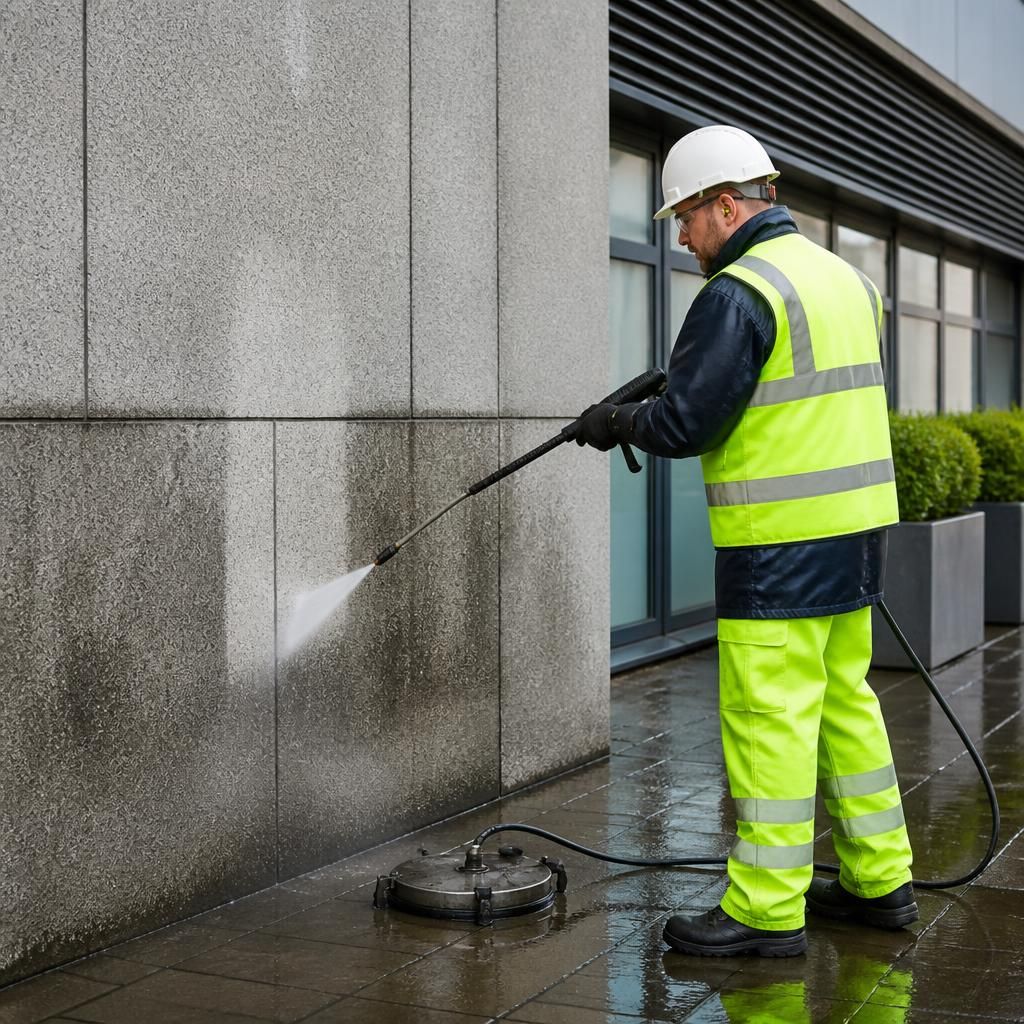
Surface preservation during high pressure washing depends on matching the cleaning force to the material, its condition and the type of contamination. Operatives first inspect the substrate and complete a discreet test patch, checking for changes to colour, texture, coating adhesion and water absorption before cleaning the wider area.
The pressure is then adjusted through the machine setting, nozzle, spray angle, water temperature and working distance. A wider fan pattern and greater distance can provide a more even, lower-impact clean, while detergents or pre-treatment may loosen grease, organic growth and traffic film without relying on excessive pressure. This helps prevent etching, mortar erosion, paint loss and damage to weathered or porous surfaces.
Water is also controlled around joints, seals, vents, electrical fittings and roof junctions to reduce the risk of water ingress. Where an existing defect makes pressure washing unsuitable, the cleaning method can be modified or an alternative approach recommended rather than risking further damage.