
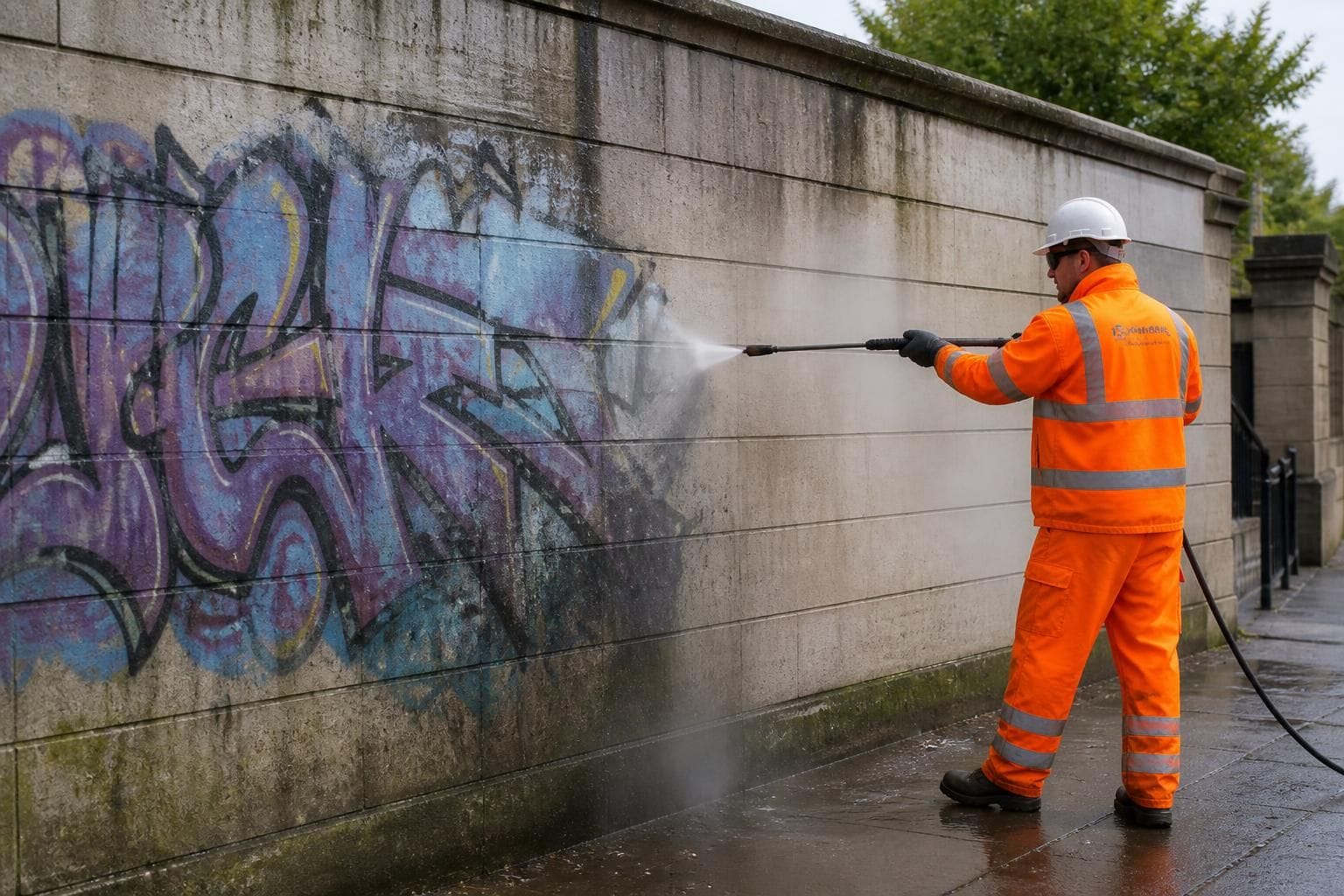
What surfaces are suitable for graffiti removal using pressure cleaning?
Pressure cleaning is suitable for many durable, non-porous and semi-porous surfaces, including brick, concrete, paving, masonry, metal cladding, rendered walls and some glass. The pressure, temperature, nozzle and cleaning agent must be matched to the surface, as delicate paintwork, weathered masonry, damaged render and certain glass finishes may require a lower-pressure or alternative graffiti removal method.
Pressure cleaning is suitable for removing graffiti from many hard, durable surfaces, particularly brick, concrete, paving, masonry, metal cladding, rendered walls and some types of glass. The cleaning method must be adapted to the surface condition, graffiti medium and substrate beneath it. Water pressure, temperature, nozzle selection, distance and any cleaning agent should be controlled to remove the marking without stripping coatings, opening the surface or causing physical damage.
Brick and masonry are commonly treated using pressure cleaning, although the condition and type of brick are important. Sound, dense brick can usually tolerate a carefully selected pressure-cleaning process. Older, softer or weathered brick may have weakened faces, eroded mortar joints or previous repairs that are more vulnerable to water pressure. A lower-pressure approach, suitable nozzle and controlled water flow may be required. Cleaning should generally follow the face of the brick rather than concentrating the jet directly on mortar joints.
Concrete is usually well suited to graffiti removal because it is a hard, mineral-based surface. It may be cleaned from walls, columns, retaining structures, service yards and other concrete features. Smooth concrete often releases paint more readily than heavily textured or weathered concrete. On older concrete, pressure cleaning can expose existing defects, surface scaling or aggregate, so an assessment and test area should be completed before the full treatment.
Paving, blockwork and hard landscaping can also be pressure cleaned. This includes concrete paving, some natural stone, kerbs, steps and other external hard surfaces. The jointing material needs particular care, as excessive pressure can remove sand, damage mortar or displace loose blocks. Where graffiti has penetrated textured paving, a controlled cleaning process may need to be followed by rinsing and, if appropriate, a compatible protective treatment.
Metal surfaces and cladding are generally suitable when the underlying material and coating are sound. Graffiti can be removed from galvanised steel, aluminium and coated metal panels, but the pressure and cleaning solution must be compatible with the finish. Painted, powder-coated or anodised surfaces may be marked, dulled or lifted by an aggressive process. The operator should check for corrosion, loose coating, exposed fixings and damaged sealants before cleaning, and avoid directing high-pressure water into joints, vents or electrical components.
Rendered and coated walls may be cleaned with pressure, but they require more caution than solid concrete or dense brick. Cement render, mineral finishes and some robust external coatings can tolerate low- or moderate-pressure cleaning when properly assessed. Thin coatings, acrylic finishes, textured render and older paintwork may be removed along with the graffiti. If the render is cracked, hollow, friable or already peeling, a lower-pressure method or specialist chemical treatment may be more appropriate.
Glass can be suitable, but it is not automatically safe for high-pressure cleaning. Sound, plain glass may be cleaned when the operator uses controlled pressure, a suitable nozzle, an appropriate working distance and a compatible cleaning solution. Care is needed around edges, seals, frames, joints and applied films. Toughened or laminated glass should still be inspected, as scratches, chips and surface defects can be worsened by unsuitable equipment or abrasive contamination. Special finishes, solar-control coatings, privacy films and treated glass may require an alternative method or approval from the manufacturer.
Painted walls, timber and plastic surfaces need a separate assessment. Pressure cleaning may be possible on sound, exterior-grade paintwork, uPVC and some robust plastics, but these surfaces can be more easily etched, discoloured or stripped than masonry. Timber is particularly sensitive because water can enter the grain, raise fibres and affect existing coatings. Fragile plastics, signage, insulation boards and composite panels should not be treated with an aggressive pressure setting without confirming that the material and finish can withstand it.
Pressure cleaning is less suitable where the substrate is loose, delaminating, cracked, heavily weathered or of unknown composition. It may also be unsuitable where graffiti has been applied over a fragile coating, historic fabric or a surface containing delicate decorative details. In these situations, a low-pressure steam process, specialist poultice, controlled chemical removal or hand-cleaning may reduce the risk of taking away part of the original surface.
Before cleaning, the surface should be inspected for its material, condition, existing coatings, previous repairs and nearby sensitive features. A small test area helps confirm whether the selected process removes the graffiti while preserving the substrate. The test should check for colour change, shadowing, surface marking, coating loss, water penetration and any residue left behind. The full treatment can then be adjusted to match the safest effective result.
Graffiti removal from commercial premises also requires attention to surrounding areas. Windows, doors, signage, landscaping, vehicles, drainage points and pedestrian routes should be protected where necessary. Wash water and removed paint residues should be controlled rather than allowed to enter surface-water drains. Once the graffiti has been removed, the surface should be rinsed or otherwise finished in accordance with the material and cleaning system, then inspected for remaining paint shadows or damage.
In practical terms, pressure cleaning is most suitable for sound, durable brick, concrete, paving, masonry and compatible metalwork, with carefully controlled treatment possible on some render, painted surfaces and glass. The correct method depends less on the graffiti alone than on the relationship between the marking, the substrate and the existing finish. A site assessment and test clean are therefore essential wherever the surface is delicate, coated, aged or valuable.
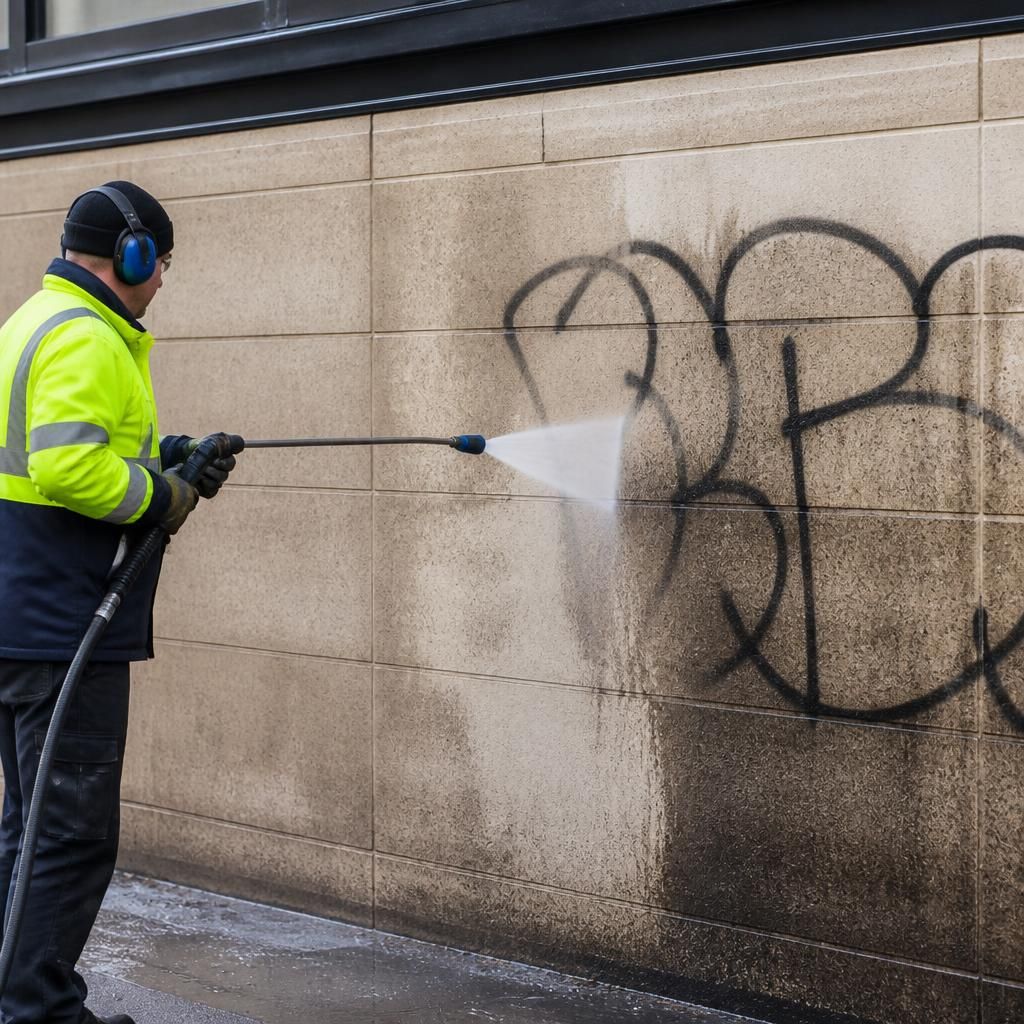
Pressure cleaning is most suitable for sound, durable surfaces such as dense brick, concrete, paving, masonry and compatible metal cladding. These materials can usually withstand a carefully controlled combination of water pressure, nozzle selection, working distance and, where appropriate, a surface-compatible cleaning agent.
The condition of the surface is as important as its material. Weathered brick, loose render, damaged coatings, fragile paintwork, timber, plastics and glass with applied films may require lower-pressure cleaning or an alternative method. A test area should be completed first to confirm that the graffiti is removed without causing colour change, coating loss, etching or damage to joints and edges.