
What key factors should be considered when choosing a graffiti removal method for glass surfaces?
When choosing a graffiti removal method for glass, consider the type and age of the paint or marker, whether the glass has coatings or films, its condition, and the risk of scratching, etching or damaging seals. The method should be tested in an inconspicuous area and selected to remove the marking effectively while controlling pressure, temperature, chemicals and wastewater.
Choosing a graffiti removal method for glass requires balancing effective marking removal with protection of the glass, its coatings, films, seals and surrounding finishes. The correct approach depends on the graffiti material, how long it has been present, the condition and type of glass, the location of the marking, and the level of control available over pressure, heat, chemicals and wastewater.
Identify the graffiti before selecting a method. Aerosol paint, permanent marker, etching products, adhesive residue and older, weathered coatings do not respond in the same way. Fresh surface paint may be removed with a relatively gentle process, whereas aged paint can have hardened and bonded more firmly to the surface. Marker inks may spread if the wrong solvent is used, while etched or acid-damaged glass cannot be restored simply by removing the remaining colour. Identifying the marking helps determine whether cleaning, specialist treatment or glass replacement is the appropriate solution.
Check the glass and any applied finishes. Clear float glass, toughened glass, laminated glass, mirrors and textured or coated glazing may have different cleaning limitations. Solar-control coatings, low-emissivity coatings, privacy films, anti-glare treatments and protective films can be more vulnerable than the glass itself. The condition of the pane should also be assessed for existing scratches, chips, cracks, failed seals or damaged edges. A method that is suitable for uncoated glass may be unsuitable for a treated or filmed surface.
Control the risk of scratching and permanent marking. Abrasive pads, harsh powders, blades and contaminated cloths can leave scratches or create a haze on glass. Grit carried by dirty water or trapped beneath a scraper can cause further damage during removal. Mechanical agitation should therefore be limited, clean tools should be used, and any scraping must be carried out with equipment and lubrication appropriate to the glass. Abrasive blasting is generally a poor choice for standard architectural glazing because it can permanently alter the surface.
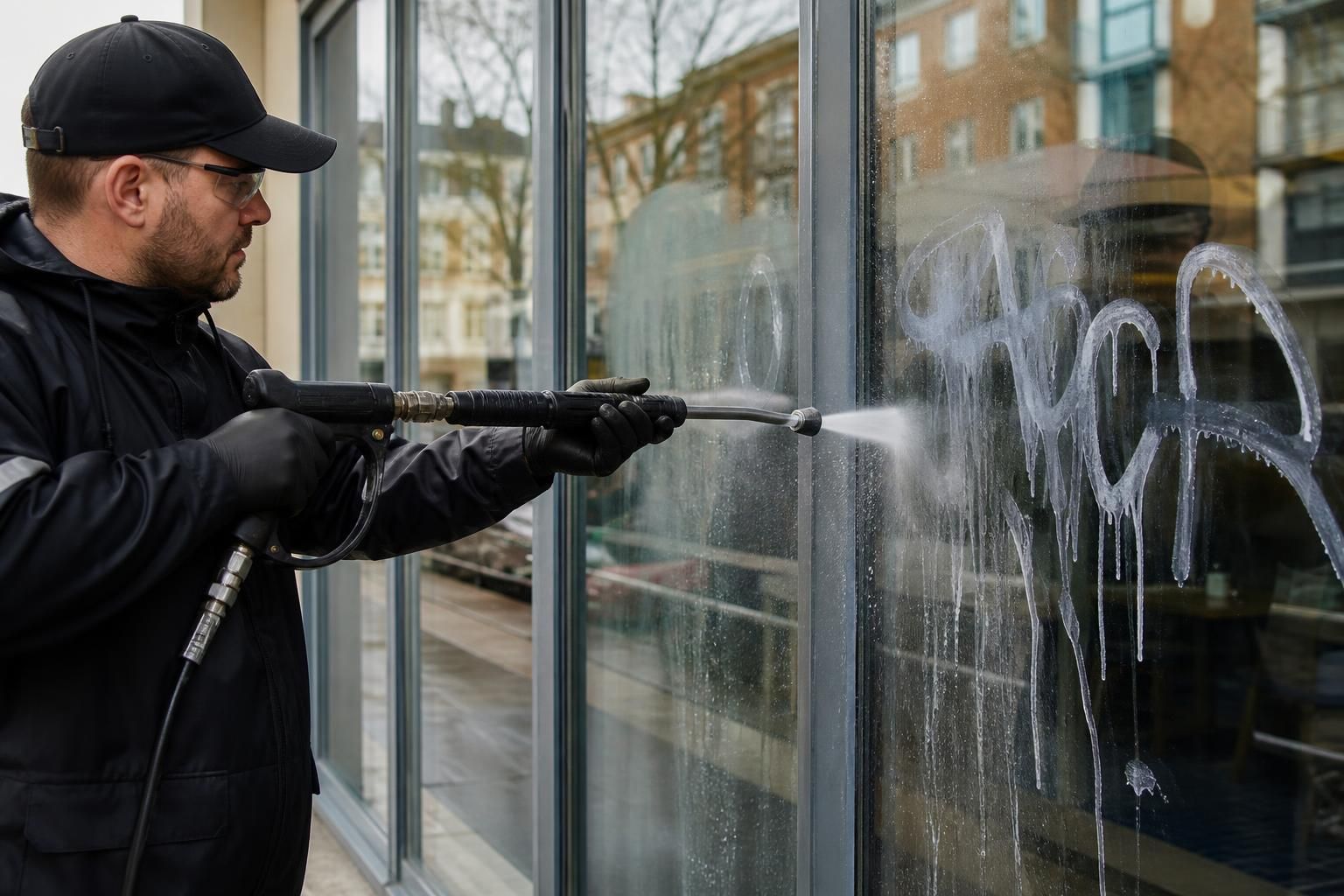
Consider pressure, temperature and distance when using water-based cleaning. Pressure cleaning can be effective where the equipment is correctly selected and operated, but high pressure is not automatically safer or more effective. Excessive pressure can force water into frame joints, seals, vents and adjacent building materials, particularly around older windows. The operator should control the pressure, nozzle type, spray angle, working distance and water volume, keeping the spray away from vulnerable seals and edges. Steam or heated water may assist with some markings, but heat must be controlled to avoid thermal stress and damage to films, sealants or surrounding finishes.
Assess whether chemicals are necessary. A compatible graffiti remover may be appropriate for paint or marker that water alone cannot lift. Its suitability depends on the glass coating, frame material, sealant, nearby surfaces and the manufacturer’s instructions. Products should not be allowed to dry on the glass, and residues must be removed thoroughly. Strong alkaline, acidic or solvent-based products can stain frames, soften sealants, affect applied films or leave a persistent film on the pane. Chemical selection should therefore be based on the complete glazing assembly rather than the glass surface in isolation.
Carry out a controlled test area. A small, inconspicuous test is essential before treating the full pane. The test should use the proposed method, tools, dwell time and rinsing process, followed by inspection in different light conditions. It should confirm that the graffiti is being removed without scratching, clouding, discolouring or lifting a coating. If the marking has penetrated the glass through etching, the test may also show that cleaning can remove residue but cannot reverse the underlying surface damage.
Protect frames, seals and surrounding materials. Masking or shielding may be needed around powder-coated aluminium, uPVC, stone, brickwork, painted surfaces and sensitive landscaping. Water and cleaning solution should not be allowed to enter drainage channels, electrical equipment or internal areas. On glazed façades and shopfronts, the cleaning sequence should prevent loosened paint and dirty solution from being transferred onto adjoining panels or finished surfaces.
Plan for safe access and containment. The height, position and size of the glass affect the practical choice of method. Work at ground level may permit controlled low-pressure cleaning, while elevated glazing may require access equipment and additional measures to prevent overspray or falling debris. Public areas need suitable exclusion zones, and the work plan should account for pedestrians, vehicles, nearby entrances and weather conditions. Water recovery and disposal may also be necessary where cleaning solution or paint residue could enter surface-water drains.
Compare the likely finish with the condition of the pane. The aim is not only to remove visible colour but to leave the glass clear, free from residue and consistent with adjacent panes. Glare, reflections and changing daylight can reveal smearing, light scratches or an uneven finish that is not obvious during the initial wash. A final rinse using clean water, followed by careful inspection and drying with uncontaminated equipment, helps identify any remaining residue before the area is signed off.
For most glass graffiti work, the safest method is the least aggressive process that removes the marking within the required time. In practice, this may involve controlled pressure cleaning, steam, a compatible chemical treatment or a carefully managed combination of methods. The decision should be based on a site inspection and test area, with particular attention to coatings, films, seals, existing damage, access, environmental controls and the risk of permanent surface alteration.
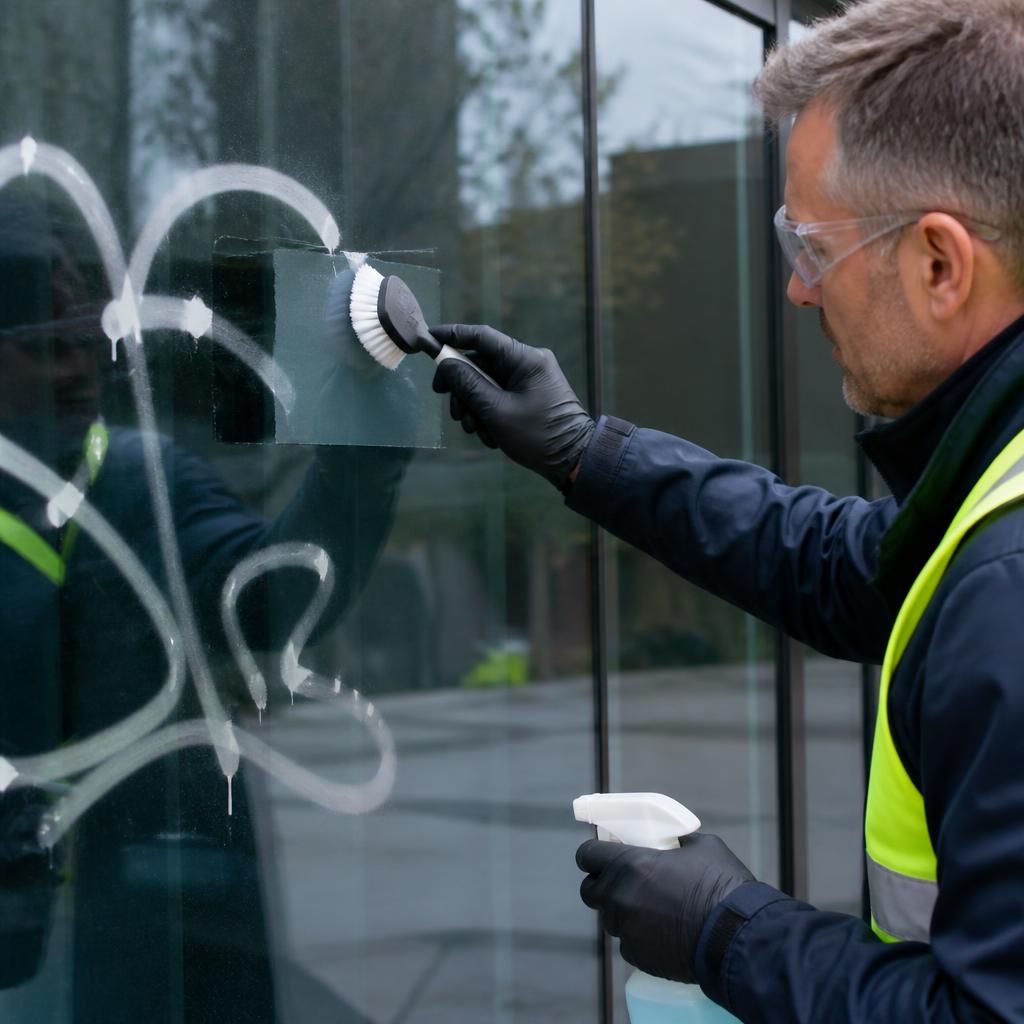
Testing a graffiti removal method on an inconspicuous area is essential before treating the full glass surface. The test should use the same pressure, temperature, cleaning product, tools and dwell time planned for the main work, because a method that removes paint effectively may still scratch the pane, cloud the finish or affect a coating or film.
After rinsing and drying the test area, inspect it in changing light for scratches, smearing, discolouration, residue or damage to nearby seals and frames. If the marking has etched the glass, testing will also establish whether cleaning can remove surface residue only; it cannot reverse permanent damage to the glass itself.
Request a Glass Graffiti Removal Assessment
Request a glass graffiti removal assessment so we can review the marking, glazing condition, coatings, access requirements and the safest effective treatment. We can then recommend a controlled method and confirm any preparation or protection needed before work begins.