
What is the best method to ensure complete graffiti removal from glass without causing damage?
The safest method is a controlled, professional process using a non-abrasive graffiti remover, gentle agitation and low-pressure rinsing, with a small test area checked first. This removes paint, ink or etching residue from the glass while avoiding abrasive pads, excessive pressure and harsh chemicals that can scratch, stain or weaken surrounding seals.
The best method for removing graffiti from glass without causing damage is a controlled, professional process using a glass-compatible, non-abrasive graffiti remover, gentle agitation and low-pressure rinsing. The product and pressure should be selected according to the type of marking, the glass finish and the condition of the surrounding seals, frames and coatings. A small, inconspicuous test area should always be checked before treating the full surface.
Glass is smooth and non-porous, so most spray paint, marker ink, adhesive residue and similar graffiti can be removed without aggressive pressure. However, it is also vulnerable to scratching, chemical staining and damage to specialist surface treatments. The aim is to dissolve or loosen the graffiti rather than force it off with abrasive tools or excessive water pressure.
A suitable removal process normally includes:
- Inspecting the glass to identify the graffiti medium, any existing scratches and any applied film, tint or solar-control coating.
- Protecting nearby frames, gaskets, painted surfaces, signage, paving and drainage points from product contact and contaminated run-off.
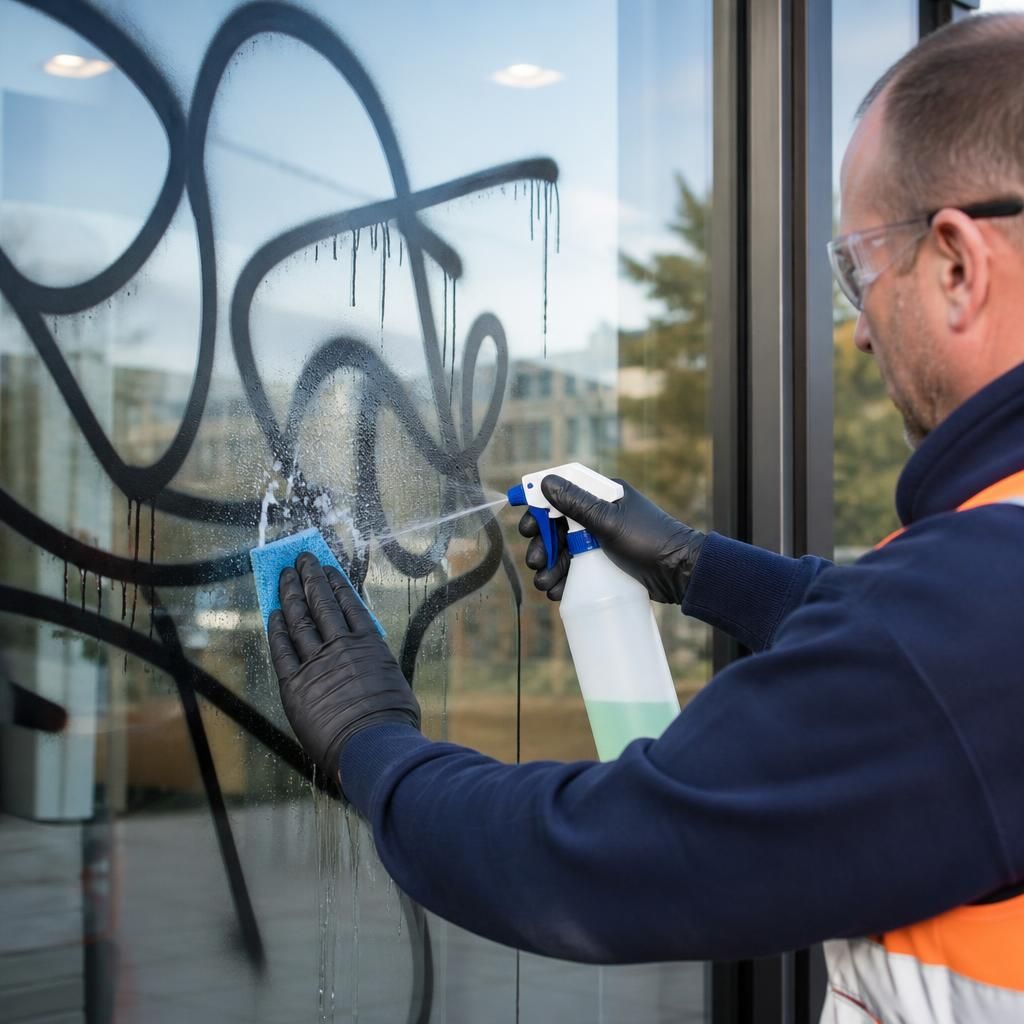
- Applying a remover that is compatible with the glass and the surrounding materials, allowing the product sufficient dwell time to soften the marking.
- Agitating gently with a soft, non-abrasive applicator rather than a scouring pad, harsh scraper or wire brush.
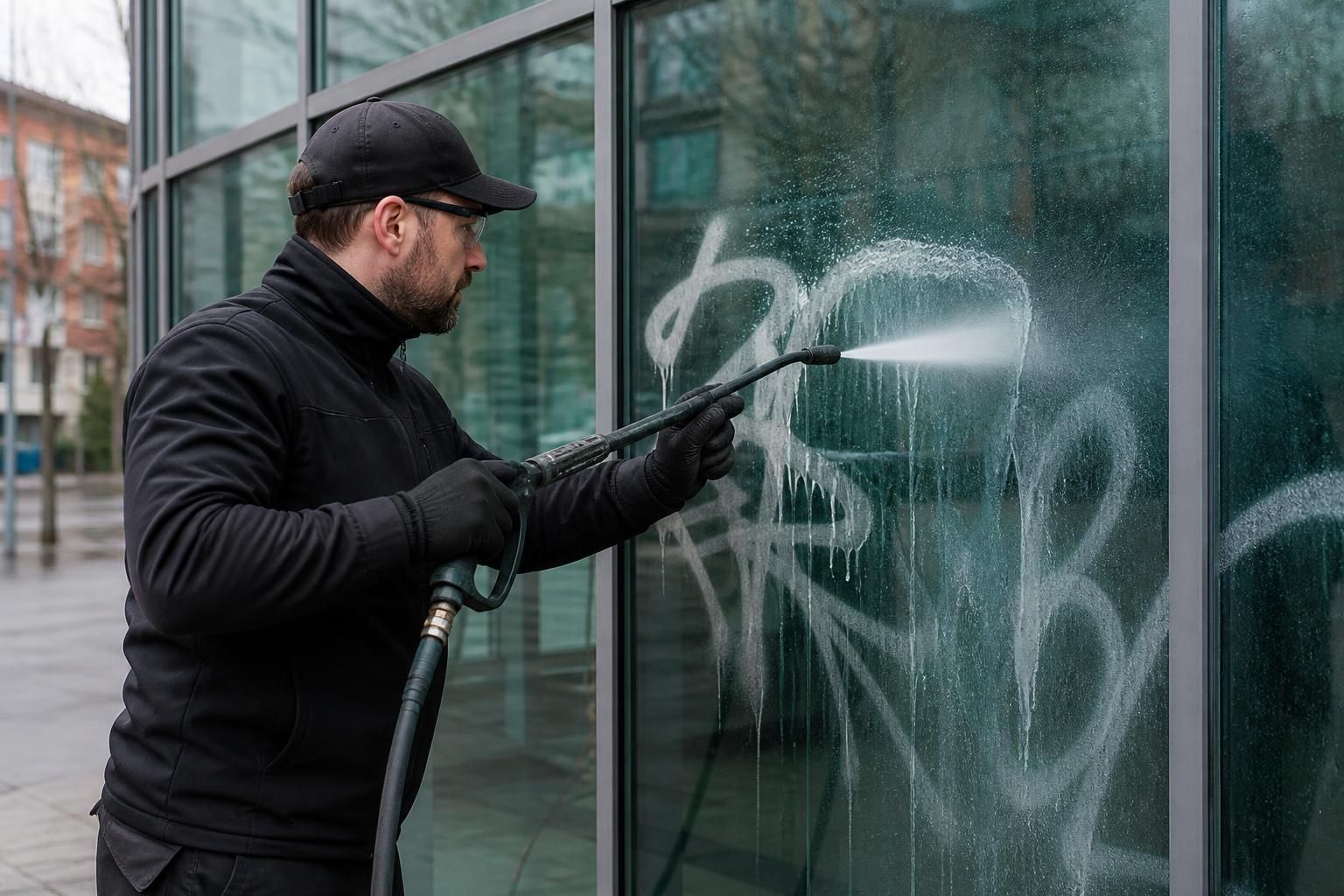
- Rinsing with controlled, low-pressure water so loosened paint and residue are carried away without driving water behind seals or into electrical fittings.
- Repeating the treatment where necessary instead of increasing pressure or using a more aggressive tool.
- Inspecting the glass in good light and drying it with a clean, soft cloth or suitable squeegee to check for remaining residue, smears or damage.
Product selection is particularly important. A remover designed for masonry or heavily soiled metal may be unnecessarily harsh for glass and can affect rubber seals, powder-coated frames, painted mullions or adjacent cladding. Strong acids, caustic products, solvents that are unsuitable for the installation and abrasive compounds should not be used without confirming their compatibility with the complete façade system. Product instructions and safety data should be followed, including requirements for ventilation, personal protective equipment and waste-water control.
Mechanical tools require similar care. A sharp blade can sometimes remove softened paint from plain, uncoated glass, but it can also create fine scratches if it is used at the wrong angle, over grit or on a surface with a film. Scrapers should therefore only be considered following a test, with the correct technique and a clean blade. Abrasive pads, dry scraping and pressure-washing at close range are unsuitable ways to make up for ineffective chemical preparation.
The condition and type of the glass must be assessed before work starts. Tinted glass, decorative glass, laminated units, applied films and self-cleaning or solar-control coatings may need a different treatment or may not tolerate standard solvents or scraping. Graffiti on the surface of a protective film may be removable while the film itself is not; if the marking has penetrated, discoloured or lifted the film, replacement may be preferable to increasingly aggressive cleaning. Seals and joints should also be checked because deterioration may allow water or product to enter the frame.
Not every mark can be removed through cleaning. Etching caused by acid, abrasive materials or deliberate scratching changes the glass itself rather than leaving a removable deposit. Cleaning may remove loose residue around the damage, but it will not restore clarity where the surface has been permanently etched. Specialist glass polishing or replacement may be required, and polishing should only be considered after confirming that it will not distort the reflection or affect a coating.
Low-pressure rinsing is preferable to high-pressure cleaning for most glass graffiti work. It provides enough flow to remove loosened material while reducing the risk of chipped edges, damaged seals, forced water ingress and spray onto unprotected areas. The pressure, nozzle, working distance and water volume should be adjusted on site rather than treated as fixed settings. Access equipment should be positioned to allow the operator to work squarely and maintain control, particularly on large façades and upper-level glazing.
After removal, the glass should be rinsed until no chemical or pigment residue remains, then inspected from different angles. Any run-off should be contained or directed to an appropriate collection point in line with site and environmental requirements. Keeping the surface clean, checking for fresh marks during routine inspections and reporting damage promptly can make future removal less intensive. Where repeated tagging is a concern, a compatible sacrificial anti-graffiti coating may provide additional protection, but its suitability must be confirmed for the specific glass, appearance and cleaning regime.
For a complete and damage-free result, the key controls are accurate surface identification, a tested glass-safe product, gentle agitation, controlled rinsing and a final inspection. If the graffiti has caused etching, affected a coating or reached deteriorated seals, the appropriate solution may involve repair or replacement rather than more forceful cleaning.
The safest way to remove graffiti from glass is to test a glass-compatible, non-abrasive remover before treating the full surface. This confirms that the product will loosen the paint or ink without affecting coatings, tinted film, seals or surrounding frames.
Apply the remover for the recommended dwell time, agitate gently with a soft applicator and rinse with controlled, low-pressure water. Do not use abrasive pads, dry scraping or excessive pressure, as these can scratch the glass, damage protective films or force water behind deteriorated seals. If the marking remains after a careful repeat treatment, it may be etching or scratching rather than removable graffiti and should be assessed for specialist polishing or glass replacement.
Arrange Professional Graffiti Removal from Glass
Arrange professional graffiti removal from glass with Encanto Exterior Cleaning for a controlled, glass-safe treatment that protects coatings, seals and surrounding frames. Contact our team to assess the marking and select the appropriate removal method.