
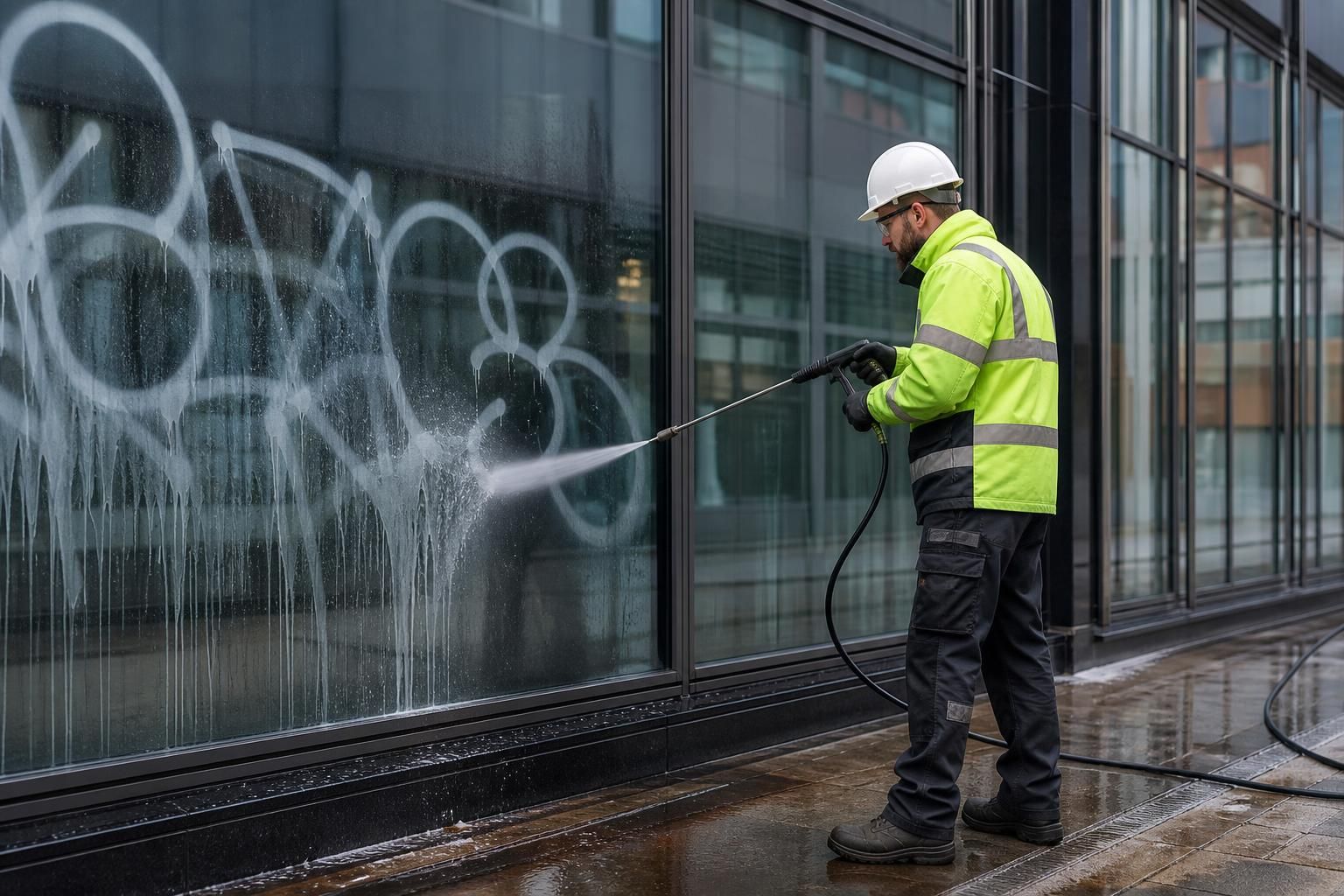
What are the environmental considerations when choosing pressure cleaning over chemical methods for graffiti removal on glass surfaces?
Pressure cleaning can be a more environmentally responsible choice than chemical graffiti removal on glass because it reduces reliance on solvents and the risk of chemical residues entering surrounding surfaces or drainage. However, the work still requires controlled water use, suitable pressure, and proper collection or management of contaminated runoff.
Pressure cleaning can be a more environmentally responsible option than chemical graffiti removal on glass because it can reduce the use of solvents, detergents and other substances that may leave residues or enter the drainage system. It is not automatically impact-free, however. The environmental performance of the work depends on using the lowest effective pressure and water volume, preventing contaminated runoff from reaching drains or soil, and disposing of removed paint responsibly.
Reduced chemical use is the main environmental advantage. Chemical graffiti removers may contain solvents, surfactants or other active ingredients that can affect aquatic environments if they are discharged incorrectly. Even products described as biodegradable require suitable handling, because biodegradability does not mean that a product is harmless when concentrated or freshly discharged. Chemical residues can also remain on frames, seals, paving, wall finishes and adjacent planting if the area is not thoroughly rinsed and controlled.
Pressure cleaning uses the physical action of water to loosen and remove the graffiti. This can reduce the need for chemical products and the associated storage, transport, application and disposal requirements. Where the paint is compatible with water-based removal and the glass is in sound condition, it may provide a simpler treatment with fewer chemical residues left on the surface.
Water use still needs to be considered. A poorly controlled pressure-washing operation can use more water than a carefully selected chemical treatment, particularly where repeated rinsing is needed. Excessive water can also spread softened paint, pigment and dirt over a wider area. The responsible approach is to assess the graffiti first, use targeted equipment and apply only the pressure and flow needed to remove it without prolonged rinsing.
Runoff control is essential. Water used to remove graffiti may contain paint fragments, pigments, binders, dirt and traces of any pre-existing coating. It should not be allowed to flow directly into surface-water drains, watercourses, planted areas or neighbouring properties. Before work begins, the surrounding area should be inspected, drains protected where appropriate, and runoff contained, collected or directed to an approved foul-water disposal route in accordance with the site requirements and local environmental controls.
Where collection is not practical, the method may need to be adjusted rather than proceeding with uncontrolled discharge. This could involve using limited-area cleaning, absorbent barriers, wet vacuum recovery or a different removal technique. Collected solids and contaminated materials should be handled as waste rather than swept into the drainage system. The correct disposal route depends on the material removed and the site circumstances.
There are also environmental considerations associated with the equipment itself. Pressure pumps and access equipment consume electricity or fuel, while transport and setup create additional emissions. These impacts can be reduced through efficient planning, appropriate equipment selection and completing related cleaning tasks during the same visit where possible. Steam or low-moisture systems may be suitable in some situations, but they still require an assessment of surface compatibility, paint type, energy use and runoff management rather than being treated as automatically greener.
Protecting the glass and surrounding materials prevents avoidable environmental impact. Glass is generally non-porous, but its edges, seals, gaskets, films, coatings, frames and adjacent sealant may not tolerate the same treatment. Excessive pressure or unsuitable heat can cause damage that leads to replacement materials, additional transport and further waste. A trained operator should identify the glass type, any surface coating and vulnerable adjoining materials before selecting the method. Testing in an inconspicuous area helps confirm that the graffiti can be removed without damaging the surface or spreading contamination.
Chemical removal may still be appropriate in some cases. Thick, aged or strongly bonded graffiti may require a controlled chemical product to avoid excessive water use or aggressive pressure. If so, the product should be selected for the specific surface, used in the smallest practical quantity and prevented from contacting vulnerable materials. The product instructions and safety data should be followed, including requirements for ventilation, protective equipment, rinsing and waste disposal. A chemical method should not be rejected solely because it involves chemicals; the relevant comparison is the total environmental impact of each suitable option.
For glass graffiti removal, the most responsible method is therefore based on a site-specific assessment. Important factors include:
- the type, age and thickness of the graffiti;
- the presence of window films, solar-control coatings, sealants or delicate frames;
- the distance to surface-water drains, watercourses, planting and pedestrian areas;
- whether wash water and paint residues can be contained and recovered;
- the water, energy and chemical requirements of each suitable method; and
- the disposal arrangements for contaminated water, solids and absorbent materials.
In practice, pressure cleaning is often the preferable first option for suitable glass because it can remove graffiti without introducing a solvent into the cleaning process. Its environmental benefit is greatest when the work is targeted, runoff is controlled, water is used efficiently and the removed material is managed correctly. A professional assessment should balance those controls against the condition of the glass and the characteristics of the graffiti, rather than assuming that either pressure cleaning or chemical removal is environmentally superior in every situation.
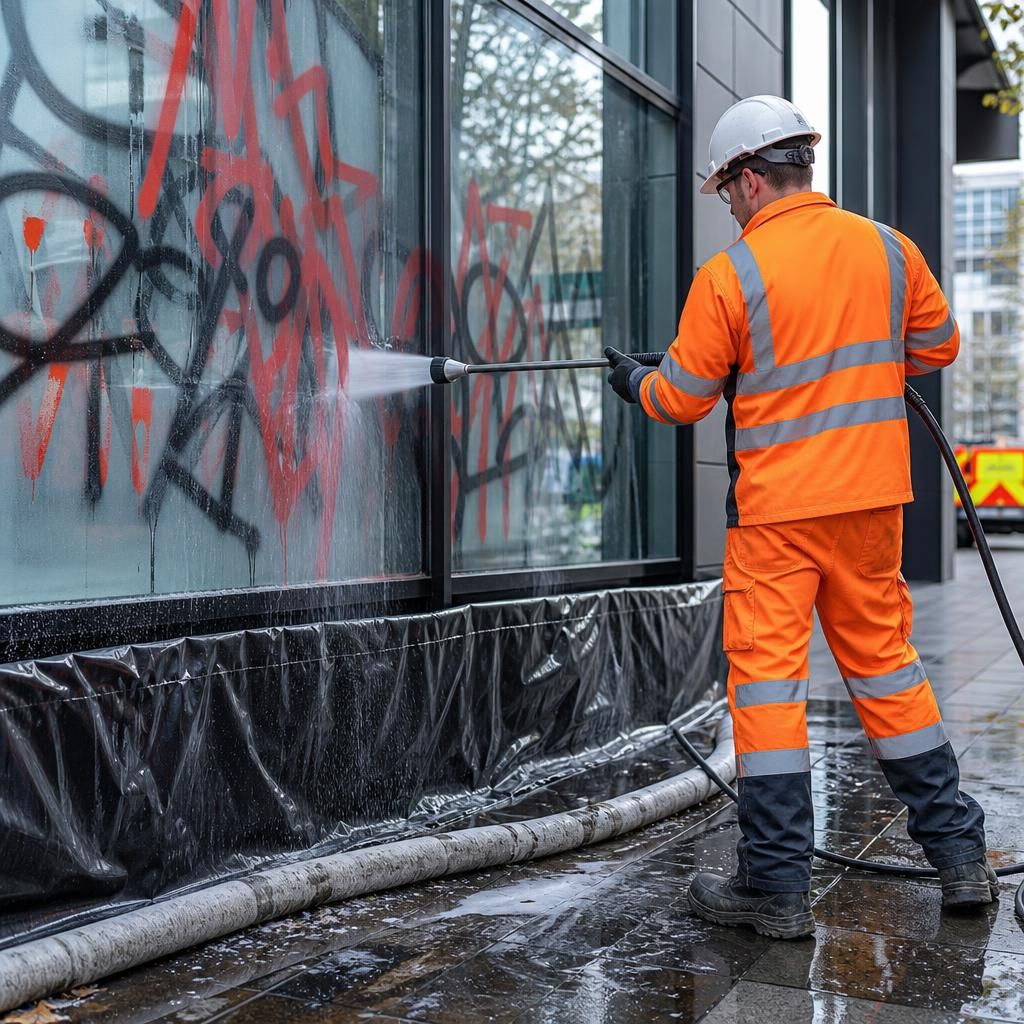
When pressure cleaning is used for graffiti removal on glass, the main environmental control is preventing contaminated wash water from entering surface-water drains, soil or planted areas. The runoff can contain loosened paint, pigments, dirt and traces of existing coatings, even when no chemical remover has been applied.
Responsible cleaning uses only the water flow needed for the work and includes suitable containment, such as drain protection, absorbent barriers or wet-vacuum recovery where conditions require it. Recovered water, paint fragments and contaminated materials should be managed through an appropriate disposal route rather than swept or washed into drainage. This allows pressure cleaning to reduce chemical residues without treating water use and runoff as impact-free.