
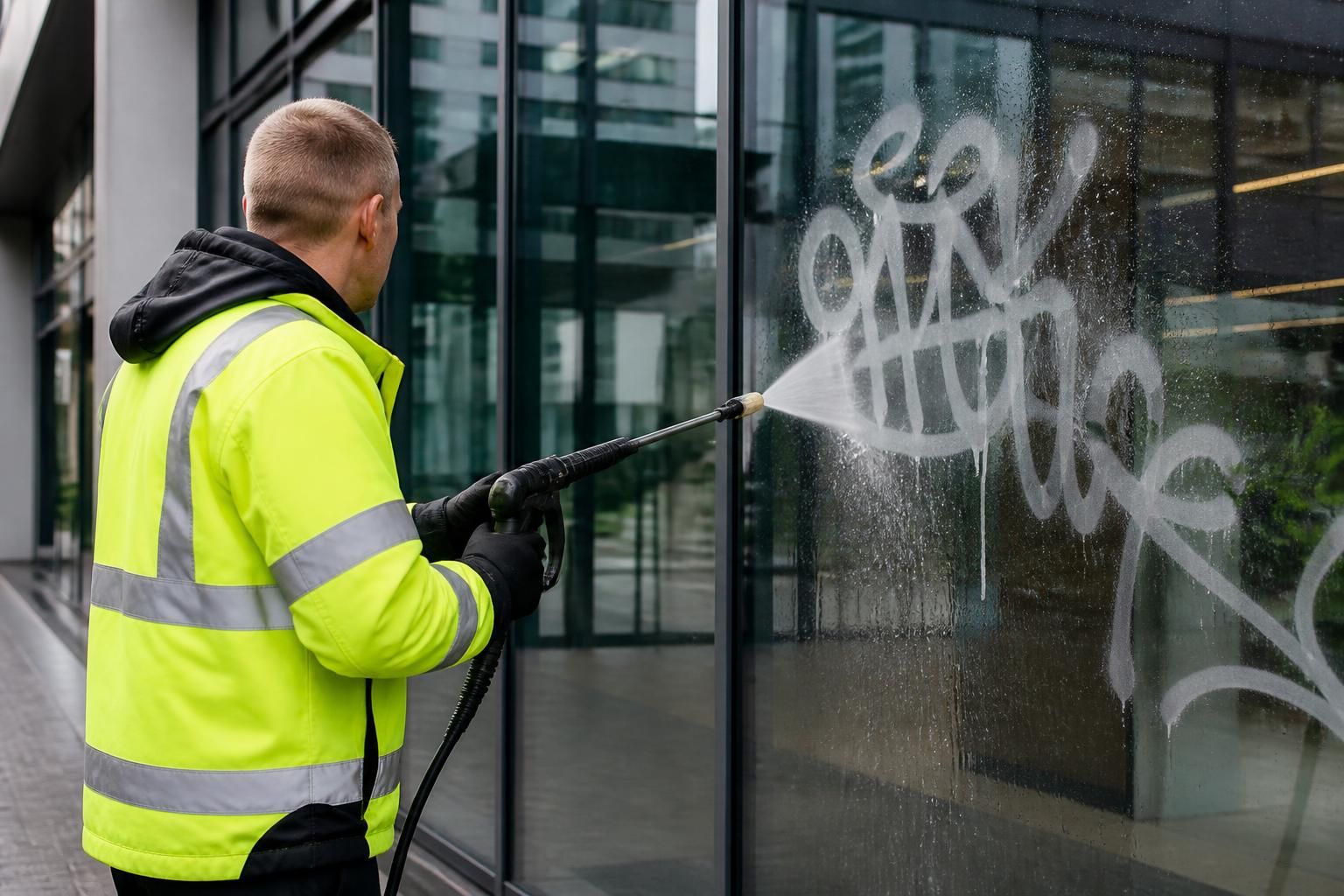
How does pressure cleaning safely remove graffiti from glass?
Pressure cleaning safely removes graffiti from glass by using controlled water pressure and a suitable nozzle to lift paint from the non-porous surface without abrasive scraping. A trained technician first tests a discreet area, then works at a safe angle and pressure while protecting seals, frames and any specialist glass coatings.
Pressure cleaning removes graffiti from glass by using a controlled flow of water to lift paint, ink and adhesive residue from the smooth, non-porous surface. Because glass does not readily absorb graffiti, a trained technician can usually clean it without abrasive scraping, provided the pressure, nozzle, working distance and cleaning method are selected for the specific pane.
Safe removal depends on control rather than maximum pressure. The technician assesses the glass, identifies the graffiti medium and checks for factors such as reflective or solar-control coatings, window film, decorative finishes, damaged edges and vulnerable seals. A discreet test area is cleaned first to confirm that the method removes the marking without affecting the glass or its surface treatment.
The cleaning process normally includes:
- Preparing the area: Frames, seals, vents, nearby surfaces and pedestrian routes are protected from overspray and loosened paint. Drainage and runoff are also considered, particularly around entrances and occupied commercial premises.
- Selecting the correct water treatment: Water temperature and cleaning solution, where required, are matched to the graffiti. Some markings respond to warm water or steam, while others need a suitable low-impact cleaning agent before rinsing.
- Using a suitable nozzle: A wide, controlled spray pattern is generally preferable to a concentrated jet. The nozzle is kept moving so that water is distributed evenly rather than focused on one point.
- Maintaining a safe angle and distance: The spray is directed across the surface at a controlled angle and from an appropriate distance. This helps lift the graffiti while reducing the risk of forcing water behind seals or towards joints and fittings.
- Removing softened residue: Paint and adhesive are rinsed away progressively instead of being repeatedly blasted. Where a small amount of residue remains, a non-abrasive method may be used rather than increasing the pressure.
- Inspecting and rinsing: The pane is checked under suitable lighting for remaining pigment, shadows, adhesive or staining. The glass is then rinsed thoroughly so that cleaning residue does not dry on the surface.
Glass is hard, but it is not completely risk-free to pressure clean. A concentrated jet used too close to the pane can damage an existing coating, disturb an edge seal, force water into the frame or worsen a pre-existing chip or crack. Sudden temperature changes can also create thermal stress, especially where one part of the glass is hot from direct sunlight and another is exposed to cooler water. For these reasons, technicians avoid aggressive settings, abrupt temperature changes and direct spraying into seals, joints or damaged areas.
Special care is needed with coated, tinted, laminated or filmed glass. A surface that appears to be ordinary glass may have a protective, solar-control or privacy layer that is more sensitive than the glass itself. If the specification or condition of the pane is uncertain, the cleaning method should be verified with the building manager, glazing contractor or coating manufacturer before full treatment. Cracked, chipped or poorly sealed units should be assessed before cleaning rather than treated as standard glass.
Pressure cleaning is most effective when the graffiti is relatively fresh and the glass is sound. Older paint may leave a faint shadow or staining after the surface film has been removed, particularly if pigments or binders have weathered onto the pane. In that situation, repeated high-pressure cleaning is not a safe solution. A controlled cleaning product, steam treatment or specialist non-abrasive residue removal may be more appropriate, followed by a careful rinse.
Professional work also includes controlling the surrounding environment. Loose flakes and contaminated water should not be allowed to enter rainwater systems, doorways or occupied areas. On commercial sites, the work area may need temporary segregation, and the cleaning schedule should account for public access, adjacent vehicles and sensitive electrical equipment.
In practice, the safest approach is a test-led process: inspect the glass, identify its finish, test a discreet section, use the least aggressive effective method and check the result before progressing across the elevation. This removes graffiti effectively while preserving the clarity, coatings, seals and surrounding façade components that form part of the glazing system.
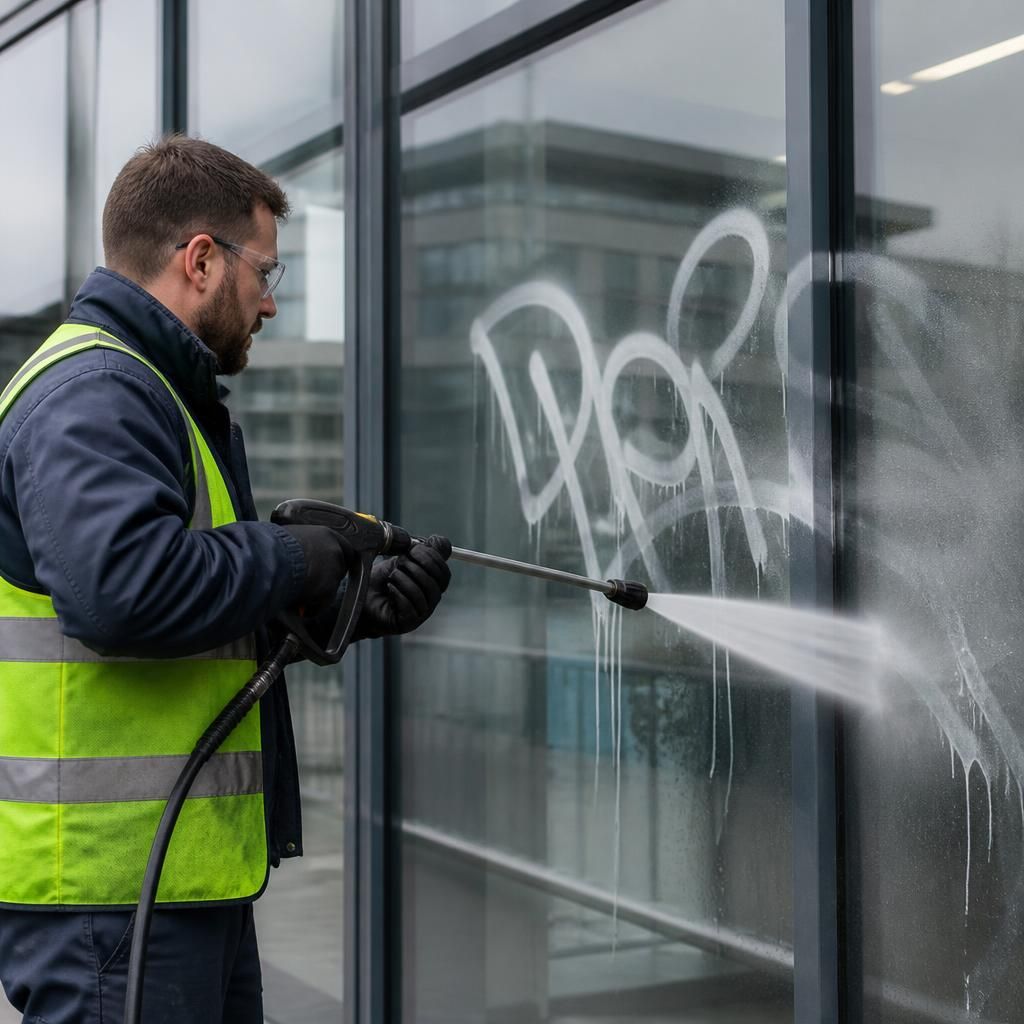
Pressure cleaning removes graffiti from glass safely when the method is tested and controlled for the specific glazing. A technician checks for coatings, window film, chips and damaged seals, then cleans a discreet area before treating the full pane.
A wide spray pattern, suitable working distance and controlled angle help lift paint without concentrating force on one point or driving water behind the frame. Where residue remains, a suitable low-impact cleaning solution or non-abrasive technique is preferable to increasing the pressure.