
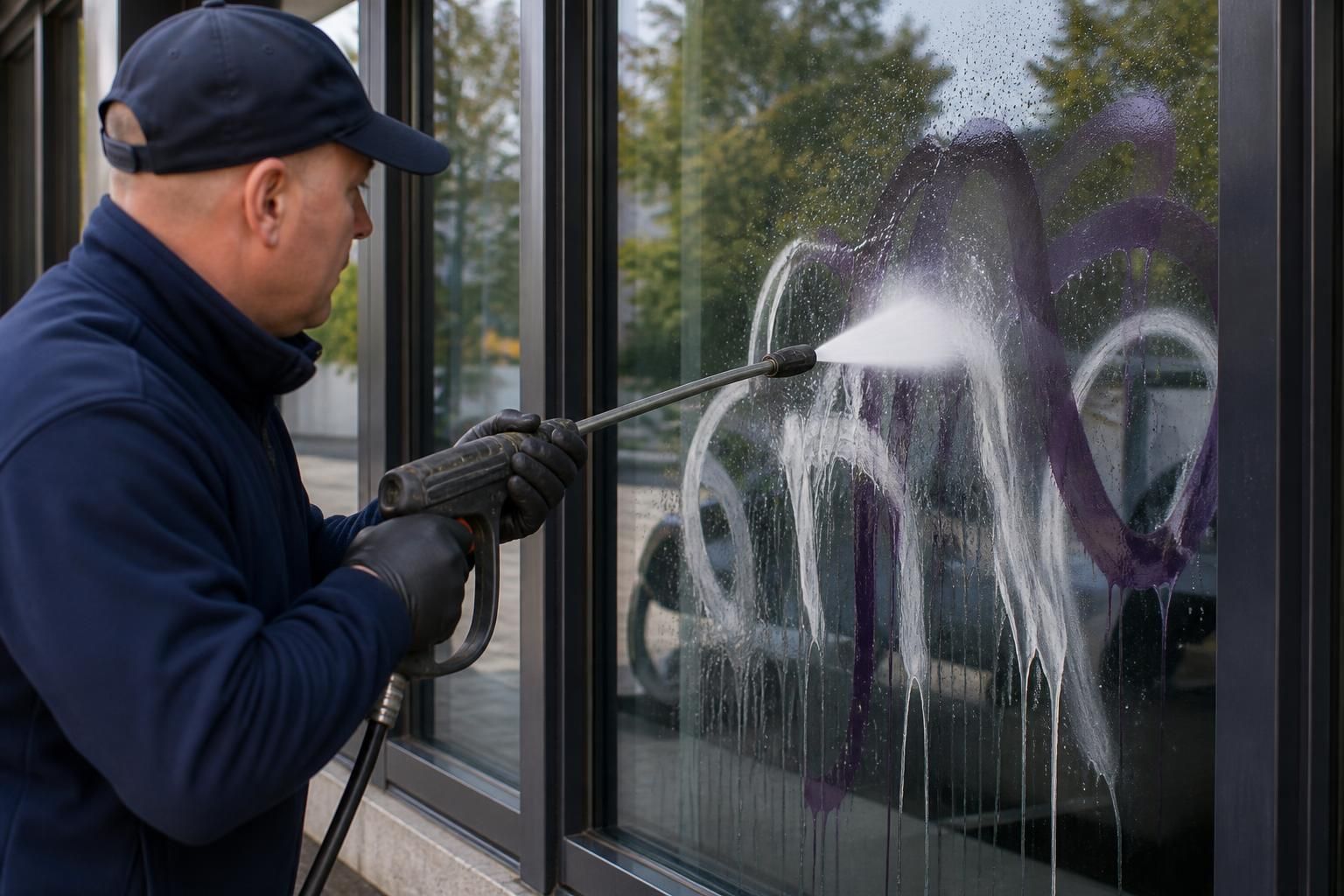
How does pressure cleaning ensure the integrity of glass surfaces during graffiti removal?
Pressure cleaning protects glass during graffiti removal by using controlled pressure, suitable nozzles and a safe working distance to lift paint without scratching or stressing the surface. A test area, careful attention around seals and frames, and the correct cleaning method help preserve the glass’s clarity and structural integrity.
Pressure cleaning preserves the integrity of glass during graffiti removal when the operator controls the pressure, uses a suitable nozzle and keeps the spray at a safe working distance. The aim is to lift the paint or marker residue from the surface without introducing scratches, thermal stress, impact damage or water ingress around the glazing system.
Glass is generally non-porous and can withstand professional cleaning, but it is not immune to damage. Scratches are more likely to result from abrasive grit trapped between the cleaning equipment and the glass than from clean water pressure alone. Excessive pressure, a narrow jet, unsuitable accessories or holding the lance too close can also damage coatings, etched finishes and vulnerable edges. This is why graffiti removal should be treated as a controlled surface-cleaning process rather than simply applying maximum pressure.
Key measures used to protect glass include:
- Pre-inspection: The glass is checked for existing scratches, chips, cracks, failed seals, loose beading, surface films, decorative coatings and signs of delamination. Existing defects are recorded so that the cleaning method can be adapted appropriately.
- Test cleaning: A discreet area is cleaned first to confirm that the pressure, water temperature, nozzle pattern and removal product are compatible with the glazing. This is particularly important for tinted, coated, laminated or chemically treated glass.
- Controlled pressure: The lowest effective pressure is selected rather than relying on a powerful jet. Operators adjust the equipment to the type and age of the graffiti, the condition of the glass and the surrounding installation.
- Suitable spray pattern: A broad, even fan is normally safer for glass than a concentrated pencil jet. The nozzle is kept moving to prevent a localised build-up of force and is not directed into chips, joints or damaged seals.
- Safe working distance: Maintaining a consistent distance helps distribute the cleaning action evenly. Bringing the nozzle closer to compensate for stubborn paint increases the risk of marking the glass, damaging a coating or forcing water behind frames.
- Clean equipment and water: Nozzles, brushes and accessories must be free from grit and previous debris. Clean water and careful rinsing help prevent particles from being driven across the surface and causing fine abrasion.
Temperature control is also important. A sudden change between very hot cleaning water and cold glass, or between cold water and sun-heated glazing, can create thermal stress. Professional operators therefore avoid abrupt temperature changes and take account of weather, solar exposure and the condition of the pane. Heat-sensitive films, sealants and some specialist coatings may require a lower-temperature method or a different removal technique altogether.
The edges of a pane require particular care. Water directed at gaskets, silicone joints, mullions, drainage paths or frame interfaces can enter areas that are not intended to receive direct pressure. That may contribute to leaks, staining, seal failure or damage to adjacent materials. The spray should be managed so that it works across the face of the glass, while frames, seals and electrical components are protected from unnecessary exposure.
Graffiti type affects the cleaning approach. Water-based paint, solvent-based paint, marker ink, adhesive residue and etched graffiti do not respond in the same way. A suitable glass-safe cleaning agent may be used to soften difficult residue before controlled rinsing, but the product must be compatible with the glass, its coating and the surrounding sealants. Etching is not a paint deposit that can simply be washed away; if the glass has been physically marked, restoration or replacement may need to be considered.
After the graffiti has been removed, the glass is rinsed and inspected from different angles and in changing light where possible. This helps identify remaining residue, hazing, water marks or pre-existing damage. Frames, ledges and drainage points should also be checked so that loosened paint and contaminated water are not left to dry on adjacent surfaces. Where required, captured wash water and removed debris are managed in line with site and environmental requirements.
In practice, the safest result comes from matching the cleaning method to the glazing rather than applying one setting to every pane. Controlled pressure cleaning is suitable for many sound, accessible glass surfaces, but heavily damaged, fragile, coated or architecturally specialised glazing may need an alternative approach. A documented inspection, test area and careful final check provide the best protection for both the appearance and the functional integrity of the glass.
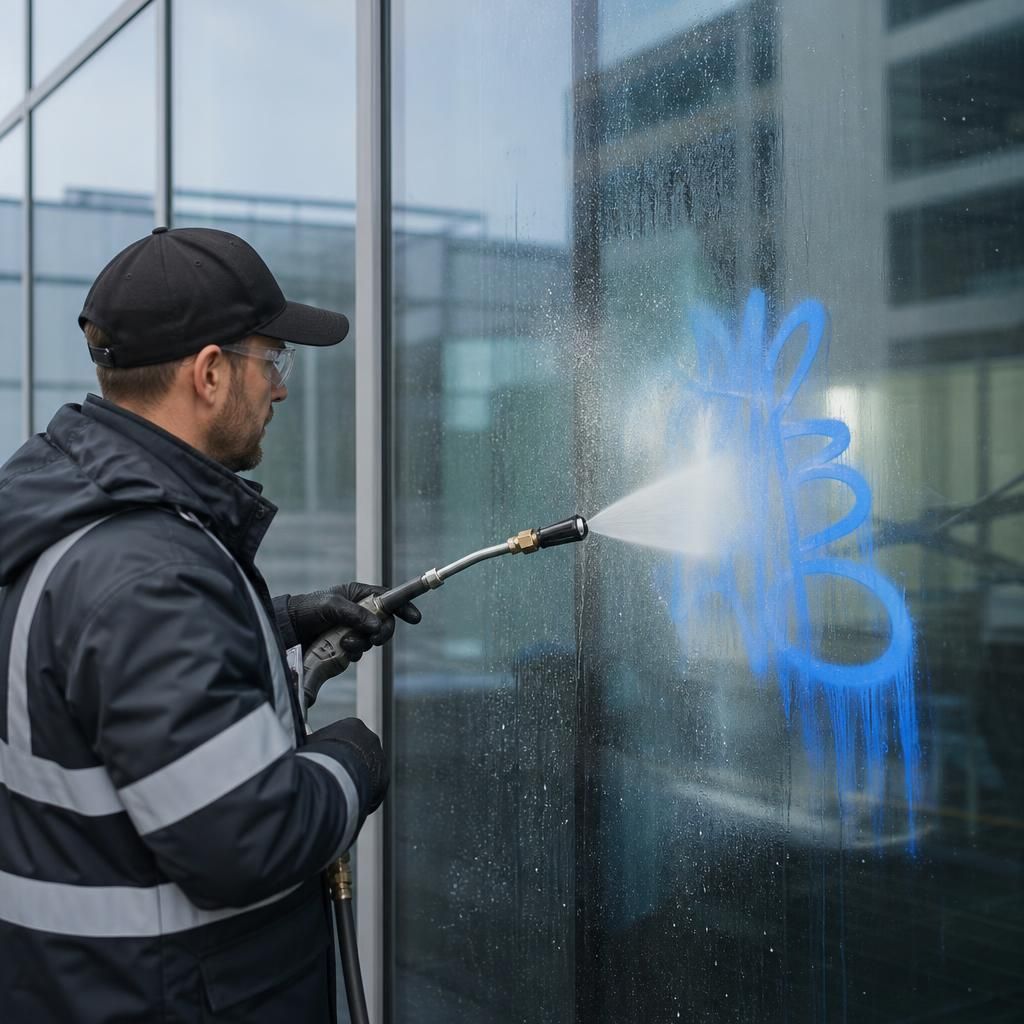
Controlled pressure and a test area are central to protecting glass during graffiti removal. An operator should first clean a discreet section using a broad spray pattern, clean equipment and the lowest effective pressure. This confirms that the method will remove the paint without marking the glass, affecting a coating or loosening surrounding sealants.
The nozzle should remain at a consistent distance and move continuously across the surface. Avoiding concentrated jets, abrasive debris and direct spray into edges, joints or damaged seals reduces the risk of scratches, water ingress and localised stress. The pressure and temperature can then be adjusted before the remaining graffiti is treated.