
Can pressure cleaning remove graffiti from porous surfaces like brick or concrete?
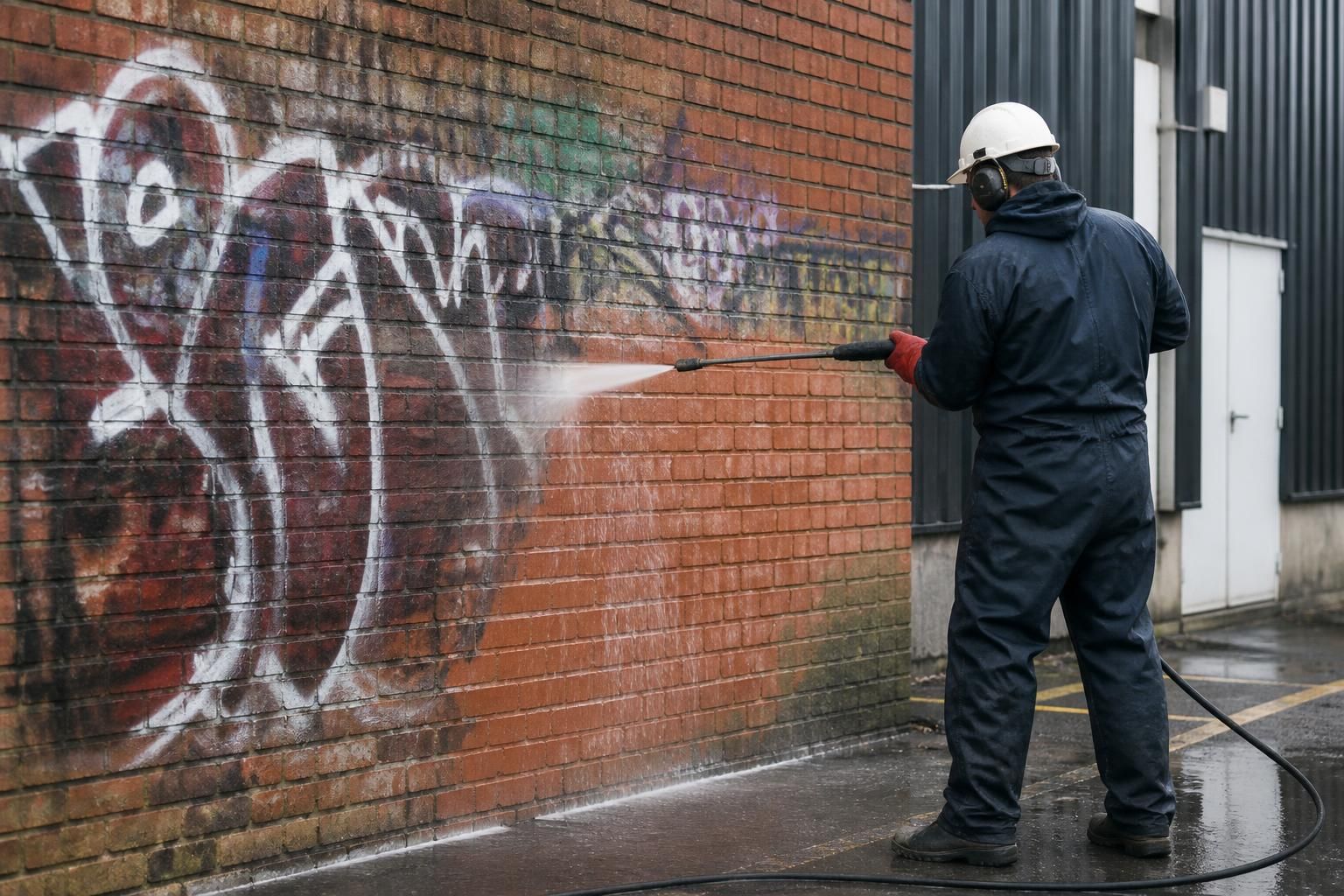
Yes, pressure cleaning can remove graffiti from porous brick and concrete, but the method must be matched to the surface and paint type. Controlled pressure, suitable detergents or steam, and careful rinsing can lift the graffiti without driving it deeper into the material or damaging the surface.
Yes. Pressure cleaning can remove graffiti from porous brick and concrete, but it must be controlled carefully because these materials absorb paint into their pores and can be damaged by excessive pressure, heat or aggressive chemicals. The most effective approach is to assess the surface and graffiti first, carry out a small test area, then use the lowest effective pressure with an appropriate detergent, steam treatment or specialist graffiti remover.
Why porous surfaces require care
Brick, concrete, render and some masonry finishes are not completely smooth. Paint can penetrate below the surface, particularly where the substrate is weathered, unsealed or heavily textured. A quick pass with high-pressure water may remove the visible coating while leaving pigment in the pores. Excessive pressure can also erode brick faces, strip mortar, expose aggregate in concrete or spread paint into adjacent areas.
How the cleaning process is selected
- The surface is identified, including its age, condition, finish and vulnerability to water or abrasion.
- The graffiti is assessed by paint type, thickness, age and coverage. Aerosol paint, marker ink and multiple layers may require different treatments.
- Nearby surfaces, drainage points, windows, vehicles, landscaping and public areas are protected from overspray and run-off.
- A discreet test patch is cleaned first to confirm that the chosen pressure, temperature, detergent and technique will not mark the substrate.
- The treatment is adjusted according to the test result. Low-pressure washing, hot water, steam cleaning, a suitable cleaning product or a combination of methods may be used.
- The area is rinsed in a controlled manner, with attention paid to collecting or directing contaminated water in accordance with site and environmental requirements.
For sound concrete, pressure cleaning can often remove surface graffiti effectively when the nozzle is kept at a suitable distance and moved evenly across the surface. Heavily textured or older concrete may need a detergent or steam treatment to release paint from the deeper profile rather than relying on water pressure alone. Brickwork is more variable: hard engineering brick may tolerate a different method from soft, handmade or historic brick, and mortar joints may require particularly gentle treatment.
Pressure is not the only control
Cleaning performance depends on more than the pressure setting. Water temperature, flow rate, nozzle selection, working distance, dwell time and the cleaning agent all affect the result. Hot water or steam can soften some paints and reduce the need for abrasive force. A suitable detergent may help break down the coating, although chemical products must be compatible with the substrate and handled so that they do not damage surrounding finishes or enter uncontrolled drainage.
Directing a narrow jet too close to the surface can create visible lines, etch concrete or remove the weathered face of a brick. Broad, controlled passes are generally safer than concentrating the jet on one spot. Where paint has penetrated deeply, complete removal may require more than one treatment, and a light residual shadow may remain if removing it would cause greater damage to the underlying material.
When pressure cleaning may not be suitable
Alternative or supplementary methods may be necessary for friable brick, damaged concrete, historic masonry, painted surfaces, weak mortar, deep staining or graffiti close to delicate architectural details. These may include low-pressure steam, poultice-style products, specialist chemical treatment or gentle abrasive systems selected for the specific substrate. The objective is to remove the graffiti without replacing it with scarring, surface loss or a visible patch.
Graffiti on a previously sealed surface can behave differently from graffiti on unsealed masonry. The coating may sit closer to the surface and be easier to remove, although the sealant itself can be affected by heat, chemicals or pressure. Any existing protective coating should therefore be identified before cleaning rather than assumed to be unaffected.
What happens after removal
Once the graffiti has been removed, the surface should be inspected in changing light and from normal viewing distances. Any remaining shadowing, paint migration or damage can then be assessed before deciding whether further treatment is appropriate. If a porous surface is prone to repeat tagging, a compatible sacrificial or permanent anti-graffiti coating may help future cleaning, provided it is suitable for the masonry and applied to a properly prepared surface.
For commercial premises, managed estates and public buildings, the safest approach is to arrange an assessment before cleaning rather than treating porous masonry with an untested pressure setting. This protects the appearance and integrity of the brick or concrete while giving the cleaning team the best chance of removing the graffiti thoroughly and managing wash water responsibly.
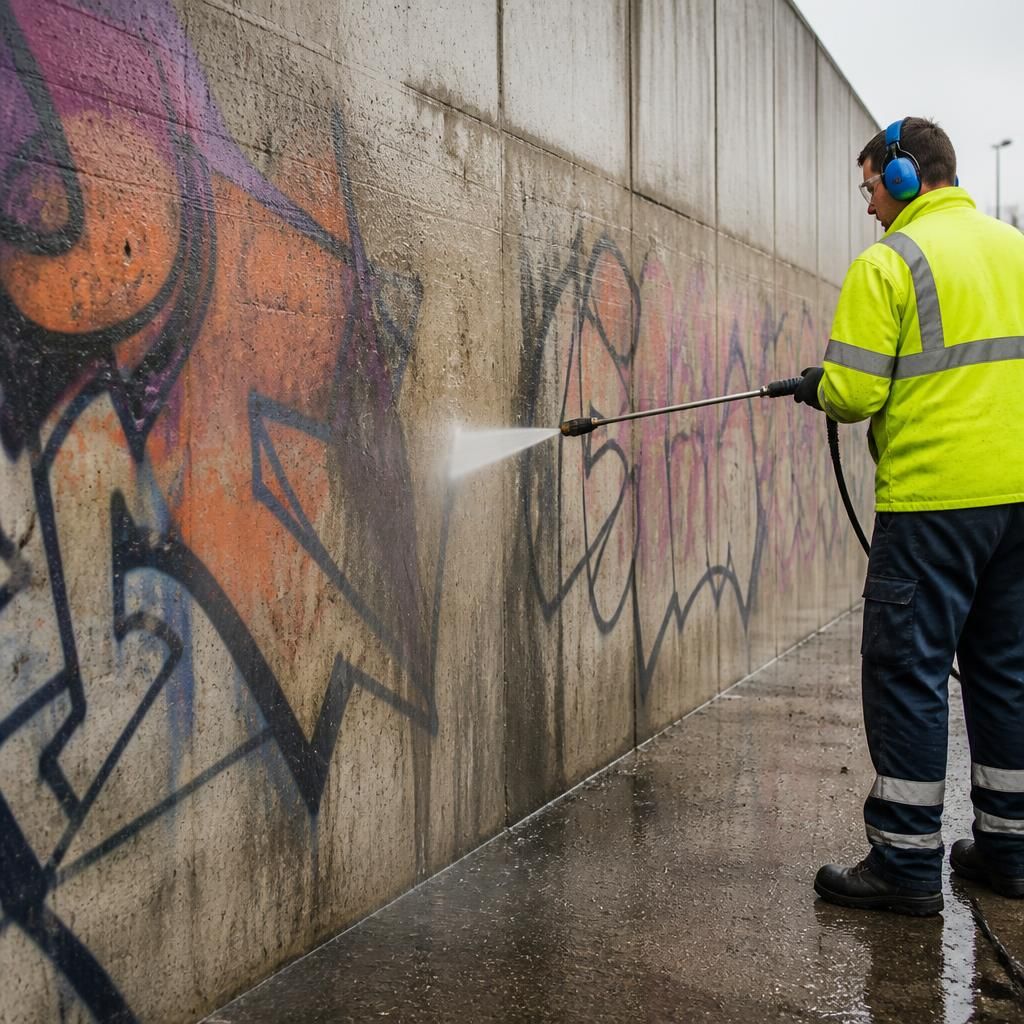
Pressure cleaning can remove graffiti from porous brick and concrete, but the treatment must be controlled to avoid driving paint deeper into the pores or eroding the surface. A professional assessment and discreet test patch help identify the safest combination of pressure, temperature, nozzle distance and cleaning product.
Hard concrete and engineering brick may tolerate carefully managed pressure cleaning, while soft, weathered or historic brick usually requires a gentler approach, such as low-pressure hot water, steam or a compatible specialist treatment. The aim is to remove the graffiti without stripping the brick face, damaging mortar joints or leaving visible cleaning marks.