
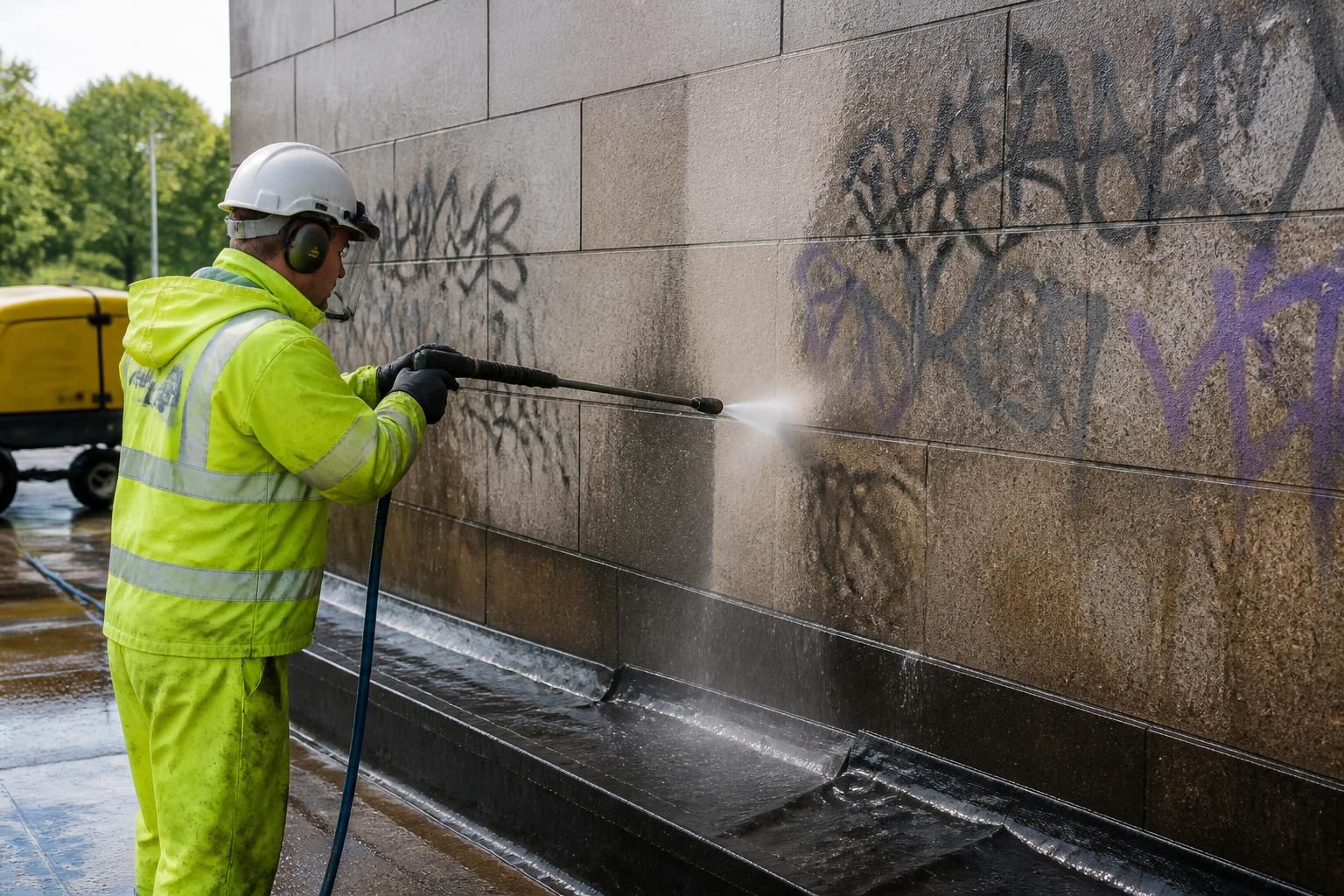
Are there any environmental benefits to using pressure cleaning for graffiti removal?
Yes. Pressure cleaning can reduce reliance on harsh chemical graffiti removers and, when managed with controlled water use and proper wastewater capture, can limit chemical residue entering drains and surrounding ground. Its environmental benefit depends on using the correct pressure, suitable detergents where necessary, and responsible collection and disposal of wash water.
Pressure cleaning can offer environmental benefits for graffiti removal because it may reduce the need for strong chemical removers and allow treated areas to be cleaned using controlled amounts of water. However, it is not automatically environmentally preferable. The outcome depends on selecting the right pressure, temperature and cleaning agent, preventing contaminated run-off from entering drains or ground, and disposing of collected wastewater responsibly.
Reduced reliance on chemical removers
Many graffiti coatings can be removed with pressurised water, hot water or steam, particularly when the coating is relatively fresh and the substrate is suitable. Where this is effective, less solvent, paint stripper or specialist chemical product is required. This can reduce the risk of chemical residues being left on façades, paving, street furniture and other external surfaces.
Chemicals may still be appropriate for certain paints, porous materials or sensitive areas, but they should be selected for the coating and substrate rather than applied routinely. Using the mildest effective treatment helps limit the volume of chemical product used and reduces the potential hazard associated with storing, handling and disposing of it.
Better control of wash water
Professional pressure cleaning equipment allows the operator to control flow, pressure and spray direction. This is important because excessive water can spread paint particles, detergent and dissolved contaminants beyond the original graffiti. Where practical, the work area should be contained using drain covers, bunding, booms or temporary collection systems, with vacuum recovery used to remove contaminated water.
Collected wastewater should not be allowed to run into surface-water drains, watercourses or surrounding soil unless it has been assessed and is suitable for discharge. Depending on the site and the substances removed, it may need to be filtered, treated or taken away by an appropriate waste contractor. The correct approach should be agreed with the client and follow the requirements of the local water authority and other relevant environmental regulators.
Lower risk to surrounding surfaces and planting
Targeted pressure cleaning can treat graffiti without applying chemicals across a larger area. This is useful near planted borders, trees, grass, public walkways and adjoining façades, although these areas still need protection from spray, run-off and loosened paint debris. Operators should assess nearby drainage, soil, vegetation, pedestrians and building entrances before work begins.
Removing graffiti carefully also helps avoid unnecessary replacement or abrasive repair of the affected material. A controlled cleaning method may preserve brickwork, concrete, cladding, masonry or street furniture that would otherwise require repainting, resurfacing or disposal. The environmental value is greatest when the method removes the graffiti while retaining the original substrate and finish.
Efficient use of equipment and energy
Cold-water pressure cleaning can require less energy than heated cleaning where the coating can be removed effectively without heat. Conversely, hot water or steam may complete a difficult task more quickly and reduce the need for chemical products or repeated passes. The most sustainable option is therefore determined by the whole process rather than by the equipment label alone.
A suitable site assessment helps avoid wasted water, fuel and working time. The operator should consider:
- the type and age of the graffiti coating;
- whether the surface is porous, painted, polished, glazed or otherwise sensitive;
- the lowest effective pressure and water flow;
- whether hot water, steam or a limited detergent application would improve removal;
- how wash water and paint debris will be contained and recovered; and
- how the cleaned surface will be protected against repeat vandalism.
Why professional control matters
Using excessive pressure can damage masonry joints, coatings, sealants and surface finishes. It may also force paint deeper into porous materials, creating the need for additional cleaning and increasing water and energy use. Uncontrolled domestic or improvised cleaning can therefore have a greater environmental impact than a planned professional treatment.
Before cleaning, the operator should identify the substrate, test the proposed method in an inconspicuous area and inspect the drainage arrangements. During the work, spray should be directed only at the affected area, surrounding surfaces should be shielded, and loosened paint and wastewater should be recovered wherever necessary. Afterward, the area should be checked for remaining residue and the waste route documented where the site requires formal environmental records.
Protective treatments and ongoing maintenance
On suitable surfaces, an appropriate sacrificial or permanent anti-graffiti treatment can make future marks easier to remove. This may allow later incidents to be dealt with using a milder process, reducing the likelihood of repeated chemical use, aggressive pressure or substrate damage. Any protective coating must be compatible with the material and applied in accordance with the manufacturer’s instructions; it should not be specified solely on the assumption that it is environmentally neutral.
Prompt reporting and removal can also reduce the resources required for cleaning. Older graffiti may weather, bond more firmly or become layered with additional paint, making treatment more intensive. An agreed inspection and maintenance plan can help address new markings before they require extensive restoration.
In practical terms, pressure cleaning is most environmentally responsible when it is targeted, uses the least aggressive effective setting, avoids unnecessary chemicals, protects nearby land and drainage, and includes proper wastewater and debris management. For commercial and industrial premises, these controls should form part of the method statement and site risk assessment rather than being treated as an afterthought.
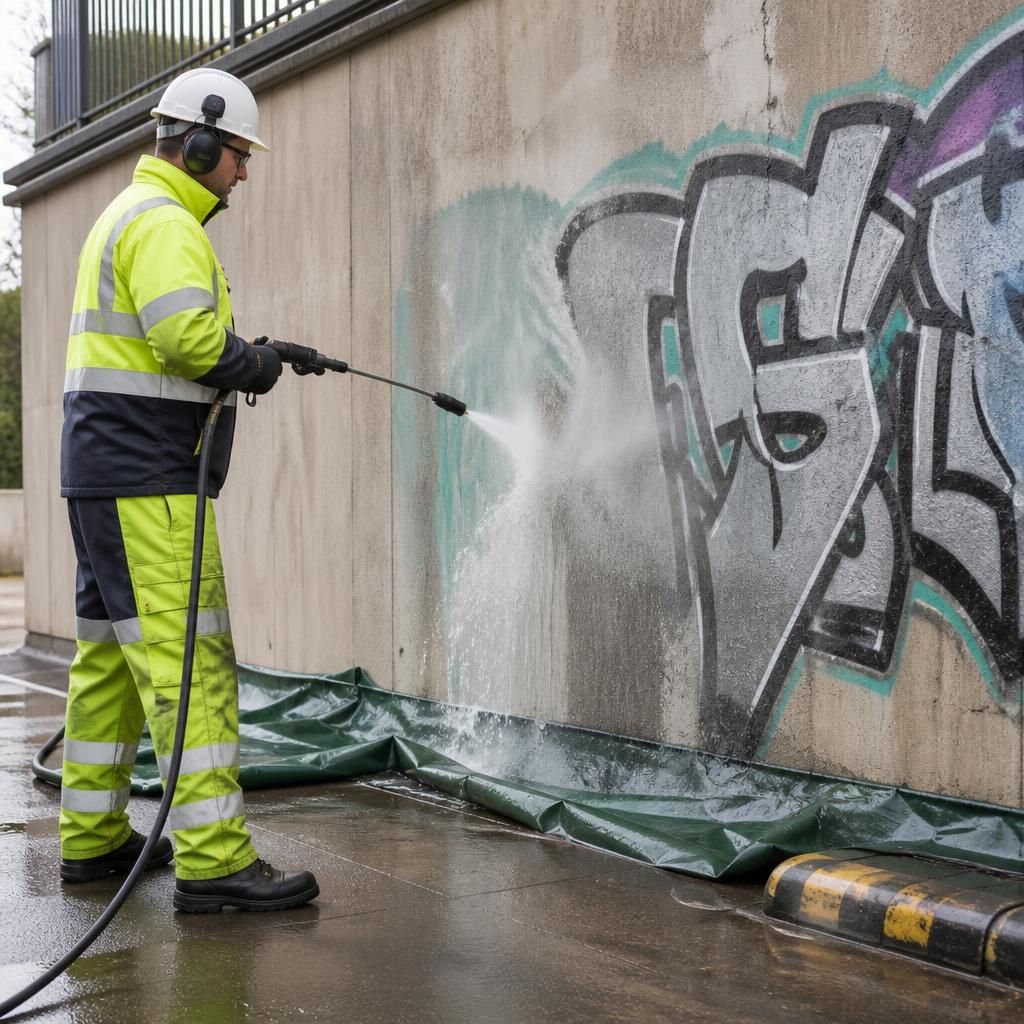
The main environmental benefit of pressure cleaning for graffiti removal comes from reducing chemical use while controlling contaminated wash water. When the coating can be removed with carefully regulated pressure, hot water or steam, fewer solvent-based products are needed. However, loosened paint, detergent and surface residues must still be contained and recovered rather than allowed to enter drains, soil or nearby watercourses.
Professional treatment should therefore include drain protection, controlled spray application and vacuum recovery or another suitable collection method where run-off could cause pollution. Recovered wastewater and paint debris should be assessed and disposed of through the appropriate waste route. This approach makes pressure cleaning a more responsible option without assuming that water-based cleaning is automatically environmentally harmless.