
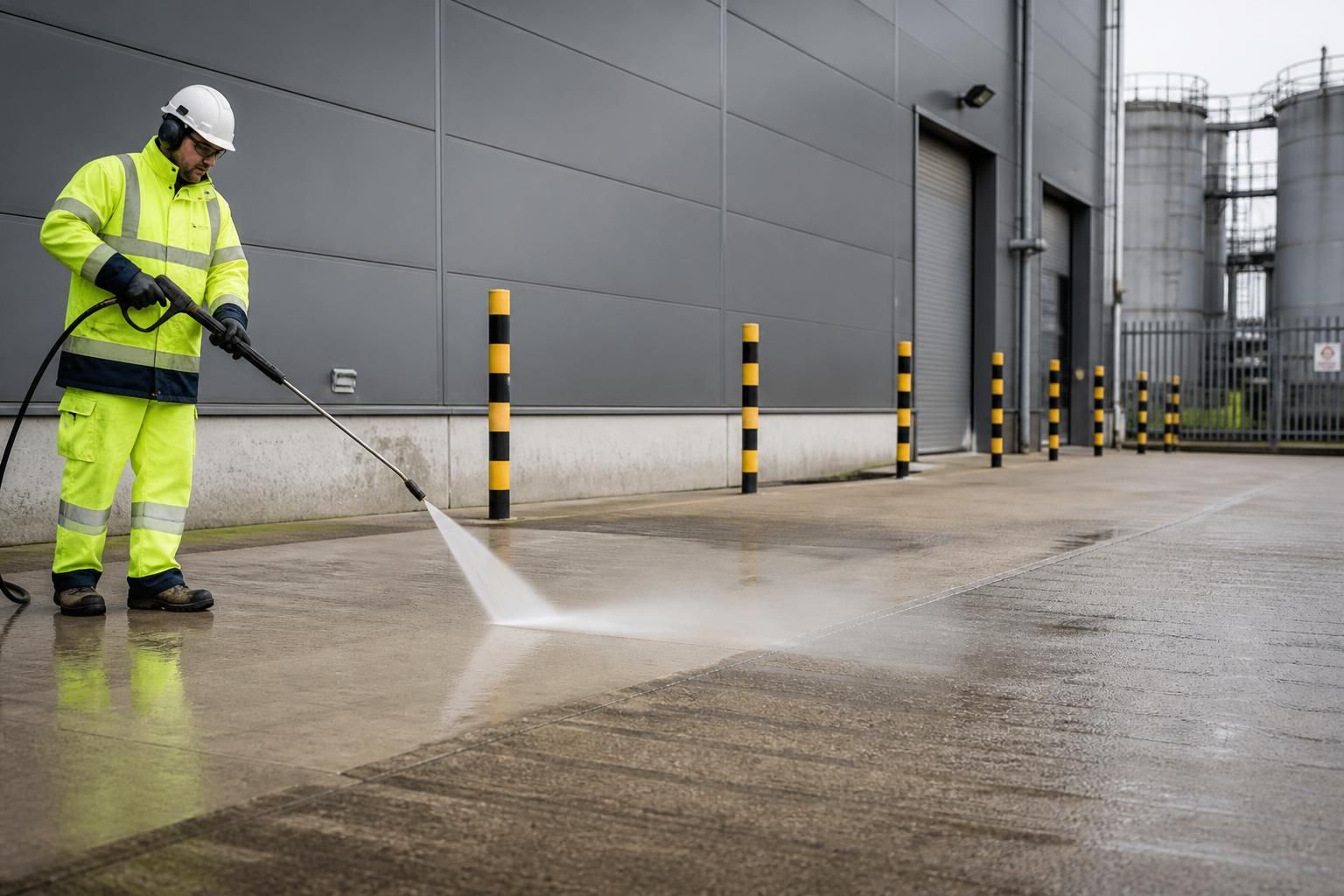
What types of surfaces can be safely cleaned using heavy-duty pressure washers?
Heavy-duty pressure washers can safely clean robust surfaces such as concrete, cement, brick, block paving, natural stone, tarmac and some metal or composite cladding. The pressure, nozzle, distance and detergent must be matched to each material, with a test patch used first to avoid etching, surface damage or the removal of protective coatings.
Heavy-duty pressure washers can safely clean hard, well-bonded surfaces including concrete, cement, brick, block paving, natural stone, tarmac, some metalwork, and suitable composite or metal cladding. Safety depends on matching the water pressure, flow, nozzle, spray distance, cleaning solution and technique to the surface. A powerful machine is not automatically suitable for every substrate, and a test patch should be completed before full cleaning.
Concrete and cement are among the most suitable surfaces for heavy-duty pressure washing. These materials can usually tolerate intensive cleaning of dirt, algae, moss, traffic film, oil residues and other embedded contamination. Care is still required because old, weathered or poorly finished concrete may have a weak surface layer. Excessive pressure or holding the lance too close can cause etching, expose aggregate, create striping or remove surface treatments.
Brick and blockwork can generally be cleaned effectively, particularly where the brick is dense and in sound condition. Pressure washing can remove atmospheric dirt, algae, moss and some staining from façades, walls and paved areas. Older, handmade, soft or already damaged bricks are more vulnerable to surface erosion. Mortar joints may also be weakened by an overly aggressive spray, so the operator should work carefully across the face of the brick rather than directing concentrated pressure into the joints.
Block paving and concrete paving are commonly cleaned with heavy-duty equipment in car parks, paths, yards and access areas. The process can remove organic growth, soil, tyre marks and general soiling from the paving surface and joints. Loose blocks, damaged jointing material and unstable edging should be identified beforehand. Cleaning may remove jointing sand, meaning the area could require appropriate kiln-dried sand or another compatible jointing material after it has dried.
Natural stone can often be pressure cleaned, but the correct method varies considerably between stone types. Dense materials such as some granite and certain hard sandstone may tolerate controlled pressure, while softer or more porous stone can suffer from pitting, flaking, staining or water penetration. Limestone, aged sandstone, slate and historic masonry require particular care. A lower-impact method, such as steam cleaning or a controlled low-pressure wash, may be more appropriate where the stone is friable, polished, jointed or protected by a specialist finish.
Tarmac and asphalt can be cleaned when the surface is structurally sound and the equipment is used with controlled pressure. This is useful for removing surface dirt, moss, algae and some vehicle-related contamination from roads, yards and car parks. Excessive pressure can loosen aggregate, damage the binder or leave visible marks, especially on older surfaces. Oil and fuel contamination may also need a suitable degreaser and controlled recovery rather than simply being displaced across the surface.
Metal surfaces, including some steel, galvanised metal and painted panels, may be suitable for pressure washing when their coating is intact. Heavy-duty cleaning can remove dust, bird fouling, algae and general atmospheric deposits from industrial structures, gates, railings and service areas. The main risks are lifting paint, damaging corrosion protection, forcing water into joints or driving moisture into electrical components. The surface should be inspected for rust, flaking coatings and exposed fixings before cleaning.
Metal and composite cladding can sometimes be cleaned safely, particularly on commercial and industrial buildings, but the specification of the panel must be confirmed first. Coated steel, aluminium and composite panels can be marked by an unsuitable nozzle or aggressive technique. Pressure should be reduced around laps, seals, vents, joints, signage and areas where the coating has deteriorated. Cleaning solutions must also be compatible with the panel finish and rinsed thoroughly to prevent residue or chemical damage.
Roofing materials need a more cautious assessment. Sound concrete tiles, some coated metal roofs and certain robust roof surfaces may be cleaned using controlled pressure or a lower-impact alternative. However, high-pressure washing is often unsuitable for fragile tiles, aged coatings, slate, sheet materials with exposed corrosion, and roofs where water could be driven beneath laps or flashings. Roof access, fall protection and the risk of dislodging tiles are also important considerations; cleaning method and access arrangements should be planned together.
Heavy-duty pressure washing is generally unsuitable, or requires specialist controls, on the following surfaces:
- Soft, porous or friable stone that can erode under concentrated water pressure.
- Loose render, damaged pointing, failing coatings and surfaces with delamination.
- Unsealed timber, which may become gouged, raised or saturated.
- Glass, unless the equipment and technique are specifically suitable and the surrounding seals are protected.
- Asphalt or membrane roofs that may be torn, loosened or affected by water ingress.
- Painted, powder-coated or lacquered finishes that are already peeling or chalking.
- Surfaces containing vulnerable insulation, electrical equipment or concealed service penetrations.
Before cleaning, the surface should be assessed for cracks, loose material, failed joints, corrosion, previous coatings and areas of repair. The operator should then select the least aggressive method that will achieve the required result. This may involve a wider fan spray rather than a concentrated jet, increased working distance, controlled passes, a compatible detergent, or steam cleaning where pressure would create unnecessary risk.
A small test area is particularly important where the material is aged, porous, painted, coated or of uncertain composition. The test should be checked after rinsing and drying, because etching, colour changes and coating failure are not always obvious while the surface is wet. Cleaning should proceed only when the result is acceptable and the method is not affecting the substrate.
Water management is also part of safe surface cleaning. Run-off can carry oil, detergents, silt, paint particles and biological contamination into drains or surrounding ground. On commercial and industrial sites, drainage points, nearby vehicles, pedestrian routes, landscaping and sensitive equipment should be protected, with contaminated water contained or recovered where necessary. Appropriate signage and exclusion zones help prevent slips and protect people from spray, loosened debris and cleaning chemicals.
In practice, the safest surface for heavy-duty pressure washing is a sound, durable substrate with no loose coating or structural defects. Concrete, cement, robust brickwork, block paving and suitable hard stone are usually good candidates, while cladding, tarmac, roofs and coated metal require a site-specific method. Matching the cleaning system to the material protects the surface, improves the consistency of the finish and avoids replacing damage that could have been prevented by a controlled test and proper assessment.
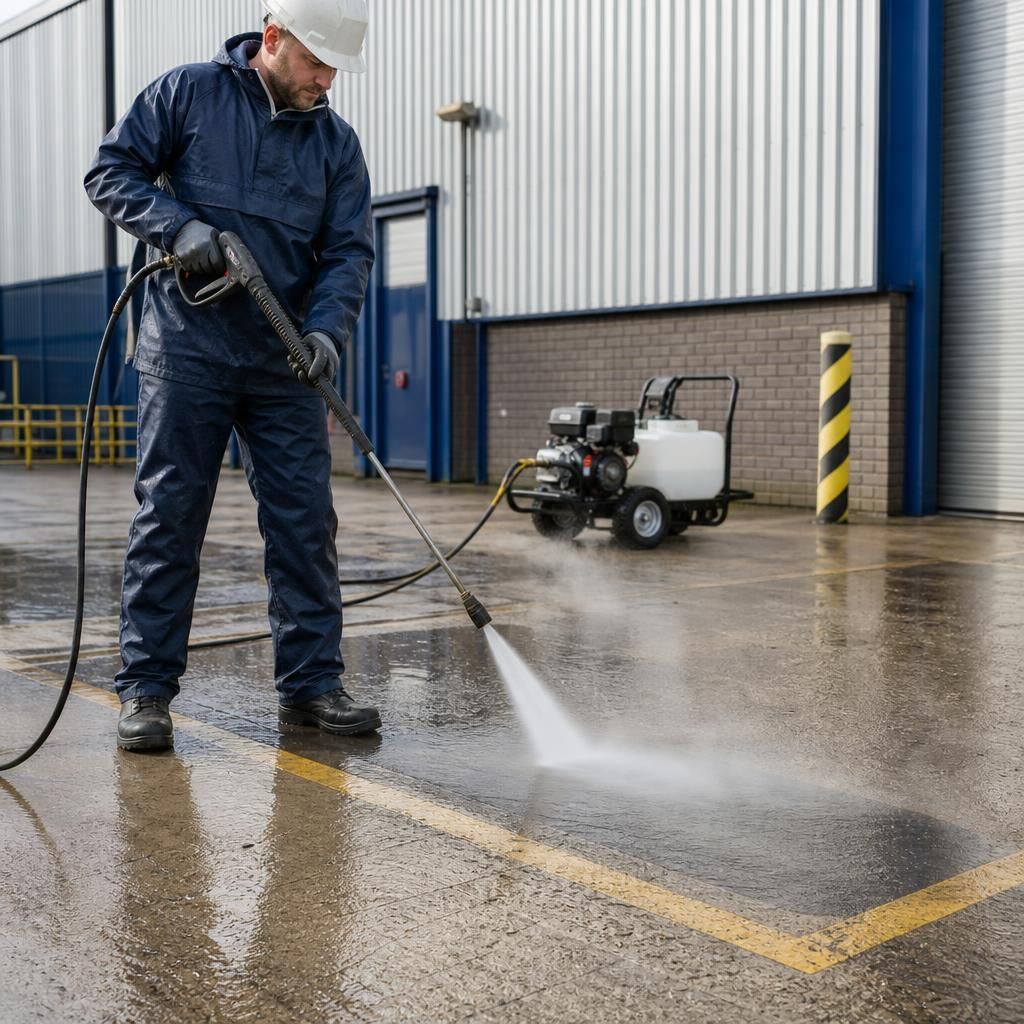
Heavy-duty pressure washers are safest on sound, durable surfaces such as concrete, cement, robust brickwork, block paving and some hard natural stone. The machine’s pressure, nozzle, spray distance and detergent must be matched to the material, because excessive force can etch concrete, erode mortar, loosen paving joints or damage porous stone.
A test patch should be completed before cleaning the full area, particularly on aged, painted, coated or weathered surfaces. Check the result after rinsing and drying, as etching, colour changes and coating failure may not be visible while the surface is wet. Tarmac, cladding, metalwork and roofing require a more controlled, site-specific approach, while fragile masonry, loose render, unsealed timber and failing coatings may need low-pressure or steam cleaning instead.