
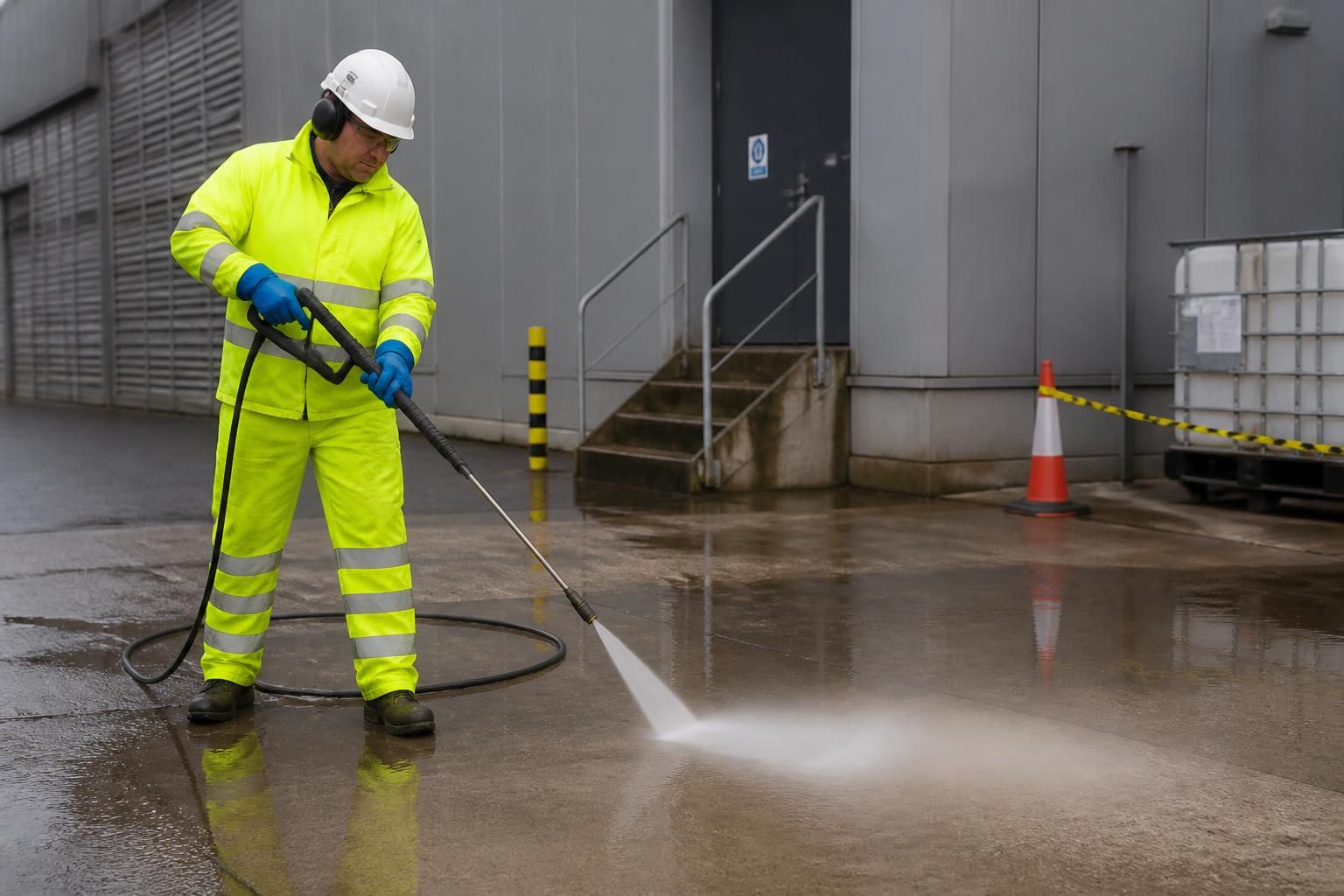
What specific safety measures should be implemented when performing high-pressure concrete cleaning to ensure both operator and surface safety?
High-pressure concrete cleaning should begin with a site-specific risk assessment, exclusion zone, stable access, equipment checks and suitable PPE, including eye and hearing protection, waterproof gloves, protective clothing and slip-resistant footwear. To protect the concrete, inspect for cracks, weak joints, coatings and drainage issues, test a discreet area, use the lowest effective pressure with the correct nozzle and working distance, and control runoff and nearby electrical or vulnerable areas throughout the clean.
High-pressure concrete cleaning should be controlled through a documented site-specific risk assessment, competent operators, suitable personal protective equipment, a clearly managed exclusion zone and a cleaning method matched to the concrete’s condition. Operator safety depends on controlling the water jet, access conditions, noise, electrical risks, chemicals and contaminated runoff. Surface safety depends on inspecting the concrete first, testing the proposed method and using the lowest pressure, flow and cleaning chemical combination that will remove the contamination effectively.
Complete a site-specific risk assessment
Before equipment is started, assess the work area and record the main hazards. The assessment should consider pedestrians, vehicles, deliveries, nearby businesses, members of the public, overhead services, electrical installations, drainage, work at height, confined areas, weather and the condition of the concrete. A method statement should explain the equipment, cleaning sequence, access arrangements, required PPE, runoff controls, emergency procedures and responsibilities of everyone involved.
Where the work forms part of a larger construction or maintenance project, coordinate the cleaning activity with the site manager and other contractors. Operators should be briefed on the risks before work begins, and the controls should be reviewed if the weather, access arrangements, surface condition or scope of cleaning changes.
Establish a secure exclusion zone
High-pressure water can dislodge grit, coatings, rust, concrete fragments and other debris. It can also create spray that affects people, vehicles, glazing and nearby equipment. Use barriers, cones and clear warning signs to prevent unauthorised access, and provide a safe alternative route for pedestrians where necessary. Keep the lance pointed away from people, animals, vehicles, windows and unprotected surfaces at all times.
On commercial premises, cleaning should be scheduled to reduce interaction with staff, customers, deliveries and traffic. A banksman or site representative may be needed where plant or vehicles are moving nearby. Do not rely solely on warning signs in busy areas; physical separation and active supervision are more reliable controls.
Use appropriate PPE and safe workwear
Operators should wear impact-rated eye protection, with a face shield where there is a significant risk of splash or flying debris. Hearing protection is important because pressure washers and surface-cleaning attachments can produce high noise levels. Waterproof, chemical-resistant gloves, protective waterproof clothing and slip-resistant safety footwear help protect against water, cleaning agents, contaminated residue and loss of footing.
Additional PPE may be required where the concrete is contaminated with oils, biological matter, chemicals, mould or hazardous residues. A suitable respiratory protection assessment should be completed if the process could generate harmful aerosols or dust. PPE must be compatible with the detergent or biocide being used and should be inspected, cleaned and replaced when damaged.
Inspect and prepare the equipment
Before use, check the machine, hoses, lance, trigger, couplings, seals, guards, electrical leads, residual-current protection and fuel or detergent systems. Do not use equipment with damaged hoses, leaking connections, faulty triggers or exposed wiring. High-pressure couplings must be correctly secured, and the operator should never attempt to repair a pressurised hose or fitting.
Start the machine in accordance with the manufacturer’s instructions and release pressure before changing nozzles, attachments or hoses. Hold the lance with both hands where required, maintain a stable stance and avoid wrapping hoses around feet, access equipment or sharp edges. Never point the lance at another person, even when the trigger is released, because stored pressure can remain in the system.
Control electrical and access risks
Water and electricity must be kept apart. Identify electrical cabinets, sockets, temporary supplies, lighting, cables and machinery before cleaning. Isolate or protect vulnerable equipment where possible, and do not direct water towards electrical installations unless the equipment has been specifically designed and assessed for that exposure. Use suitable electrical protection and follow the site’s electrical safety arrangements.
Concrete cleaning often involves car parks, ramps, steps, loading areas or elevated structures. Keep access routes clear, control hoses to prevent trip hazards and use suitable platforms or access equipment rather than improvised ladders. Where there is a risk of falling from an edge or working above ground level, follow the hierarchy of control for work at height and use properly inspected equipment. Do not operate a pressure washer from an unstable surface or while overreaching.
Inspect the concrete before applying pressure
Examine the surface for cracks, delamination, spalling, exposed aggregate, hollow-sounding areas, eroded joints, loose repairs, weak edges and signs of structural movement. Identify sealers, paint, line markings, resin coatings, curing compounds and previous repairs, as high-pressure water may lift or undermine them. Pay particular attention to expansion joints, drainage channels, corners and areas where water may enter the substrate.
Pressure washing is a cleaning process, not a repair method. If the inspection suggests structural weakness, obtain appropriate technical advice before proceeding. Record existing defects with photographs where necessary so that pre-existing damage is distinguished from any change caused by cleaning.
Test the cleaning method first
Carry out a test clean in a discreet area or on a representative section. Check the result after the surface has dried, because wet concrete can conceal etching, colour variation and coating damage. The test should confirm the suitable pressure, nozzle, spray angle, working distance, travel speed, detergent concentration and recovery method.
Use a wide fan spray or an attachment designed for surface cleaning where appropriate. Avoid holding a narrow jet close to the concrete, as concentrated pressure can cut the cement paste, expose aggregate, deepen joints and leave visible striping. Keep the lance moving evenly and maintain a consistent distance. Reduce the pressure or increase the working distance around damaged areas, edges, joints and decorative finishes.
Use chemicals and detergents responsibly
Select a detergent according to the contaminant and the concrete finish. Read the product safety information and follow the required dilution, contact time, ventilation, storage and PPE instructions. Never mix cleaning products unless the manufacturer expressly permits it, particularly products that could create harmful vapours or reactions.
Prevent detergents from drying on the concrete and rinse thoroughly where the product instructions require it. Protect nearby plants, metals, painted surfaces, glazing and drainage systems from overspray. COSHH controls should be in place for substances that may be hazardous to health, including information on exposure, storage, spill response and disposal.
Manage water, slurry and contaminated runoff
High-pressure cleaning can mobilise oil, fuel, silt, biological growth, paint residue and cleaning chemicals. Prevent contaminated water from entering surface-water drains, watercourses, soil or neighbouring property. Use drain covers, bunds, wet vacuums, silt barriers or a controlled collection system as appropriate, and confirm how recovered water and solid waste will be handled before work starts.
Do not allow slurry to accumulate on walkways or ramps. Remove it promptly and maintain a safe, slip-resistant route throughout the work. If the contamination or chemical content makes the water hazardous, arrange collection and disposal through an appropriate waste process rather than discharging it without approval.
Follow safe operating and emergency procedures
Operators should take regular checks of hose condition, footing, spray direction, surface response and runoff controls during the clean. Stop immediately if the surface begins to break up, a hose or fitting fails, an unauthorised person enters the exclusion zone, visibility becomes unsafe or runoff cannot be contained.
A high-pressure water injection injury can appear minor while causing serious internal damage. Any suspected injection injury requires urgent medical assessment, and the operator should tell medical staff that it involved high-pressure water or cleaning fluid. Keep first-aid arrangements, clean water for rinsing, spill materials and emergency contact details available in accordance with the site risk assessment.
Complete a final safety and quality check
After cleaning, depressurise and isolate the equipment, remove barriers only when the area is safe, and inspect the concrete for remaining contamination, exposed defects, surface damage and consistent appearance. Confirm that the surface is no longer hazardous from standing water or slurry and that drains, joints and surrounding assets have been left clear. Record the method used, products applied, waste or runoff arrangements, defects identified and any recommendations for repairs, sealing or planned maintenance.
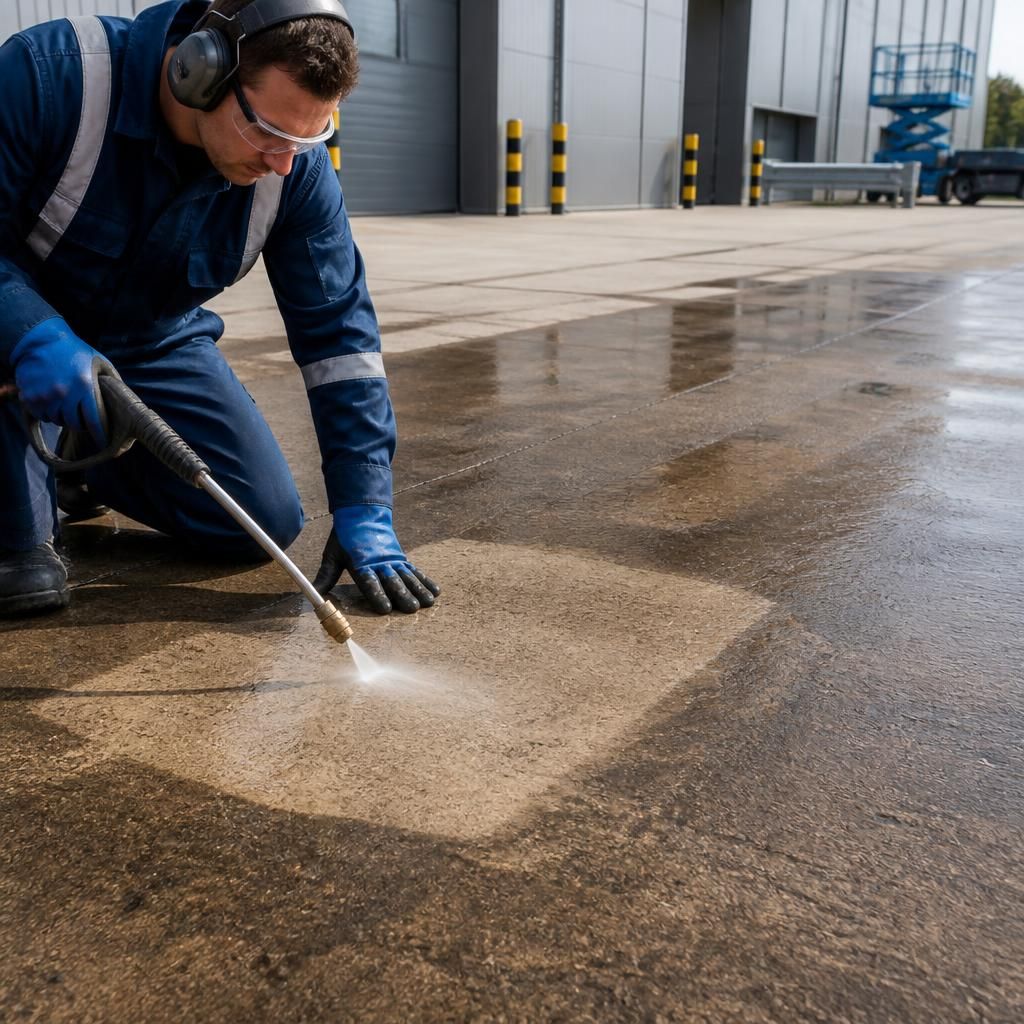
A discreet test clean is the most reliable way to protect concrete before full-scale high-pressure washing. Test the proposed nozzle, pressure, working distance, spray angle and detergent on a representative area, then assess the surface again after it has dried.
Wet concrete can conceal etching, colour variation, exposed aggregate and coating damage. If the test causes surface marking, loosens the cement paste or affects a sealer, reduce the pressure, increase the working distance or change the cleaning method. Keep the lance moving evenly, avoid concentrated jets around joints and damaged edges, and use a surface-cleaning attachment where it is suitable for the substrate.
Discuss Your High-Pressure Concrete Cleaning Requirements
Discuss your high-pressure concrete cleaning requirements with our team to confirm the safest cleaning method, access arrangements and runoff controls for your site. We can help plan a compliant service suited to the concrete’s condition and the surrounding environment.