
What safety precautions are necessary when using a high-pressure washer on concrete surfaces?
When using a high-pressure washer on concrete, wear suitable PPE, inspect the surface and equipment, keep people clear, and control the pressure and nozzle distance to prevent injury or surface damage. Isolate electrical hazards, avoid directing the jet at joints or damaged areas, manage slurry and cleaning chemicals safely, and follow the washer manufacturer’s operating guidance.
Safe high-pressure washing of concrete depends on controlling four main risks: the water jet, the equipment, the working environment and the condition of the surface. Operators should complete a site-specific risk assessment, wear suitable personal protective equipment (PPE), inspect the washer and concrete before starting, keep people away from the work area, and use the lowest pressure and most suitable nozzle that will remove the contamination without damaging the surface.
Assess the site and concrete first
Before setting up, identify hazards such as pedestrians, vehicles, open edges, steps, confined areas, overhead services, electrical equipment, drainage channels and nearby buildings. Establish a controlled work zone using appropriate barriers and warning signs. On commercial or industrial sites, agree access arrangements with the responsible person and plan how traffic and pedestrians will be diverted.
Inspect the concrete for cracks, spalling, loose aggregate, delamination, eroded joints, fragile repairs and exposed reinforcement. High-pressure water can widen existing defects, remove weak material or force water beneath coatings and into voids. Take particular care around expansion joints, sealants, edges, drainage fittings and areas where the concrete is already deteriorating. A small test area should be cleaned first to confirm that the selected pressure, nozzle and cleaning method are suitable.
Wear appropriate PPE
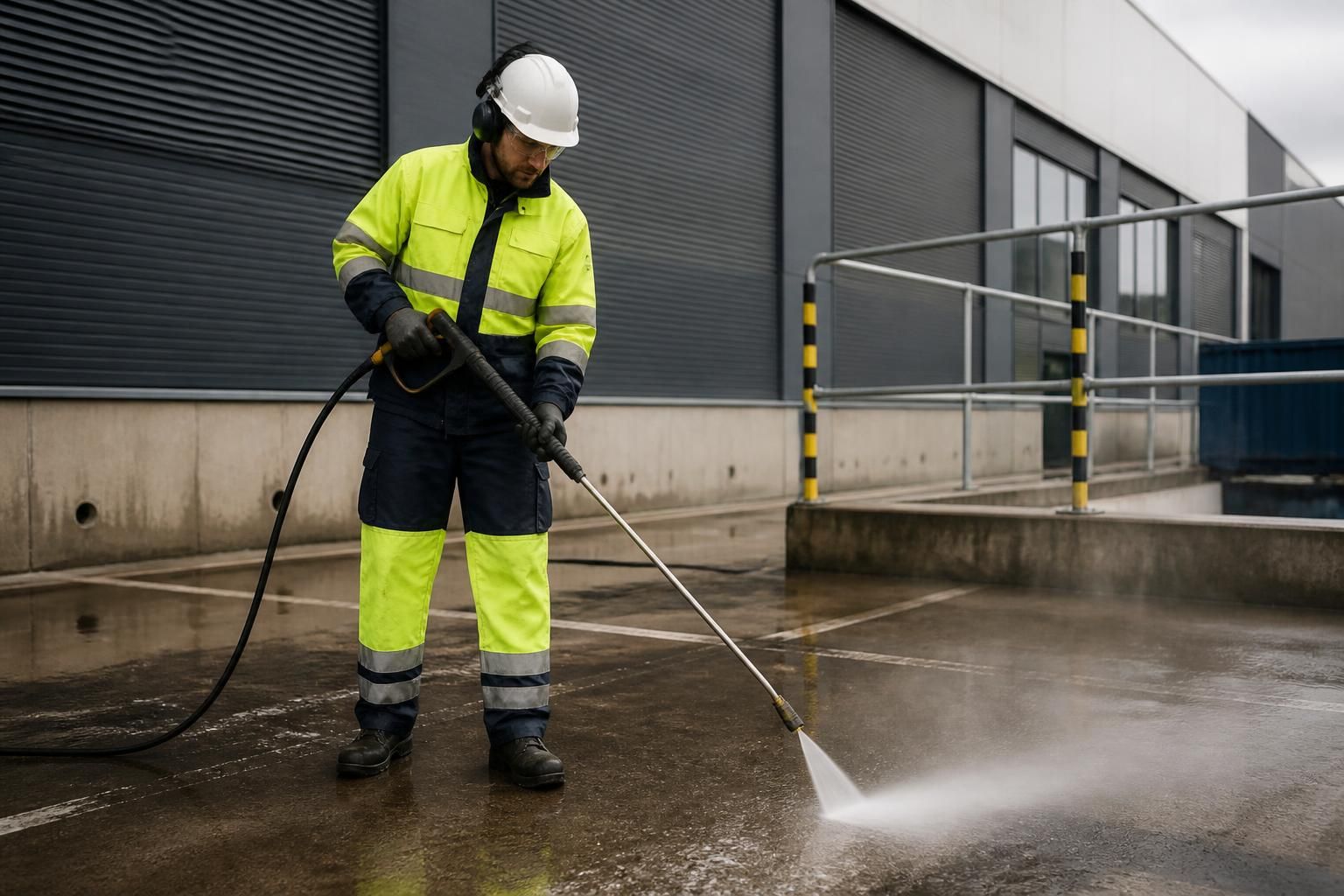
High-pressure water can cause serious injection injuries even when the entry wound appears minor. PPE does not make the jet safe, but it reduces exposure to spray, debris, chemicals and noise. Suitable PPE may include:
- Water-resistant protective clothing or coveralls that provide adequate coverage.
- Safety footwear with slip-resistant soles and suitable toe protection.
- Eye protection, with a face shield where there is a significant risk of splash or flying debris.
- Waterproof, task-appropriate gloves that allow secure control of the lance and trigger.
- Hearing protection when operating equipment that produces damaging noise levels.
- Head protection where falling debris or overhead hazards are present.
- Respiratory protection where the process could generate hazardous mist, dust or contaminated aerosols, based on the site assessment.
Do not wear loose clothing, unsecured jewellery or anything that could catch on equipment. Anyone assisting with the work should receive equivalent protection and remain outside the jet path.
Inspect and operate the washer correctly
Check the machine, hose, lance, trigger, couplings, guards and electrical connections before use. Do not operate equipment with damaged hoses, leaking fittings, defective trigger controls or missing safety components. Confirm that the hose is routed away from sharp edges, hot surfaces, vehicle routes and areas where it could create a trip hazard. Use only accessories rated for the operating pressure and compatible with the machine.
Read and follow the manufacturer’s operating instructions. Start the washer with the trigger released, keep a stable stance and hold the lance securely with both hands where the equipment requires it. The reaction force can be considerable, particularly when the trigger is opened or a rotating nozzle is used. Never leave a running machine unattended, bypass safety controls or point the lance at another person, an animal or yourself. Release pressure before changing a nozzle, disconnecting a hose or carrying out any adjustment.
Never attempt to clear a blocked nozzle by looking into it or placing a hand in front of the outlet. Stop the equipment, isolate the water and power supply in accordance with the manufacturer’s instructions, and release residual pressure before inspecting the blockage.
Control pressure, nozzle choice and distance
Use the least aggressive setting that achieves the required result. Excessive pressure or holding the nozzle too close can etch the concrete, expose aggregate, strip a coating, damage joint material and leave visible cleaning marks. A wider fan pattern generally distributes force more evenly than a narrow jet. Rotary or specialist nozzles should be used only when the operator understands their effect and has confirmed their suitability on the surface.
Keep the lance moving in controlled, overlapping passes rather than dwelling in one location. Maintain a consistent working distance and angle, adjusting them gradually after testing. Avoid directing the jet at joints, cracks, damaged edges, drainage fittings or previously repaired sections unless the method has been specifically assessed. Take extra care with decorative, aged or high-strength concrete finishes, which may respond differently to pressure and water flow.
Prevent electrical and access-related accidents
Water and electricity are a dangerous combination. Isolate, cover or remove electrical equipment from the cleaning area wherever practicable, and keep connections, extension leads and control units away from standing water and spray. Use equipment and residual-current protection appropriate to the site and the manufacturer’s requirements. Do not clean near exposed electrical installations unless a competent person has confirmed that the work can be carried out safely.
Use stable access equipment designed for the task. Do not overreach from ladders, stand on unstable surfaces or direct the lance while climbing. Where work takes place at height, near open edges or on roofs, use a suitable access and fall-protection system following the relevant site controls. High-pressure hoses can increase the risk of slips and can destabilise an operator on wet or uneven ground.
Manage spray, slurry and contaminants
Concrete cleaning can produce slippery slurry containing silt, oils, biological growth, paint residues or other contaminants. Prevent the material from entering surface-water drains unless discharge has been assessed and authorised. Use drain covers, bunding, wet vacuums, collection systems or other suitable controls, and arrange disposal in line with the waste requirements for the site. Keep clean areas separate from contaminated runoff.
Control overspray so that it does not affect adjacent façades, vehicles, stock, air intakes, public areas or completed work. If detergents or biocides are required, read the product safety information, use the correct dilution and wear the PPE specified for the substance. Never mix cleaning chemicals unless the product instructions expressly permit it. Provide ventilation where mist or vapour could accumulate, and keep chemical containers labelled and secure.
Apply safe working procedures
- Brief everyone involved on the method, exclusion zone, communication signals and emergency arrangements before work begins.
- Keep the trigger locked or the machine isolated when the lance is not in use.
- Work from a stable position and avoid directing water towards yourself or across your feet.
- Stop immediately if the surface begins to break up, the equipment behaves abnormally or visibility becomes inadequate.
- Allow adequate lighting and ventilation in enclosed or poorly lit areas.
- Pause work during conditions that create an unacceptable risk, such as lightning, flooding, severe wind or icy ground.
- Have first-aid arrangements and a clear method for summoning assistance available on site.
Any suspected injection injury, eye injury, electric shock or chemical exposure requires immediate medical attention. Do not treat a high-pressure injection wound as a minor cut, even if pain or bleeding is limited. Report the incident and provide medical staff with details of the equipment, substance and task involved.
For large commercial areas, heavily contaminated concrete, restricted sites or work involving access equipment, trained professionals should manage the cleaning. Proper planning protects operators and the public while also preventing avoidable damage to concrete, joints, coatings, drainage systems and surrounding property.
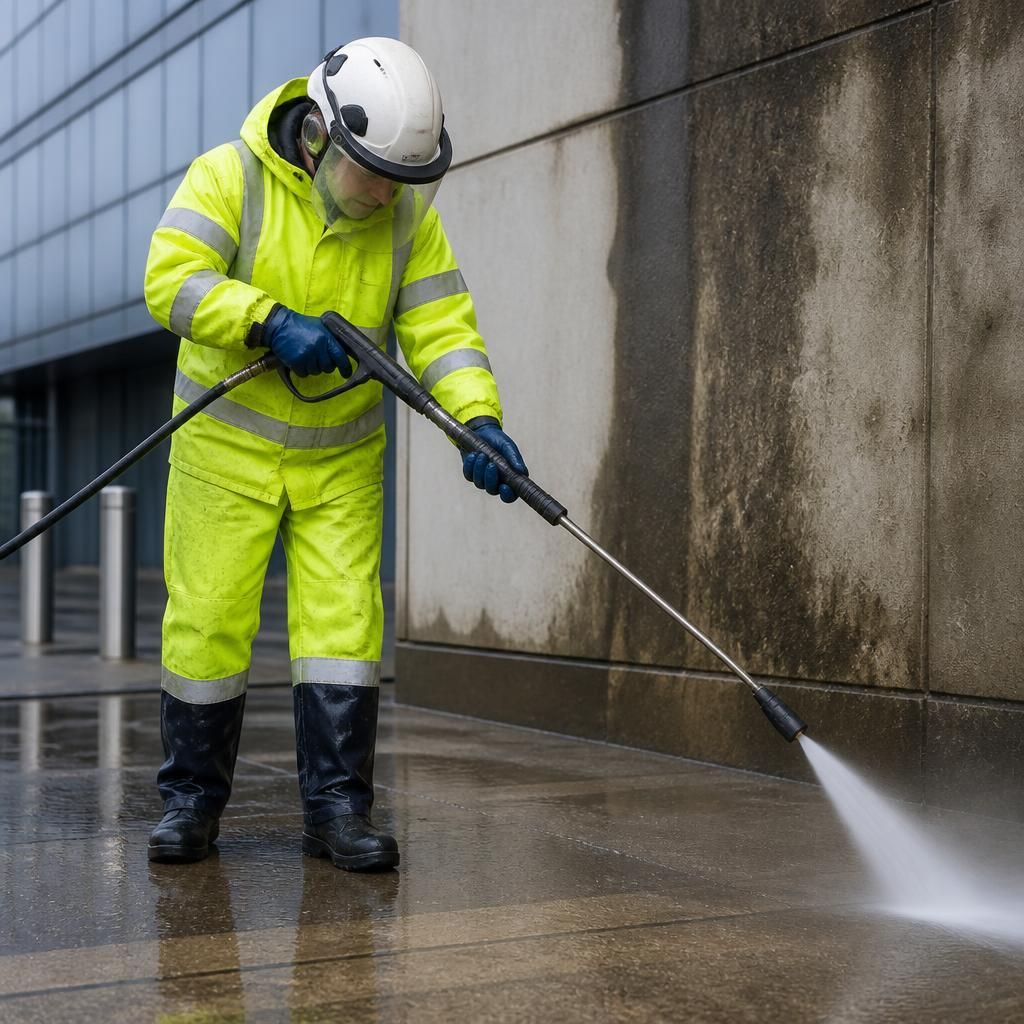
High-pressure water can penetrate skin and cause a serious injection injury, so never treat the spray as harmless. Wear waterproof protective clothing, slip-resistant safety footwear, suitable gloves, eye protection and hearing protection where required. Add a face shield, hard hat or task-specific respiratory protection when the site assessment identifies splash, falling debris or contaminated mist hazards.
Keep the exclusion zone clear of other people, hold the lance securely with both hands and never point it at yourself, another person or an animal. If an injection injury occurs, seek immediate medical attention even if the wound appears small or causes little pain.
Discuss Safe High-Pressure Concrete Cleaning
Need high-pressure concrete cleaning carried out safely on a commercial or industrial site? Discuss the surface condition, access requirements and runoff controls with Encanto Exterior Cleaning so the work can be planned and completed using an appropriate method.