
What are the most common contaminants found on concrete surfaces, and how can they affect the structural integrity over time?
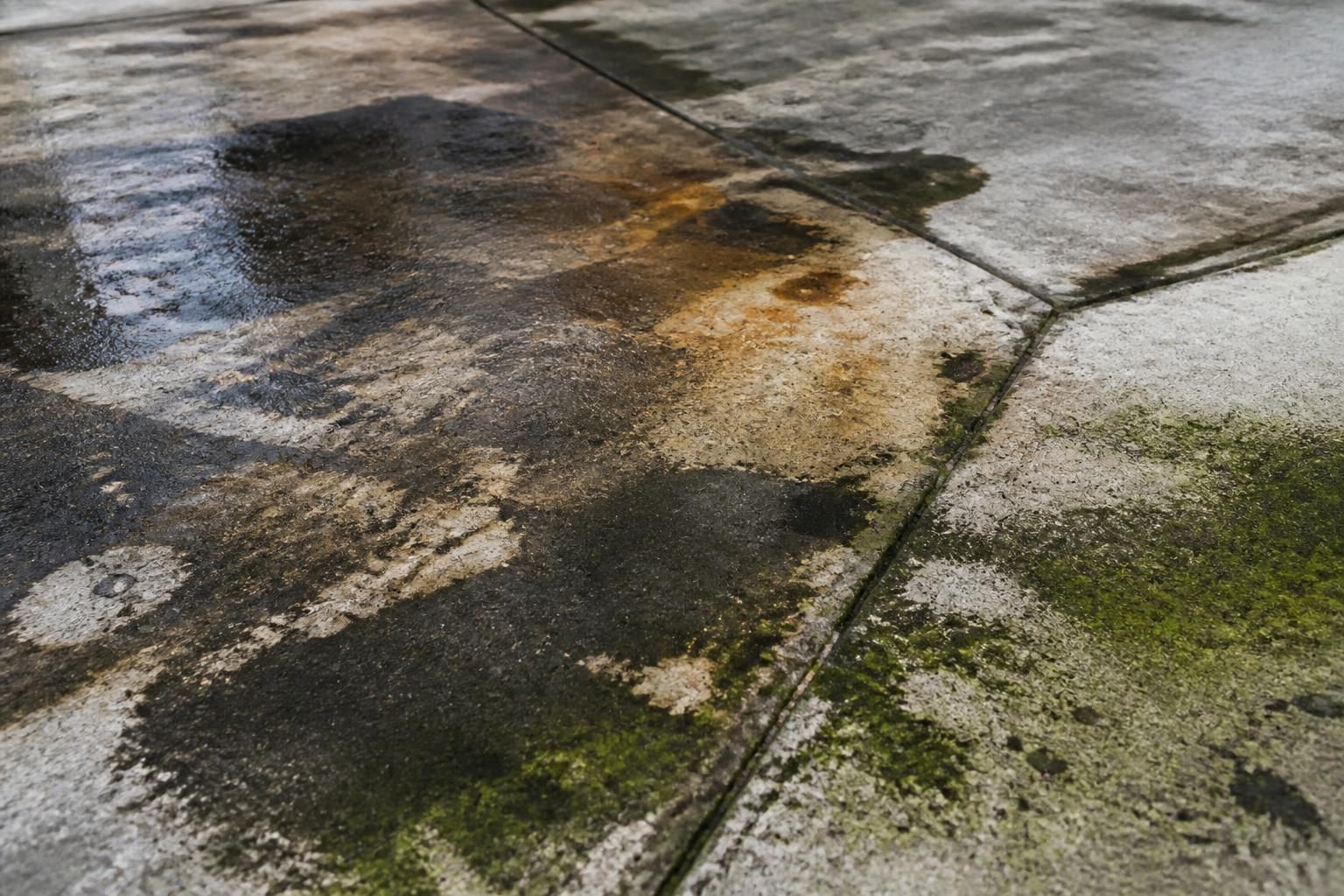
Common concrete contaminants include oil, salts, de-icing chemicals, algae, moss, organic debris, rust staining and atmospheric grime. If left in place, they can encourage moisture penetration, surface scaling, spalling, staining and reinforcement corrosion, gradually reducing the concrete’s durability and, where deterioration reaches embedded steel or load-bearing areas, its structural integrity.
The most common contaminants on concrete are oil and fuel, de-icing salts, general road grime, algae, moss, lichen, organic debris, rust staining, atmospheric pollution and chemical residues. They can affect more than appearance: by holding moisture against the surface, carrying chlorides into the concrete, blocking drainage or contributing to chemical and freeze-thaw damage, they may accelerate scaling, spalling and corrosion of embedded reinforcement. The risk depends on the concrete’s age, porosity, exposure, condition and whether it contains steel reinforcement.
Contamination does not automatically mean that concrete has lost its structural capacity. Many deposits are initially superficial and can be removed safely. However, persistent contamination can conceal defects or create conditions that allow deterioration to progress. Cleaning should therefore be considered alongside inspection, repairs and maintenance rather than as a substitute for a structural assessment.
Oil, diesel and hydraulic fluid
Vehicle and machinery fluids are common on loading yards, car parks, workshops, service areas and industrial sites. Concrete is porous, so oil can penetrate below the surface rather than remaining as a removable film. This can cause dark staining, retain dust and reduce surface traction, particularly when wet. Some petroleum products can also soften or disrupt surface treatments and may interfere with the adhesion of subsequent coatings or repairs.
Oil contamination is usually a durability and safety concern before it becomes a direct structural concern. Where it remains for a long period, repeated wetting, traffic and freeze-thaw cycles can worsen an already weak or cracked surface. Degreasing products, controlled hot-water cleaning or steam cleaning may be appropriate, but the method must prevent contaminated wash water entering drains or soil.
De-icing salts and other chlorides
Salt from gritted roads, de-icing operations and coastal exposure can be carried onto concrete by vehicles, footwear and runoff. Chlorides can migrate through pores and cracks. In reinforced concrete, they may break down the protective alkaline environment around steel reinforcement, allowing corrosion to begin. Rust occupies more volume than the original steel, which can generate internal pressure, cracking, delamination and eventual spalling.
Surface salts can also contribute to efflorescence, where pale crystalline deposits appear as moisture evaporates. Salt deposits are not always evidence of serious structural damage, but recurring efflorescence indicates that moisture and dissolved salts are moving through the concrete. Removing deposits without addressing water ingress, defective falls, leaking joints or poor drainage will usually provide only a temporary improvement.
Algae, moss, lichen and organic growth
Algae, moss and lichen are most prevalent on shaded, damp or poorly drained concrete. They create a slippery surface and retain moisture against the slab, paving, steps, walls or retaining structures. Moss can also work into joints and small cracks, while roots and organic matter may widen existing defects over time.
Biological growth rarely causes major structural failure by itself. Its importance is that it maintains damp conditions and can conceal cracking, open joints, surface scaling and trip hazards. Removing the growth, improving drainage and applying a suitable treatment can help prevent rapid regrowth. Pressure must be controlled carefully on aged or friable concrete, as aggressive cleaning can remove the cement-rich surface layer.
Soil, silt, leaves and other organic debris
Soil and silt commonly accumulate along edges, in expansion joints, around drainage channels and beneath stored materials. Leaves, bark and other organic debris decompose into acidic residues and retain water. Blocked channels and covered joints can cause standing water, increasing the likelihood of staining, frost damage and deterioration at edges.
These deposits are generally not structural contaminants in themselves, but prolonged ponding can expose concrete to repeated saturation and drying. In colder conditions, water in pores and cracks can freeze and expand, leading to surface scaling, flaking and progressive loss of material. Routine sweeping, removal of debris and maintenance of drainage are therefore important parts of concrete preservation.
Rust and metallic staining
Rust marks may come from external steelwork, corroding fixings, furniture, vehicles or contaminated runoff. A surface stain does not necessarily mean that the reinforcement inside the concrete is corroding. However, rust staining accompanied by cracking, rust-coloured seepage, hollow-sounding areas or pieces of loose concrete can indicate corrosion of embedded steel.
Where reinforcement corrosion is suspected, cleaning alone is not sufficient. The source of the water or chloride exposure must be identified, loose concrete may need to be removed, and the reinforcement and repair specification should be assessed by a suitably qualified professional.
Atmospheric grime, soot and traffic deposits
Dust, soot, rubber residue, airborne pollution and general road film accumulate on façades, bridges, pedestrian areas and hardstandings. These deposits are usually cosmetic, but they can retain moisture and obscure defects such as open cracks, failed sealant, surface delamination and leaking joints. Pollution can also combine with moisture to form acidic deposits, particularly on exposed surfaces that are not washed naturally by rain.
Regular removal helps maintain visibility of the concrete condition and prevents contamination from becoming embedded. Cleaning should be matched to the substrate: lower-pressure washing, steam or a suitable detergent may be safer than using high pressure alone, especially on older concrete or areas with exposed aggregate.
Chemical spills and incompatible materials
Concrete can be affected by acids, strong alkalis, solvents, fertilisers, cleaning chemicals and industrial process residues. Acids may dissolve or leach cement paste from the surface, leaving a rough, weakened or aggregate-exposed finish. Certain chemicals can cause softening, discolouration or expansion, while repeated exposure may attack joints and adjacent materials.
The exact substance matters. Unknown residues should not be treated with an untested detergent or mixed with other chemicals. A suitable method requires identification of the contaminant, review of the concrete’s condition and, where necessary, a small test area. Safety data and appropriate containment should be considered before cleaning.
How contamination progresses into concrete damage
- Moisture retention: moss, dirt, oil and organic matter hold water against the surface and slow drying.
- Chloride ingress: de-icing salts can travel through pores and cracks to embedded reinforcement.
- Freeze-thaw action: saturated concrete can suffer internal pressure when trapped water freezes, causing scaling and cracking.
- Corrosion-related expansion: rusting reinforcement expands and can force the surrounding concrete to crack and spall.
- Surface erosion or chemical attack: acids and abrasive deposits can remove cement paste and expose aggregate.
- Defect concealment: heavy deposits can hide cracks, failed joints, hollow areas and drainage problems until deterioration is more advanced.
Cleaning and inspection considerations
Before cleaning, the surface should be checked for cracks, spalling, delamination, exposed reinforcement, failed joints, unstable edges and drainage defects. The contaminant should be identified so that the cleaning process removes it without damaging the concrete or spreading pollution. A controlled test patch is useful where the surface is old, decorative, previously coated or visibly deteriorated.
Pressure, temperature, nozzle selection, detergent and collection of wastewater all affect the result. Excessive pressure can erode the cement paste, enlarge cracks and dislodge already weakened concrete. Cleaning may reveal the true extent of deterioration, so loose material should not simply be washed away and overlooked. Any significant spalling, exposed steel, movement or load-bearing damage warrants assessment by a competent structural or concrete repair professional.
For commercial and industrial sites, the most effective approach is a planned maintenance cycle: remove oils and debris promptly, control moss and algae, keep drainage clear, manage de-icing residues, inspect recurring staining and record changes in cracking or surface loss. Early cleaning and targeted repairs can limit moisture and contaminant exposure, helping preserve concrete durability and reducing the chance that a manageable maintenance issue develops into a more extensive structural repair.
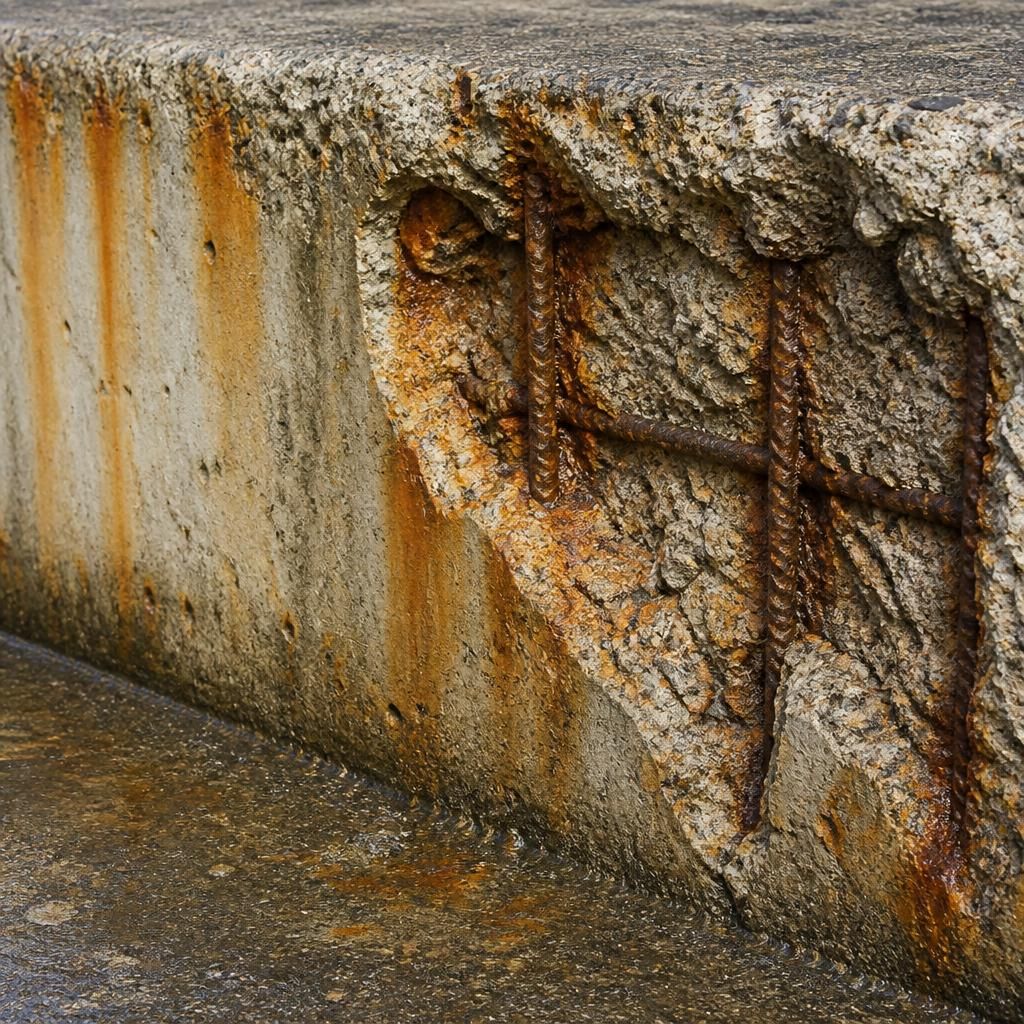
De-icing salts are among the most damaging contaminants found on reinforced concrete because dissolved chlorides can travel through pores and cracks to the embedded steel. Once the steel’s protective alkaline environment is compromised, corrosion may begin.
Corroding reinforcement expands inside the concrete, creating internal pressure that can cause cracking, delamination and spalling. Regular removal of salt deposits, together with clear drainage and inspection of recurring rust staining or cracking, helps limit chloride exposure. Cleaning alone cannot repair corroded reinforcement, so visible spalling or exposed steel should be assessed by a competent concrete repair professional.
Book a Concrete Cleaning and Condition Assessment
Arrange a concrete cleaning and condition assessment to identify contamination, surface deterioration and drainage issues before they become more costly to address. Our team can recommend a suitable cleaning method and advise when specialist concrete repairs or further inspection are needed.