
What are the environmental considerations and potential impacts when using high-pressure cleaning methods on concrete surfaces?
High-pressure cleaning of concrete can affect the environment through water consumption, contaminated runoff, cleaning chemicals, noise and damage to surrounding soil, drains or vegetation. These impacts can be reduced by selecting suitable pressure and detergents, containing and treating wastewater, preventing pollutants entering surface-water drains, and using water-efficient equipment where appropriate.
High-pressure cleaning of concrete can have environmental impacts through water consumption, contaminated runoff, cleaning chemicals, energy use, noise and physical damage to nearby surfaces or habitats. The main risk is not the pressure itself, but the mobilisation of pollutants such as oil, fuel, heavy metals, paint residues, rubber deposits, silt and biological growth, which can enter drainage systems, soil or watercourses if wastewater is not controlled.
Water use and wastewater management
Pressure washing can use substantial volumes of water, particularly on large car parks, yards, loading areas and concrete structures. Water-efficient equipment, correctly selected nozzles and an appropriate working pressure can reduce consumption without compromising cleaning quality. Pre-sweeping, scraping or vacuuming loose material before washing also reduces the time spent using water.
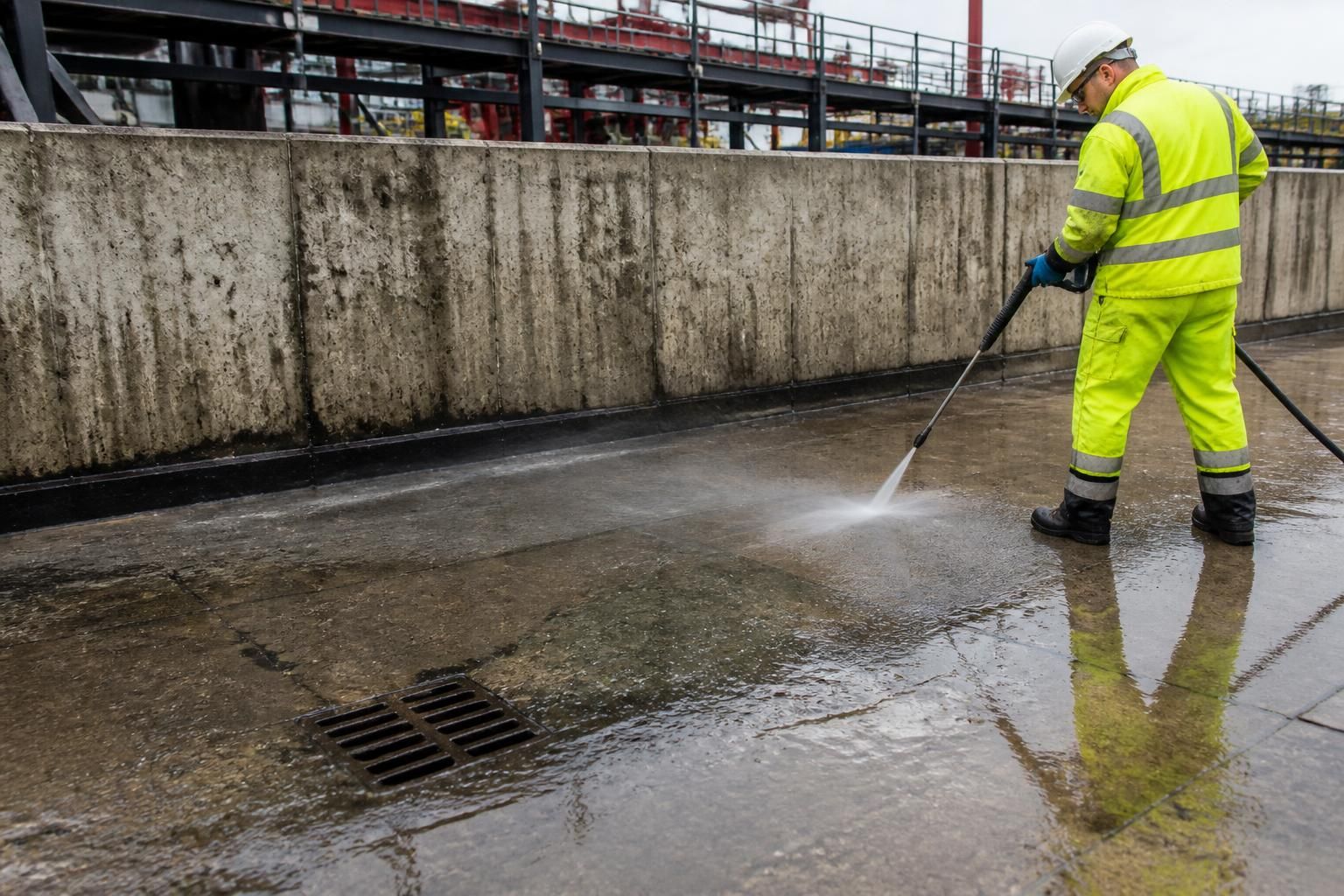
Used wash water should be treated as potentially contaminated rather than allowed to flow freely across the site. It may contain suspended solids, oils, detergents, hydrocarbons, algae, metals and other residues removed from the concrete. Operatives should identify nearby surface-water drains, foul drains, soakaways, watercourses and unmade ground before work begins. Surface-water drainage commonly discharges to the environment without the treatment provided by a foul-water system, so contaminated water must not be directed into it.
Depending on the site, wastewater may need to be contained, vacuumed, filtered, settled, treated or removed for suitable disposal. Discharge to a foul sewer may require the sewerage provider’s permission, particularly where detergents, oil or other trade effluent are present. Discharge to land, a surface-water drain or a watercourse can require additional controls or regulatory approval. A site-specific assessment should be completed where contamination is likely, and the relevant environmental and drainage requirements confirmed before cleaning starts.
Cleaning chemicals and runoff pollution
Detergents, degreasers, biocides and stain-removal products can improve the result, but they may increase the environmental hazard of the wastewater. The least hazardous effective product should be selected, used at the manufacturer’s recommended dilution and prevented from reaching vegetation, soil, drains and watercourses. Product labels and safety data sheets should be checked for aquatic toxicity, disposal requirements and any restrictions on use.
Biocidal treatments need particular care because they are intended to control living organisms and can harm aquatic life if they enter drainage or watercourses. Chemical application should be limited to areas where it is necessary, with suitable dwell-time control and complete recovery or rinsing of residues. Chemicals should never be mixed unless the manufacturer’s instructions specifically permit it, and containers must be stored securely to prevent spills.
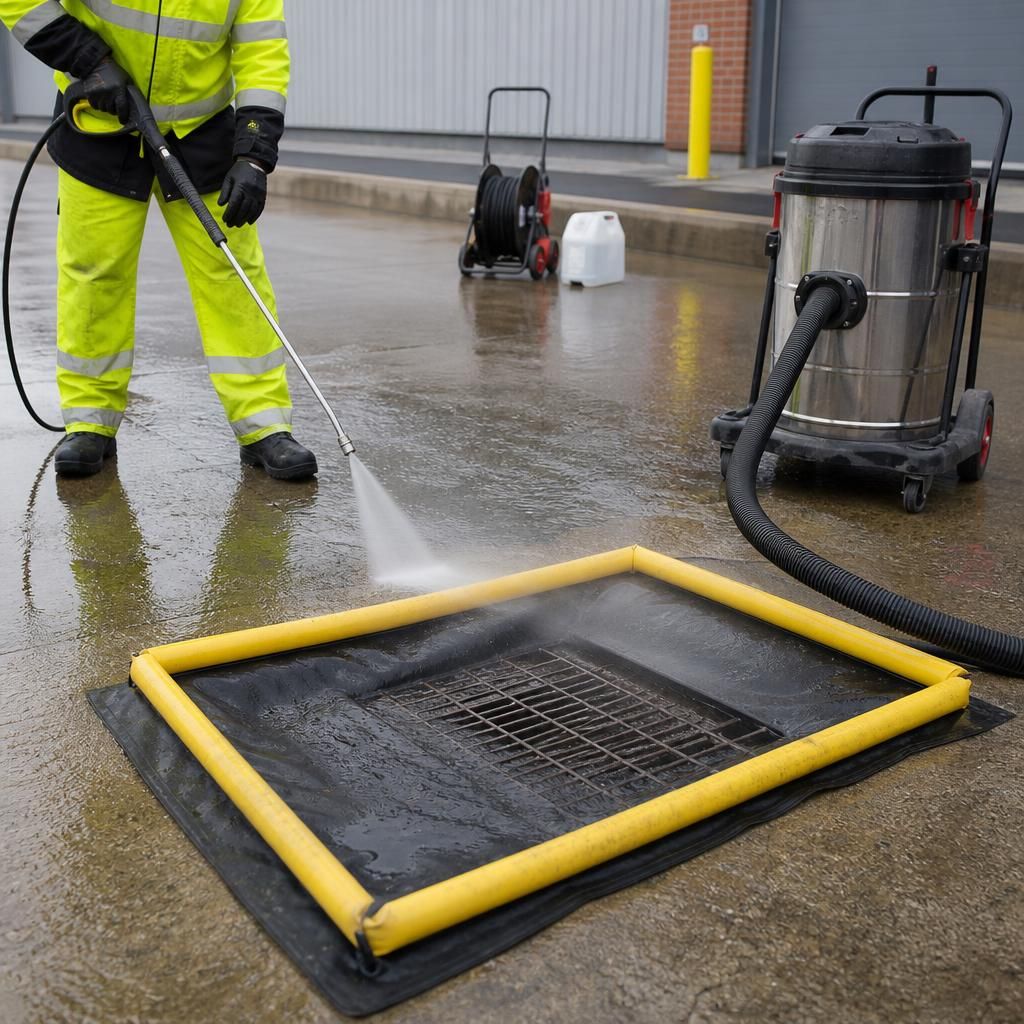
Oil- or fuel-contaminated concrete requires additional planning. Pressure washing can break deposits into smaller droplets and spread them beyond the original contaminated area. Absorbent materials, drain covers, booms, bunding and a wet vacuum can help contain the wash water. Where there is a significant oil release or an unknown contaminant, cleaning should pause until the substance has been identified and an appropriate waste and pollution-control method agreed.
Effects on soil, vegetation and wildlife
Uncontrolled spray and runoff can damage grass, planted areas, tree roots and soil organisms. Detergents, high pH products, oils and concentrated residues may cause leaf scorch, alter soil conditions or harm aquatic organisms. Fine sediment can also smother drainage channels and enter ponds or streams.
Work areas should be isolated from planted zones where practical. Sensitive vegetation can be protected with suitable covers, although covers must not trap chemical residues or create unsafe conditions. Spray should be directed at the concrete rather than surrounding surfaces, and wastewater should be collected before it can migrate across the site. Cleaning near open water, ecological features or protected areas requires a more cautious method and may need timing restrictions or specialist advice.
Energy use, noise and air quality
Pressure washers, pumps, vacuum recovery systems and water-treatment equipment consume energy. Fuel-powered equipment can produce exhaust emissions, while all powered systems may generate noise that affects occupants, neighbours and nearby wildlife. Electric equipment may reduce local exhaust emissions where a suitable power supply is available, but its overall environmental benefit still depends on the source of electricity and how efficiently the equipment is operated.
Noise can be reduced by choosing equipment appropriate to the task, maintaining pumps and engines, avoiding unnecessary operation and scheduling disruptive work within agreed site hours. Steam cleaning and other methods may have different energy and noise profiles, so the best option should be based on the surface, contaminant, access arrangements and wastewater controls rather than pressure alone.
Risk of damage to the concrete and surrounding materials
Excessive pressure, an unsuitable nozzle, prolonged cleaning in one location or incorrect technique can erode the cement paste, expose aggregate, enlarge cracks and remove surface treatments. Damage to joints, sealants, painted markings, coatings, brickwork, render, asphalt, drainage channels and façade materials can create additional waste and require remedial work. Removing a protective surface can also make the concrete more vulnerable to future water penetration, staining and freeze-thaw damage.
Environmental protection therefore includes avoiding unnecessary surface damage. The cleaning method should be tested in an inconspicuous area, with pressure, distance, flow rate, nozzle type and detergent adjusted to the condition of the concrete. Lower-impact methods such as mechanical sweeping, controlled low-pressure washing, steam cleaning or targeted spot treatment may be preferable to full high-pressure cleaning where contamination is localised or the surface is vulnerable.
Practical measures for more sustainable concrete cleaning
- Inspect the concrete, identify contaminants and assess nearby drains, soil, vegetation and watercourses before work begins.
- Remove loose debris and absorb free oil or fuel before introducing water.
- Use the lowest effective pressure and water flow, and avoid prolonged cleaning in one area.
- Select biodegradable or lower-hazard detergents only where they are necessary and suitable for the contaminant.
- Use drain protection, bunding, barriers and vacuum recovery to contain wastewater.
- Filter or settle solids and arrange compliant disposal or approved discharge of recovered water.
- Keep chemicals, fuels and dirty equipment away from drainage routes, and maintain a spill response kit on site.
- Protect nearby planting, soil and water features from spray and contaminated runoff.
- Use well-maintained, water-efficient equipment and consider electric equipment where site conditions allow.
- Record the products used, wastewater arrangements and any incidents so future maintenance can be planned more effectively.
A responsible concrete-cleaning plan balances the required appearance and hygiene standard with water conservation, pollution prevention and protection of the substrate. For larger commercial or industrial sites, the method statement should define the cleaning technique, chemical controls, drainage protection, wastewater recovery and disposal arrangements before work starts. This approach reduces environmental risk while also helping to preserve the concrete and avoid unnecessary repeat cleaning.
The main environmental risk when high-pressure cleaning concrete is contaminated wastewater entering surface-water drains, soil or nearby watercourses. Pressure washing can mobilise oil, fuel, detergents, sediment, metals and biological residues that were previously trapped in the surface.
Before cleaning, identify drainage routes and protect them with drain covers, bunding or temporary barriers. Remove loose debris and absorb oil where possible before using water. Recover wash water with a wet vacuum or suitable collection system, then filter, settle, treat or dispose of it in accordance with the site’s drainage requirements. Do not discharge polluted water to a surface-water drain, soakaway or watercourse without confirming that the discharge is permitted.
Using the lowest effective pressure and only the necessary detergent reduces both water consumption and the amount of contamination released. Nearby planting, soil and open water should also be protected from spray and runoff throughout the work.
Arrange an Environmentally Responsible Concrete Cleaning Assessment
Arrange an environmentally responsible concrete cleaning assessment to review the surface, contamination, drainage routes and wastewater controls before work begins. We can recommend a suitable cleaning method and recovery plan for your site.