
What are the best pressure settings for cleaning concrete surfaces effectively?
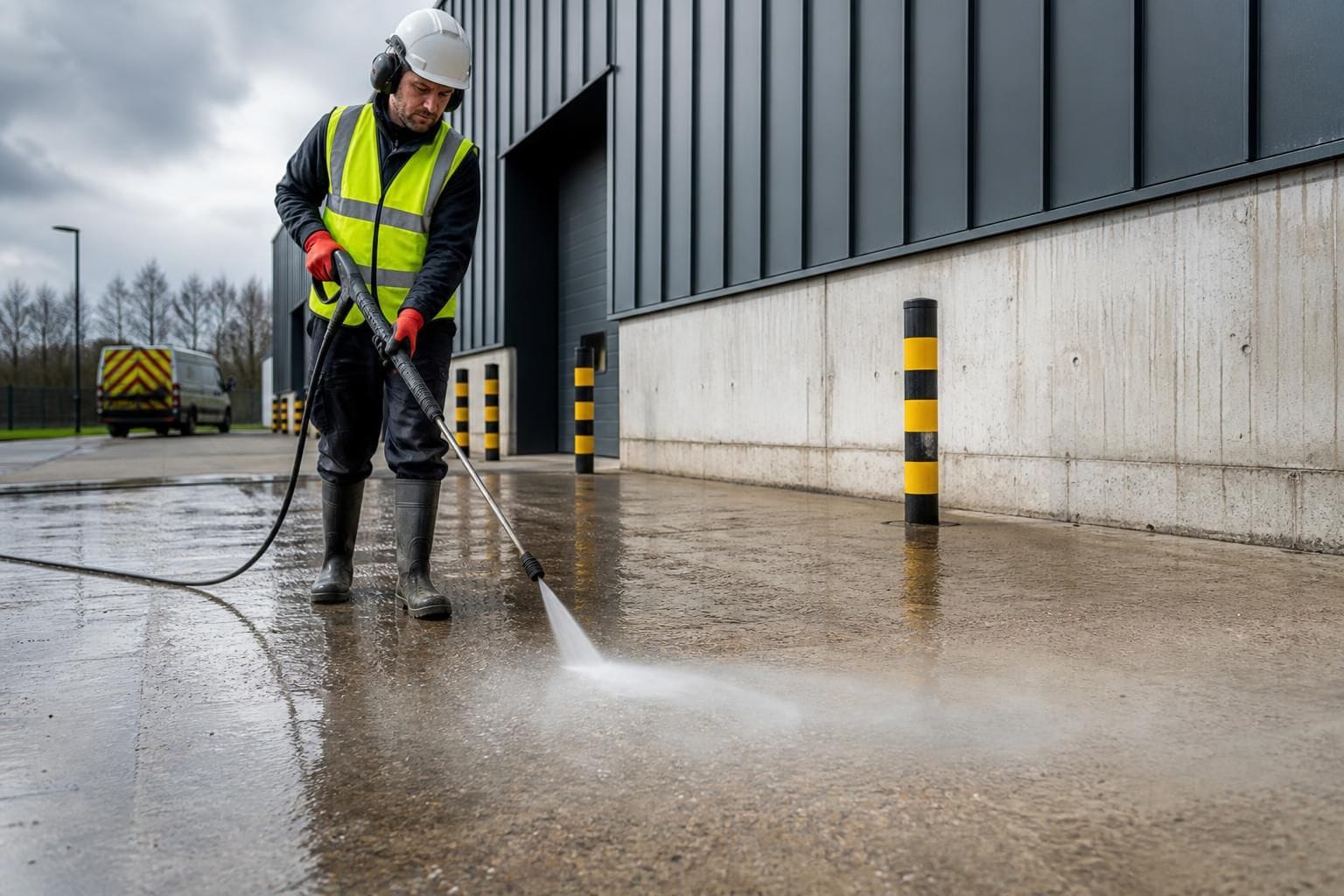
For sound, unsealed concrete, a pressure setting of approximately 2,000–3,000 psi (140–207 bar) is generally effective for removing dirt, algae and surface grime. Start at the lower setting with a wide fan spray, keep the nozzle moving, and reduce the pressure for aged, cracked, decorative or sealed concrete to avoid etching and surface damage.
For sound, unsealed concrete, a working pressure of approximately 2,000–3,000 psi (140–207 bar) is usually effective for removing general dirt, algae, traffic film and surface grime. Begin at the lower end of this range with a wide fan spray, then increase pressure only when necessary. Aged, cracked, decorative, painted, coated or sealed concrete normally requires less pressure and a more controlled cleaning method to prevent etching, spalling, coating failure or other surface damage.
The correct setting depends on more than the machine’s maximum pressure. Concrete age, strength, porosity, surface finish, contamination and previous repairs all affect how much pressure the surface can tolerate. The pressure shown on the equipment may also differ from the pressure delivered at the nozzle, particularly when using long hoses, specialist attachments or restricted water flow. Settings should therefore be treated as a starting point rather than a fixed specification.
Indicative pressure ranges
- Sound, unsealed concrete: approximately 2,000–3,000 psi (140–207 bar) for routine cleaning, subject to a preliminary test.
- Aged, weathered or porous concrete: often around 1,500–2,500 psi (103–172 bar), using careful technique and avoiding concentrated spray.
- Decorative, stamped, exposed aggregate or coloured concrete: use a reduced setting, commonly below 2,000 psi (138 bar), because the finish or aggregate may be loosened.
- Sealed, painted or coated concrete: use the lowest effective pressure, often below 1,500 psi (103 bar), and confirm that the coating is suitable for pressure washing.
- Cracked, spalled or structurally weakened concrete: pressure washing may not be appropriate until the condition has been assessed and defective areas repaired.
These ranges are not a substitute for testing. Even a relatively low pressure can damage concrete when the nozzle is held too close, the spray is concentrated in one place or the operator uses a narrow rotating jet. Conversely, a suitable surface may need a cleaning detergent, hot water or additional dwell time rather than a higher pressure setting.
Choose the spray pattern carefully. A wide fan nozzle distributes the force over a larger area and is generally the safest starting point. Keep the lance moving at a consistent speed and maintain an even distance from the surface. Avoid stopping over one spot, spraying directly into joints or directing water at damaged edges. Narrow pencil jets and aggressive rotary nozzles can clean quickly, but they concentrate energy and are more likely to leave visible lines, create etching or dislodge weak material. They should only be used where the concrete has been tested and the operator can control the result.
Test before cleaning the full area. Select an inconspicuous section and clean a small representative patch. Check the result once the concrete has dried, as wet surfaces can conceal lightening, streaking and changes in texture. Look for exposed aggregate, scarring, loose cement paste, displaced jointing material and differences between cleaned and adjoining areas. If damage appears, increase the distance, widen the spray pattern, reduce the pressure or change the cleaning method.
Use pressure alongside the right cleaning process. Loose debris should be swept or removed before washing. Organic growth, oil, chewing gum, rust and construction residues may not respond equally to water pressure alone. A detergent or specialist treatment can loosen contamination so that it can be removed at a lower pressure. Apply any chemical in accordance with its instructions, allow the required dwell time without letting it dry, and rinse thoroughly. Oil-contaminated water and chemical runoff must be contained and disposed of in line with site and environmental requirements.
Concrete cleaning also depends on water flow. A machine with high pressure but insufficient flow may clean slowly and leave uneven results, while excessive flow can create unnecessary runoff. Surface cleaners can help produce a more uniform finish across large slabs, car parks and paved areas because they control spray height and reduce visible striping. Edges, kerbs, steps and heavily marked sections still require controlled lance work.
For commercial sites, the setting should be selected according to the weakest relevant surface, not simply the most heavily soiled area. Protect nearby doors, glazing, vents, electrical equipment, vehicles, landscaping and vulnerable joints before work begins. Keep pedestrians and other workers outside the operating area, and use suitable eye, hearing and slip protection. High-pressure water can inject into damaged skin, dislodge fragments and force contaminants into drainage systems, so safe operating procedures are essential.
In practice, the most reliable approach is to start with the lowest pressure likely to work, use the widest suitable spray pattern, maintain a consistent distance and increase the setting gradually only where the concrete remains sound. For large or mixed-surface areas, a site assessment and test clean can establish the safest pressure, nozzle, detergent and equipment combination before the main work starts.
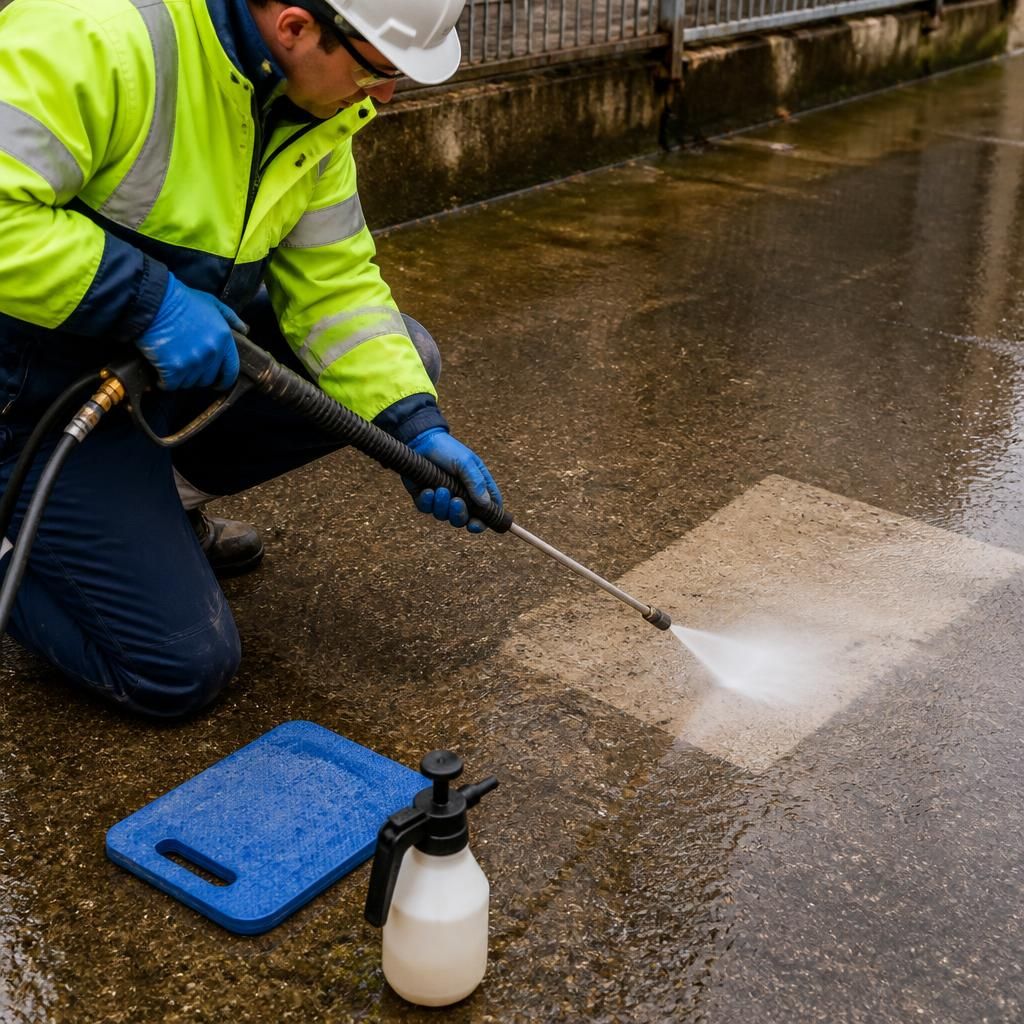
The safest pressure setting for concrete is established by testing a small, inconspicuous area before cleaning the full surface. Begin with the lowest effective pressure and a wide fan spray, keeping the nozzle moving at a consistent distance. This reduces the risk of etching, streaking, exposed aggregate and damage to weak joints or repaired sections.
Allow the test area to dry before assessing the result, as wet concrete can conceal changes in texture or colour. If dirt remains, increase the pressure gradually or use a suitable detergent and dwell time rather than immediately switching to a narrow, aggressive jet. Decorative, sealed, cracked or weathered concrete should be treated more cautiously and may require a lower-pressure method.
Arrange a Concrete Cleaning Assessment
Arrange a concrete cleaning assessment with Encanto Exterior Cleaning to identify the safest pressure, nozzle and cleaning method for your surface. We can test representative areas and recommend a suitable approach for large, mixed or vulnerable concrete surfaces.