
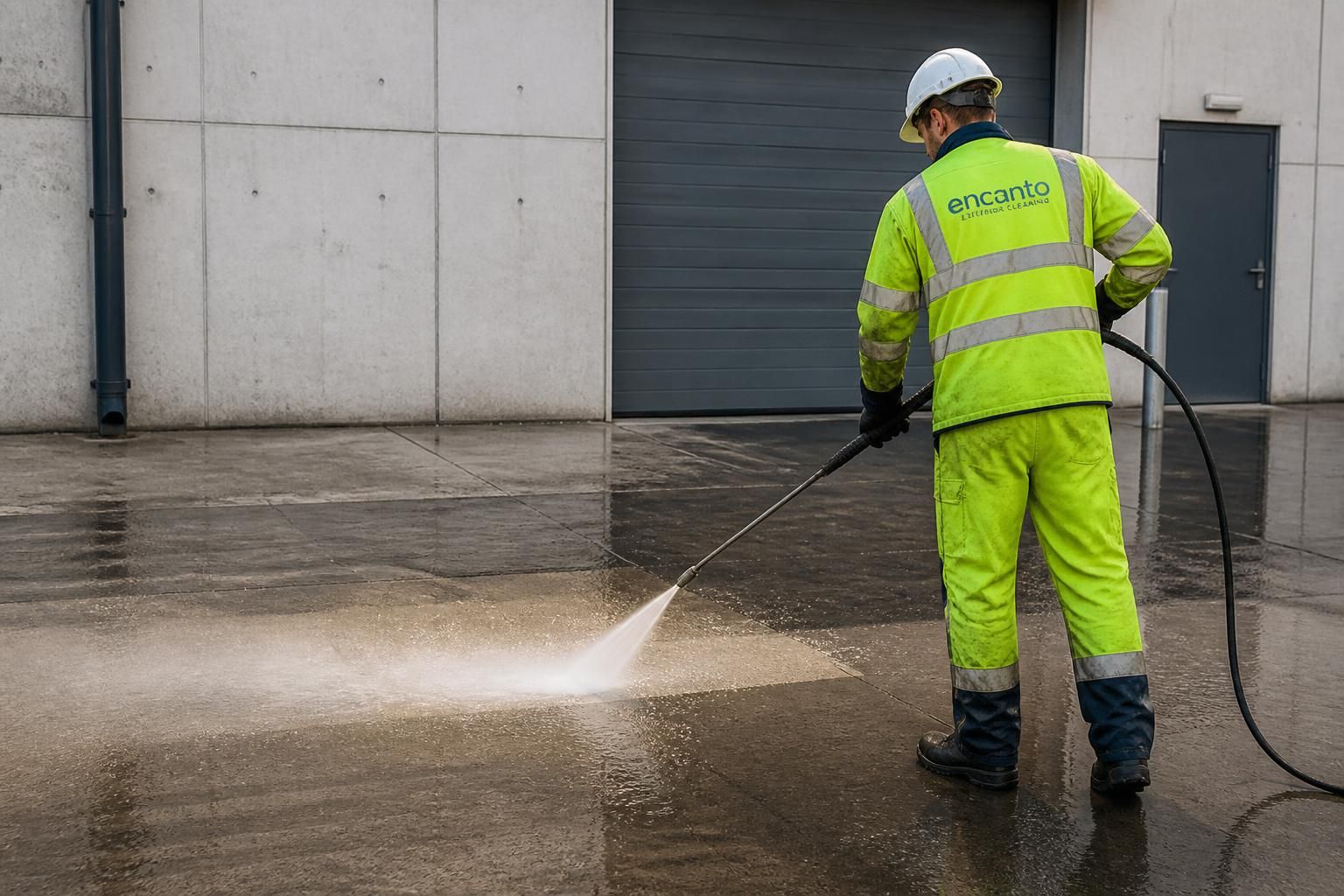
How often should concrete surfaces be cleaned to maintain their appearance and durability?
Most concrete surfaces should be professionally cleaned at least annually, with high-traffic, heavily weather-exposed or frequently contaminated areas cleaned more often. Promptly removing oil, algae, grime and chemical spills, alongside regular inspections, helps prevent staining, surface deterioration and slip hazards.
Most concrete surfaces should receive a thorough professional clean at least once a year to maintain their appearance and durability. High-traffic areas, exposed sites and surfaces affected by oil, algae, de-icing salts, construction dust or other contaminants may need cleaning more frequently. Promptly removing harmful deposits, rather than waiting for heavy build-up, helps prevent staining, surface wear, biological growth and slip hazards.
The appropriate interval depends on how the concrete is used, where it is located and what it is exposed to. A lightly used concrete path at a well-maintained commercial property may remain in good condition with annual cleaning and routine sweeping. By contrast, loading bays, service yards, pedestrian areas, car parks and refuse collection points are exposed to heavier soiling and usually benefit from a planned maintenance programme with additional spot cleaning between scheduled visits.
Factors that affect cleaning frequency
- Foot and vehicle traffic: Frequent use works dirt into the surface and increases the likelihood of tyre marks, chewing gum, grease and other staining. Entrances, walkways, ramps and parking areas generally require closer monitoring than low-use areas.
- Weather exposure: Rain, shade and persistent dampness encourage algae, moss and lichen growth. Freeze-thaw conditions can make existing cracks and surface defects more vulnerable, particularly where water and contaminants are allowed to remain.
- Nearby activities: Construction, manufacturing, catering, waste handling and vehicle maintenance can introduce cement residue, dust, oil, hydraulic fluid and chemical deposits. These contaminants should be removed as soon as they are identified.
- Drainage and shade: Poor drainage leaves water standing on the concrete, while shaded elevations dry slowly. Both conditions increase the chance of organic growth and recurring discolouration.
- Surface condition: Older, porous or weathered concrete absorbs contaminants more readily than dense, well-maintained concrete. Damaged or previously over-cleaned surfaces may also need a gentler, more carefully controlled approach.
A practical maintenance schedule
An annual deep clean is a useful baseline for many commercial and industrial premises. It can be combined with routine inspections and regular sweeping to remove loose grit before it becomes embedded. Sites with persistent contamination or heavy public use may require planned cleaning at shorter intervals, while isolated spills, fresh graffiti, algae growth and bird fouling should be dealt with immediately rather than held for the next scheduled visit.
Seasonal inspections are particularly useful. In spring, cleaning can remove winter grime, organic growth and residues left by de-icing treatments. During warmer and wetter periods, shaded areas should be checked for algae and moss. Before winter, drainage channels, entrances, ramps and other areas exposed to standing water should be inspected so that contamination and slip risks are not allowed to worsen.
Cleaning frequency should also be reviewed after a building project, change of occupier, change in traffic levels or alteration to drainage. Construction dust and cement residues can bond strongly to concrete if they are left in place. Similarly, an area that has changed from occasional use to regular deliveries may need a more frequent maintenance cycle.
Signs that concrete needs cleaning
- Dark patches, green growth or a slippery film on walkways and ramps.
- Oil, fuel, grease or rubber marks in parking areas and service yards.
- White mineral deposits, cement residue or construction dust.
- Persistent staining around bins, loading areas, drains or catering facilities.
- Reduced surface appearance at entrances and other prominent customer-facing areas.
- Water pooling, blocked drainage points or contamination being carried into buildings.
Visible dirt is not the only reason to arrange cleaning. Some contaminants continue to affect the concrete after the surface appears only lightly soiled. Oil and chemicals can penetrate porous areas, while organic growth can retain moisture and make the surface more slippery. Grit and abrasive particles can also contribute to gradual wear when they are repeatedly driven or walked over.
Cleaning method matters as much as timing
Concrete should be assessed before work begins so that the cleaning method matches its age, finish and condition. Pressure washing can remove general grime, algae and some staining efficiently, but excessive pressure, an unsuitable nozzle or prolonged working in one area can damage weak, cracked or friable concrete. Steam cleaning or a suitable detergent may be more appropriate for certain grease deposits, biological growth or sensitive locations.
Oil and chemical contamination may require pre-treatment, controlled agitation and appropriate recovery of wastewater. Cleaning alone may not remove every mark from deeply penetrated or chemically altered concrete, and aggressive treatment can make the surface worse. A competent contractor should inspect the area, identify the contaminant, protect adjacent surfaces and use the least aggressive effective process.
After cleaning, check whether the concrete dries evenly and whether stains, growth or drainage issues return quickly. Rapid recontamination may indicate a leak, poor falls, blocked drainage, nearby vehicle activity or an untreated source of organic growth. Addressing that underlying cause can extend the period between professional cleans and reduce the need for harsh treatments.
For most properties, the best approach is an annual professional clean supported by routine inspections and immediate treatment of spills or hazardous deposits. Increase the frequency for high-traffic, shaded, damp or heavily contaminated areas, and review the schedule whenever site use or environmental conditions change. This planned approach keeps concrete presentable while helping to protect its texture, drainage performance and long-term serviceability.
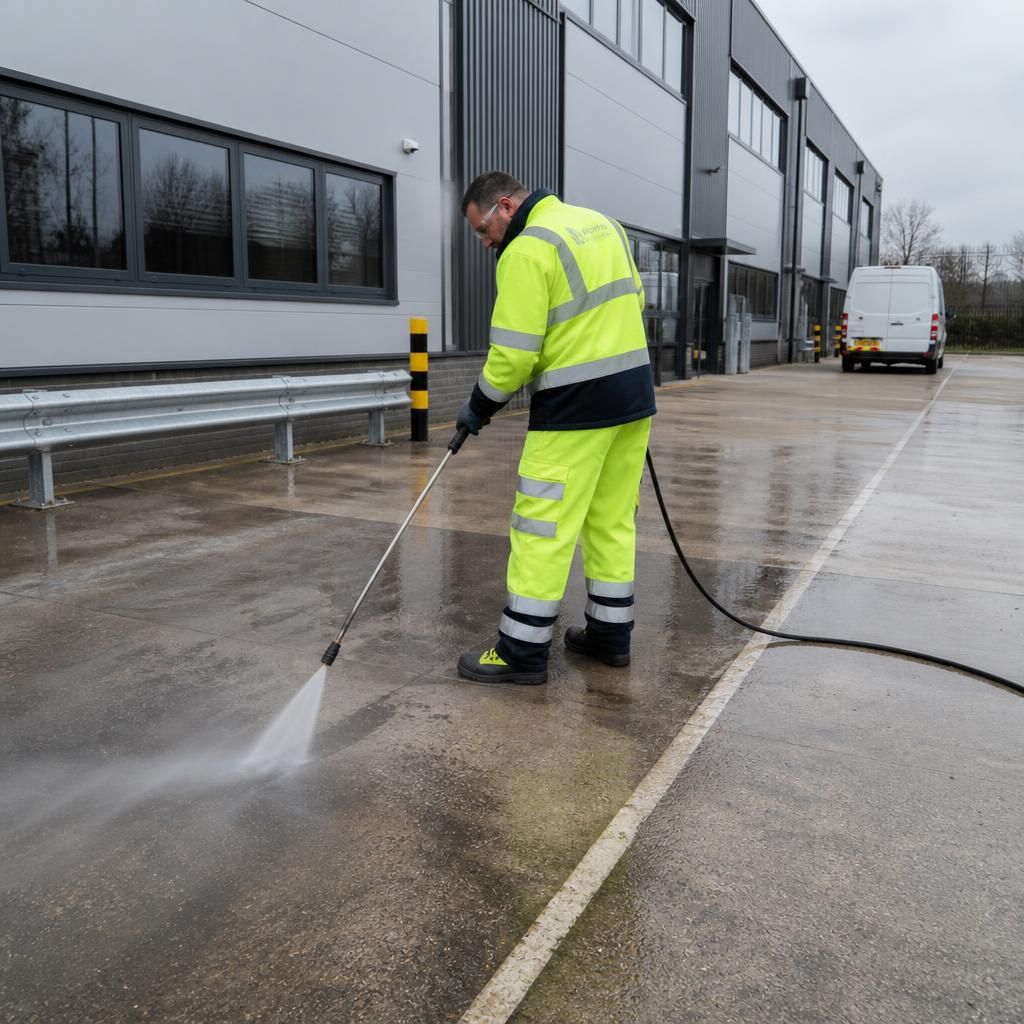
Most commercial concrete surfaces should have a professional clean at least annually, but high-traffic, shaded or heavily contaminated areas often need more frequent attention. Regular cleaning removes oil, algae, tyre marks, grit and other deposits before they become embedded, helping to preserve the surface and reduce slip risks.
The cleaning schedule should reflect how the area is used and exposed. Entrances, pedestrian routes, car parks, loading bays and refuse areas require closer monitoring than lightly used paths. Arrange prompt treatment for oil or chemical spills, fresh graffiti, bird fouling and persistent organic growth rather than waiting for the next planned visit.
Seasonal inspections can identify recurring problems such as standing water, blocked drainage or algae in shaded areas. If contamination returns quickly after cleaning, the underlying cause should be addressed so the concrete remains presentable and durable without relying on unnecessarily aggressive cleaning.