
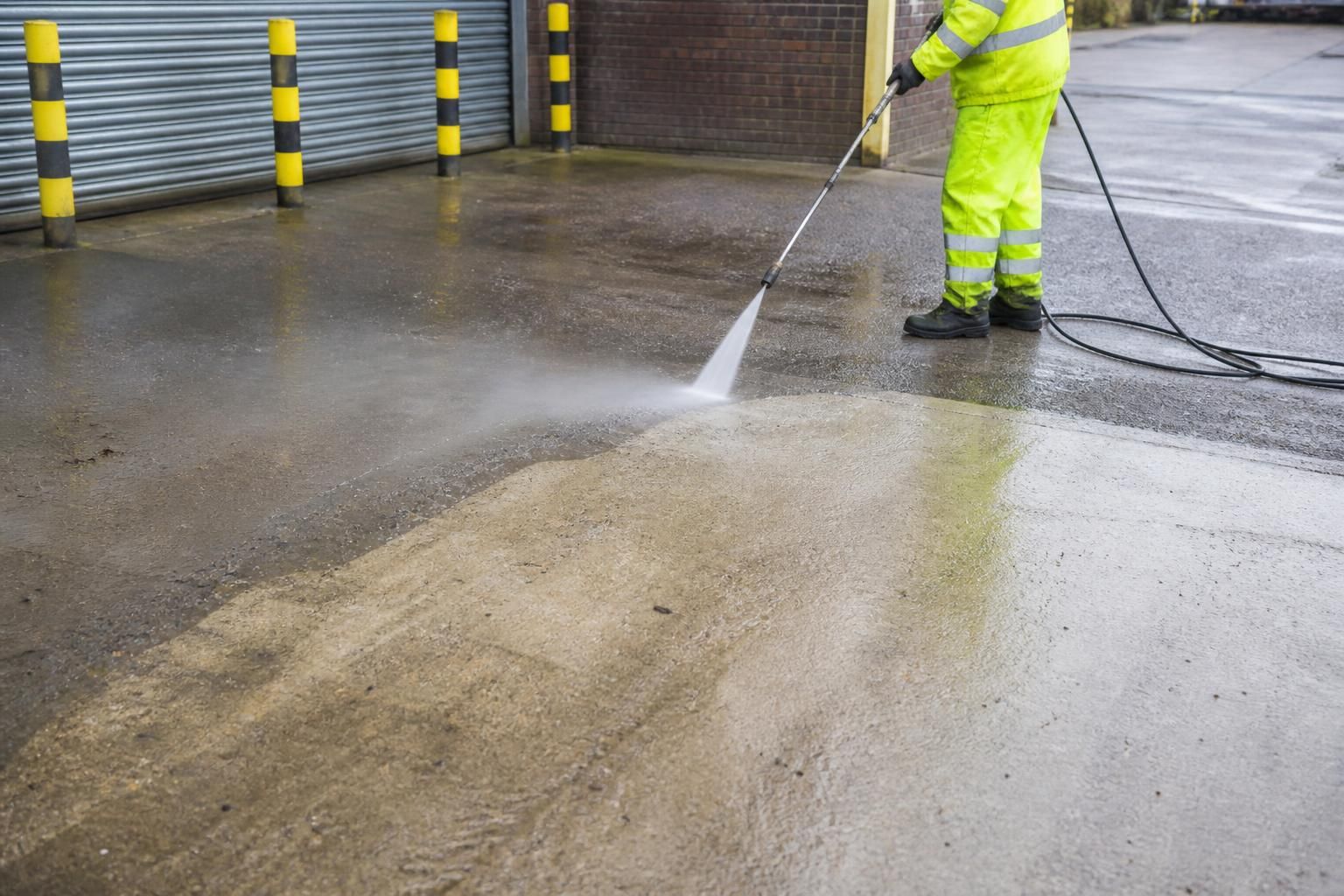
How frequently should concrete surfaces be subjected to pressure washing to maintain their appearance and integrity?
For most commercial concrete surfaces, professional pressure washing once a year is suitable for maintaining appearance and preventing contaminant build-up, while busy car parks, walkways and loading areas may need more frequent cleaning. Inspect the surface regularly and adjust the schedule for oil, algae, de-icing residue or heavy traffic; excessive cleaning or excessive pressure can erode the cement paste and accelerate surface damage.
For most commercial concrete surfaces, professional pressure washing once a year provides a practical maintenance interval. This frequency is usually sufficient to remove accumulated dirt, algae, moss, traffic film, oil residues and de-icing deposits before they significantly affect appearance or surface performance. However, the correct schedule depends on the location, level of use, exposure to contaminants and condition of the concrete. Busy car parks, loading areas, service yards and pedestrian routes may require more frequent cleaning, while lightly used or sheltered areas may remain satisfactory for longer.
Pressure washing should be treated as part of a planned cleaning and inspection programme rather than a fixed treatment applied at identical intervals. Regular visual checks can identify when cleaning is becoming necessary and whether the concrete is suitable for further pressure washing. Look for darkening, organic growth, slippery deposits, oil staining, tyre marks, efflorescence, loose surface material, cracking and areas where water is no longer draining properly. Cleaning before contaminants become heavily embedded generally allows the work to be completed more effectively and with less aggressive pressure.
Annual cleaning is commonly appropriate for general commercial areas. External concrete around offices, retail premises, managed property and lightly trafficked communal areas often benefits from a scheduled annual clean. This helps maintain a consistent appearance, reduces the build-up of biological growth and removes surface contamination that can become more difficult to treat over time. The timing can be arranged to suit the site, but cleaning is often particularly useful after periods of wet weather or following winter exposure to road salt, grit and general debris.
High-traffic areas may need cleaning several times within a year. Car parks, pedestrian approaches, delivery yards, refuse collection points and loading bays are exposed to more frequent soiling and mechanical wear. Vehicle oils, hydraulic fluids, rubber deposits, food waste, mud and airborne pollution can accumulate quickly in these locations. A maintenance clean may therefore be needed more often than an annual deep clean, especially where the appearance of the site affects visitors, tenants or customers, or where contamination creates a slip or hygiene concern.
Cleaning frequency should also reflect the type of contaminant present:
- Algae, moss and other organic growth: Shaded, damp or poorly drained concrete may need more frequent treatment because biological growth can return quickly. Removing it promptly helps reduce slipperiness and limits the spread of growth into joints and surface defects.
- Oil and fuel: Spills should be dealt with as soon as practicable rather than left until the next scheduled wash. Pressure washing alone may not remove deeply absorbed oil, so an appropriate detergent, controlled dwell time and suitable recovery method may be required.
- De-icing salt and grit: These residues should be removed after the winter period where practical. Salt can contribute to corrosion of embedded steel where the concrete is cracked or permeable, while grit can remain abrasive under vehicle and foot traffic.
- Dust, mud and construction residue: Construction sites and newly completed developments may need a clean at handover and further washes as surrounding works continue.
- Graffiti and isolated staining: Localised problems should be treated when they occur rather than pressure washing the whole area unnecessarily.
More frequent washing is not automatically better for concrete. Concrete is made up of cement paste and aggregate, and excessive pressure, repeated passes or an unsuitable nozzle can erode the surface paste. This may expose aggregate, create streaking, produce a rough or powdery finish and make the surface more vulnerable to future staining and freeze-thaw damage. Older, weathered, repaired or already weakened concrete generally requires a more conservative approach than sound, dense concrete.
Before deciding on the interval, the surface should be assessed for cracks, spalling, delamination, exposed aggregate, failed joint sealant, previous pressure-washing marks and areas of surface scaling. Defects should not be mistaken for dirt. Pressure washing will not repair structural movement, damaged joints or concrete that is breaking down, and directing high-pressure water into cracks can worsen local damage or drive water into vulnerable areas. Where defects are present, cleaning should be coordinated with repairs and any necessary access or drainage controls.
The cleaning method should be adjusted to the condition of the concrete and the type of soiling. A competent contractor will normally begin with an inspection and, where appropriate, a small test area. Water pressure, nozzle selection, distance, angle, flow rate and the speed of movement all affect the result. Lower pressure with controlled passes is often preferable to using maximum pressure, particularly on aged or decorative concrete. Detergents can improve the removal of oil, biological growth and traffic film, but they must be compatible with the surface and managed so that contaminated run-off does not enter drains or watercourses.
For commercial sites, a useful approach is to combine a planned annual deep clean with condition-based interim cleaning. Keep high-use areas under observation, remove spills promptly, clear leaves and silt from drainage routes and arrange targeted treatment when contamination appears. This avoids allowing one heavily soiled section to dictate an unnecessarily intensive wash across the entire site.
After pressure washing, the concrete should be allowed to dry so that remaining staining, surface defects and areas of poor drainage can be identified. Where appropriate, sealing may help reduce future water and contaminant penetration, but it is not suitable for every concrete surface and should only be applied to clean, sufficiently dry material after compatibility has been confirmed. A maintenance record noting the date, areas cleaned, contaminants found, defects observed and any recommended follow-up work can make future scheduling more reliable.
In practical terms, inspect commercial concrete throughout the year, arrange professional pressure washing annually as a baseline, and shorten the interval for heavily trafficked, shaded, contaminated or safety-critical areas. Extend it only where the surface remains clean, sound and safe. This balanced approach maintains appearance without subjecting the concrete to unnecessary cleaning or avoidable surface wear.
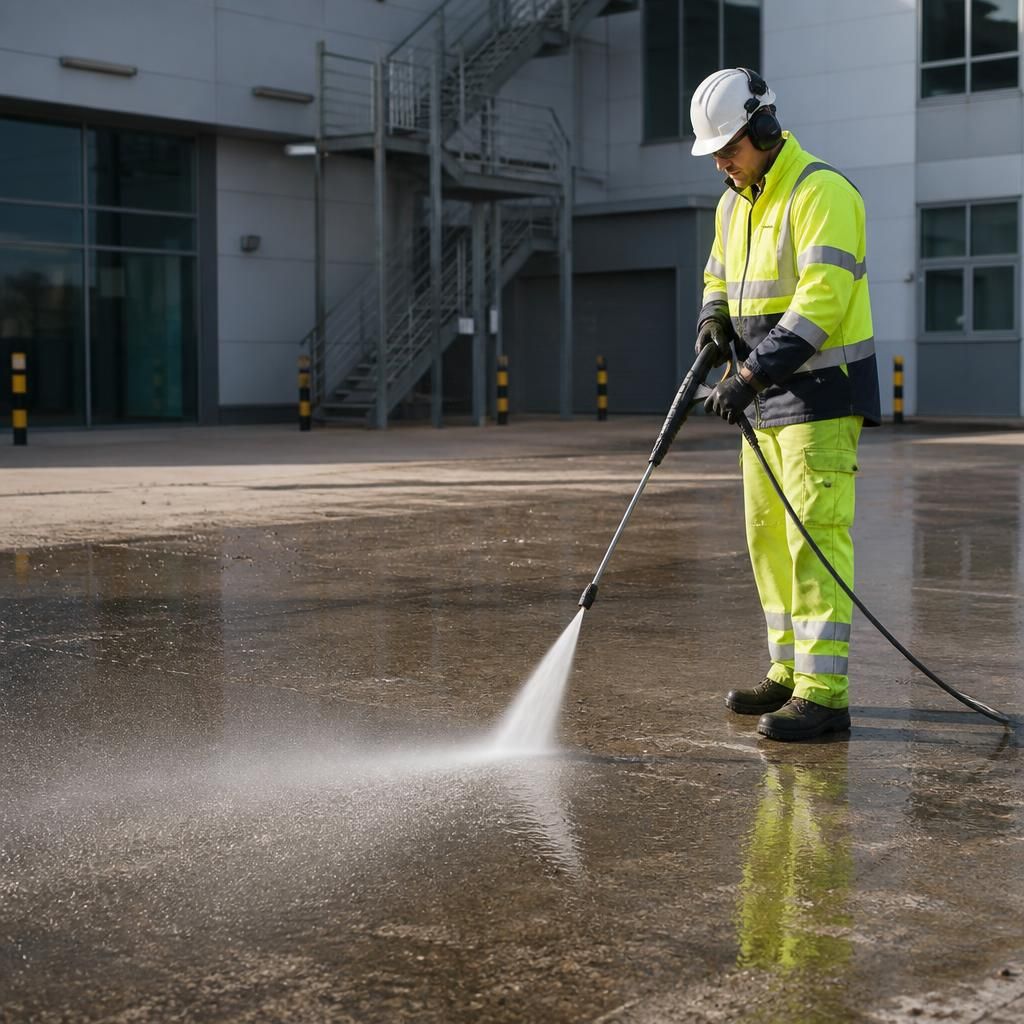
Most commercial concrete surfaces benefit from professional pressure washing once a year, but high-traffic or heavily contaminated areas may need cleaning more often. Car parks, loading bays, pedestrian routes and service yards should be inspected regularly for oil, algae, tyre marks, mud and de-icing residue.
Cleaning should be based on the surface condition rather than a rigid timetable. Promptly treating spills and organic growth helps prevent staining and slippery deposits, while using controlled pressure avoids unnecessary erosion of the concrete surface. Older, cracked or weathered concrete should be assessed before washing and cleaned using a suitably conservative method.