
How does power washing remove tough stains from concrete surfaces?
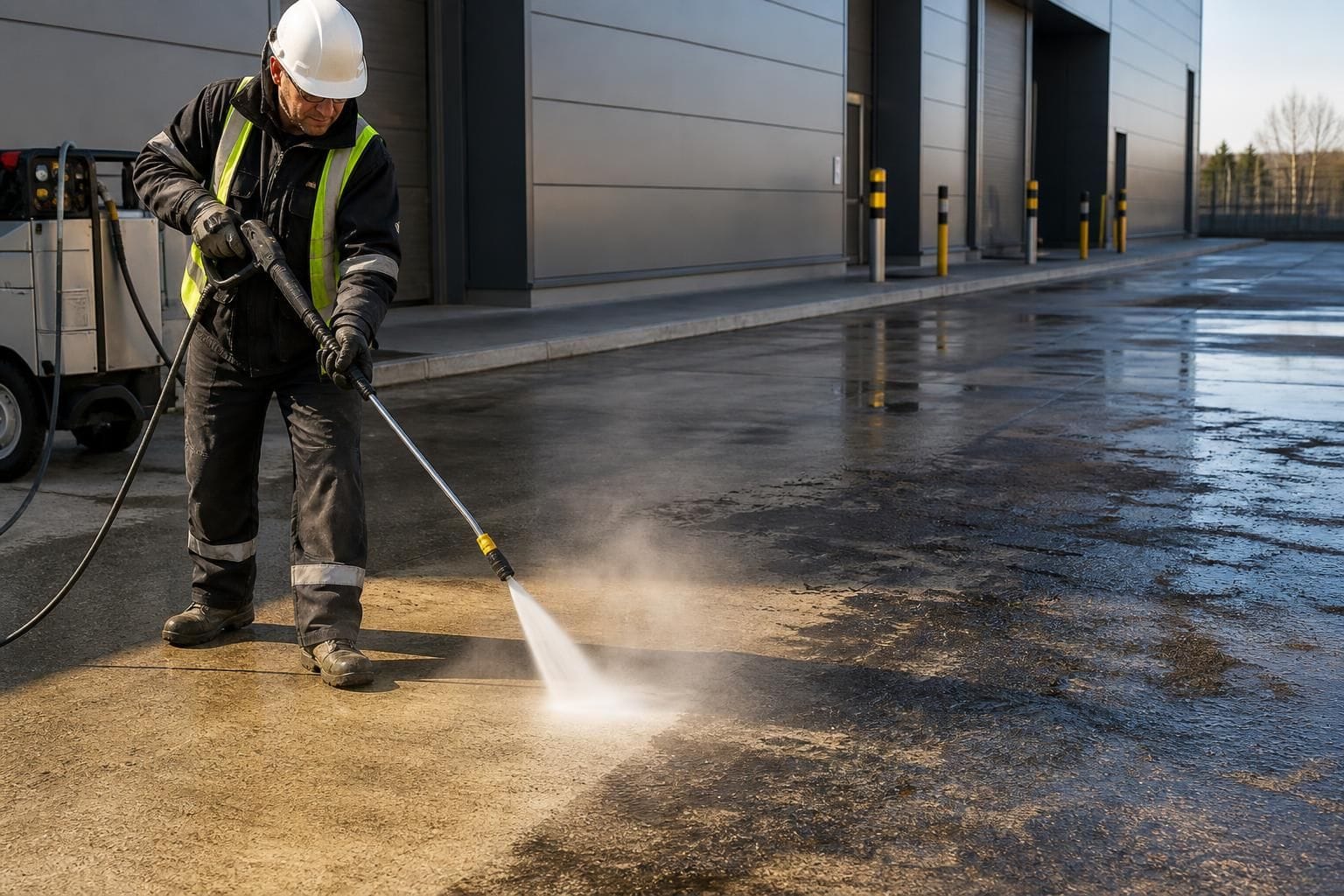
Power washing removes tough stains from concrete by directing pressurised water into the surface pores, loosening and flushing away ingrained dirt, oil, algae, moss, tyre marks and other contaminants. The correct pressure, nozzle, water temperature and cleaning detergent are selected to break down the stain without damaging the concrete surface.
Power washing removes tough stains from concrete by combining pressurised water, controlled impact and, where appropriate, a suitable detergent or hot-water treatment. The water penetrates the concrete’s surface pores and textured profile, breaks the bond between the contaminant and the substrate, then flushes the loosened material away. The pressure, nozzle, water temperature, cleaning solution and working technique must be matched to the type and condition of the concrete so that staining is removed without causing surface damage.
Concrete is porous, so contaminants can become embedded rather than remaining only on the surface. Foot traffic, vehicle movement, weathering and repeated contamination can drive oil, dirt and organic growth into the surface. Power washing is effective because it reaches the irregular areas and pores that routine brushing may not clean thoroughly. It can restore a more consistent appearance to car parks, service yards, paths, loading areas, façades and other external concrete surfaces.
The cleaning process normally begins with an inspection. The condition of the concrete, the age and type of the stain, surface coatings, joints, drainage and nearby materials are assessed before equipment is selected. Small test areas help establish whether the surface can tolerate the proposed pressure and whether a detergent or hot water is needed. This is particularly important for older, cracked, previously repaired or heavily weathered concrete, which may have a weaker surface layer.
Different stains respond to different cleaning methods:
- Oil and grease: These contaminants can repel cold water and leave dark patches after an initial rinse. A suitable degreasing detergent helps break down the oily residue, while hot water can improve the release of bonded grease. The area is then rinsed thoroughly so that dissolved contamination is not redistributed across the concrete.
- Algae, moss and organic growth: Low-pressure application of an appropriate biocidal or cleaning treatment can loosen growth and reduce the risk of aggressive cleaning. Controlled rinsing removes the dead material from the surface and textured areas. Persistent growth may require follow-up treatment because spores and moisture can remain in shaded locations.
- Tyre marks and rubber deposits: These are usually concentrated around turning points, entrances, ramps and loading areas. A suitable detergent and controlled pressure help lift the rubber without excessively abrading the concrete surface.
- Soil, dust and general traffic film: Surface dirt is often removed with a consistent cleaning pass using a fan-pattern nozzle or specialist surface-cleaning equipment. Even coverage helps prevent stripes and patchy results.
- Rust and mineral staining: Pressure washing alone may not remove deeply bonded rust or mineral deposits. A compatible specialist treatment may be required, followed by careful rinsing and management of the resulting wash water.
- Paint, cement residue and construction deposits: These materials may need mechanical agitation, a controlled cleaning solution or a more targeted technique. Excessive pressure can mark the surrounding concrete or expose aggregate, so the treatment should be selected according to the deposit and the substrate.
The nozzle also affects the result. A wider spray pattern distributes impact across a larger area and is generally more suitable for routine cleaning. A narrower pattern concentrates force and can be useful for localised deposits, but it requires greater control because holding it too close or stationary can etch the concrete. Specialist rotary surface cleaners can provide more even coverage over large areas and help reduce visible cleaning lines.
Pressure is only one part of the process. Excessive pressure can remove the cement-rich surface layer, expose aggregate, create ridges or leave a visibly etched finish. It can also force water into cracks, joints and vulnerable edges. Effective contractors therefore work with the lowest practical pressure and adjust the distance, spray angle and speed of movement rather than relying on force alone. Cleaning in overlapping passes produces a more uniform finish, while keeping the nozzle moving prevents concentrated damage.
Pre-treatment is often what makes difficult cleaning more effective. A detergent or specialist chemical can soften oils, organic matter and other deposits before rinsing. The product must be compatible with the concrete and any surrounding surfaces, including brickwork, metalwork, painted finishes, glazing, planted areas and drainage systems. It should be given suitable contact time without being allowed to dry on the surface. Detergents do not replace proper rinsing: residues and loosened contaminants must be removed so they do not leave a film or cause further discolouration.
Hot-water power washing can be particularly useful for grease, oil and traffic-related deposits because heat reduces the viscosity of oily contamination and helps cleaning agents work more efficiently. Cold-water cleaning may be sufficient for loose dirt, dust, algae and general surface grime. The choice depends on the contaminant, access to drainage and the environmental controls required for the site.
Run-off management is an essential part of commercial concrete cleaning. Wash water may contain oil, detergents, silt, paint particles and other pollutants. It should not be allowed to enter surface-water drains or escape into planting beds and watercourses. Drain protection, collection, filtration or controlled disposal may be needed, particularly at car parks, industrial premises, construction sites and sites managed by local authorities. The cleaning plan should account for pedestrians, vehicles, nearby businesses and the safe movement of equipment.
Power washing cannot reverse every form of discolouration. Rust can chemically stain the concrete, oil may have penetrated deeply, and areas of differential weathering may remain visible after cleaning. Efflorescence, surface scaling and concrete deterioration are also not simply dirt problems. If the surface is delaminating, friable, cracked or structurally compromised, aggressive washing may worsen the condition. In these situations, cleaning should be limited to what the substrate can safely withstand, with repairs or specialist treatment considered separately.
After cleaning, the concrete should be inspected while it is drying. Wet surfaces can temporarily appear darker and may conceal remaining marks. Any persistent staining can then be assessed to determine whether a further targeted treatment is appropriate. Where suitable for the site, sealing may help reduce future oil penetration, water absorption and staining, but the concrete must be sufficiently clean, dry and sound before a sealer is applied. A sealer is not a substitute for removing existing contamination or correcting drainage and maintenance issues.
For large commercial and industrial areas, the most reliable approach is a planned combination of inspection, stain-specific pre-treatment, controlled power washing, effective rinsing and responsible run-off management. This removes tough deposits while protecting the concrete’s surface profile, adjacent materials and site users, helping the cleaned area remain safer and easier to maintain.
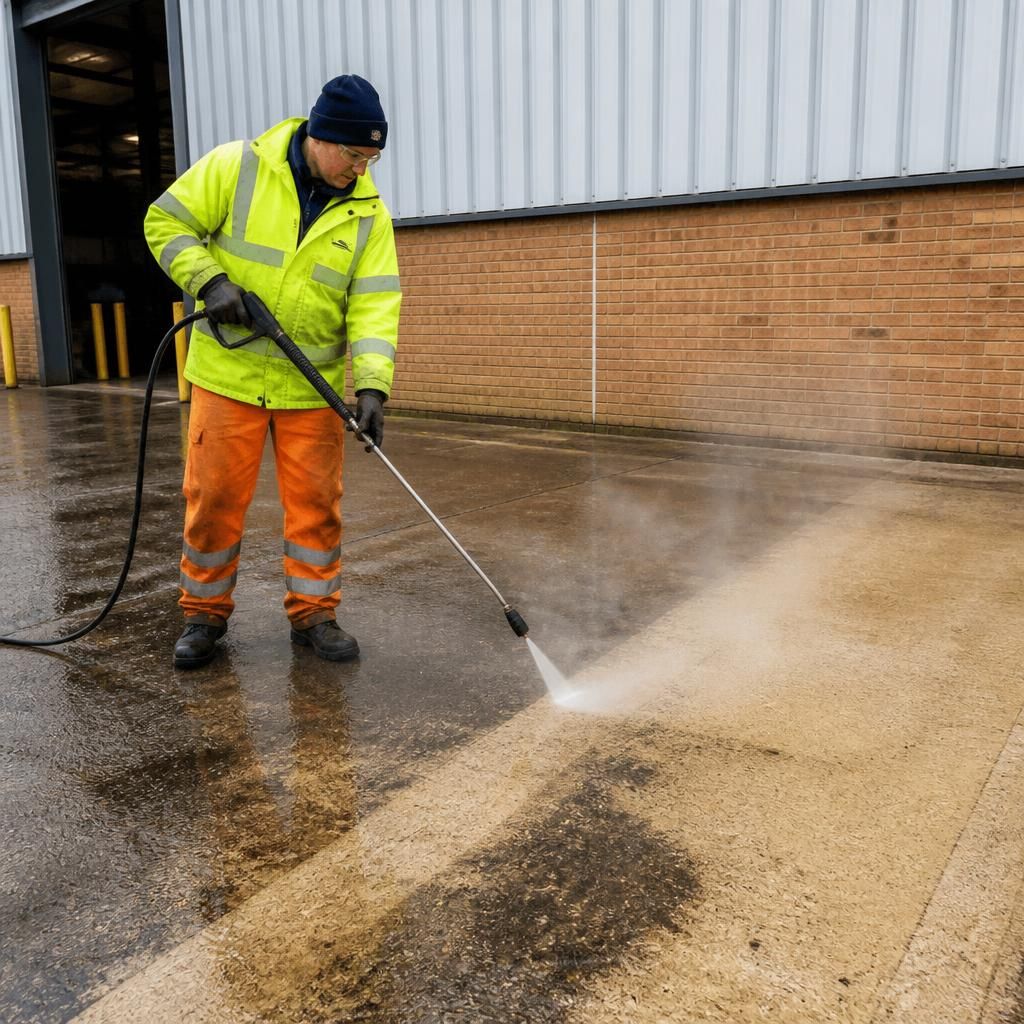
Hot-water power washing combined with a suitable degreasing detergent is particularly effective against oil and grease stains on concrete. Heat helps loosen oily deposits, while the detergent breaks their bond with the porous surface so they can be lifted and rinsed away more effectively than with cold water alone.
The treatment should be tested first and kept moving across the surface to avoid patching or etching. Thorough rinsing and responsible collection of the wash water are essential, as dissolved oil, detergent and sediment must not enter surface-water drains or nearby planting areas.