
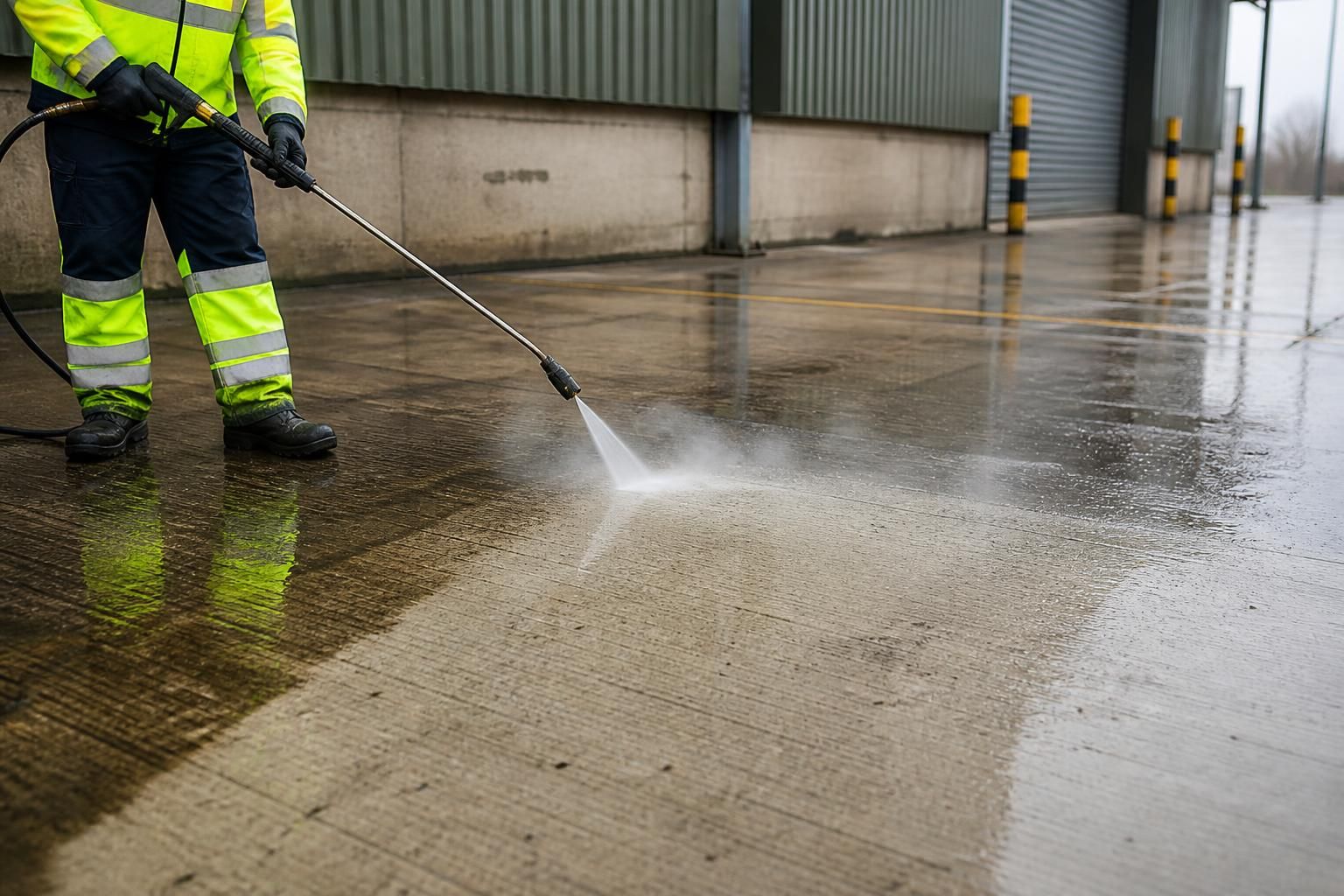
How can the selection of a power washing detergent enhance the effectiveness of concrete cleaning procedures?
Selecting the right power washing detergent helps break down oil, grease, algae, traffic film and embedded dirt that water pressure alone may not remove from concrete. A detergent suited to the surface and contaminant improves cleaning efficiency, reduces the pressure and dwell time required, and helps achieve a more consistent finish while limiting the risk of surface damage.
The correct power washing detergent enhances concrete cleaning by chemically loosening contaminants before they are rinsed away. Water pressure provides the mechanical action, while the detergent breaks down oil, grease, traffic film, organic growth and ingrained dirt. This combination can produce a more uniform clean with less reliance on extreme pressure, reducing the likelihood of surface damage and improving productivity on commercial and industrial sites.
Detergent selection should be based on the contaminant, concrete condition and surrounding environment. There is no single product suitable for every concrete cleaning procedure. A detergent that works well on oily loading bays may be unsuitable for a decorative, sealed or acid-sensitive surface. Before cleaning, the surface should be assessed for its age, porosity, existing coatings, repairs, joints and nearby materials such as painted metal, glass, brickwork, landscaping and drainage channels.
Alkaline detergents for oil and grease
Alkaline degreasers are generally effective against petroleum residues, cooking oils, hydraulic fluid, tyre marks and other greasy deposits. They work by emulsifying or lifting oily contamination so that it can be flushed from the concrete rather than redistributed across the surface. This makes them useful for car parks, service yards, plant areas, warehouses, workshops and delivery zones.
Heavily contaminated areas may require the detergent to be applied at a suitable dilution and left to dwell briefly before agitation or pressure washing. The product must not be allowed to dry on the concrete, as dried residue can leave streaks and may be more difficult to remove. Excessively strong alkaline products can affect certain coatings, joint materials and adjacent finishes, so dilution and compatibility instructions should be followed.
Surfactant-based detergents for general dirt
Surfactants reduce the surface tension of water, helping it spread across porous concrete and penetrate the film holding dust, soil and traffic grime in place. They are useful for routine maintenance where the contamination is widespread but not dominated by heavy oil or biological growth. A suitable surfactant can improve coverage, reduce patchiness and help detach dirt from textured or broom-finished concrete.
Biocidal or fungicidal treatments for organic growth
Algae, moss, lichen and other biological deposits may need a treatment designed specifically for organic contamination. These products help weaken or kill growth before rinsing, making removal more effective and reducing the need for aggressive pressure. They are particularly relevant to shaded paths, retaining areas, external stairways, façades and surfaces that remain damp.
Biocidal treatments must be used responsibly. Run-off should be controlled, nearby planting protected and the product applied only in accordance with its label and relevant site procedures. Removing visible growth without addressing persistent dampness, poor drainage or shade may lead to recurrence, so the wider condition of the area should also be considered.
Acidic cleaners require particular caution
Acidic products can dissolve cementitious residues, efflorescence, rust staining and some mineral deposits. However, they may etch or discolour concrete, attack exposed aggregate, damage metal fittings and harm surrounding stone or masonry. They can also affect jointing materials and coatings. They should therefore be reserved for suitable applications following a controlled assessment and test clean. Acid should never be selected simply because a stain is difficult; the likely cause of the deposit and the concrete’s finish must be established first.
How detergent improves the cleaning process
- Identify the contamination. Inspect the area and distinguish between oil, organic growth, rust, cement residue, tyre marks, soil and general atmospheric dirt. Mixed contamination may require more than one treatment, applied in a controlled sequence.
- Check compatibility. Review the concrete’s finish and any sealer or coating. Test the proposed detergent on an inconspicuous area and allow the result to be assessed after rinsing and drying.
- Prepare the site. Remove loose debris, protect vulnerable adjacent surfaces and prevent contaminated wash water from entering unsuitable drains or watercourses.
- Apply evenly. Use the recommended dilution and ensure complete coverage. Application equipment should suit the product and the scale of the area.
- Allow suitable dwell time. The detergent needs time to react with the contaminant, but it must remain wet and controlled. Dwell time should be adjusted for temperature, porosity and the condition of the concrete.
- Agitate where appropriate. Brushing or mechanical agitation can help release embedded dirt, particularly on textured concrete and in heavily soiled areas.
- Rinse methodically. Use a pressure and nozzle selection appropriate to the surface, working in an organised pattern and directing the wash water towards the planned recovery or drainage point.
- Inspect and repeat selectively. A second application to isolated staining may be safer and more effective than increasing pressure across the whole area.
Using detergent does not remove the need for correct pressure settings. Excessive pressure can strip surface paste, expose aggregate, enlarge existing defects or force water into joints and cracks. Conversely, insufficient rinsing can leave detergent, loosened soil or oily residue behind. The best result comes from balancing chemical action, dwell time, agitation, water temperature, flow and pressure rather than relying on any one element.
On older or damaged concrete, cleaning should begin conservatively. Cracks, spalled areas, weak edges and previously repaired sections may respond differently from sound concrete. Sealed or coated surfaces also need separate consideration because a detergent may soften, dull or undermine the finish. Where the surface has a specialist coating, the coating manufacturer’s compatibility guidance should take priority.
Commercial work also requires attention to run-off and the wider site. Detergent and removed contaminants can affect vegetation, drainage systems, watercourses and downstream treatment processes. Wash water should be contained, collected or directed through an appropriate treatment arrangement where necessary. Product safety data, control-of-substances procedures and site-specific environmental requirements should be reviewed before work begins. Operators should use the required protective equipment and avoid mixing chemicals unless the manufacturer expressly permits it.
For routine maintenance, a mild, compatible detergent is often preferable to a highly aggressive product. Stronger chemistry should be reserved for contamination that genuinely requires it, with dilution controlled carefully and the surface monitored throughout the process. This approach gives more predictable results, protects the concrete and reduces chemical consumption.
In practical terms, the right power washing detergent makes concrete cleaning more efficient because it targets the bond between the surface and the contaminant. Correct selection, controlled application and thorough rinsing can improve the finish while allowing the cleaning team to use a more appropriate pressure level. For large commercial areas, documenting the detergent used, dilution, test results, run-off controls and final inspection also helps maintain consistent standards during future maintenance visits.
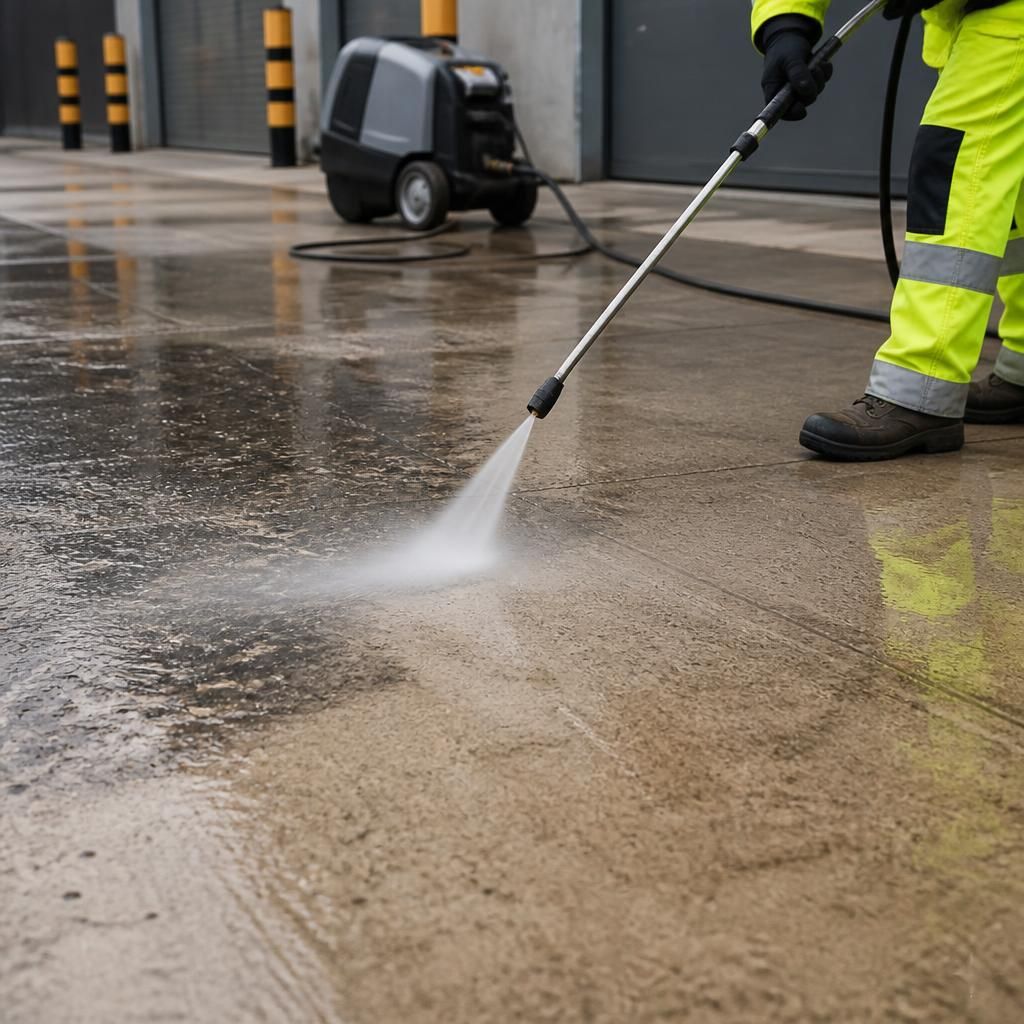
The right power washing detergent improves concrete cleaning by loosening the bond between contaminants and the surface before rinsing. Alkaline degreasers help break down oil, grease and tyre marks, while surfactant-based products lift general traffic film and ingrained dirt. This chemical action means the cleaning team can often achieve a thorough result without relying on unnecessarily high pressure.
Detergent selection must match the contamination and the concrete finish. The product should be tested in an inconspicuous area, applied at the recommended dilution and kept wet for the correct dwell time. Thorough rinsing is essential to remove detergent and suspended contaminants, while run-off should be controlled to protect drainage systems, vegetation and nearby surfaces.