
What safety measures should be in place during a commercial jet washing operation?
Commercial jet washing operations should be controlled by a site-specific risk assessment and method statement, with trained operators, suitable PPE, secure equipment and clear segregation of the work area. Controls should also cover water and electrical hazards, high-pressure injection injuries, working at height, traffic, pedestrians, surface damage and responsible wastewater management.
Safe commercial jet washing requires a site-specific risk assessment and method statement, competent operators, suitable personal protective equipment, secure equipment, controlled water and electrical supplies, and clear separation between the work area and other people. The controls must reflect the site, surface, access arrangements, pressure and temperature of the equipment, cleaning products used, traffic movements and how wastewater will be contained or discharged.
Commercial pressure washing is not simply a matter of directing a lance at a dirty surface. High-pressure water can cause serious injection injuries, damage materials, create slip hazards and spread contaminated water. A properly planned operation protects operatives, building users, members of the public, vehicles, nearby property and the environment.
Site assessment and method statement
Before work begins, the contractor should inspect the site and prepare a risk assessment and method statement, commonly referred to as RAMS. These documents should be specific to the proposed work rather than relying on a generic template. They should identify:
- The areas to be cleaned and the condition and construction of each surface.
- Potential hazards such as pedestrians, vehicles, overhead services, fragile roofs, open edges, drainage channels and uneven ground.
- The pressure, flow rate, water temperature and accessories required for each task.
- Any detergents, biocides, degreasers or other substances, together with their handling and storage requirements.
- How the work area will be isolated, how wastewater will be managed and what will happen in an emergency.
- The competence, supervision and welfare arrangements required for the team.
The site team should understand the RAMS before starting work. It should also be reviewed if conditions change, such as a change in weather, access equipment, cleaning method, surface condition or site traffic arrangements.
Competent operators and site communication
Operators should be trained in pressure-washing equipment, the hazards of high-pressure water, safe chemical use, manual handling and emergency procedures. They should be able to recognise when a surface, coating, joint or fixture is unsuitable for the selected cleaning method and know when to stop and seek further advice.
On occupied or active commercial sites, the contractor should agree access times, exclusion zones, vehicle routes, noise restrictions, emergency contacts and handover arrangements with the responsible site manager. A briefing should be given to anyone working within or near the cleaning area. Clear communication between lance operators, hose handlers, banksmen and site contacts is particularly important where visibility is restricted or plant and traffic are moving nearby.
Personal protective equipment
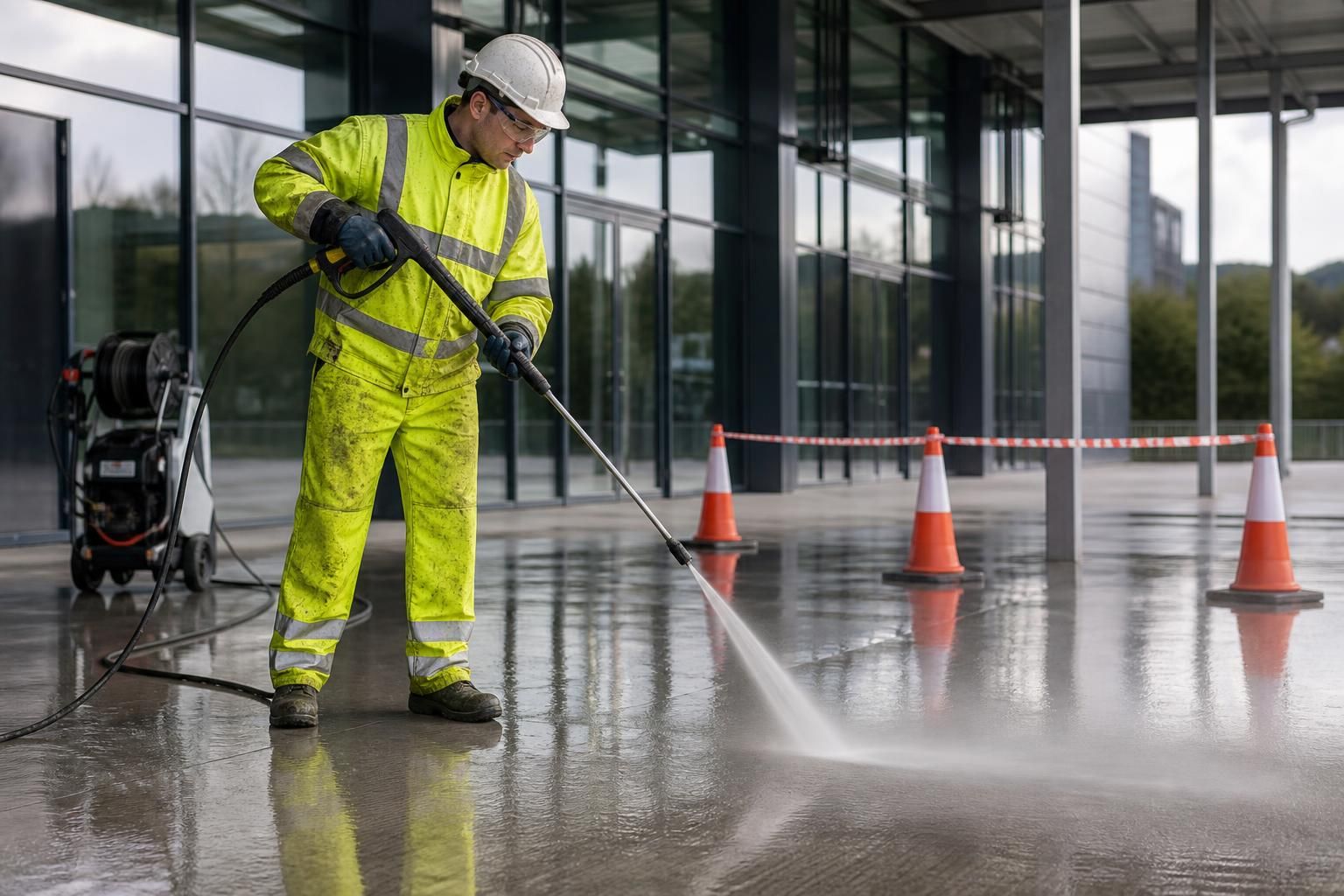
PPE should be selected following the risk assessment and should supplement, not replace, physical controls. Depending on the work, this may include:
- Water-resistant protective clothing or suitable waterproof outerwear.
- Safety footwear with effective slip-resistant soles and suitable protection for the task.
- Eye protection or a full face shield to protect against spray, debris and chemical splashes.
- Hearing protection where equipment noise or the surrounding work environment requires it.
- Protective gloves suitable for high-pressure work and any cleaning chemicals being used.
- Head protection where there is a risk of falling objects or contact with overhead hazards.
- Respiratory protection where the assessment identifies exposure to hazardous mist, dust or chemical vapour and adequate controls cannot otherwise be achieved.
PPE must be maintained, cleaned and replaced when damaged. Wet clothing and gloves can reduce grip and increase discomfort, so operators should have suitable arrangements for breaks, drying and changing where the work requires it.
Safe use and inspection of equipment
Jet washing equipment should be appropriate for the surface and task, maintained in accordance with the manufacturer’s instructions and checked before use. The inspection should include the machine, fuel or electrical supply, hoses, couplings, lance, trigger, nozzles, guards, reels and emergency stop controls.
Hoses should be routed to prevent trips, crushing, sharp-edge damage and contact with hot surfaces. Couplings must be properly secured, and operators should never attempt to disconnect a pressurised hose. The lance should be held firmly with both hands where required, and the trigger should be released before moving, adjusting a nozzle or passing control of the equipment to another person.
Pressure should be increased only as necessary. The operator should use the correct nozzle, spray pattern and working distance, and should test the method in an inconspicuous area before cleaning a prominent surface. Equipment should never be aimed at people, animals, vehicles, unprotected electrical equipment or vulnerable building components.
High-pressure water can penetrate skin even where the wound appears small. A suspected injection injury requires urgent medical attention and should not be treated as an ordinary cut. The equipment should be isolated safely, the incident reported and the person taken for professional assessment without delay.
Segregation of people, vehicles and property
The work area should be clearly marked and physically segregated where necessary. Barriers, cones, warning signs and trained banksmen may be required to prevent pedestrians or vehicles entering the spray zone. On car parks, forecourts, service yards and roads, the traffic management plan should account for vehicle access, reversing movements, visibility, delivery schedules and the risk of contaminated or slippery surfaces.
Doors, entrances, air intakes, windows and sensitive equipment should be protected from spray and overspray. Any building occupants who could be affected should be notified in advance. The contractor should also prevent dirty water, grit or cleaning chemicals from reaching adjoining properties, public footways or areas that have already been cleaned.
Water, electricity and fuel controls
Water and electricity present additional risks because wet conditions increase the consequences of damaged cables, unsuitable connections and poor housekeeping. Electrical equipment should be suitable for the environment, protected from water and inspected before use. Cables should be kept away from standing water, vehicle routes and sharp edges, with connections positioned where they cannot be sprayed or submerged.
Where electrically powered equipment is used, the supply and any portable electrical equipment should be appropriate for the site conditions and managed in accordance with the applicable workplace controls. Petrol or diesel-powered machines should be refuelled in a controlled area away from ignition sources and drains, with spill response materials available. Engines must not be operated in enclosed or poorly ventilated spaces unless suitable controls are in place.
Working at height and difficult access
Façades, roofs, canopies and elevated structures require additional planning. Work at height should be avoided where possible by using ground-based equipment, extension systems or suitable access methods. Where access equipment is necessary, it must be selected for the ground conditions and task, inspected, operated by competent personnel and positioned so that hoses do not create instability or trip hazards.
Guardrails, edge protection and suitable fall prevention or restraint systems should be used where required. Roofs must be assessed for fragility, skylights, rooflights, unprotected edges and weather conditions. Jet washing should not proceed in wind, rain, ice or other conditions that make access, footing or control of the equipment unsafe.
Chemicals, spray and surface hazards
Cleaning products should be selected for the material and contamination involved. Product labels and safety data sheets should be followed, including requirements for dilution, storage, PPE, ventilation and first aid. Chemicals should never be mixed unless the manufacturer specifically permits it. Operators should avoid creating unnecessary mist and should protect people from chemical spray and run-off.
Different surfaces require different controls. Excessive pressure or heat can remove coatings, damage pointing, open joints, etch masonry, force water behind cladding or affect roof membranes. Fragile, painted, timber, rendered and historic surfaces should be tested and cleaned using a method that limits damage. Any pre-existing defects should be recorded, and the client should be informed if cleaning could worsen a known defect.
Wastewater and environmental protection
Dirty water should be controlled rather than allowed to enter surface-water drains, watercourses, neighbouring land or public areas. The method may involve drain covers, bunding, wet vacuums, recovery systems, temporary containment or a suitable connection to the foul drainage system where permitted. Oily, chemical or heavily contaminated water may need specialist collection and disposal.
Operators should identify drainage routes before starting and keep spill kits available. Any accidental release should be contained promptly and reported through the agreed site procedure. Water use should also be controlled to reduce flooding, unnecessary run-off and disruption to the premises.
Emergency arrangements and completion checks
The team should know how to isolate the machine, raise the alarm, contact the site representative and obtain first aid or emergency medical assistance. The plan should address injection injuries, chemical splashes, falls, slips, electrical incidents, fuel spills, equipment failure and damage to property.
At the end of the operation, the contractor should depressurise and secure the equipment, remove hoses and barriers safely, inspect the cleaned area, clear debris and confirm that surfaces are not left dangerously slippery. Drains, access routes, entrances and traffic areas should be checked before they are returned to normal use. Relevant defects, incidents, near misses, damage or follow-up requirements should be recorded and communicated to the client.
For an existing commercial cleaning programme, these controls should be reviewed whenever the site, equipment, cleaning products or scope of work changes. Consistent RAMS, trained personnel, well-maintained equipment and disciplined site segregation provide the foundation for safe, compliant and effective commercial jet washing.
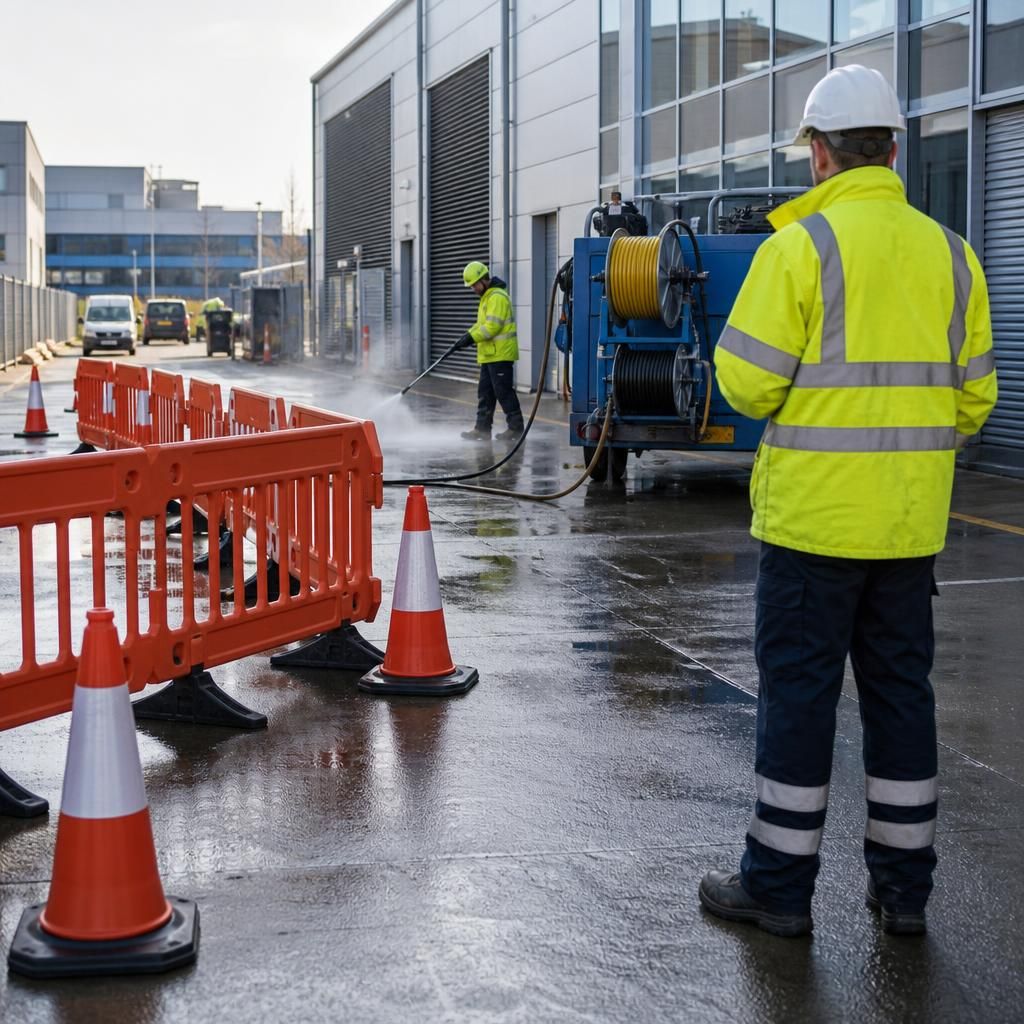
Physical segregation is a fundamental safety measure during commercial jet washing. Barriers, cones and clear warning signs should keep pedestrians, vehicles and site staff outside the spray and hose area, while a trained banksman manages vehicle movements where visibility or access is restricted.
Before work starts, the cleaning team should agree the exclusion zone and traffic arrangements with the site representative. Entrances, air intakes, windows, electrical equipment and adjoining property should be protected from overspray. The area must remain controlled until hoses, standing water, debris and any slippery residue have been removed and the surface is safe to use.