
What maintenance and aftercare should be expected following a commercial jet washing service?
Following a commercial jet washing service, you should expect a completion inspection, advice on drying and surface care, and confirmation of any remedial work or ongoing maintenance required. Where agreed, aftercare may also include a cleaning report, photographic records, scheduled inspections and prompt support if staining, damage or drainage issues become apparent.
Following a commercial jet washing service, you should expect the contractor to complete a handover inspection, explain any drying and access requirements, record the work carried out, and identify any further maintenance or remedial action. Where included in the agreed scope, aftercare can also cover photographs, drainage checks, treatment of recurring staining, scheduled inspections and a clear process for reporting issues.
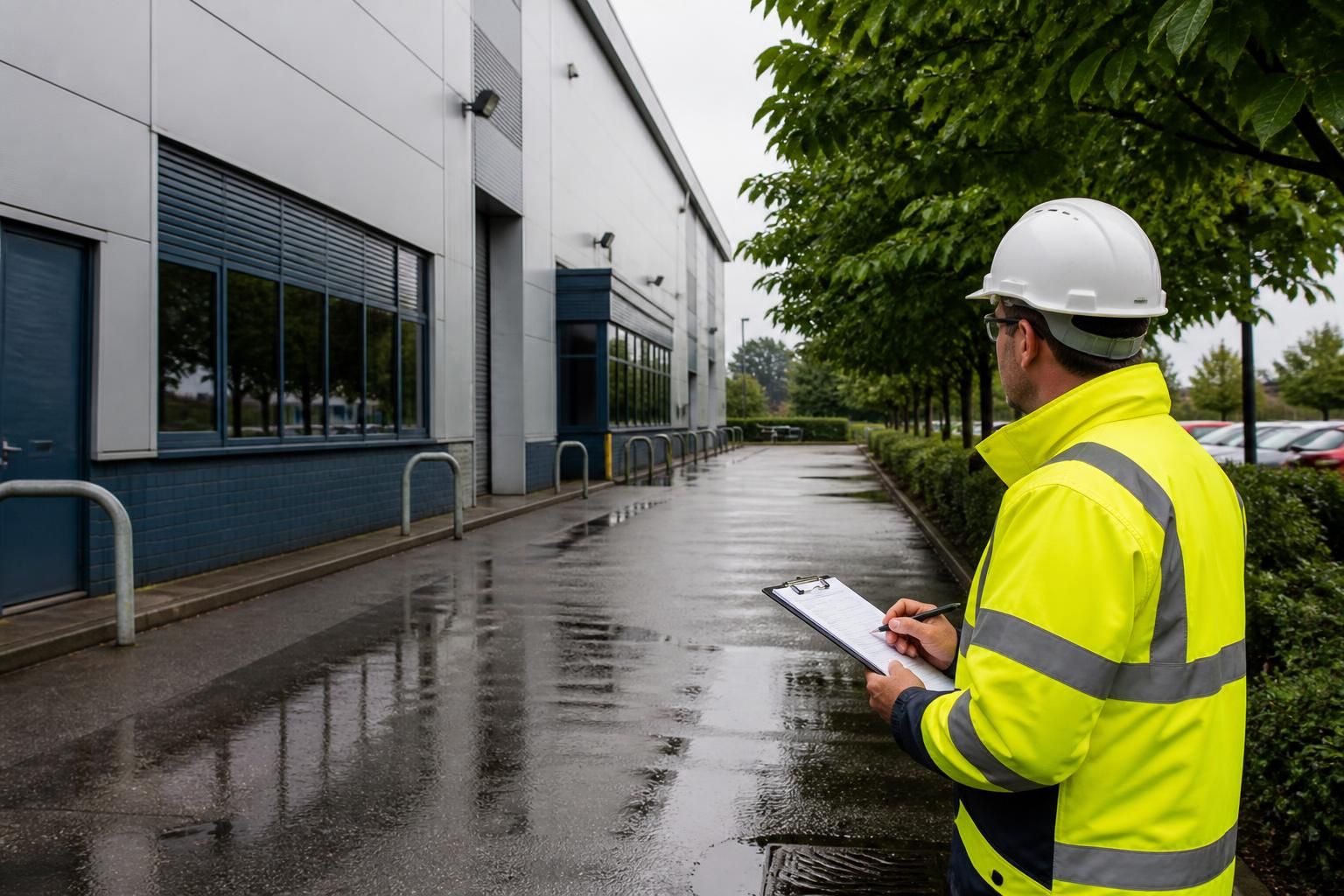
Completion inspection and handover
The cleaning team should inspect the treated areas with the site contact before leaving, or provide a documented handover where an immediate joint inspection is not practical. This check should confirm that the agreed surfaces have been cleaned, that difficult areas have been noted, and that surrounding features such as doors, loading bays, signage, vents, kerbs and drainage points have been left in a suitable condition.
Jet washing removes surface dirt, organic growth, traffic film and some staining, but it cannot correct defects in the underlying material. Any failed coatings, cracked paving, loose pointing, damaged cladding, blocked drainage or staining that has penetrated the substrate should be recorded rather than concealed. A professional handover distinguishes between an incomplete cleaning result and a pre-existing or material-related defect.
Advice on drying and reinstating the site
Recently washed surfaces may remain damp, slippery or visibly darker until they dry. The contractor should explain when pedestrians, vehicles, deliveries and other site activities can safely resume. This is particularly important for car parks, forecourts, ramps, stairs, walkways and entrances where residual moisture can affect traction.
Aftercare instructions should also cover any items that were temporarily protected, isolated or moved during the work. Plant, furniture, barriers and access equipment should be returned or removed as agreed. If doors, shutters or service areas were kept closed, the responsible site contact should know when they can be operated normally.
Cleaning records and photographic evidence
For commercial premises, a completion record is useful for facilities management, landlord files, compliance documentation and future quotations. Depending on the project, this may include:
- The areas and surfaces cleaned, including any exclusions from the agreed scope.
- The cleaning methods used, such as pressure washing, soft washing, steam cleaning or a specialist treatment.
- Relevant notes about access restrictions, surface condition, drainage and areas requiring further attention.
- Before-and-after photographs, particularly for large façades, roofs, car parks, cladding and graffiti removal projects.
- Details of any protective treatment, sealant or post-cleaning application and its maintenance requirements.
- The date of completion and the recommended timing for the next inspection or clean.
Photographs should support the written record rather than replace it. They are most useful when they show the same locations before and after cleaning and identify areas where staining, damage or access limitations remain.
Checking drainage and wastewater controls
Run-off should be managed during the work, but drainage points and nearby areas should also be checked at completion. Gullies, channels and grates can collect silt, moss, leaves and loosened debris during cleaning. Any material that could restrict flow should be removed or reported promptly, and wastewater should not be allowed to enter unsuitable drains or watercourses.
If the site has oil separators, interceptors or other drainage controls, the contractor should follow the agreed site procedures and tell the responsible person if cleaning has exposed a blockage or capacity issue. Ongoing drainage maintenance may sit outside the jet washing contract, so responsibilities should be clear at handover.
Advice for ongoing surface maintenance
A clean surface will gradually collect new dirt from traffic, weather, construction activity, exhaust emissions, vegetation and footfall. The contractor should advise on practical maintenance rather than suggesting that one intensive clean will prevent all future soiling.
- Remove litter, leaves and organic debris before they become embedded or retain moisture.
- Deal with spillages promptly, especially oils, food products, chemicals and construction materials.
- Keep drainage channels, gullies and roof outlets clear where they are accessible to the site team.
- Report new graffiti, biological growth or staining before it spreads across a larger area.
- Use cleaning products and equipment suitable for the particular surface; unsuitable chemicals or excessive pressure can damage coatings, joints and porous materials.
- Include high-traffic areas, entrances, loading zones and sheltered elevations in routine inspections.
The appropriate maintenance interval depends on the surface, exposure, usage and type of soiling. A busy forecourt, exposed façade or shaded canopy may need attention sooner than a lightly used elevation. A provider should base recommendations on the site condition and cleaning history rather than applying the same schedule to every property.
Reviewing recurring staining or surface deterioration
Some marks return because the source has not been removed. Algae and moss may recur where moisture and shade persist; traffic film may build up again in vehicle areas; rust, tannin, efflorescence or hard-water deposits may require a different treatment; and leaks or defective sealants can continue to stain a façade or canopy.
Aftercare should explain whether a further treatment is appropriate and what caused the issue. It should not promise permanent removal where the substrate is damaged or the source of contamination remains. If a protective coating or sealant has been applied, the contractor should state what it is intended to protect against, how it should be inspected and which cleaning methods are compatible with it.
Rectification and reporting of concerns
If an area appears to have been missed or a concern becomes apparent after drying, report it through the agreed contact as soon as possible, with photographs and the location of the issue. The contractor should assess whether it is a cleaning omission, a pre-existing defect, a newly visible substrate problem or a result of an unsuitable previous treatment.
Where the issue falls within the agreed scope, reasonable rectification may involve a return visit, additional spot treatment or adjustment of the cleaning method. Remedial building work, repairs to paving or cladding, roof repairs, drainage maintenance and replacement of damaged materials normally require separate assessment unless expressly included in the contract.
Planned inspections and continuing support
For larger sites or ongoing contracts, aftercare may include scheduled condition inspections and planned maintenance visits. These can help identify early signs of biological growth, coating failure, blocked drainage, recurring spillages, graffiti or damage caused by site operations. Inspection findings should be recorded so that future cleaning is based on the actual condition of the premises.
Before the service is considered complete, confirm what is included in the aftercare arrangement, who is responsible for routine checks, how concerns should be reported, whether return visits are covered, and when the next review is recommended. A clear written handover gives the facilities or property management team a usable record and helps preserve the condition, safety and appearance of the cleaned areas.
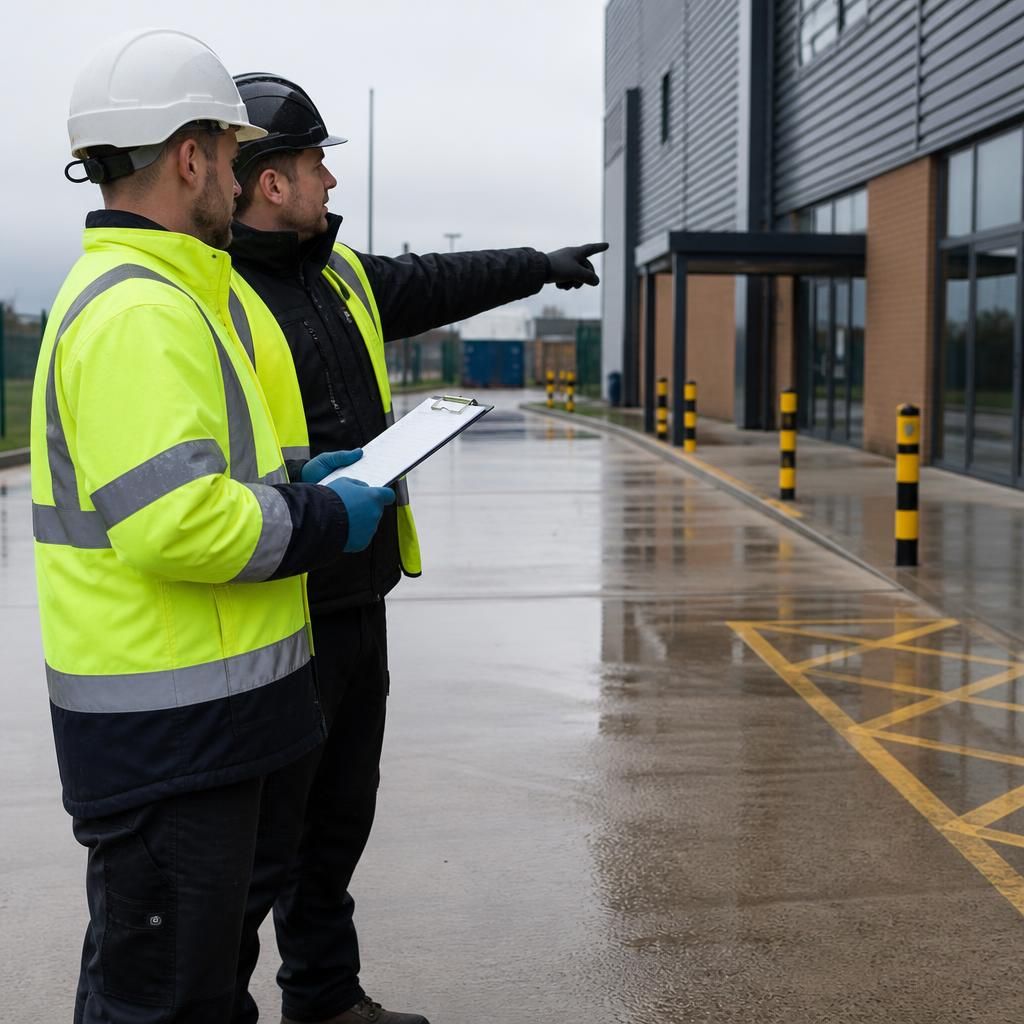
A completion inspection is an important part of commercial jet washing aftercare. The treated areas should be checked for remaining soiling, surface damage, loose debris and drainage issues, with any exclusions or pre-existing defects recorded rather than overlooked.
The site contact should also receive clear instructions on drying times, safe reinstatement of pedestrian and vehicle access, and any further maintenance required. A written handover with photographs can provide a useful record for facilities management and help identify whether later concerns relate to cleaning, surface condition or an underlying defect.