
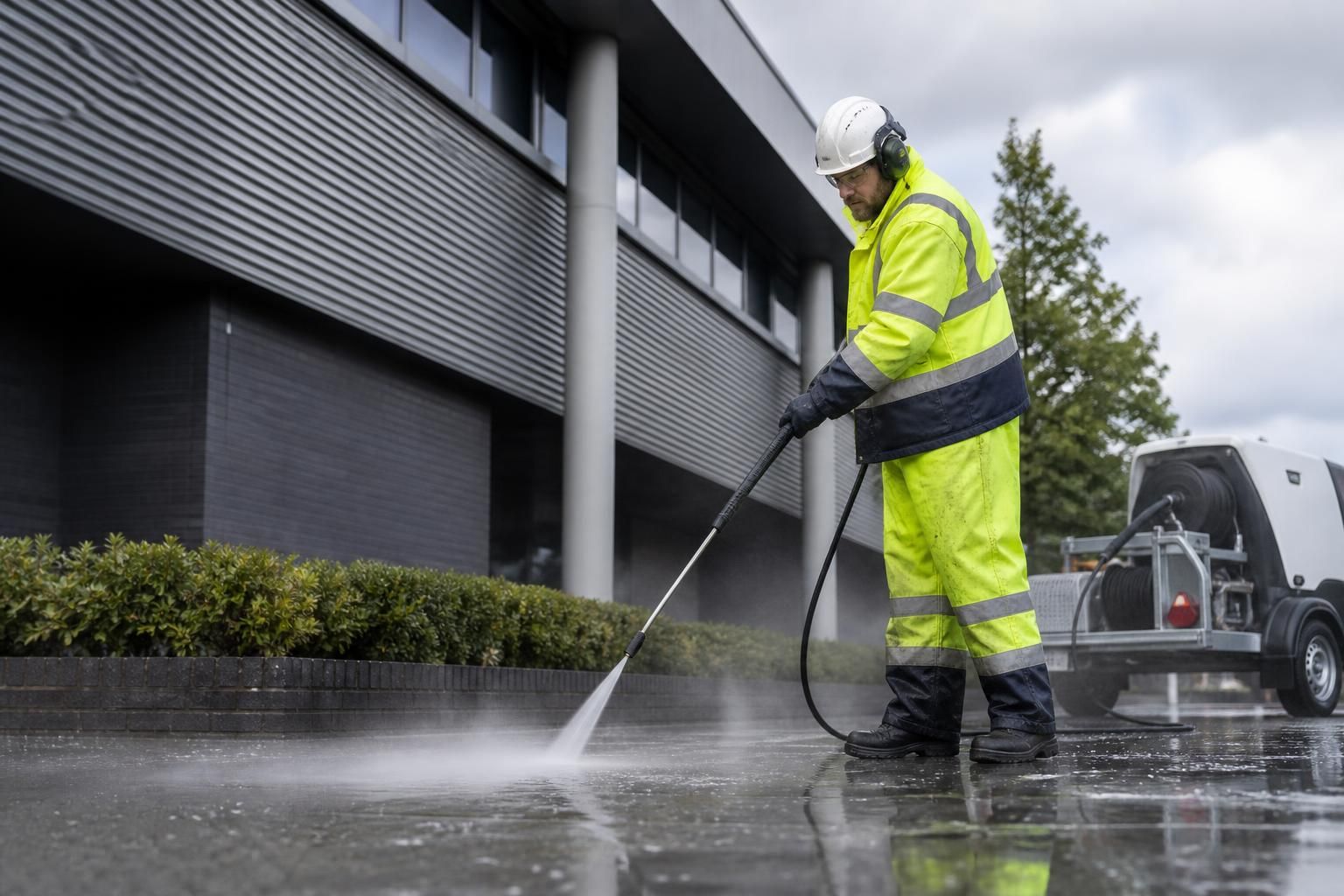
What environmental considerations should be addressed by a commercial jet washing service?
A responsible commercial jet washing service should control water use, prevent contaminated runoff from entering drains or watercourses, select cleaning chemicals carefully and dispose of waste lawfully. It should also assess the surface and site beforehand, use appropriate pressure or steam-cleaning methods, and follow relevant environmental and wastewater requirements throughout the work.
A responsible commercial jet washing service should minimise water and energy use, prevent polluted runoff, control chemical use, and manage sludge and other waste in accordance with environmental and wastewater requirements. The correct approach depends on the surface, the contaminants being removed, the drainage layout, the site’s sensitivity and the intended cleaning method.
Site and environmental assessment
Environmental controls should be planned before equipment is switched on. The contractor should identify surface-water drains, foul-water drains, soakaways, watercourses, planted areas and nearby properties. They should also establish what contaminants are present, such as oil, fuel, heavy dirt, algae, paint, cement residue, bird fouling or graffiti coatings. This matters because wash water from a lightly soiled façade presents a different risk from water containing oil, chemicals or construction residue.
The assessment should consider whether the work is beside a river, pond, canal, groundwater protection area, highway or environmentally sensitive site. It should also review local drainage arrangements and any requirements set by the site owner, landlord, water company or local authority. Where contamination could enter a drain or watercourse, the work method should include suitable containment and recovery measures rather than relying on dilution.
Water consumption and recovery
Commercial jet washing can use substantial volumes of water if equipment is poorly selected or operated without controls. A professional contractor should match the pressure, flow rate and cleaning time to the material and contamination. Higher pressure is not automatically more effective: the right combination of pressure, temperature, nozzle selection, detergent and dwell time can reduce unnecessary water use while protecting the surface.
Practical measures may include trigger-controlled equipment, low-flow nozzles, targeted cleaning rather than blanket washing, and steam or hot-water systems where they are suitable. Water recycling or recovery systems can be considered for larger projects, particularly where wash water is heavily contaminated or where site conditions make discharge difficult. Recovered water should only be reused where its quality and the equipment manufacturer’s requirements make that appropriate.
Runoff and drainage protection
Uncontrolled runoff is one of the main environmental risks associated with commercial jet washing. Dirty water can carry oils, detergents, metals, paint particles, cement, organic matter and other pollutants into surface-water drains. These drains often discharge to the environment without the same treatment provided by a foul sewer.
Controls should be proportionate to the risk and may include:
- Using drain covers, temporary bunds, booms or drain mats to prevent contaminated water entering surface-water drainage.
- Directing suitable wastewater to an approved foul drain only where the discharge is permitted.
- Vacuum recovery or wet-vacuum collection of wash water from hard surfaces.
- Using settlement tanks, filters, interceptors or other treatment equipment where appropriate.
- Inspecting the work area during cleaning and stopping the operation if containment fails.
- Preventing silt, sludge and debris from being swept into drains after the main wash is complete.
Wastewater should never be discharged to a watercourse, onto land or into a surface-water drain simply because it appears clear. The legal and technical acceptability of a discharge depends on its contents, the drainage system and the relevant permissions. If the wastewater is contaminated or cannot be discharged lawfully, it should be collected and transferred through an appropriate waste route.
Cleaning chemicals and detergents
Chemicals should be used only where they provide a clear cleaning benefit and where water or steam alone is unsuitable. The contractor should select products that are appropriate for the surface, contamination and drainage arrangements, using the lowest effective concentration and preventing unnecessary overspray or spillage.
Product labels and safety data should be reviewed before use. Particular care is needed with acidic or alkaline cleaners, biocides, degreasers, solvents and products that can harm aquatic life. Chemicals must not be mixed unless the manufacturer specifically permits it, and rinse water should be controlled so that residues do not enter sensitive areas. On sites with planting, water features, food-related operations or vulnerable occupants, the method may need additional precautions or a chemical-free alternative.
Storage containers should be closed, labelled and protected from damage. Spill kits and a clear response procedure should be available, with any spill contained promptly and reported through the site’s agreed arrangements. Chemical use should also be recorded where the project, client or regulatory requirements call for it.
Sludge, debris and waste disposal
Jet washing produces more than liquid wastewater. Removed moss, algae, silt, paint flakes, chewing gum, oil residues, cement deposits and contaminated absorbents may all require separate handling. Waste should be kept from drains, segregated where practical and stored securely while awaiting removal.
The contractor should determine whether waste is hazardous before disposal and use appropriately authorised carriers and disposal or treatment facilities. Waste transfer documentation and other records should be retained where required. It is not acceptable to leave collected sludge on the pavement, wash it into a drain or place contaminated material in general site bins without confirming that this is permitted.
Protection of surfaces, planting and wildlife
Environmental responsibility also includes avoiding unnecessary damage. Excessive pressure, heat or aggressive chemicals can remove protective coatings, damage pointing, expose substrates and create additional repair or replacement waste. A controlled test area helps confirm that the proposed method is effective without causing avoidable damage.
Plants, trees, soil, water features and habitats should be protected from overspray, contaminated water and chemical contact. Nesting birds, bats and other protected wildlife may affect the timing or method of work, particularly when cleaning roofs, canopies, façades and vegetation-covered structures. Where there is a reasonable possibility of protected species being present, the site manager should seek suitable ecological advice before work begins.
Energy use, noise and air quality
Fuel-powered pressure washers and access equipment can create exhaust emissions, while all powered equipment consumes energy. Selecting well-maintained, correctly sized equipment and avoiding unnecessary idling can reduce these impacts. Electric equipment may be suitable for some sites, provided the available power supply and operating conditions allow it. Hot-water and steam systems should be used when their greater cleaning efficiency justifies the energy required, rather than as a default for every surface.
Noise, spray drift and equipment movements should also be considered around offices, homes, schools, hospitals and occupied commercial premises. Working within agreed hours, positioning equipment carefully and using suitable barriers or low-noise methods can reduce disturbance. These controls are particularly important for work in enclosed courtyards or near neighbouring properties.
Compliance and evidence
The contractor should be able to explain how wastewater will be contained, treated, discharged or removed before the project starts. Depending on the site and activity, this may involve following Environment Agency guidance, meeting water company trade effluent requirements, complying with waste duty-of-care obligations and observing local authority or client-specific conditions. A permit, consent or specialist waste arrangement may be needed in some circumstances; responsibility should be confirmed rather than assumed.
For larger or higher-risk projects, useful records include the environmental risk assessment, method statement, chemical information, drainage plan, waste transfer documentation, discharge permissions and details of any incidents or corrective action. Clear records allow the client to demonstrate that environmental controls were considered and maintained throughout the operation.
Before work begins, the client should ask where the wash water will go, how drains and sensitive areas will be protected, which chemicals will be used, how waste will be removed and what evidence will be provided afterwards. These questions help confirm that the commercial jet washing service is not only effective on the visible surface but also controlled throughout the wider site.
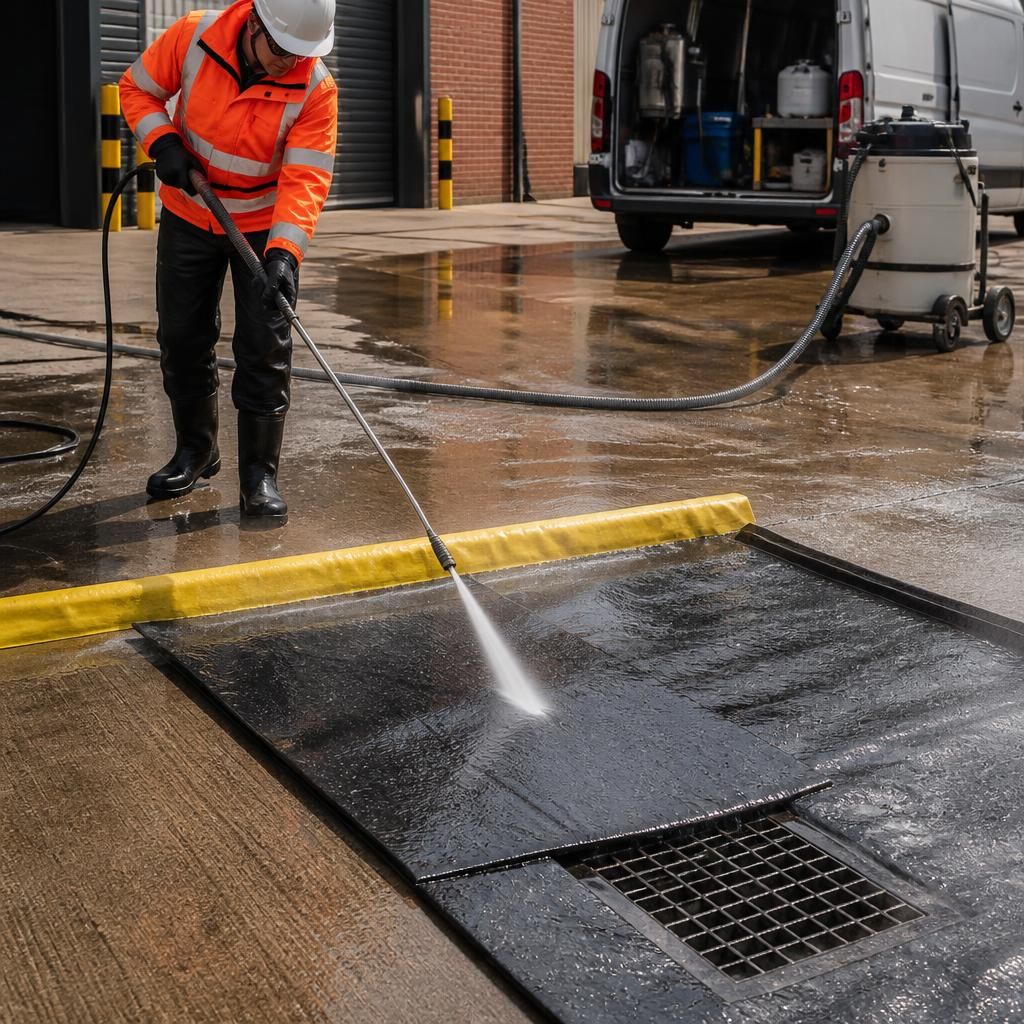
Runoff control is a central environmental responsibility during commercial jet washing. Dirty water can carry oil, detergents, paint particles, cement residue, silt and organic matter into surface-water drains, which may discharge directly to rivers, canals or groundwater without full treatment.
Before cleaning begins, the contractor should identify the drainage layout and protect vulnerable points with drain mats, temporary bunds or other suitable containment. Where appropriate, wastewater can be recovered using wet vacuums, passed through suitable treatment equipment or directed to an approved foul drain with the necessary permission. Collected sludge and contaminated water must be stored securely and removed through an appropriate waste route. Water should never be allowed to enter a surface-water drain, watercourse or soil simply because it appears clear.
Discuss Your Commercial Jet Washing Requirements
Discuss your commercial jet washing requirements with Encanto Exterior Cleaning, including drainage, runoff, chemical use and waste-management arrangements. We can help you plan a practical cleaning method suited to your site and environmental responsibilities.