
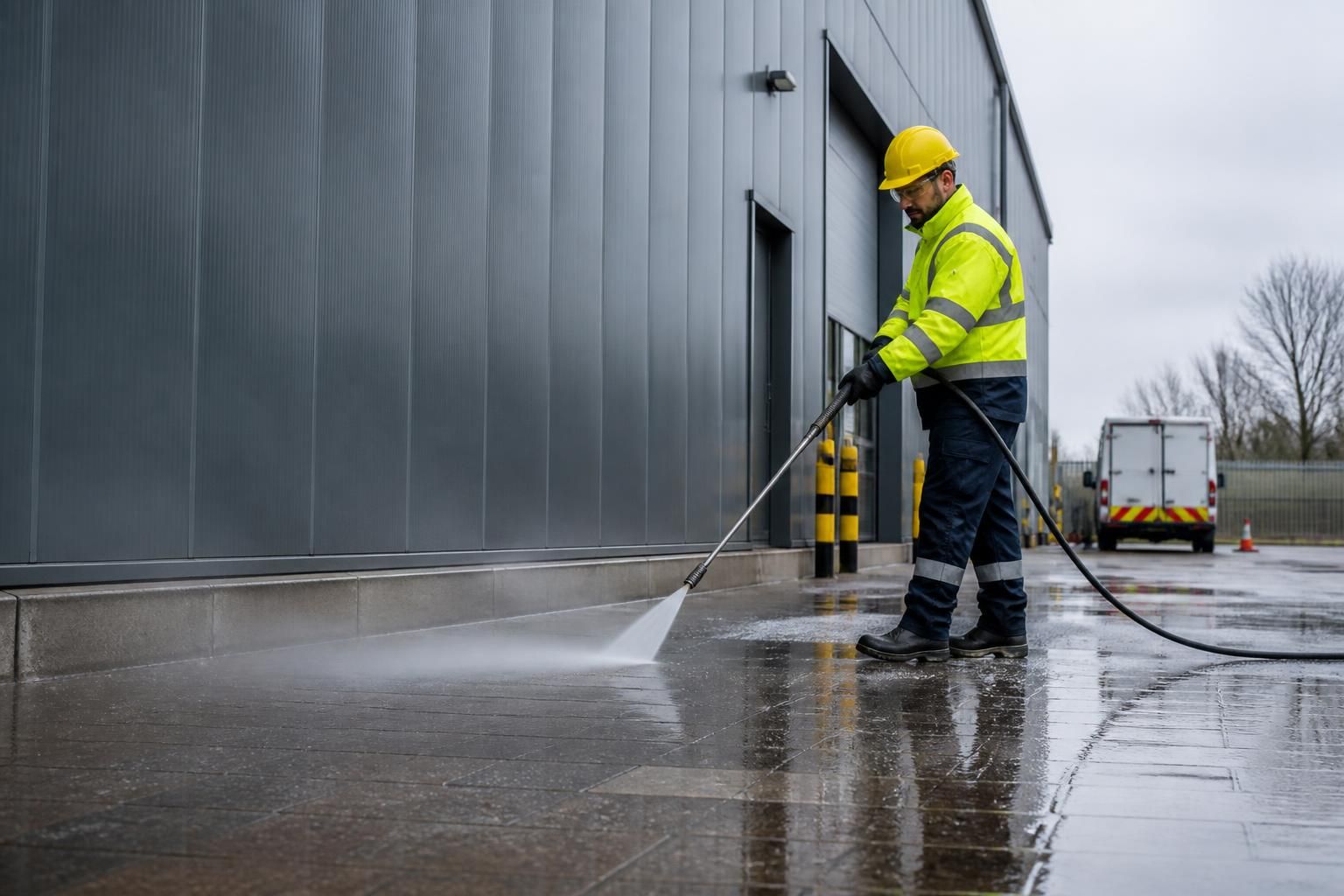
What are the safety considerations when performing commercial jet washing on different surfaces?
Commercial jet washing safety depends on the surface, its condition and the surrounding environment: concrete can tolerate stronger cleaning than brick, rendered façades, cladding, roofs or painted finishes. Operators should select suitable pressure, temperature, nozzle distance and cleaning products, while controlling water, protecting people and checking for damage before work begins.
Commercial jet washing safety depends on the surface being cleaned, its condition and the surrounding environment. Concrete may tolerate relatively intensive cleaning, while brick, mortar, render, cladding, roofs, painted finishes and older materials can be damaged by excessive pressure, heat, impact or unsuitable chemicals. Safe work therefore requires a documented assessment, a controlled method, appropriate equipment and protection for people, property, drainage systems and the environment.
Safety checks before cleaning
- Inspect the surface for cracks, loose coatings, failed joints, corrosion, open fixings, delamination and previous repairs. Cleaning can expose or worsen defects that are not visible from ground level.
- Identify the material and establish whether it has any protective coating, sealant, paint or specialist finish. The cleaning method should be compatible with the manufacturer’s requirements where these are available.
- Check for fragile features such as vents, air bricks, seals, windows, doors, signage, electrical fittings, cameras, security systems and roof-mounted equipment. These may need to be isolated, covered or cleaned by a different method.
- Look for hazardous substances and contamination. Suspected asbestos-containing materials must not be jet washed; work should stop until the material has been assessed by a competent specialist. Oil, fuel, biological contamination, lead-based coatings and other hazardous residues may also require a specific control plan.
- Carry out a small test area in an inconspicuous location. Confirm that the pressure, nozzle, temperature, dwell time and detergent do not cause etching, colour change, water penetration or coating loss before extending the method across the surface.
Operators should also assess pedestrians, vehicles, nearby businesses, traffic routes, overhead services, weather, drainage and access arrangements. The work area needs suitable barriers and warning signs, with a planned route for hoses and cables to reduce trip hazards. Cleaning should be paused if wind carries spray towards people, traffic, occupied premises or electrical equipment.
Concrete and cement-based surfaces
Sound concrete is generally more resistant to jet washing than many façade materials, but it can still be damaged. Excessive pressure or concentrating the jet in one place can roughen the surface, expose aggregate, enlarge cracks and remove curing compounds or protective sealers. Older or weak concrete may suffer surface loss, particularly around joints and edges.
- Use a broad spray pattern and keep the lance moving rather than directing a narrow jet at one point.
- Take extra care around expansion joints, repaired areas, drainage channels and deteriorated edges.
- Check whether the surface has been sealed or painted, as the coating may require a gentler method than the concrete beneath it.
- Control slurry and dirty water so that it does not enter surface-water drains or create a slipping hazard.
Concrete can look patchy immediately after cleaning because areas of different age, porosity or previous contamination absorb water differently. A suitable drying period and, where necessary, sealing or further treatment should be agreed before judging the final appearance.
Brickwork, mortar and masonry
Brick façades can be vulnerable to water penetration, surface erosion and mortar loss. The risk is higher with soft, handmade, historic or weathered brick, open joints and previously damaged masonry. A jet directed too closely at mortar can wash out joints and allow water into the wall construction. It can also force moisture behind coatings or through defective seals.
- Use the lowest effective cleaning intensity and a suitable fan spray, maintaining a consistent distance from the wall.
- Avoid directing water into joints, cracks, vents, weep holes, window seals and openings.
- Protect or temporarily seal vulnerable internal areas only where this can be done safely and without trapping moisture.
- Stop if bricks begin to powder, flake or lose their face, or if mortar is visibly being removed.
Historic or listed masonry may need a conservation-led assessment and a low-pressure or non-jet cleaning method. The objective is to remove contamination without removing the weathered surface that protects the building.
Render, stone and painted façades
Render can be hollow, cracked or poorly bonded beneath the surface. Jet washing may lift it from the substrate, enlarge cracks or drive water behind the system. Painted façades can lose their coating, particularly where paint is already chalking or peeling. Natural stone varies considerably: some dense stone is durable, whereas softer or chemically sensitive stone can be etched or discoloured.
Test cleaning should confirm both the appearance and the condition of the substrate. Avoid aggressive treatment around cracks, beads, corners and repairs. Cleaning products must be selected for the stone and contamination; acidic products, for example, can damage acid-sensitive materials and corrode adjacent metals. Rinse thoroughly where the method requires it, while preventing contaminated water from entering the building or surrounding drainage.
Metal cladding, glazing and painted finishes
Cladding panels may be aluminium, steel, composite, coated metal, plastic or another material, and each has different limitations. High-impact cleaning can dent panels, lift coatings, damage sealant joints or force water behind laps and flashings. Spray can also reach insulation, electrical components or occupied spaces through defective joints.
- Confirm the cladding type and coating condition before choosing pressure, temperature and detergent.
- Keep the spray away from panel joints, fixings, louvres, vents, seals and damaged coating edges unless the method specifically requires detailed cleaning.
- Protect glazing from abrasive particles and avoid sudden temperature changes that could stress damaged or cold glass.
- Use compatible, non-abrasive products and rinse residues from metalwork to reduce staining or corrosion.
Windows, doors and façade penetrations should be checked after cleaning. Any water ingress, displaced sealant or coating damage should be recorded and reported rather than concealed by further washing.
Roofs, canopies and fragile overhead surfaces
Roof cleaning combines surface risk with work-at-height risk. Tiles, membranes, coated metal sheets and translucent roof panels may crack, puncture or become slippery when wet. Some roof systems are not designed to be walked on, and jet reaction can affect an operator’s balance. Canopies may also have concealed drainage, lighting or tensioned components.
Use suitable access equipment, edge protection and fall-prevention measures based on the site assessment. Do not rely on a roof ladder, guardrail or harness without confirming that it is suitable, correctly installed and used within an appropriate system of work. Where possible, clean from a safe position rather than standing directly on a fragile surface. Keep water away from rooflights, electrical fittings, vents and defective flashings, and check that outlets are not blocked by loosened moss or debris.
Materials that may contain asbestos, including some older roofing products, must be identified and managed by competent specialists. Jet washing can release hazardous fibres and should not be used as a substitute for an asbestos control procedure.
Block paving, asphalt and resin-bound surfaces
Block paving can tolerate controlled cleaning, but strong jets may remove jointing sand, loosen blocks or damage sealant. Reinstating joints may be necessary after cleaning, and the surrounding area should be protected from displaced material. Asphalt can soften, scuff or lose aggregate if exposed to excessive heat or impact, particularly when aged or damaged. Resin-bound surfacing can be marked or disturbed if the bond is weak.
Use an appropriate spray pattern, avoid dwelling on joints and inspect for movement or failure as the work progresses. Sloping paved areas require careful control of runoff because loosened dirt, detergent and algae can create a serious slip hazard.
People, equipment and electrical safety
Operators should wear task-appropriate personal protective equipment, which may include eye and face protection, waterproof clothing, gloves, protective footwear and hearing protection. PPE does not replace safe positioning and equipment control. The lance should be held securely, with the operator standing on stable ground and avoiding recoil, awkward reaches and work above shoulder height.
- Keep uninvolved people outside the exclusion zone and provide a safe alternative route where the work affects entrances or walkways.
- Protect vehicles, stock, machinery, interior finishes and neighbouring property from spray, debris and cleaning chemicals.
- Use electrical equipment and connections suitable for wet conditions, keep connections out of standing water and isolate vulnerable systems where required.
- Inspect hoses, couplings, guns, lances, guards and access equipment before use. Damaged equipment should be removed from service.
- Control hoses and cables across access routes and maintain clear communication between operatives working at ground and elevated levels.
Detergents should be handled according to their safety data and site controls. They must never be mixed unless the product instructions specifically permit it. Operators should protect skin and eyes, prevent overspray and use only the concentration and application method needed for the contamination and surface.
Runoff, drainage and completion checks
Dirty water and chemical runoff should be contained, diverted, recovered or discharged only through an approved route. Surface-water drains must not be used for contaminated wash water without confirmation that the discharge is permitted. Extra controls may be needed where cleaning removes oil, paint, biological growth or other pollutants.
After cleaning, inspect the surface for coating loss, exposed defects, water ingress, damaged joints and remaining slip hazards. Remove barriers only when walkways are safe, dry enough for use and free from equipment and residue. Record any defects identified during the work and recommend repairs, re-sealing or further specialist assessment where cleaning has revealed an underlying problem.
The safest commercial jet washing method is therefore surface-specific rather than based on maximum pressure. A competent operator adjusts the equipment and cleaning process to the material, starts with controlled testing, protects the surrounding area and stops when the condition of the surface or the site makes continued jet washing unsafe.
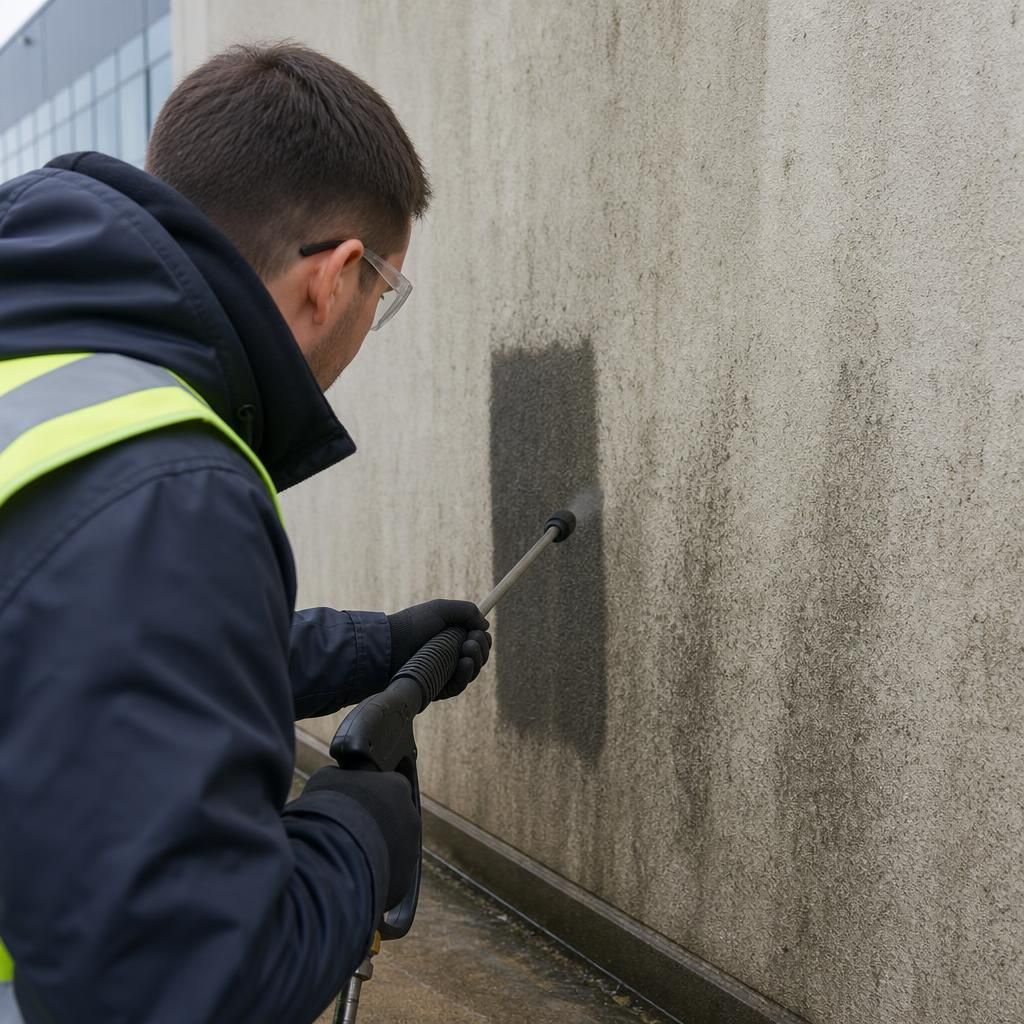
Surface testing is a critical safety control before commercial jet washing begins. An operator should test the proposed pressure, nozzle distance, temperature and cleaning product on an inconspicuous area, then check for etching, colour change, coating loss, mortar erosion or water penetration. The method should only be extended when the test confirms that the material and its finish can tolerate the treatment.