
What are the environmental considerations associated with commercial jet washing?
Commercial jet washing should manage water consumption, cleaning chemicals and contaminated runoff to prevent pollution of drains, soil and watercourses. Responsible contractors select suitable pressure or steam-cleaning methods, contain and dispose of wastewater correctly, and use environmentally preferable products where the surface and regulations allow.
Commercial jet washing has environmental implications because the process can use substantial water and can mobilise oil, silt, metals, algae, old coatings, detergents and other contaminants. A responsible service therefore considers the cleaning method, water demand, chemical selection, runoff control, wastewater disposal, energy use and the sensitivity of the surrounding site before work begins.
Water consumption and method selection
Pressure washing is not automatically the most sustainable option for every surface. The correct pressure, flow rate, nozzle and cleaning time should be selected for the material and the level of soiling. Using excessive pressure or water can increase consumption, damage coatings and create more contaminated runoff.
Steam cleaning or hot-water washing may be preferable for some applications because heat can help remove grease, chewing gum, biological growth and other deposits with less reliance on detergents. However, these methods still require energy and can produce contaminated water. The environmentally appropriate choice depends on the surface, the type of dirt, the available drainage and the controls that can be put in place.
Runoff and drainage protection
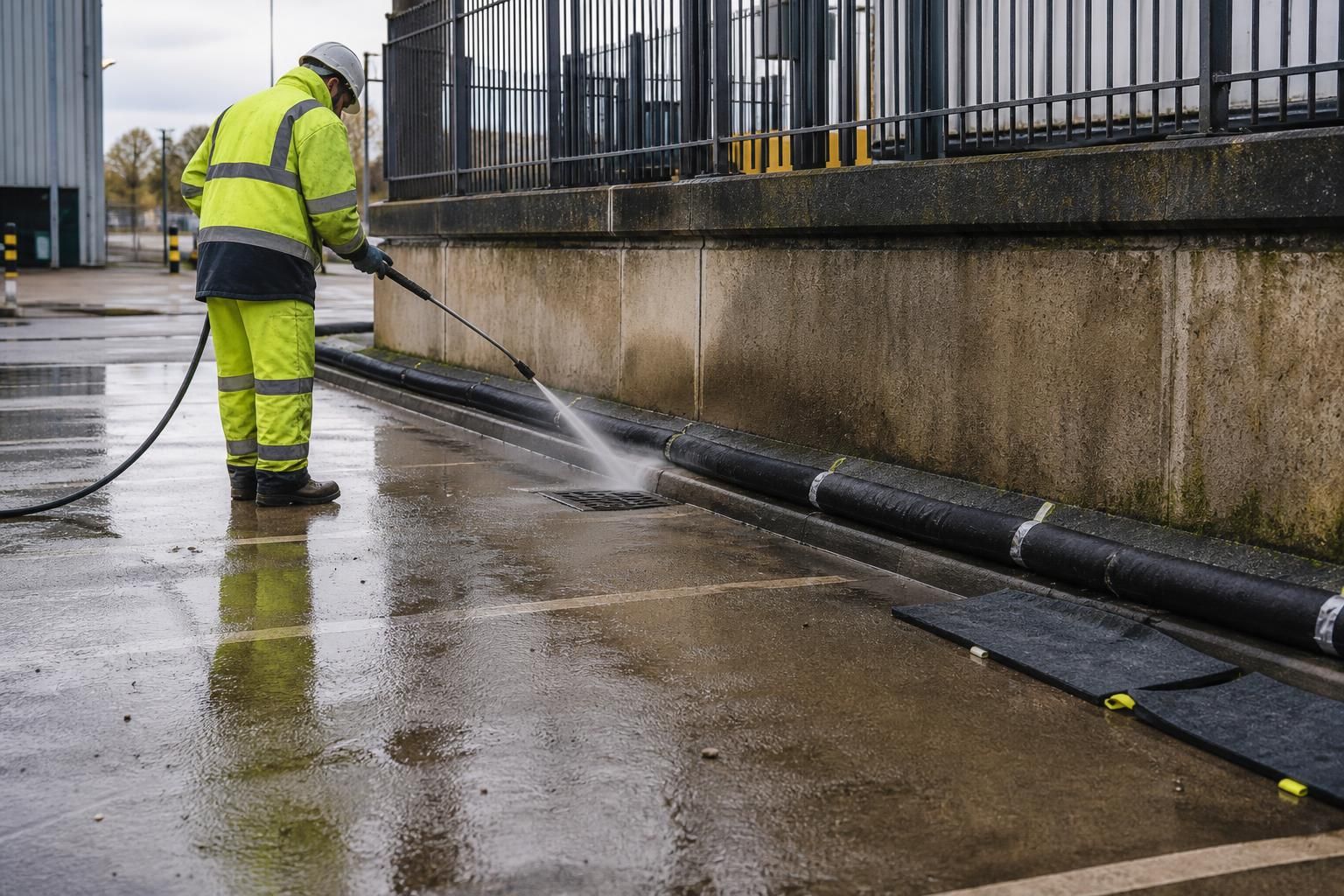
Runoff from commercial cleaning must be controlled rather than allowed to flow into surface-water drains, soil, watercourses or neighbouring property. Car parks, loading areas, forecourts and industrial surfaces may contain oil, fuel residues, brake dust, hydrocarbons, metals, litter and sediment. Façade and roof cleaning can also release paint fragments, mortar, sealant residues, bird fouling and biological matter.
Before work starts, the drainage layout should be checked and surface-water inlets identified. Suitable controls may include drain covers, temporary bunds, absorbent socks, silt barriers, collection channels and wet vacuums. Cleaning should be paused if runoff controls become ineffective, particularly during heavy rain or where water could reach a nearby watercourse.
Surface-water drains commonly discharge to the environment with little or no treatment. Water should not be directed into them simply because the area appears clean. Discharge to a foul sewer may also require approval or trade effluent consent from the relevant water and sewerage company. Where discharge is not authorised or suitable, wastewater should be collected for appropriate treatment or disposal.
Wastewater, silt and residue disposal
Collected wastewater should be assessed according to what it contains. Silt, sludge and settled solids may need to be separated before disposal, and contaminated liquids may require controlled removal by a suitably authorised waste contractor. Waste transfer documentation and disposal records should be retained where applicable.
Wastewater should not be diluted simply to make it appear less concentrated, nor should contaminated material be washed from one part of the site to another. If a spill occurs, the source should be stopped, drains protected and the incident reported through the agreed site procedure. The appropriate response depends on the contaminant, quantity and receiving environment.
Cleaning chemicals and detergents
Many commercial surfaces can be cleaned with water alone or with mechanical action, reducing the need for chemical products. Where a detergent, biocide, degreaser or treatment chemical is necessary, it should be selected for the surface and used at the lowest effective concentration. Product information and safety data should be checked before use, including any restrictions relating to aquatic life, drainage and disposal.
Terms such as “eco-friendly” or “biodegradable” do not mean that a product can be discharged without controls. A biodegradable chemical may still harm aquatic organisms, affect wastewater treatment or react with other substances. Chemicals should be stored securely, mixed accurately, kept away from drains and prevented from entering soil or watercourses. Residues and empty containers should be managed in accordance with the product instructions and applicable waste requirements.
Protection of buildings, soil and wildlife
Environmental protection also includes preventing avoidable damage to the asset and its surroundings. Jet washing can remove pointing, loosen coatings, disturb fragile roofing materials or spread spores and contaminated deposits. A method statement should identify vulnerable materials and areas such as planted borders, trees, ponds, nesting locations and habitats close to the work area.
Biocidal treatments and roof or façade cleaning should be planned to avoid unnecessary drift and overspray. Plants, soil and water features may need physical protection, and work may need to be rescheduled where weather conditions would carry spray or runoff beyond the controlled area. Any suspected asbestos-containing material, lead-based coating or other hazardous substance should be assessed before cleaning rather than disturbed by pressure washing.
Energy, emissions and noise
Fuel-powered pressure washers, hot-water systems, pumps, extraction equipment and transport all have an energy and emissions footprint. This can be reduced by selecting efficient equipment, avoiding unnecessary idling, planning work to minimise repeat visits and using mains electricity or lower-emission equipment where the site and duty allow. Equipment should be maintained so that it operates efficiently and does not leak fuel or oil.
Noise and spray drift can also affect occupants, neighbours and wildlife. Operating hours, equipment choice and work sequencing should reflect the surrounding environment, especially at hospitals, schools, residential developments and sites near sensitive habitats. Noise controls should be agreed with the client where cleaning is carried out during occupied hours.
Legal and site-specific controls
Environmental requirements vary according to the location, drainage arrangement, contaminants present and type of work. In the UK, the contractor and site operator may need to consider environmental permitting requirements, trade effluent controls, waste legislation, pollution-prevention guidance and local site rules. Discharge permissions should be confirmed before cleaning, not assumed after the work has started.
A suitable environmental assessment or method statement should record the cleaning method, expected runoff, drainage controls, chemical products, emergency arrangements and disposal route. For larger or higher-risk projects, the plan may also include water protection measures, inspection points, waste documentation and responsibilities for stopping work if conditions change.
What customers should expect
- A site assessment that identifies drains, watercourses, sensitive areas, contamination risks and vulnerable surfaces.
- A cleaning method chosen for the material and soiling rather than relying on maximum pressure.
- Clear arrangements for preventing, collecting and disposing of contaminated runoff.
- Controlled use, storage and disposal of detergents, biocides and other treatment products.
- Appropriate protection for landscaping, occupants, neighbouring property and wildlife.
- Evidence of how wastewater and solid residues were handled when the project requires documented controls.
The most sustainable commercial jet washing operation is not simply the one that uses the least water. It is the one that achieves the required result while minimising water, chemical and energy use, preventing pollution and managing every waste stream lawfully. For complex sites, the environmental controls should be agreed during planning so that cleaning can proceed without creating an unplanned discharge or avoidable risk to the surrounding area.
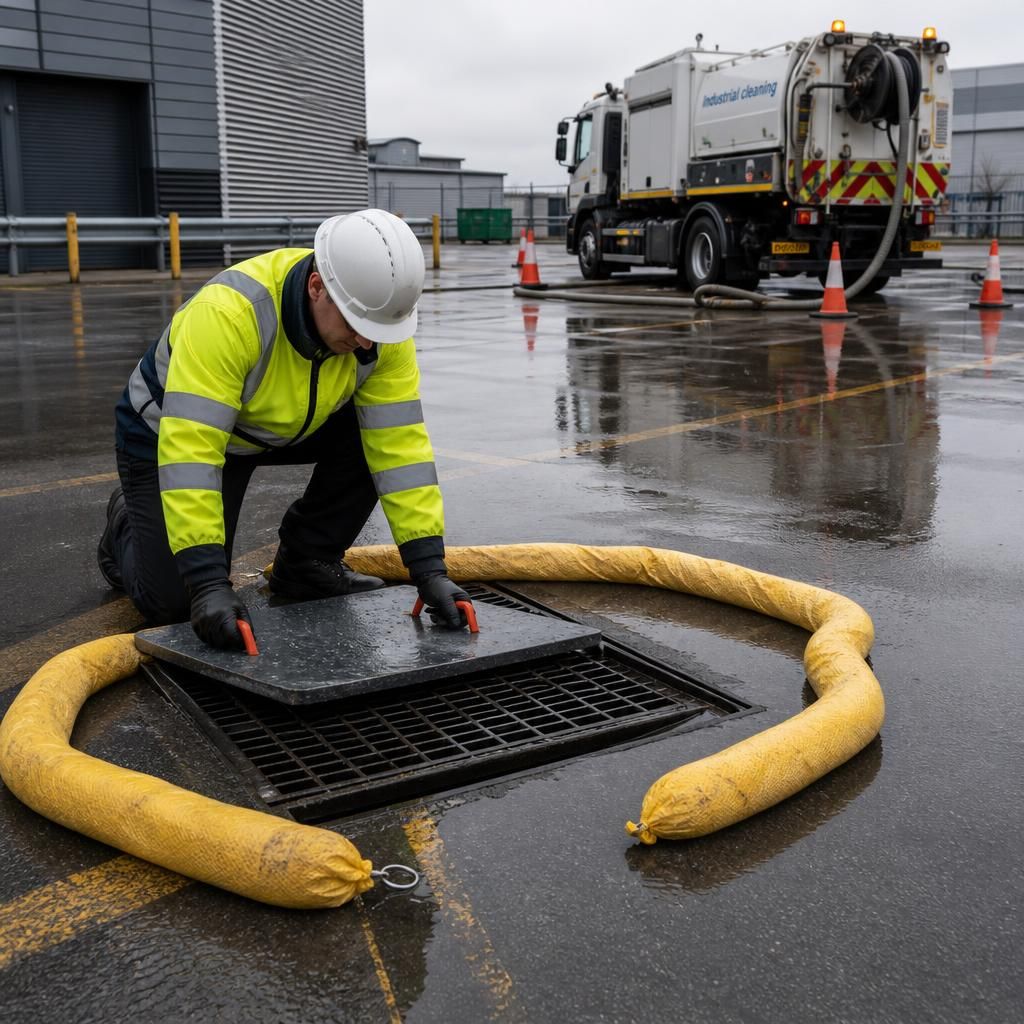
Controlling runoff is one of the most important environmental measures during commercial jet washing. Cleaning water can carry oil, fuel residues, silt, metals, detergents, paint fragments and biological matter into surface-water drains, soil or nearby watercourses.
Before work starts, drainage points should be identified and protected with suitable covers, bunds, absorbent barriers or collection equipment. Contaminated water should be recovered where necessary and discharged only through an authorised route. It should never be moved to another part of the site or diluted simply to make disposal easier.
Plan Commercial Jet Washing with the Right Environmental Controls
Contact Encanto Exterior Cleaning to discuss your site’s drainage, runoff and waste-management requirements before commercial jet washing begins. We can help plan suitable environmental controls for the surfaces and conditions involved.