
What surfaces are suitable for roof and canopy jet washing?
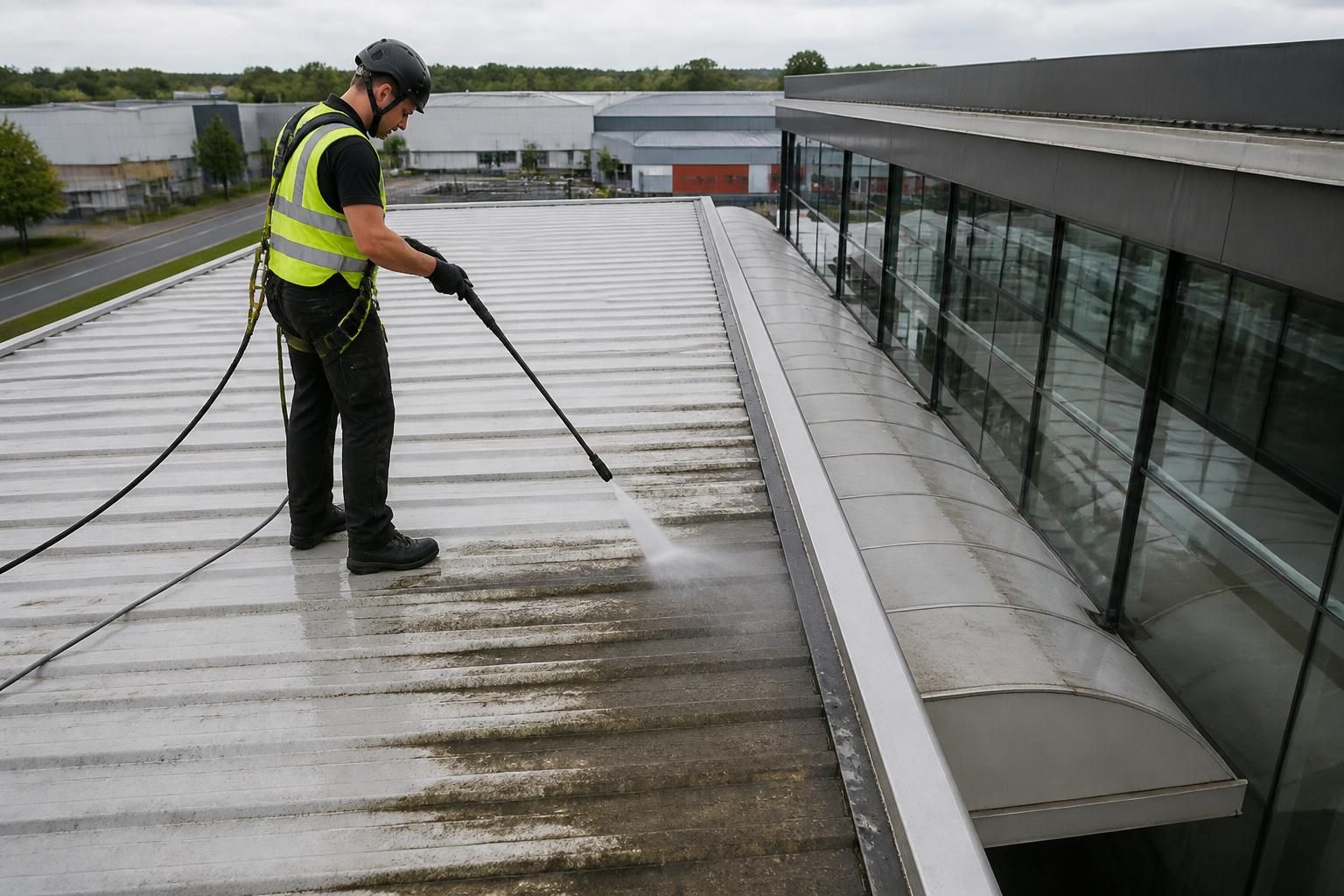
Roof and canopy jet washing is generally suitable for robust surfaces such as concrete tiles, clay tiles, metal sheeting, coated cladding, glazed canopies and well-maintained felt or membrane systems, provided the cleaning pressure is matched to the material. Fragile, aged, cracked, loose or poorly sealed surfaces may require soft washing, steam cleaning or another low-pressure method to avoid damage and water ingress.
Roof and canopy jet washing is most suitable for sound, well-maintained surfaces that can tolerate controlled water pressure without losing their finish, protective coating or weatherproofing. Typical suitable materials include concrete roof tiles, some clay tiles, coated metal sheeting, robust industrial cladding, glazed canopies and certain well-sealed membrane systems. The correct pressure, nozzle, water volume and cleaning method must always be matched to the material and its condition.
Jet washing is not determined by the surface material alone. Age, previous repairs, surface contamination, fixings, joints, coatings and the condition of the underlying structure all affect whether pressure cleaning is appropriate. A professional assessment should take place before work begins, particularly on commercial roofs and canopies where a small defect can allow water into occupied areas, stockrooms, plant rooms or electrical installations.
Concrete roof tiles
Sound concrete tiles are often suitable for controlled jet washing because they are comparatively dense and durable. Pressure cleaning can remove moss, algae, bird fouling, atmospheric dirt and other deposits from the tile surface. However, excessive pressure can erode the surface, expose aggregate, disturb the tile coating or force water beneath overlapping tiles. Older concrete tiles may also be porous, brittle or cracked, so testing and a lower-pressure approach may be necessary.
Clay roof tiles
Unglazed clay tiles can sometimes be cleaned with carefully controlled pressure, but they require more caution than many concrete tiles. Their surface may be weathered, and forceful cleaning can cause chipping, surface loss or movement around laps and fixings. Glazed clay tiles are generally more resistant to staining and water absorption, although damaged glaze, cracked tiles and failing mortar still make high-pressure cleaning unsuitable. Where the tiles are fragile or heavily weathered, soft washing or steam cleaning may provide a safer alternative.
Metal roofs and coated metal sheeting
Galvanised steel, aluminium and factory-coated metal sheets can be suitable for jet washing when the coating and fixings are intact. Controlled cleaning can remove grime, moss, bird deposits and pollution from industrial and commercial roof areas. The operator should avoid directing water into laps, seams, penetrations, vents and fastener points. Strong pressure or unsuitable chemicals may damage the coating, accelerate corrosion or strip protective finishes, particularly where the metal is already scratched or oxidised.
After cleaning, exposed corrosion, failed sealant, loose fixings and damaged coatings should be recorded for repair rather than concealed by further washing. Water runoff should also be managed so that contaminated water does not enter drainage systems or affect neighbouring areas.
Cladding and composite panels
Robust external cladding, including coated metal panels, can generally be cleaned using low or moderate pressure with a suitable detergent where required. This is particularly relevant to warehouses, factories, retail units and other large commercial buildings. The cleaning approach must account for the panel coating, joint sealants and any concealed insulation or backing system. Direct pressure at panel joints can drive water behind the cladding, while aggressive cleaning can mark or dull the finish.
Composite panels, rendered panels and insulated systems should be tested in an inconspicuous area before wider cleaning. The test should check for colour change, coating loss, streaking, water penetration and any reaction with the cleaning solution. A softer method may be more appropriate where the finish is decorative, aged or easily marked.
Glazed, polycarbonate and glass canopies
Glass and glazed canopies are usually suitable for carefully controlled cleaning, provided the glazing, seals and supporting frame are in good condition. Jet washing can remove surface grime, algae and bird fouling, but water should not be directed aggressively at seals, drainage channels, joints or opening mechanisms. Scratches can result from trapped grit or unsuitable accessories, so loose debris should be removed using a method that will not drag abrasive particles across the surface.
Polycarbonate and other plastic glazing require particular care. They may scratch, craze, become opaque or react with certain solvents and cleaning chemicals. Low-pressure rinsing, a compatible cleaning solution and non-abrasive equipment are normally preferable to forceful jetting. The manufacturer’s cleaning guidance should be followed where available.
Felt, liquid-applied and single-ply membrane roofs
Some well-maintained felt and membrane roofs can be cleaned, but they are not automatically suitable for conventional jet washing. The membrane may be vulnerable to punctures, lifted edges, failed seams, degraded coatings and water being forced beneath the system. Cleaning should therefore be undertaken at low pressure, with particular care around outlets, laps, upstands, penetrations and perimeter details.
Liquid-applied coatings and protected membrane systems may tolerate gentle cleaning if the coating is fully cured and undamaged. A high-pressure approach can remove the protective layer or expose the substrate. If the roof is soft, blistered, cracked, ponding water or showing loose edges, cleaning should be paused until the condition has been assessed and any necessary repairs completed.
Canopies made from tensile fabric or flexible materials
Fabric, PVC-coated textile and other flexible canopy materials usually require soft washing or very low-pressure cleaning rather than standard jet washing. Excessive pressure can stretch the material, damage stitching, open seams, remove protective treatments or create leaks. The support structure and tensioning points should also be inspected, as movement during cleaning can increase the risk of damage.
Surfaces that need extra caution or may be unsuitable
High-pressure jet washing is generally unsuitable for surfaces that are cracked, loose, friable, delaminated, severely weathered or poorly sealed. This includes broken tiles, failing coatings, aged asbestos-containing materials, fragile heritage surfaces, deteriorated render and roofs with visible water ingress. It may also be unsuitable where the substrate has not been identified or where the surface contains lead-based paint or other hazardous coatings that could be disturbed.
Asbestos-containing roofing and cladding require specialist management and must not be treated as ordinary jet-washing work. The material should be identified and assessed before any cleaning decision is made. Where hazardous residues, bird fouling or contaminated deposits are present, the method must also account for safe handling, containment and disposal.
How suitability is assessed before cleaning
- The roof or canopy material, coating and construction are identified.
- The condition of tiles, sheets, membranes, glazing, seals, joints, fixings and drainage points is checked.
- Areas showing cracks, movement, corrosion, delamination, loose edges or existing leaks are recorded.
- A small test area is cleaned to confirm the pressure and cleaning agent are compatible.
- Runoff, access, nearby surfaces and sensitive equipment are considered before work starts.
- The cleaning method is adjusted to use jet washing, soft washing, steam cleaning or manual methods as appropriate.
For many commercial projects, the safest solution is a combination of methods rather than one pressure setting across the whole building. A robust concrete-tiled section may accept controlled jet washing, while adjoining membrane details, glazing, sealants or aged cladding require low-pressure cleaning. This reduces the risk of surface damage while still removing the deposits that affect appearance, drainage and maintenance.
Jet washing should also be treated as a cleaning operation, not a repair process. It will not correct failed waterproofing, loose tiles, defective flashings, damaged sealants or structural movement. Any defects identified during the assessment should be reported and addressed through the appropriate repair process before or after cleaning, depending on the risk. Where the surface cannot safely tolerate jet washing, a lower-pressure alternative can usually be selected to achieve effective cleaning without compromising the roof or canopy system.
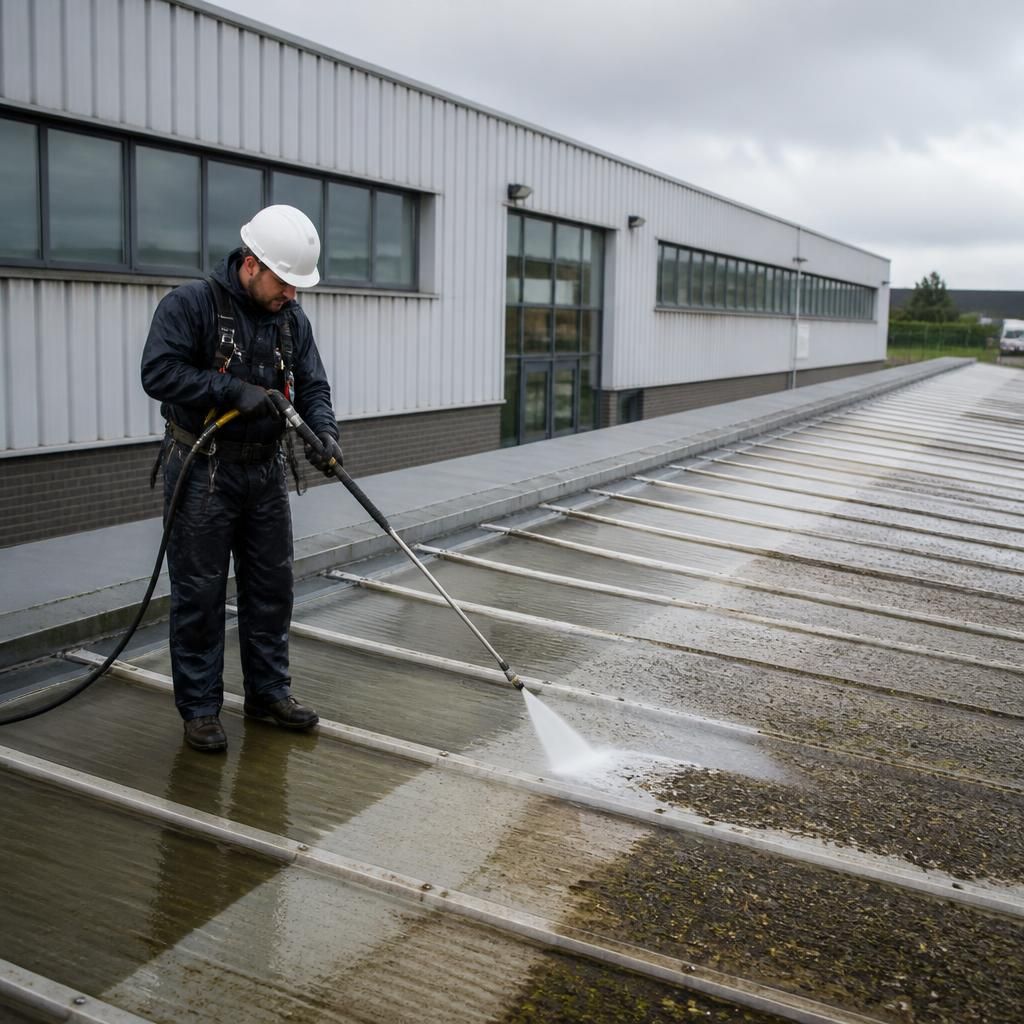
Roof and canopy jet washing is suitable only when the surface is strong enough to withstand controlled water pressure without damage. Sound concrete tiles, coated metal sheeting, robust cladding and well-maintained glazed canopies may be suitable, while cracked tiles, aged membranes, flexible fabric and poorly sealed joints usually require a gentler method.
Before cleaning, the surface condition, coatings, fixings, seams, seals and drainage points should be checked. A small test area helps confirm that the selected pressure and cleaning solution will not cause marking, coating loss or water ingress. Where jet washing is unsuitable, low-pressure washing, steam cleaning or manual cleaning can provide a safer alternative.