
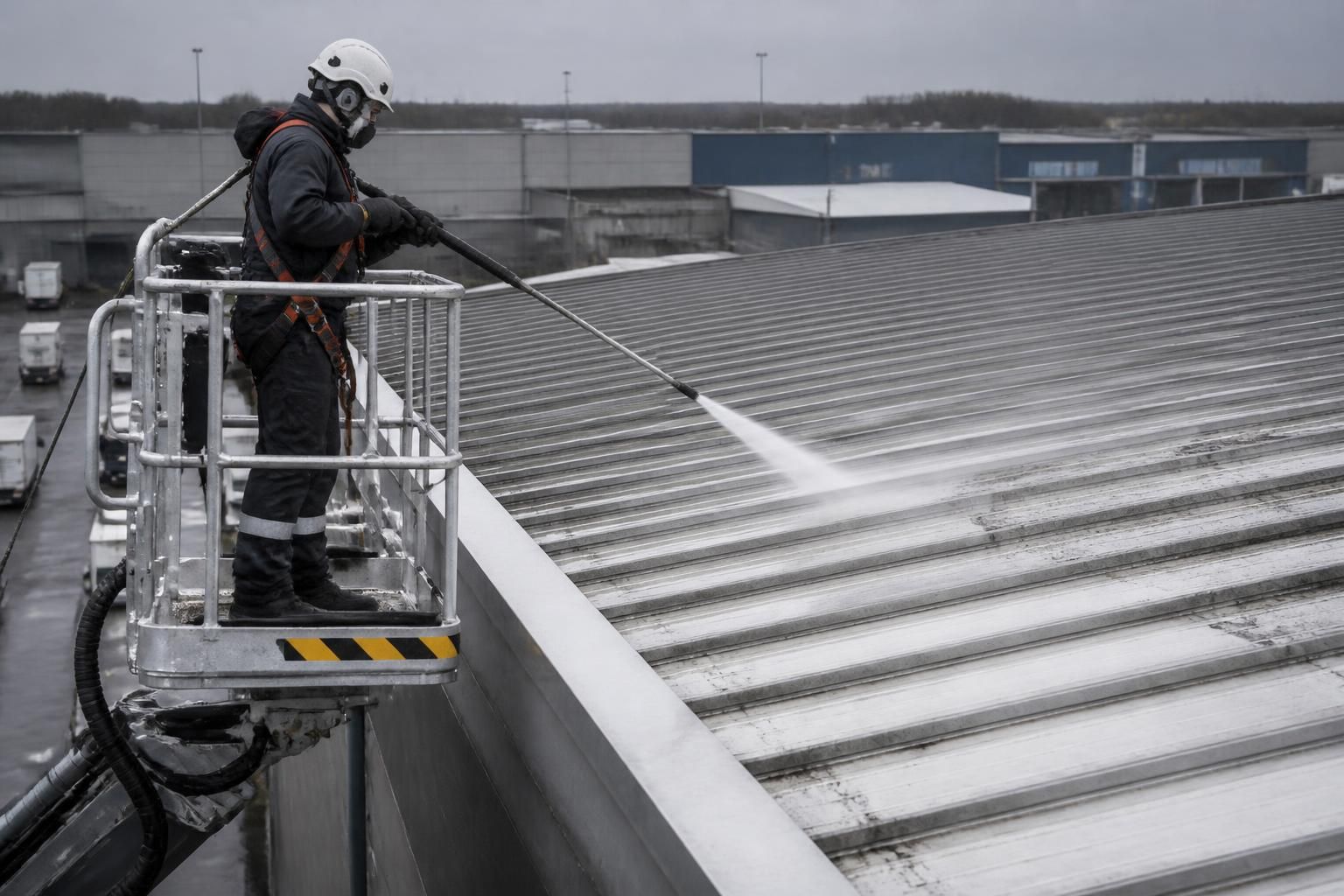
What safety measures are in place during roof and canopy jet washing?
Roof and canopy jet washing is carried out using documented risk assessments, trained operatives, suitable access equipment and appropriate personal protective equipment. Work areas are controlled with exclusion zones and warning signage, while water pressure, cleaning methods and runoff are managed to protect people, the building, electrical systems and surrounding surfaces.
Safety during roof and canopy jet washing is managed through a site-specific risk assessment, trained operatives, controlled access, suitable equipment and careful management of water, pressure and runoff. The cleaning method is adjusted to the roof or canopy construction, its condition, the surrounding environment and the risks identified before work starts.
Pre-work assessment and planning
Before cleaning, the team assesses the roof or canopy, access routes, roof edges, fragile areas, skylights, drainage points, nearby structures and any visible defects. The assessment also considers members of the public, employees, vehicles, plant, pedestrians and other contractors who may be affected by the work. A method statement and risk assessment identify the controls required, including how equipment will be positioned, how the work area will be isolated and what will happen if unsafe conditions are found.
Where the condition of the surface is uncertain, the cleaning team may recommend a survey or a lower-impact cleaning method before using jet washing equipment. Damaged coverings, loose panels, failed sealants and vulnerable joints are not treated as routine cleaning areas. Any concerns are recorded and raised before work continues.
Safe access and work at height
Access equipment is selected according to the height, layout and condition of the building. This may include mobile elevated work platforms, scaffold, tower systems, roof access equipment or other suitable arrangements. Equipment is used by trained personnel, positioned on appropriate ground and checked before use. Access points and working platforms are kept clear so that operatives can handle hoses and equipment without creating avoidable trip or balance risks.
Roof work is not treated as safe simply because the surface can be reached. Edge protection, barriers, restraint or fall-arrest arrangements may be required, depending on the site assessment. Fragile roofs, rooflights and areas unable to support a person are identified and protected from access. Harnesses are only effective when used with a suitable, planned system and secure anchor arrangements; they are not a substitute for proper access planning.
Exclusion zones and warning controls
The area below and around the work is controlled with barriers, cones, warning signs or other suitable measures. This prevents people from walking beneath access equipment, entering the spray area or coming into contact with contaminated water and loosened debris. Where the building remains occupied, work can be phased or timed to reduce interaction with staff, visitors, deliveries and vehicles.
Hoses and electrical leads are routed to minimise trip hazards and are protected where they cross walkways or traffic routes. Operatives maintain communication with colleagues and site contacts, particularly when equipment is being moved, access equipment is repositioned or visibility is restricted.
Controlled pressure, water and cleaning methods
Jetting pressure is selected for the material and its condition rather than applying the highest available pressure. The operator controls the spray distance, angle, nozzle and dwell time to reduce the risk of damaging coatings, membranes, pointing, seals, flashings or canopy panels. Delicate or defective areas may require reduced pressure, soft washing or steam cleaning instead.
Water is directed away from openings, joints and vulnerable building details wherever possible. Before cleaning, doors, vents, electrical points, signage and other sensitive items are protected or isolated. Drainage routes are checked so that water can leave the surface safely without pooling against the building or overwhelming the drainage system. Operatives monitor for unexpected water ingress during the work and stop to investigate if it occurs.
Electrical and equipment safety
Electrical supplies, lighting, signage, roof-mounted equipment and external services are identified before cleaning. Equipment is kept away from electrical hazards, and power supplies are isolated or protected where the risk assessment requires it. Jet washing equipment, hoses, couplings and access equipment are inspected before use and removed from service if defects are found.
Operatives use personal protective equipment suited to the task, which may include protective footwear, gloves, eye or face protection, waterproof clothing, hearing protection and respiratory protection where the assessment identifies a risk. PPE supports the wider controls but does not replace safe access, exclusion zones or correct operating procedures.
Chemical, debris and runoff controls
If a cleaning agent is required, it is selected for compatibility with the surface and used in accordance with its safety information and the agreed method statement. The team controls storage, dilution, application and rinsing, and avoids allowing chemicals or contaminated water to enter inappropriate drains, watercourses or neighbouring areas. Any required permissions or runoff controls are considered during planning.
Jet washing can dislodge moss, coatings, dirt, bird fouling and loose material. The work area is managed to prevent debris falling onto people, vehicles or property. Waste and residue are collected or directed to an appropriate drainage or disposal route rather than being left on walkways or surrounding surfaces.
Weather and changing site conditions
Wind, rain, frost, poor visibility, lightning and extreme temperatures can affect access equipment, surface safety, spray control and the quality of the clean. Conditions are monitored throughout the work, not just at the start. Work is paused or rearranged if weather or site conditions make access, containment or water control unsafe.
Completion checks and communication
After cleaning, the team checks the roof or canopy, edges, joints, drainage points, access areas and surrounding ground for standing water, debris, damage or signs of water ingress. Barriers remain in place until the area is safe for normal use. Any defects or conditions outside the cleaning scope are reported to the responsible site contact, together with any recommended follow-up action.
These controls are applied alongside the site’s own procedures and access requirements. Sharing information about occupancy, vulnerable areas, roof-mounted services, restricted zones and known defects before the visit helps ensure the work plan reflects the actual premises and can be updated if conditions change.
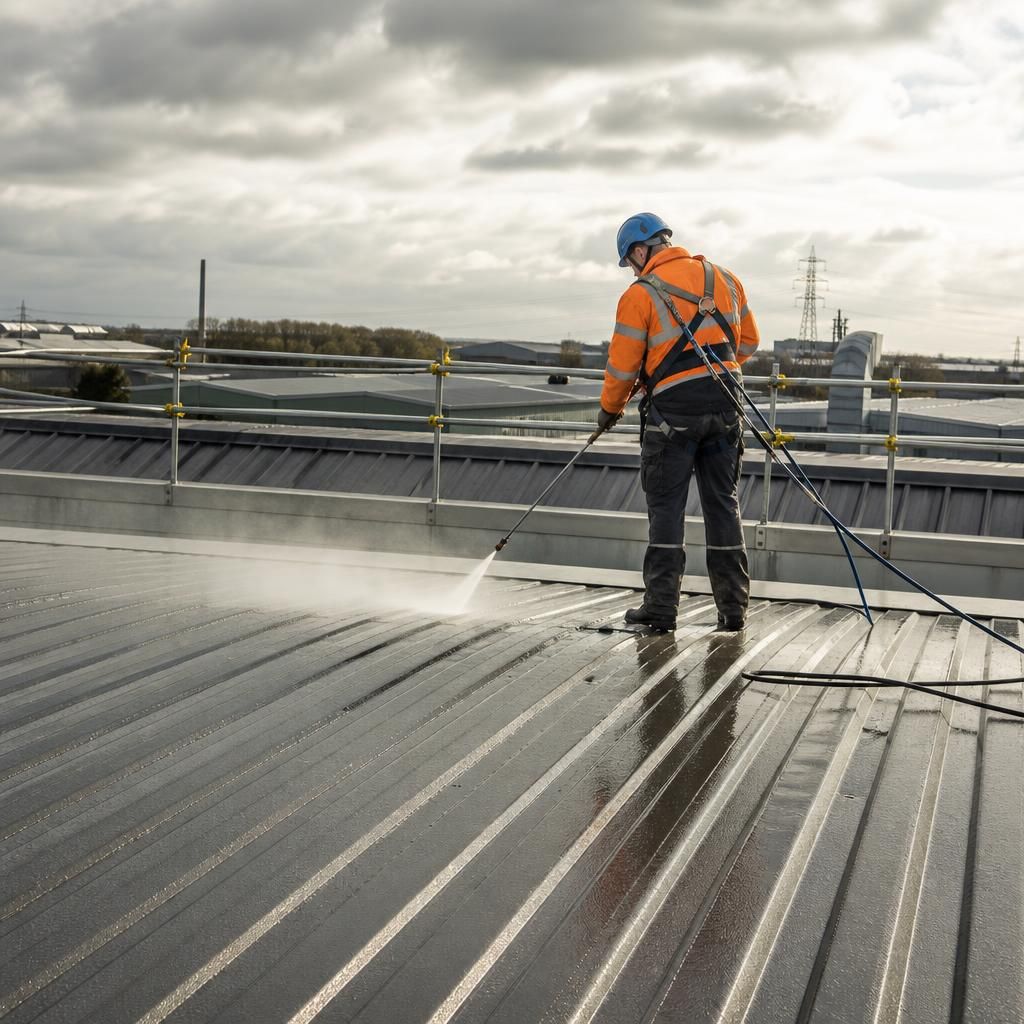
Fall protection and controlled access are central safety measures during roof and canopy jet washing. Before work starts, the team identifies roof edges, fragile surfaces, rooflights and areas below the cleaning zone, then selects suitable access equipment and fall-prevention controls for the site.
Barriers and warning signs help keep employees, visitors, vehicles and other contractors away from falling debris, overspray and contaminated runoff. Hoses and leads are routed to reduce trip hazards, while operatives use suitable personal protective equipment and maintain communication with the site contact throughout the work. If access, weather or surface conditions become unsafe, cleaning is paused until the method can be reviewed.