
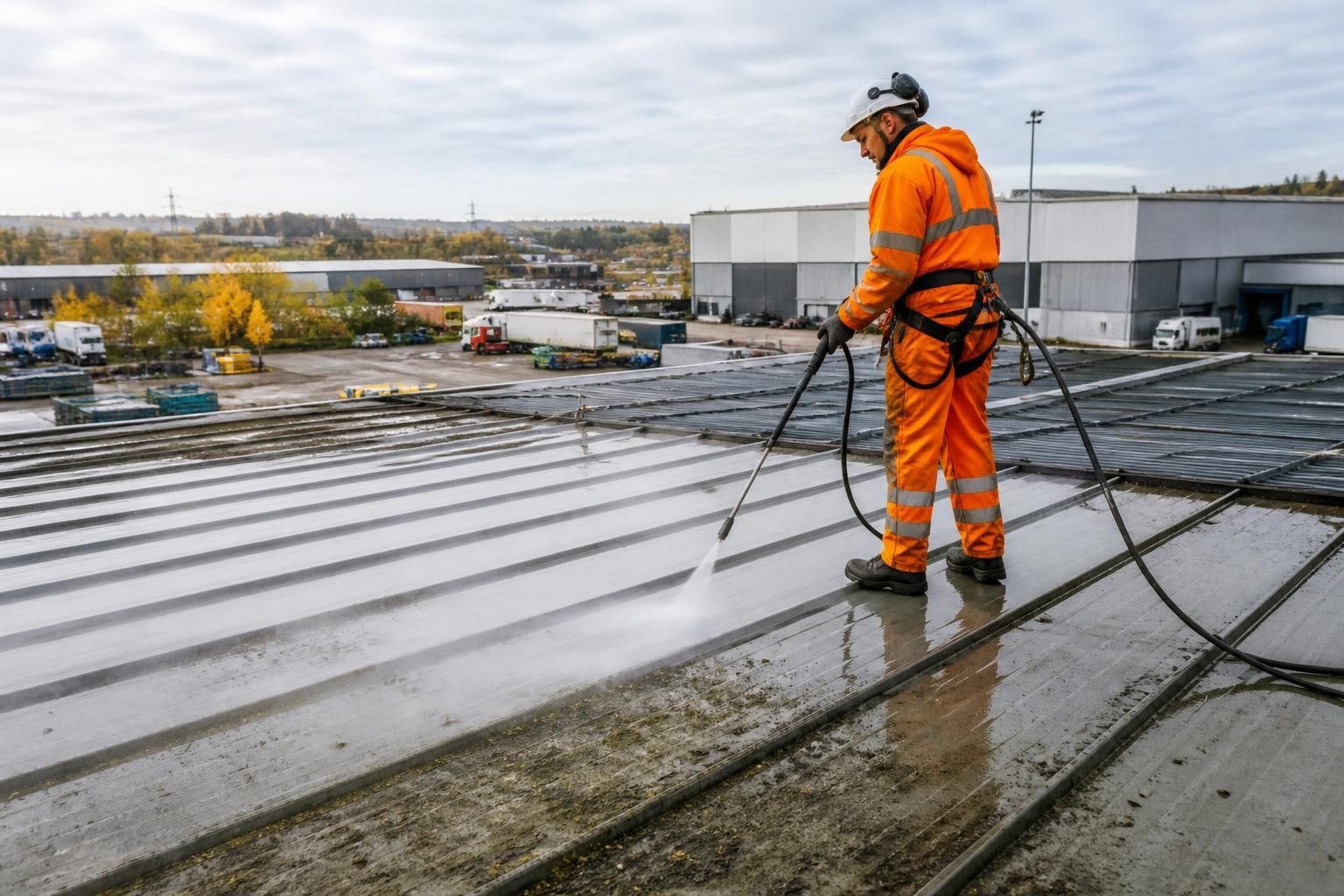
What potential challenges or risks should be evaluated when planning a roof and canopy jet washing project?
Potential challenges include unsafe access, fragile or deteriorated surfaces, water ingress, blocked drainage, contaminated runoff, unsuitable cleaning pressure or chemicals, and adverse weather conditions. These risks should be assessed before work begins so the method, equipment, protection measures and schedule are appropriate for the roof or canopy.
The main risks to assess before a roof and canopy jet washing project are unsafe access, fragile or deteriorated materials, water ingress, uncontrolled drainage, contaminated runoff, unsuitable pressure or cleaning agents, and adverse weather. A competent pre-work assessment should identify these issues so the cleaning method, equipment, protection measures and schedule are appropriate for the building.
Access and work-at-height risks
Roofs and canopies can be difficult to reach safely, particularly where there is limited space for access equipment, a sloping profile, fragile roof lights or nearby traffic. The assessment should consider the safest access method, edge protection, temporary working platforms, exclusion zones and how operatives will move equipment without damaging the structure. Jet washing from ladders is generally unsuitable for sustained work because the operator needs stable footing and control of the lance.
Access equipment must be suitable for the ground conditions and the building layout. Uneven surfaces, soft ground, overhead obstructions, restricted entrances and public areas may affect whether a mobile elevated work platform, scaffold or other system can be used. Vehicles, pedestrians and site personnel should be kept clear of falling debris, overspray and equipment during the work.
Condition and fragility of the roof or canopy
Pressure washing can worsen existing defects if the surface is already cracked, delaminated, corroded, loose or poorly supported. Before cleaning, check for damaged sheets, open joints, failed sealant, exposed fixings, unstable trims, blocked gutters and weak areas around roof lights or service penetrations. A visual inspection should also identify whether the roof covering is suitable for operatives to work near or whether it requires a non-foot traffic method.
Different materials tolerate different cleaning methods. Coated metal, polycarbonate, glass, tensile fabric, asphaltic coverings, tiles and membrane systems may require reduced pressure, wider spray patterns, softer agitation or a non-pressure treatment. An approach that is suitable for a robust metal façade may remove a coating, mark a canopy panel or force water beneath a roof membrane. Where the condition or construction is uncertain, obtain relevant building information or arrange a closer inspection before selecting equipment.
Water ingress and hidden building defects
Jet washing introduces water at pressure into areas that may not be watertight. Particular attention is needed around laps, joints, flashings, roof lights, vents, skylights, cable entries, fixings and canopy connections. Water can be driven beneath overlapping sheets or through failed seals, causing internal staining, damage to stock or equipment, and disruption to occupied areas.
Protect vulnerable openings and avoid directing the spray at joints or penetrations. Internal areas below the work should be checked where practical, and the client should be informed about any pre-existing defects before cleaning starts. If water ingress is already present, cleaning should not be treated as a repair; the affected area may need separate investigation and remedial work.
Pressure, temperature and equipment selection
Excessive pressure, heat or an unsuitable nozzle can etch surfaces, strip protective coatings, loosen granules, damage sealants and force water into the construction. The cleaning plan should specify the lowest effective pressure and the correct distance, angle and spray pattern for each material. A controlled test area is useful for confirming the result before progressing across the full roof or canopy.
Equipment should also be selected according to the available water supply, drainage capacity, access restrictions and height of the work area. Hoses and power cables must be routed so they do not create trip hazards, obstruct emergency routes or foul moving vehicles. Any equipment used at height should be secured and operated in accordance with the manufacturer’s instructions.
Drainage, overspray and contaminated runoff
Loose moss, silt, coating residue and cleaning water can overload or block gutters, downpipes, gullies and surface drains. Before work begins, confirm where the water will go and whether the drainage system can accept the expected flow. Drain outlets may need temporary protection, staged cleaning or separate debris removal rather than being left to carry all material away.
Runoff must be controlled so it does not enter occupied areas, neighbouring property, watercourses, planting beds or drainage systems where contamination could occur. Oil, algae, bird fouling, construction residue, paint particles and other deposits may require collection or specialist disposal. The site plan should include measures for containing, diverting and removing wastewater, with particular care around petrol stations, loading areas, industrial yards and public highways.
Cleaning agents and chemical compatibility
Detergents, biocides and other treatments can improve cleaning but may damage coatings, seals, vegetation or adjacent materials if incorrectly selected or diluted. They may also create additional environmental and handling requirements. Check compatibility with the roof or canopy material, confirm the required dwell time, prevent unwanted drying and rinse thoroughly where appropriate.
Safety data and product instructions should be followed, and chemical use should be proportionate to the deposits being removed. Protect nearby glazing, painted surfaces, vehicles, landscaping and building occupants from splashes and vapour. Do not combine products unless the manufacturer specifically permits it.
Weather and site conditions
Wind can carry spray, debris and chemicals beyond the work area, while rain can increase slip risks and dilute treatments. Frost can affect surfaces and create unsafe conditions, and strong sunlight or high temperatures can cause cleaning products to dry too quickly. Weather can also make access equipment unstable and prevent surfaces from being assessed accurately.
The schedule should include suitable weather criteria and a clear postponement procedure. Conditions should be reviewed before arrival and throughout the work, rather than relying solely on the forecast. If weather changes, the priority should be to make the area safe, secure equipment and resume only when the planned controls remain effective.
People, vehicles and business operations
Cleaning a commercial roof or canopy can affect entrances, walkways, deliveries, car parks, loading bays and customer access. Identify busy periods, vulnerable occupants, emergency exits and critical operations before scheduling the work. Barriers, signs, banksmen, temporary diversions and phased working may be needed to separate the cleaning area from people and vehicles.
Overspray can affect vehicles, electrical equipment, stock and ventilation intakes. Windows, doors, air-conditioning units, lighting and external electrical installations should be identified and protected where necessary. Agree how the site will be handed back, including the removal of debris, standing water, barriers and temporary protection.
Structural, electrical and environmental hazards
Roofs may contain hidden services, fragile roof lights, solar equipment, vents or plant that cannot safely withstand water or impact. Canopies may have concealed electrical lighting, drainage channels or fixings that are not apparent from ground level. Relevant drawings, permits and site information should be reviewed, and electrical installations should be isolated or protected where required.
Bird fouling, mould and other organic deposits may present hygiene risks. Heavily contaminated areas may require additional personal protective equipment, controlled handling and suitable disinfection procedures. The assessment should also account for noise, spray mist and the effect of cleaning operations on nearby occupants or neighbouring premises.
Planning controls and contingency arrangements
A written method statement and risk assessment should set out the proposed access system, surface checks, pressure and chemical controls, runoff arrangements, exclusion zones, emergency procedures and inspection points. The responsible site contact should understand the sequence of work and know how to stop the operation if a defect, unsafe condition or unexpected water ingress is discovered.
Allow time to deal with blocked outlets, failed sealant, loose panels or additional debris rather than assuming the roof is ready for uninterrupted cleaning. Photographs and condition notes taken before and after the work can help distinguish pre-existing defects from issues identified during the project and provide a useful maintenance record.
Practical pre-start checklist
- Confirm the roof or canopy material, age, condition and areas that cannot bear normal foot traffic.
- Inspect access routes, edges, roof lights, joints, penetrations, gutters and downpipes.
- Select equipment and cleaning pressure appropriate to each surface, using a test area where necessary.
- Plan for water collection, debris removal and protection of drains, landscaping and neighbouring property.
- Identify occupants, vehicles, electrical equipment, air intakes and operational restrictions.
- Check weather conditions and establish clear stop-work criteria.
- Agree the method statement, site controls, emergency arrangements and client communication process.
Evaluating these risks before the project helps determine whether jet washing is appropriate at all, or whether a lower-pressure, soft-washing, steam-cleaning or manual method would provide better control. It also allows defects and drainage problems to be addressed separately, reducing the likelihood of avoidable damage, disruption or repeat cleaning.
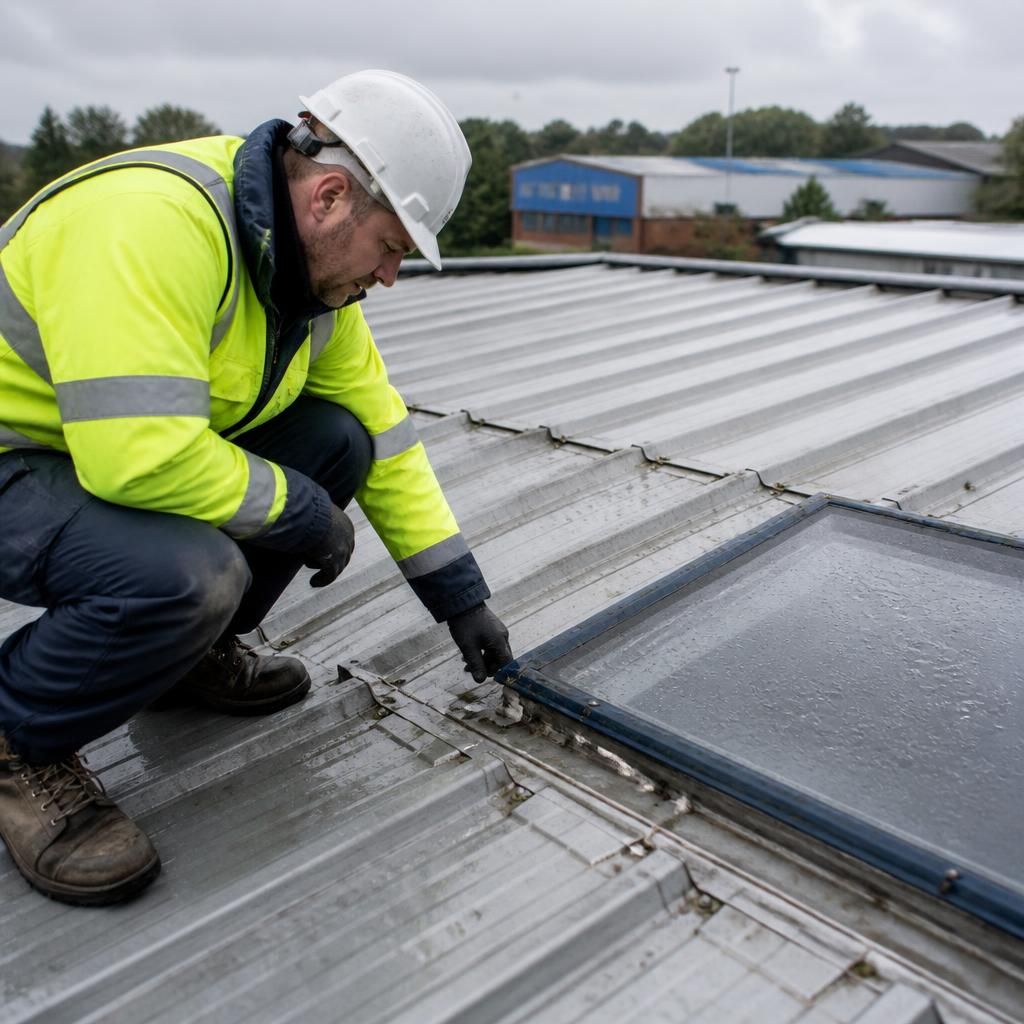
Water ingress is a key risk to assess before roof or canopy jet washing because pressurised water can enter through failed seals, open joints, roof lights, fixings and service penetrations. Existing leaks or defects may become worse if spray is directed at these areas.
Before cleaning, inspect vulnerable details and protect openings where possible. Use the lowest effective pressure, avoid spraying directly into laps and joints, and check internal areas below the work for signs of damp or staining. Any pre-existing defect should be recorded and addressed separately rather than relying on cleaning to resolve it.