
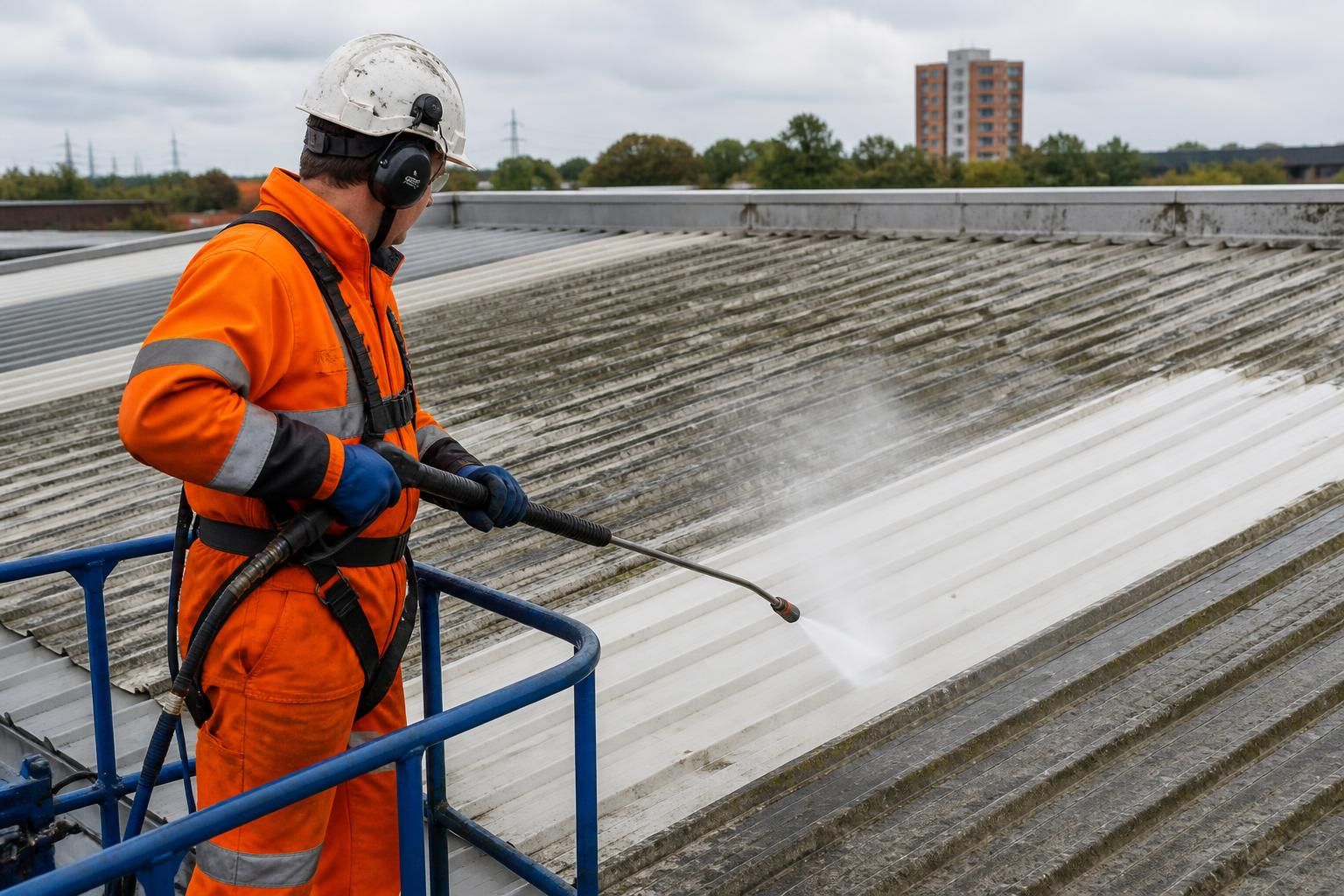
What are the key factors to consider when selecting a professional roof and canopy jet washing service?
When selecting a professional roof and canopy jet washing service, assess the contractor’s relevant experience, safety procedures, insurance, equipment, cleaning methods and ability to protect the roof, canopy and surrounding property. You should also confirm that they provide a clear survey, scope of work, environmental controls, access plan and maintenance recommendations suited to your premises.
Select a professional roof and canopy jet washing service by assessing its experience with your type of property, understanding of roof and canopy materials, cleaning methods, safety controls, insurance, environmental procedures and the clarity of its proposed scope of work. The lowest quotation is not necessarily the most economical option if unsuitable pressure, poor access planning or inadequate water management causes surface damage, leaks or disruption.
Relevant commercial experience
Roof and canopy cleaning is different from ground-level pressure washing. A competent contractor should be able to demonstrate experience with the specific conditions found on commercial and industrial premises, such as large roof areas, entrance canopies, loading bays, fragile coverings, glazed sections, flat roofs, profiled metal cladding and areas above public or vehicle routes. Ask whether the proposed team has completed comparable work and understands the operational requirements of occupied buildings.
Experience should include working around tenants, staff, visitors, vehicles, plant and sensitive building systems. Contractors should also be familiar with planning work in busy locations across Birmingham, the West Midlands and other UK sites where access, weather and site logistics can affect the programme.
A proper survey before work starts
A reliable service should begin with a site survey rather than recommending a standard cleaning process without inspecting the property. The survey should consider:
- The roof or canopy material, age, condition and existing coatings.
- Visible moss, algae, lichen, bird fouling, atmospheric deposits, staining, oil residue or other contamination.
- Cracks, open joints, loose fixings, damaged seals, corrosion, blocked drainage points and areas of existing water ingress.
- Rooflights, glazed panels, membranes, insulation, vents, plant, electrical equipment and other vulnerable features.
- Ground conditions, vehicle access, working height, edge protection, fragile areas and suitable locations for equipment.
- Drainage routes and the likely destination of dirty water, sediment and cleaning residues.
The contractor should distinguish between contamination that can be removed by cleaning and defects that require repair by another specialist. Cleaning should not be presented as a cure for failed waterproofing, damaged membranes or structural deterioration.
Suitable cleaning methods and pressure control
Jet washing should be selected and controlled according to the surface. High pressure may be appropriate for robust concrete or some sound hard surfaces, but it can damage coatings, force water beneath laps and seals, strip protective finishes, open weak joints or disturb fragile roofing materials. A professional contractor should be able to explain the proposed pressure range, nozzle choice, spray distance, temperature and cleaning sequence in terms of the surface being treated.
Where appropriate, steam cleaning, low-pressure washing, soft washing or manual treatment may be safer than conventional high-pressure cleaning. Cleaning agents should be chosen for the contamination and substrate, used at the correct dilution and prevented from affecting nearby plants, drainage systems, vehicles or building occupants. A small test area can help confirm the expected result and identify risks before wider cleaning begins.
Protection against water ingress and damage
Ask how the contractor will prevent water entering the building or damaging the roof system. The method statement should address spray direction, pressure control, vulnerable joints, rooflights, vents, penetrations, drainage outlets and areas where water could collect. It should also explain how openings, doors, air intakes, electrical installations and sensitive equipment will be protected.
Water should not be directed beneath cladding overlaps, roof coverings, canopy fascias or failed seals. Drainage should be checked before cleaning and kept clear during the work so that loosened dirt does not create blockages or overflow. Where a roof or canopy already has defects, these should be recorded and discussed before cleaning starts.
Health and safety arrangements
Work at height and wet cleaning create risks to workers, building users and the public. Select a contractor that provides a site-specific risk assessment and method statement, with controls suited to the actual premises rather than generic paperwork. Important arrangements may include:
- Safe access to the roof or canopy, using suitable access equipment and edge protection.
- Controls for fragile roof areas, openings, slopes, wet surfaces and changing weather conditions.
- Exclusion zones, barriers, warning signs and traffic or pedestrian management.
- Appropriate personal protective equipment and trained operatives.
- Safe handling of hoses, pressure-washing equipment, chemicals and electrical connections.
- Procedures for stopping work if wind, rain, frost, poor visibility or other conditions make the task unsafe.
- Emergency arrangements, rescue planning and communication with the responsible person on site.
Access equipment should be appropriate for the height, reach and ground conditions. A professional team should not rely on unsafe ladder use or improvise access because the original plan did not account for site restrictions.
Insurance, training and compliance
Confirm that the contractor holds appropriate public liability and employers’ liability insurance, and ask for evidence where required by your procurement process. For higher-risk or larger projects, you may also need confirmation of relevant training, access-equipment competence, chemical handling procedures and membership of applicable trade or safety schemes.
Insurance does not replace safe planning. It is still important to establish who is responsible for isolating equipment, protecting goods, managing access, reporting defects and dealing with accidental damage or water ingress. The contractor should provide clear contact details and an escalation process before work begins.
Water, chemical and environmental controls
Roof and canopy cleaning can release sediment, organic matter, oils, detergents and contaminated wash water. The contractor should explain how run-off will be contained, filtered, collected or directed to an approved drainage route. Dirty water should not be allowed to enter surface-water drains, watercourses, planted areas or neighbouring property without suitable controls.
Ask which cleaning products will be used and whether they are suitable for the roof, canopy, surrounding finishes and drainage arrangements. A responsible service will use the least aggressive effective treatment, follow product instructions and provide safety information when requested. Environmental controls are particularly important on sites with food operations, manufacturing processes, landscaping, water features or strict drainage requirements.
Equipment and capability
The contractor should have equipment that matches the scale and access conditions of the project. This may include adjustable pressure-washing systems, steam equipment, water recovery or filtration systems, long-reach tools, lifting equipment and suitable access platforms. Equipment should be maintained, safely operated and positioned so that it does not obstruct fire routes, loading areas or public access.
Capability is not determined by equipment alone. The operative must know when to reduce pressure, change the cleaning method, protect a vulnerable detail or stop and refer a defect for inspection. Ask who will supervise the work and whether the same controls described in the quotation will be followed by the site team.
A clear quotation and agreed specification
A useful quotation should describe the areas to be cleaned, the proposed method, preparation, access arrangements, protection measures, treatment of run-off, expected finish and any exclusions. It should state whether gutters, drainage channels, fascias, underside surfaces, rooflights, plant screens or adjacent paving are included, as these details are often interpreted differently.
Clarify how difficult staining, oxidation, moss growth, old coatings and permanent discolouration will be handled. Some marks may improve without disappearing completely, and aggressive treatment to achieve a uniform appearance could cause unnecessary damage. The quotation should also identify any repairs, surveys, traffic management, out-of-hours working or specialist access that may be charged separately.
Programme, disruption and communication
Agree the cleaning schedule around building use, deliveries, car park activity, tenant access and weather-sensitive operations. The contractor should confirm how much notice is needed to rearrange work if conditions become unsafe and how the site will be left at the end of each shift. For larger projects, a phased programme can keep entrances, walkways or operational areas available.
Good communication includes a named site contact, confirmation of preparation requirements, updates about unexpected defects and prompt reporting of any incident. Before work begins, record the condition of vulnerable surfaces and nearby assets so that existing damage is not confused with damage caused during cleaning.
Inspection and aftercare
Confirm how the finished work will be checked. A completion inspection should look for remaining contamination, blocked outlets, overspray, residue, damage to coatings and safe removal of barriers and equipment. Photographs or a short completion report can provide a useful record for property managers and facilities teams.
Ask for practical maintenance advice, including whether vegetation, debris or bird fouling should be removed routinely and whether drainage needs additional inspection. A planned maintenance approach can reduce the need for aggressive cleaning and help identify developing defects before they lead to leaks or larger repair costs.
Questions to ask before appointing a contractor
- Have you cleaned this type of roof or canopy and a property with similar access requirements?
- What survey findings determine the proposed pressure, temperature and cleaning agent?
- How will fragile areas, rooflights, seals, joints and building openings be protected?
- What access equipment, exclusion zones and work-at-height controls will be used?
- How will dirty water, sediment and chemical residues be managed?
- What is included in the quotation, and what conditions or repairs are excluded?
- How will weather affect the programme and who will approve any changes?
- What insurance, training records and completion documentation can be provided?
For a commercial roof or canopy jet washing project, the strongest choice is the contractor that can connect its cleaning method to the condition of the surface, demonstrate robust safety and environmental controls, and provide a transparent plan from survey through to completion. Comparing contractors against these factors helps protect the building, reduce operational disruption and establish whether the proposed service is suitable for the property rather than simply selecting on price.
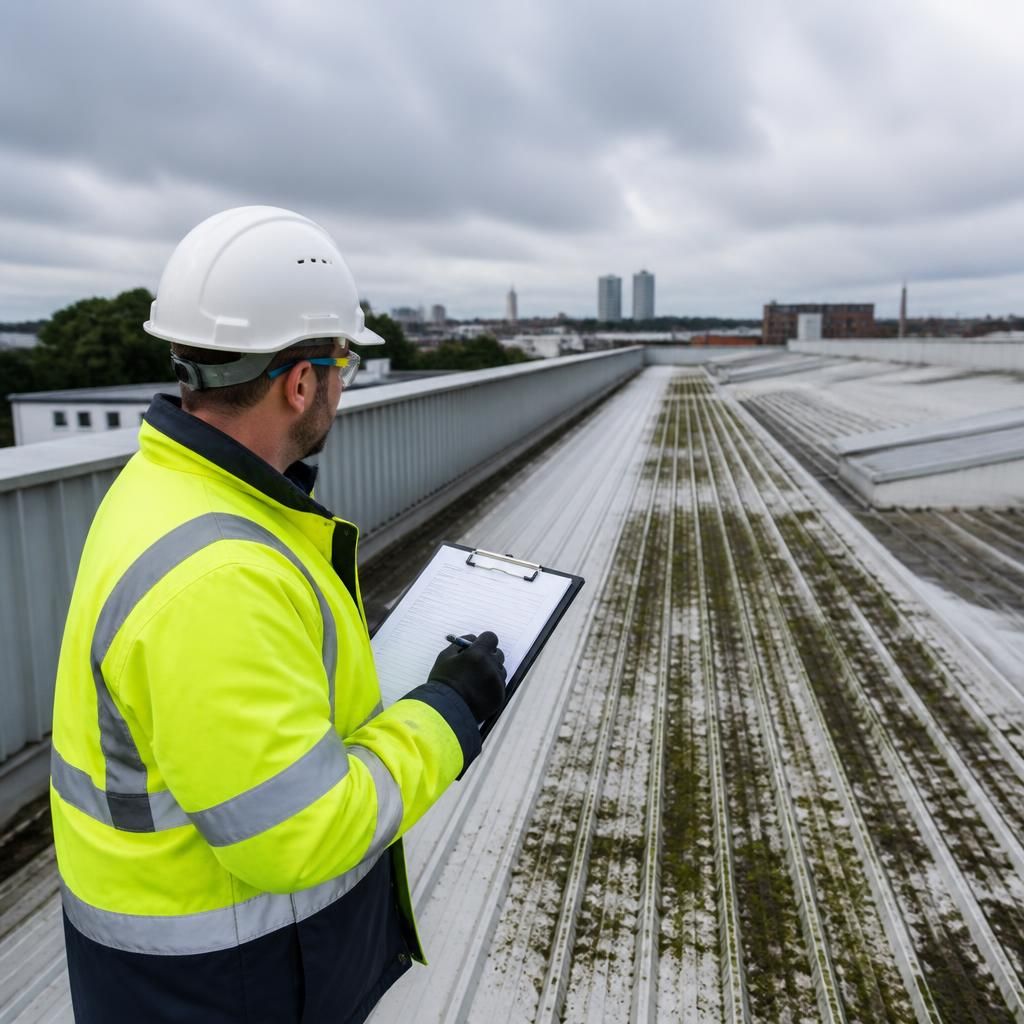
A site survey is one of the most important factors when selecting a professional roof and canopy jet washing service. Before recommending a method, the contractor should assess the surface material, existing defects, fragile details, access requirements, drainage and nearby equipment. This information determines whether jet washing, steam cleaning or a lower-pressure treatment is appropriate.
A suitable contractor should then provide a clear written specification covering the areas included, pressure controls, access equipment, protection measures, run-off management and any exclusions. This helps prevent unsuitable cleaning, water ingress and unexpected disruption, while giving you a practical basis for comparing quotations.