
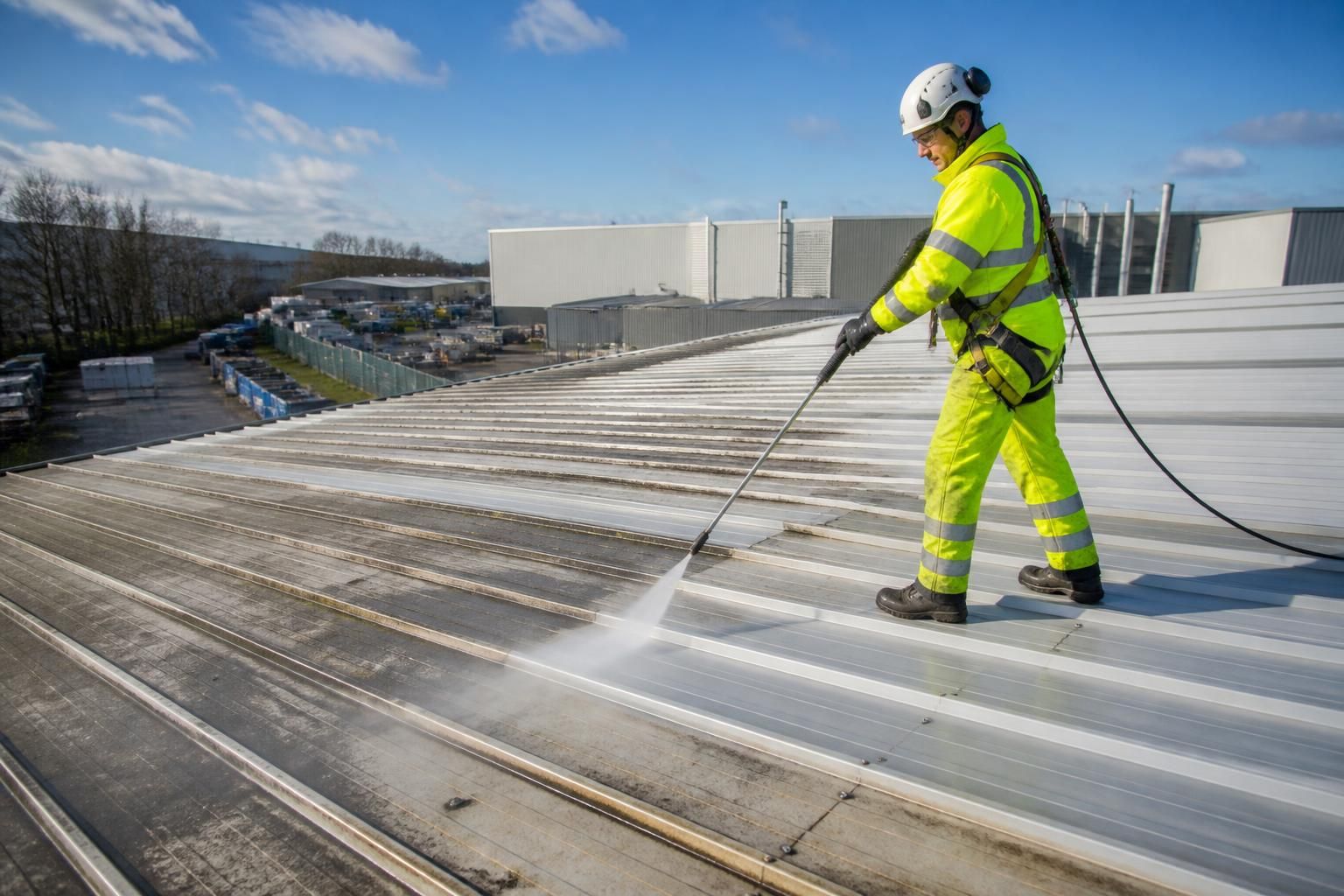
What are the benefits of professional roof and canopy jet washing services?
Professional roof and canopy jet washing removes built-up dirt, algae, moss, oil and other contaminants that can affect appearance, drainage and surface condition. It helps maintain safer, more presentable commercial premises while reducing the risk of blocked outlets, premature deterioration and costly remedial work.
Professional roof and canopy jet washing removes accumulated dirt, moss, algae, oil, bird fouling and other contaminants using controlled water pressure and, where appropriate, steam or specialist cleaning agents. For commercial premises, the main benefits are improved safety and presentation, better drainage performance, earlier identification of defects and reduced risk of avoidable deterioration. The work must be planned around the roof covering, canopy materials, drainage arrangements and access requirements rather than treated as a standard high-pressure wash.
Improved appearance and kerb appeal
Roofs and entrance canopies are highly visible parts of a commercial property. Dirt streaks, biological growth, atmospheric pollution and staining can make a maintained building appear neglected, even when the rest of the site is in good condition. Removing these deposits restores a cleaner, more uniform appearance across roof edges, canopy panels, fascias and associated surfaces.
This is particularly useful for retail units, offices, schools, healthcare premises, managed estates, industrial sites and properties being prepared for inspection, letting or handover. Cleaning can also help maintain a consistent appearance across a portfolio where several buildings need to meet the same presentation standard.
Reduced slip and contamination risks
Moss, algae and other organic growth can retain moisture and create slippery conditions on accessible canopy surfaces, roof walkways, loading areas and adjacent hardstanding. Bird fouling, oil residues and general grime may introduce further hygiene or slip concerns, particularly around entrances, service yards and covered pedestrian routes.
Professional cleaning helps remove these contaminants and allows the surrounding areas to be assessed more clearly. It does not replace a formal risk assessment, repairs or routine housekeeping, but it can form part of a wider programme for keeping access routes and operational areas safer.
Clearer drainage and fewer blockages
Leaves, moss, silt and surface debris can collect around gutters, valleys, outlets and canopy drainage channels. When this material restricts water flow, rainfall may overflow onto façades, walkways, loading areas or electrical installations. Persistent standing water can also increase staining and place additional stress on drainage components.
Jet washing, combined with the appropriate removal of loose debris, can improve the condition and cleanliness of drainage routes. Outlets should be checked during the work, and removed material should be collected and disposed of responsibly rather than being washed into the drainage system. Cleaning alone cannot correct damaged falls, displaced components or defective outlets, so any visible defects should be recorded for further attention.
Helps limit premature surface deterioration
Organic growth and retained moisture can keep roof and canopy surfaces damp for extended periods. Depending on the material, this may contribute to staining, corrosion, coating breakdown, joint deterioration or damage caused by freeze-and-thaw conditions. Dirt can also conceal small defects that would otherwise be identified during routine maintenance.
Removing deposits at suitable intervals helps keep surfaces in a more manageable condition and makes inspections more effective. It is a preventative maintenance measure, not a substitute for replacing failed sealants, repairing corrosion, renewing coatings or addressing structural problems.
Earlier identification of defects
A heavily soiled roof or canopy can hide cracked panels, failed fixings, open joints, damaged flashing, corrosion, blocked outlets and areas of standing water. Once deposits have been removed, these conditions are easier to see and document. This gives property managers and facilities teams better information when prioritising repairs.
Experienced contractors also consider how water behaves across the surface during cleaning. Unusual ponding, unexpected runoff or water emerging from joints may indicate an issue that needs investigation. Findings should be communicated clearly, with photographs or maintenance notes where appropriate, while recognising that cleaning personnel are not automatically providing a structural survey or roofing inspection.
Protection of building façades and surrounding areas
Dirty roofs and canopies can transfer contaminated water onto walls, glazing, signage, paving and vehicles. Runoff may leave streaks or carry moss, silt, oil and cleaning residue into areas that have already been cleaned. A properly planned service considers the complete drainage path and protects vulnerable surfaces before washing begins.
Measures may include controlling the direction and volume of water, protecting entrances and equipment, isolating sensitive areas, collecting contaminated runoff and cleaning affected hardstanding afterwards. Where cleaning agents are needed, their suitability, dilution, dwell time and environmental handling should be assessed in advance.
More consistent cleaning results
Professional equipment allows the cleaning method to be adjusted to the material and the type of contamination. A sound metal canopy, a coated panel, a fragile membrane, polycarbonate glazing and a concrete roof should not all be treated with the same pressure or nozzle. Operators can use lower-pressure washing, controlled jetting, steam cleaning, soft-washing techniques or manual methods where these are safer for the surface.
This controlled approach is important because excessive pressure can remove protective coatings, force water beneath laps or seals, damage membranes and loosen pointing or fixings. The objective is to remove contamination without causing avoidable wear or water ingress.
Reduced disruption to site operations
Commercial roof and canopy cleaning often takes place around staff, visitors, deliveries, tenants and public access routes. A professional contractor can plan access, exclusion zones, water management and working times around the site’s operating requirements. This may reduce interference with entrances, car parks, loading bays and pedestrian routes.
Planning should cover access equipment, welfare arrangements, emergency routes, weather conditions, isolation of vulnerable equipment and communication with the person responsible for the premises. Where work at height is required, the method should be selected according to the building and the task rather than relying on improvised access.
Better support for planned maintenance and budgeting
Including roof and canopy jet washing within a planned maintenance schedule makes contamination easier to manage before it becomes extensive. It also provides regular opportunities to observe changes in surface condition, drainage performance and access requirements. This can help facilities teams distinguish routine cleaning from repairs that require a roofing, building or drainage specialist.
Planned work is generally easier to coordinate than urgent cleaning following blocked drainage, severe staining, complaints or a failed inspection. The appropriate interval depends on the roof and canopy materials, surrounding vegetation, pollution levels, bird activity, drainage design, site use and exposure to weather. A site assessment is more reliable than applying the same frequency to every property.
Support for compliance and property standards
Clean, accessible and well-maintained external areas support a site’s wider health and safety, facilities management and presentation procedures. Cleaning records, method statements, risk assessments and photographs can provide useful evidence that routine external maintenance is being managed. The precise documentation required will depend on the client’s internal procedures, the nature of the site and the work being undertaken.
Jet washing does not by itself establish compliance with every legal or industry requirement. Duty holders must still manage work at height, water discharge, hazardous substances, public protection, equipment isolation and any other risks relevant to the premises.
What a professional service should include
- Assessment of the roof or canopy covering, condition, contamination and drainage layout.
- Confirmation of suitable access equipment and safe working arrangements.
- Selection of pressure, temperature, nozzles and cleaning products appropriate to the surface.
- Protection of glazing, signage, electrical equipment, entrances, vehicles and nearby landscaping.
- Controls to prevent water ingress, uncontrolled runoff and contamination of drainage systems.
- Collection of loosened debris and appropriate management of wastewater and residues.
- Inspection and reporting of visible defects, blocked outlets or areas requiring specialist repair.
- Clear communication about site access, exclusions, expected disruption and any follow-up work.
The value of professional roof and canopy jet washing comes from combining effective contaminant removal with appropriate surface protection, access planning and drainage control. When carried out as part of a wider maintenance programme, it can keep commercial premises safer and more presentable, support early defect detection and help prevent minor cleanliness or drainage issues from becoming more disruptive problems. Before work starts, the cleaning method should be agreed from an assessment of the specific roof or canopy rather than from its appearance alone.
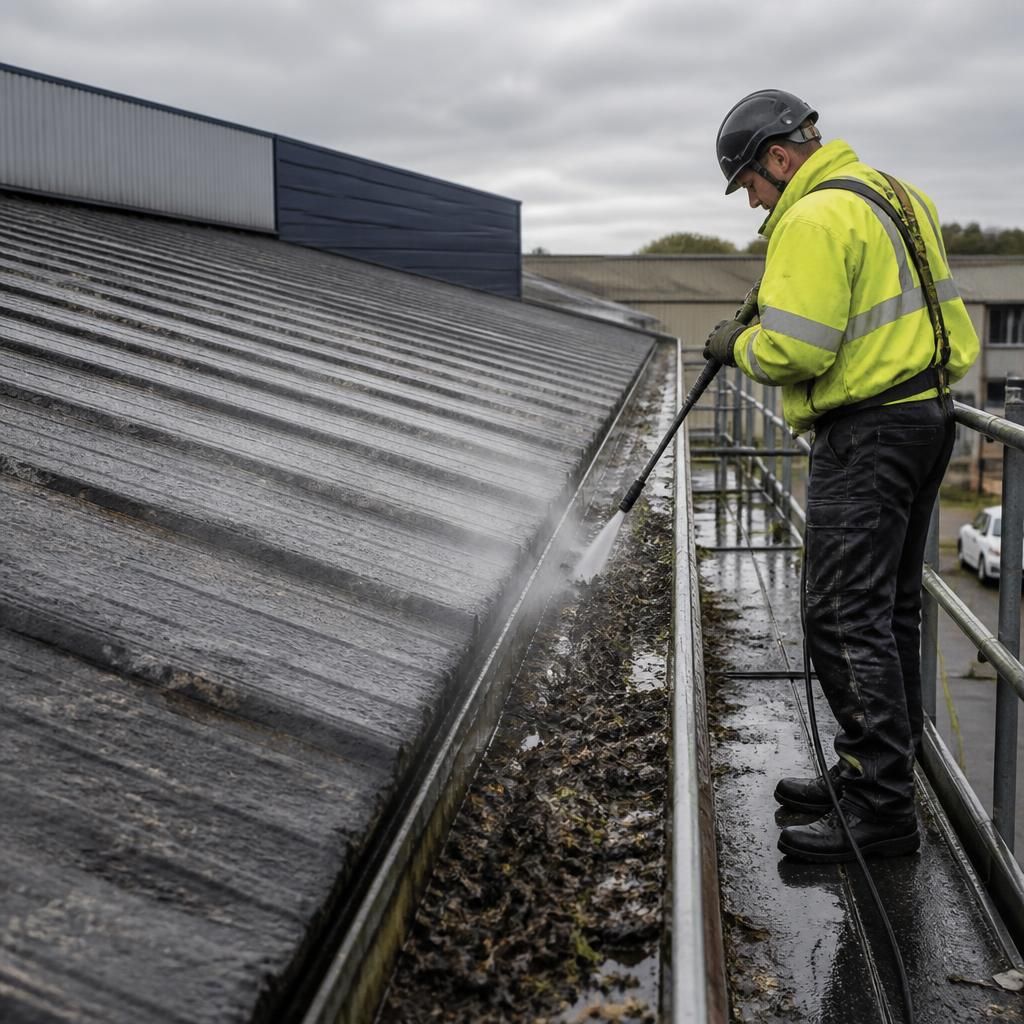
Professional roof and canopy jet washing helps keep drainage routes clear by removing moss, silt, leaves and other debris from gutters, valleys, outlets and canopy channels. Better water flow reduces the likelihood of overflow staining façades, wetting pedestrian routes or leaving standing water around vulnerable roof components.
The cleaning process also makes blocked outlets, damaged joints, corrosion and areas of ponding easier to identify. A suitable contractor will control runoff, collect loosened debris and report visible defects, while recognising that cleaning does not replace specialist roof repairs or a structural inspection.
Arrange Your Professional Roof and Canopy Jet Washing Assessment
Arrange a professional roof and canopy jet washing assessment to review the surface condition, drainage, access requirements and suitable cleaning method for your premises. Contact Encanto Exterior Cleaning for a reliable, site-specific quote.