
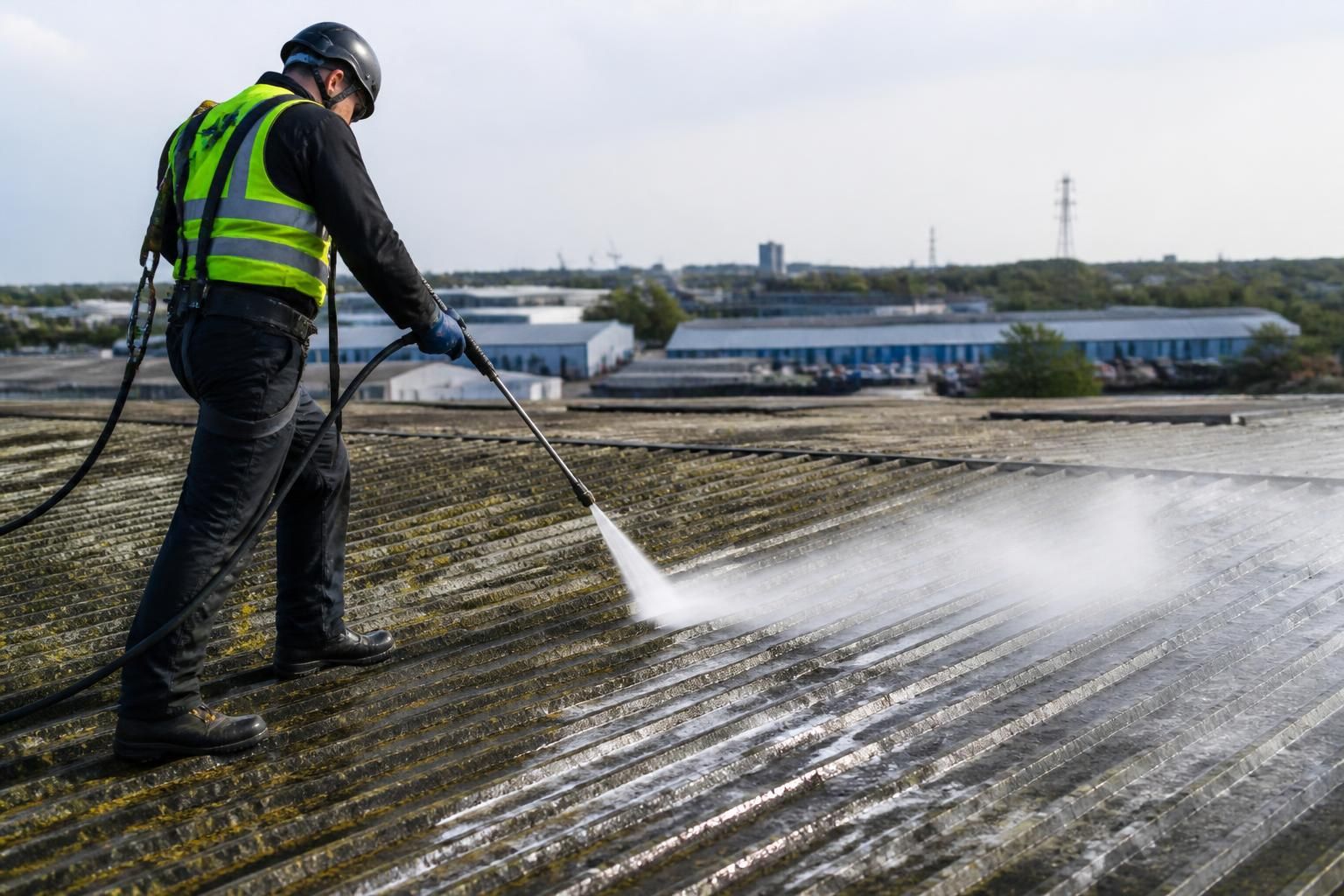
How does the choice of cleaning agents impact the effectiveness and safety of roof and canopy jet washing?
The choice of cleaning agent affects how effectively roof and canopy jet washing removes algae, moss, oil, dirt and other deposits, while also determining the risk of surface damage, staining, harmful runoff and exposure to people. The correct product must be matched to the roof or canopy material, applied at a suitable concentration and thoroughly rinsed or contained by trained technicians.
The choice of cleaning agent directly affects how effectively roof and canopy jet washing removes contamination and how safely the work can be completed. A product that is suitable for one surface may stain, soften, corrode or strip another, so the agent must be selected according to the substrate, the type of deposit, the drainage arrangements and the surrounding environment. Correct application, dilution, dwell time, rinsing and runoff control are as important as the product itself.
Cleaning agents are used to loosen contamination before or during jet washing. Water pressure alone may remove loose dust and surface dirt, but biological growth, traffic film, grease, oil, atmospheric staining and embedded deposits often need chemical assistance. Using the appropriate agent can reduce the pressure and agitation required, helping to protect vulnerable roof coverings and canopy materials while producing a more consistent clean.
Common product types include:
- Neutral or mildly alkaline detergents: These are generally used for general dirt, organic deposits and light atmospheric soiling where a lower-impact cleaning approach is appropriate.
- Biocidal or fungicidal treatments: These help treat algae, moss, lichen and other biological growth. They may be applied as part of the cleaning process or as a separate treatment, depending on the surface and the planned maintenance regime.
- Alkaline degreasers: These can be effective against oil, grease, food residue and heavy traffic film on suitable hard surfaces, particularly around loading areas, car parks and commercial canopies.
- Specialist stain removers: These may be required for particular deposits, but they need careful compatibility checks because some are more aggressive than general-purpose detergents.
Surface compatibility is the first safety consideration. Coated and uncoated metal cladding, polycarbonate, glass, concrete, asphalt, tiles, membranes, painted finishes and tensile canopy fabrics all respond differently to chemicals. An agent that is acceptable for concrete may dull a painted coating or damage a clear canopy panel. Strong alkalis can affect some coatings, sealants and aluminium finishes, while acidic products can attack cement-based materials, metals and protective coatings. Solvent-based products may soften plastics, rubber seals, mastics or certain painted surfaces.
Roofing membranes and coated systems require particular care. Chemical exposure can alter the surface, weaken an aged finish or affect the adhesion of existing coatings. On insulated panels, the cleaning method must also avoid damage to joints, laps and edge details. For canopies, the frame, glazing, fabric, drainage channels and fixings may all require different treatment. A professional assessment should identify the actual materials rather than relying only on the appearance of the surface.
The type of contamination determines which agent is appropriate. Biological growth is not treated in the same way as oil, rust staining or general dust. Applying a strong degreaser to moss may be ineffective and unnecessarily harsh, while using a biological treatment on an oil-contaminated canopy will not address the underlying problem. Identifying the deposit first helps avoid excessive chemical use and prevents repeated cleaning attempts that could increase surface wear.
Concentration and application method also affect both performance and risk. Too weak a solution may fail to loosen the contamination, leading to more pressure, repeated passes and greater water use. Too strong a solution can cause discolouration, surface attack, residue or damage to nearby materials. Technicians should follow the product instructions, use the minimum effective concentration and consider the condition, age and previous treatment of the surface. The solution should not be allowed to dry on the substrate unless the product instructions specifically require this.
A controlled process normally includes a visual inspection, identification of the surface and deposits, protection of sensitive areas, a small test patch and an agreed application method. The test area helps confirm the cleaning result and reveals unwanted reactions such as colour change, whitening, streaking, softening or loss of a coating. It should be reviewed before the wider area is treated, particularly where the roof or canopy is aged, previously painted or of uncertain composition.
Using the correct agent can allow lower-pressure cleaning. Pre-treatment loosens organic matter and oily films so that the jet washing stage can remove them without relying solely on high impact. This is important around roof laps, flashings, sealants, drainage outlets and canopy joints, where excessive pressure could force water beneath edges or disturb components. Chemical cleaning is not a substitute for controlled pressure: the nozzle, spray pattern, distance, direction and rinse method still need to be suitable for the surface.
Safety extends beyond the roof or canopy itself. Cleaning agents can present risks through skin contact, eye contact, inhalation of spray or vapour, and accidental ingestion. A competent contractor should assess the product information and Control of Substances Hazardous to Health requirements, provide suitable personal protective equipment and control access to the work area. People below should be protected from overspray, falling residue and contaminated water, with particular attention to entrances, walkways, occupied premises, vehicles and ventilation intakes.
Runoff must be managed as part of the chemical selection. Detergents, biocides, oils, heavy metals and loosened debris should not be allowed to enter surface-water drains, watercourses, planted areas or neighbouring property without appropriate controls. Before work begins, the team should identify drainage routes, cover or isolate vulnerable inlets where necessary, use collection or diversion measures, and follow the relevant disposal requirements. The method may need to change where the site has sensitive landscaping, open drainage, rainwater harvesting or strict environmental controls.
Rinsing is also important. Residual product can leave streaks, attract further dirt, affect coatings or continue reacting with the surface. Rinsing should be thorough but controlled, using a method that does not spread contaminated water or drive moisture into roof construction details. On some materials, a low-pressure rinse or recovery system is more appropriate than an unrestricted high-volume wash.
Cleaning agents must never be mixed unless the manufacturer expressly confirms that combination is safe and appropriate. In particular, incompatible acidic, alkaline, oxidising or chlorine-containing products can produce harmful reactions or reduce cleaning performance. Products should be stored, labelled and transported correctly, and technicians should have access to the relevant safety data and emergency procedures.
Weather and site conditions influence chemical performance and safety. Strong sun, wind, frost, rain and high temperatures can alter drying time, increase overspray or wash an agent away before it has worked. Wind can carry spray onto vehicles, glazing, vegetation and occupied areas. Rain can create uncontrolled runoff. Work should therefore be planned for conditions that allow the product to remain within the intended area and be rinsed or recovered properly.
For commercial properties, the safest specification is not necessarily the strongest chemical. It is the least aggressive effective agent that is compatible with the surface and can be contained, rinsed and disposed of responsibly. The cleaning plan should record the identified materials, contamination, selected products, dilution and application controls, protection measures, test results and runoff arrangements. Where the substrate or coating is uncertain, the manufacturer or a qualified specialist may need to confirm compatibility before cleaning begins.
After treatment, the roof or canopy should be checked for remaining biological growth, staining, coating defects, blocked outlets and signs of water ingress. Cleaning agents can improve the appearance and hygiene of the surface, but they cannot repair failed seals, damaged membranes, corroded fixings or defective drainage. Reporting these conditions separately ensures that jet washing does not conceal a maintenance issue or create an expectation that chemical cleaning will resolve a structural defect.
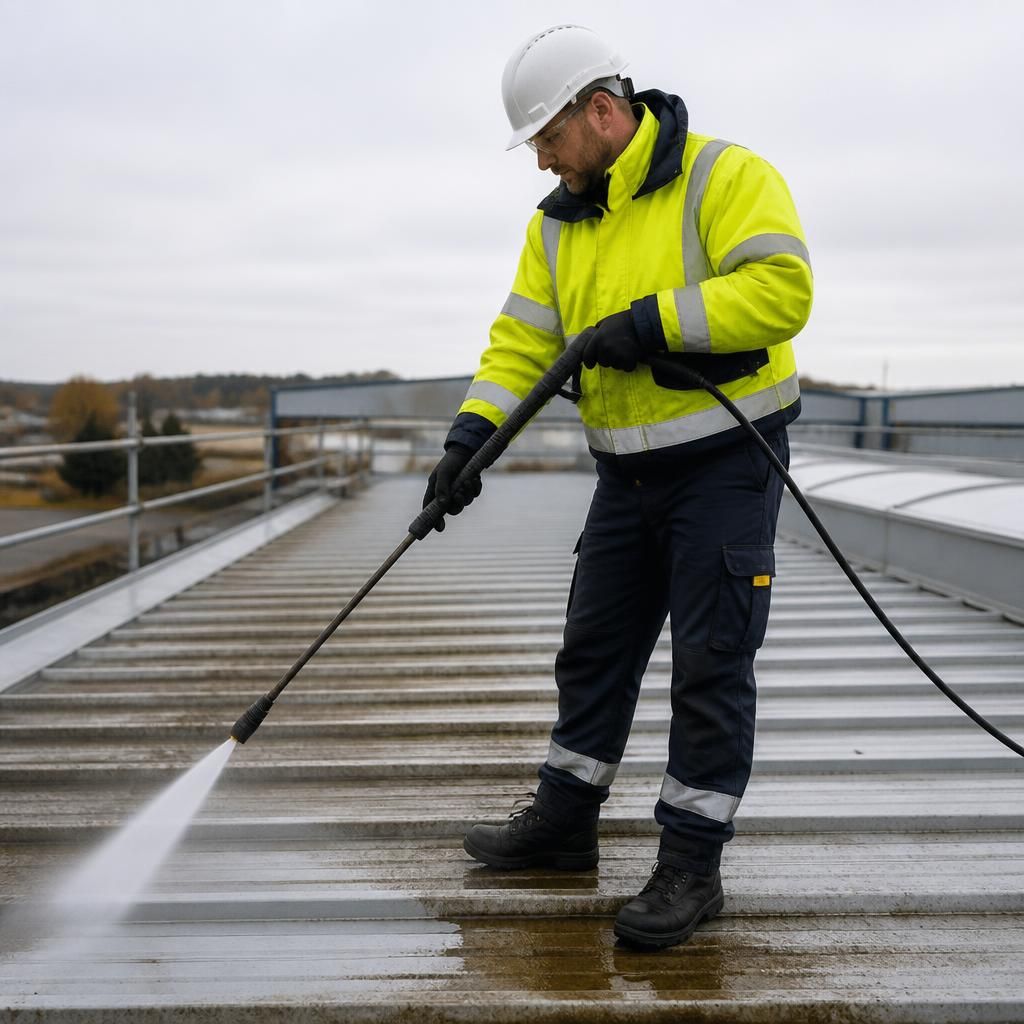
Cleaning agents affect roof and canopy jet washing by loosening contamination before rinsing, which can improve results while reducing the pressure needed on vulnerable surfaces. The safest choice is the least aggressive product that effectively treats the specific deposit and is compatible with the roof covering, coating, glazing, seals or canopy fabric.
Before full application, the cleaning team should inspect the substrate, complete a small test patch and confirm how runoff will be contained. This helps identify potential reactions such as staining, whitening, softening or coating damage. Product dilution, dwell time, weather conditions and rinsing must then be controlled so that residues do not remain on the surface or enter unsuitable drains.