
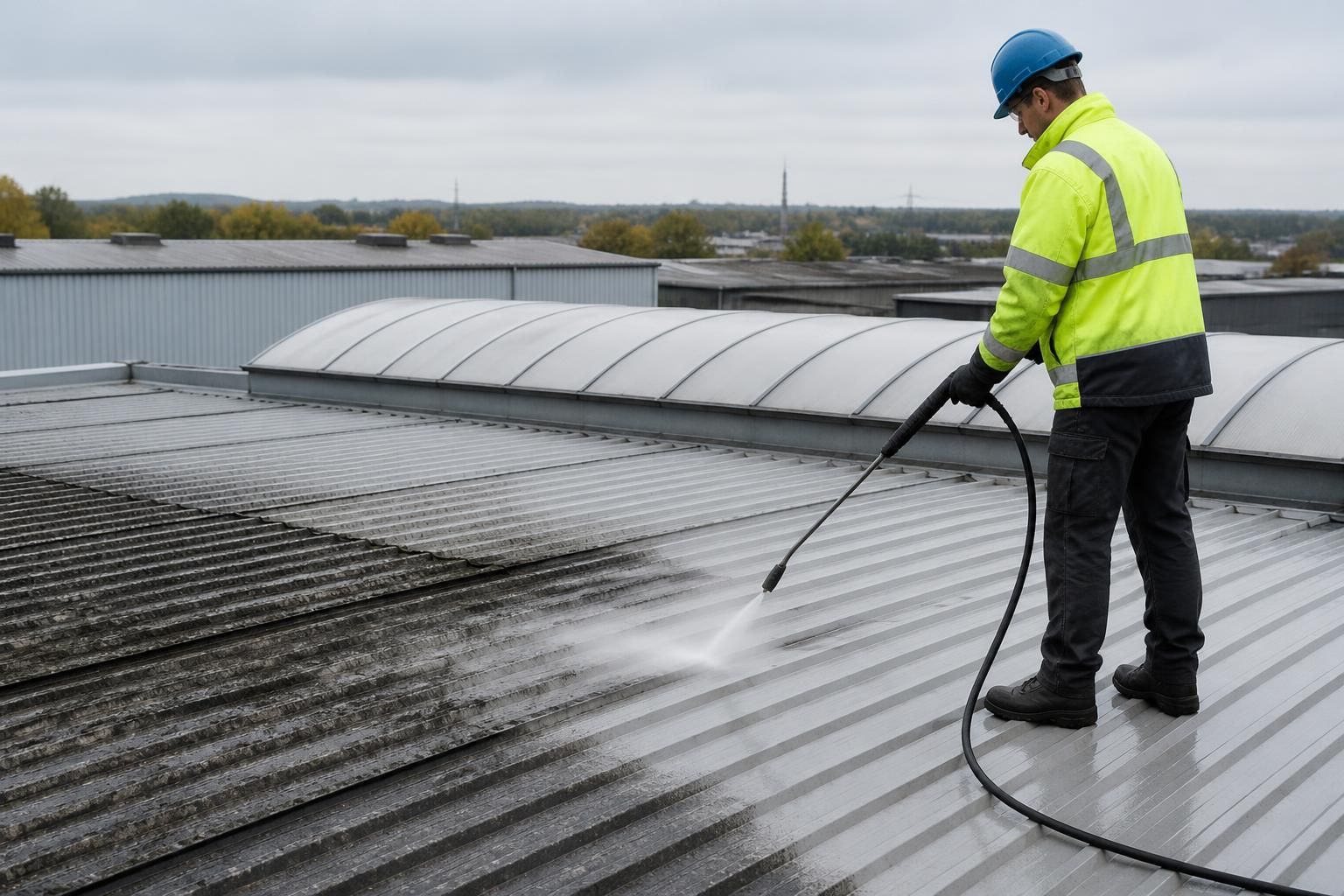
How can scheduling and frequency of roof and canopy jet washing services impact long-term maintenance and costs?
A planned roof and canopy jet washing schedule helps control long-term maintenance costs by removing dirt, moss, algae and other build-up before it contributes to blocked drainage, surface deterioration or more extensive repairs. The right frequency, based on the building, surrounding environment and level of contamination, also makes cleaning more predictable and helps maintain safe, professional premises.
A planned roof and canopy jet washing schedule usually lowers long-term maintenance costs by dealing with contamination before it causes blocked drainage, surface deterioration, staining or more complex repairs. Frequency should be based on the roof or canopy material, its condition, the surrounding environment, drainage performance and the type of contamination present. Cleaning too infrequently can allow deposits to become difficult and costly to remove, while cleaning more often than necessary can add avoidable access, labour and water-treatment costs.
During a scheduled service, dirt, moss, algae, bird fouling, leaves and atmospheric deposits can be removed before they become firmly established. This helps prevent contamination from retaining moisture against the surface or restricting gutters, outlets and downpipes. On canopies, regular cleaning also reduces the build-up that can make glazing, fabric, coated metal or polycarbonate appear permanently stained.
The main financial benefit is better control of maintenance work. Planned cleaning can often be coordinated with other inspections, repairs or access requirements, reducing the need to arrange separate visits. It also makes it easier to identify minor defects, such as failed sealant, loose trims, damaged coatings, blocked outlets or early corrosion, before they develop into water ingress or structural problems.
Reactive cleaning is generally more disruptive and may cost more because it is carried out after contamination has affected the building or created an operational concern. For example, heavily blocked drainage may contribute to overflowing gutters, water marks, damp areas or damage to adjacent façades. A canopy with persistent organic growth may become slippery around its perimeter, while a heavily soiled roof may require additional treatment, slower cleaning methods or more careful use of access equipment.
The most suitable frequency is determined by site-specific factors, including:
- Surrounding vegetation: Trees and dense planting increase the amount of leaves, pollen and organic matter reaching the roof and drainage system.
- Exposure and location: Buildings near busy roads, industrial areas or coastal environments may accumulate airborne grime, traffic film or corrosive deposits more quickly.
- Roof and canopy design: Complex profiles, shallow falls, concealed gutters and areas with limited drainage may need closer monitoring than open, well-drained surfaces.
- Material and coating: Some finishes tolerate pressure washing, while others require lower pressure, steam cleaning or a controlled chemical treatment to avoid damage.
- Use of the premises: Entrances, loading areas, retail frontages and public-facing canopies may require more frequent attention because appearance, cleanliness and slip prevention are operational priorities.
- Previous condition: A site with established moss, algae or staining may need an initial deep clean followed by periodic maintenance visits.
- Drainage performance: Repeated blockages or standing water are signs that cleaning and inspection intervals may need to be reviewed.
A practical maintenance plan normally combines periodic cleaning with routine visual checks. The cleaning interval can then be adjusted according to what is found on site rather than relying on a fixed timetable. After each visit, it is useful to record the areas cleaned, the type of contamination, the condition of drainage components, any defects identified and recommendations for the next inspection. These records help property managers plan budgets and demonstrate that foreseeable maintenance risks are being addressed.
Scheduling should also take account of seasonal conditions and the building’s operating calendar. Cleaning before periods when leaf fall or organic growth is likely to affect drainage can reduce blockages. Work may also be arranged outside busy trading, public access or production hours to limit disruption. Weather conditions, water run-off, drying time and the availability of safe access equipment should be assessed before confirming the visit.
More frequent cleaning is not automatically better. Excessive pressure, unsuitable cleaning agents or unnecessary repeat work can affect coatings, seals, joints and delicate surfaces. The correct approach is to select a cleaning method that matches the material and contamination, use controlled pressure where appropriate, protect vulnerable details and manage wastewater responsibly. A professional assessment should also confirm how water will be prevented from entering roof voids, electrical fittings, joints or internal areas.
For larger commercial sites, a planned programme may cover high-priority areas first, such as main entrances, heavily shaded roof sections, canopy drainage and locations with a history of blockage. Less exposed areas can be reviewed at a different interval. This condition-based approach avoids treating every surface in the same way and helps direct the maintenance budget towards areas most likely to create repair, safety or presentation issues.
In summary, an effective roof and canopy jet washing programme protects the building by combining appropriate cleaning intervals with inspection and record keeping. The objective is not simply to clean the surface, but to prevent contamination-related deterioration, maintain drainage, identify defects early and reduce the likelihood of urgent remedial work. The schedule should be reviewed whenever the building’s use, surroundings, materials, drainage performance or contamination levels change.
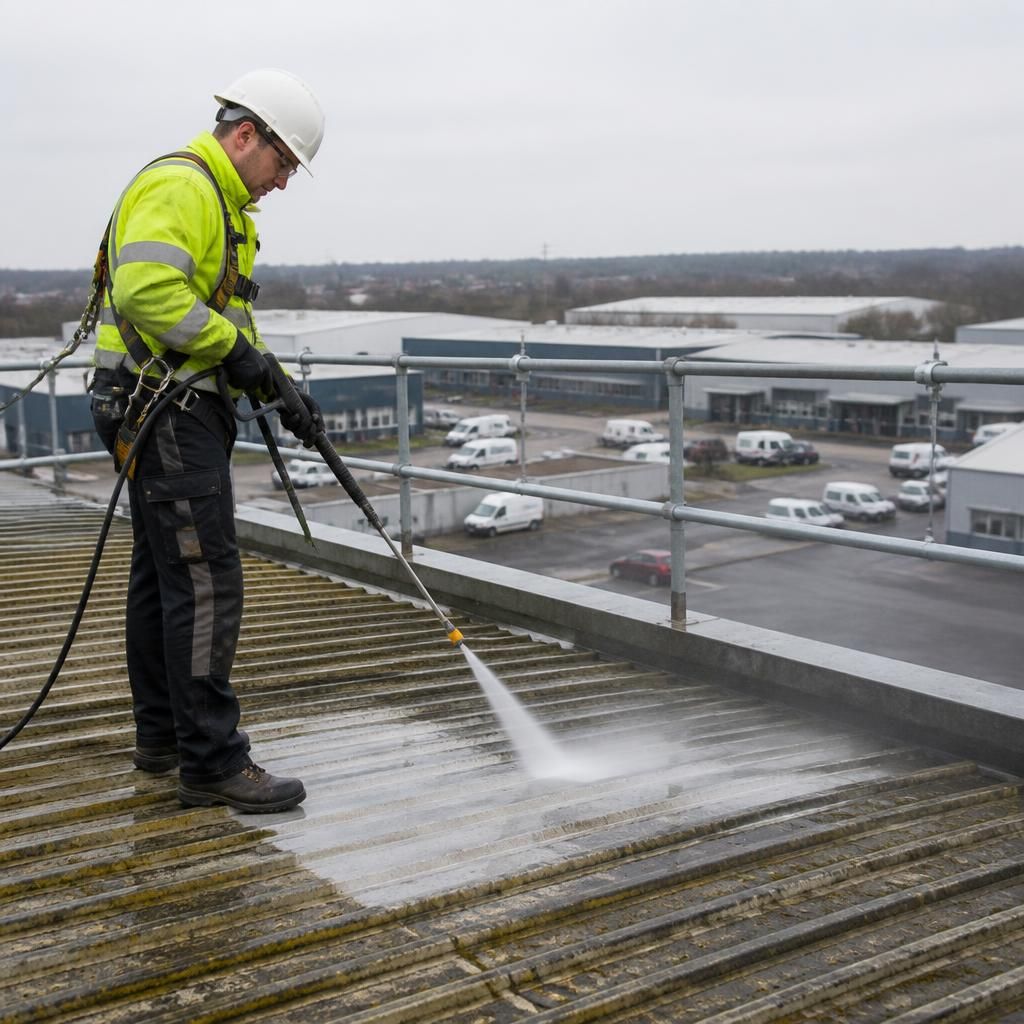
A condition-based roof and canopy jet washing schedule adjusts cleaning intervals according to contamination, drainage performance, material condition and site exposure. This is more cost-effective than cleaning every surface at the same frequency, because attention can be focused on areas most likely to develop blockages, staining, deterioration or safety concerns.
After each service, the condition of gutters, outlets, coatings, seals and vulnerable details should be recorded alongside the contamination identified. These records help determine when the next visit is needed and allow minor defects to be addressed before they require disruptive remedial work. High-priority areas, such as shaded roof sections, concealed drainage and busy entrance canopies, may need closer monitoring than less exposed surfaces.