
What safety measures are implemented during the jet washing of car parks and forecourts?
During jet washing, we use site-specific risk assessments, controlled work zones, suitable PPE, traffic and pedestrian management, and carefully regulated water pressure to protect people, vehicles, buildings and surfaces. Operatives also manage hoses and runoff, follow safe equipment procedures, and inspect the area before reopening it.
Safety during car park and forecourt jet washing is managed through a site-specific risk assessment, controlled work areas, suitable personal protective equipment, traffic and pedestrian controls, and careful handling of water, equipment and runoff. These measures are planned around the layout, surface condition, vehicle movements, nearby buildings and the cleaning method required, rather than applying the same procedure to every site.
Before work starts, the cleaning team assesses the area and identifies hazards such as moving vehicles, pedestrians, uneven or damaged paving, trip points, drainage channels, fuel residues, oil contamination, open access points and nearby electrical equipment. The assessment also considers the pressure and temperature of the cleaning system, the condition of the surface, weather conditions and how wastewater can be contained or directed safely. Any control measures are communicated to the operatives and, where appropriate, the client’s site contact.
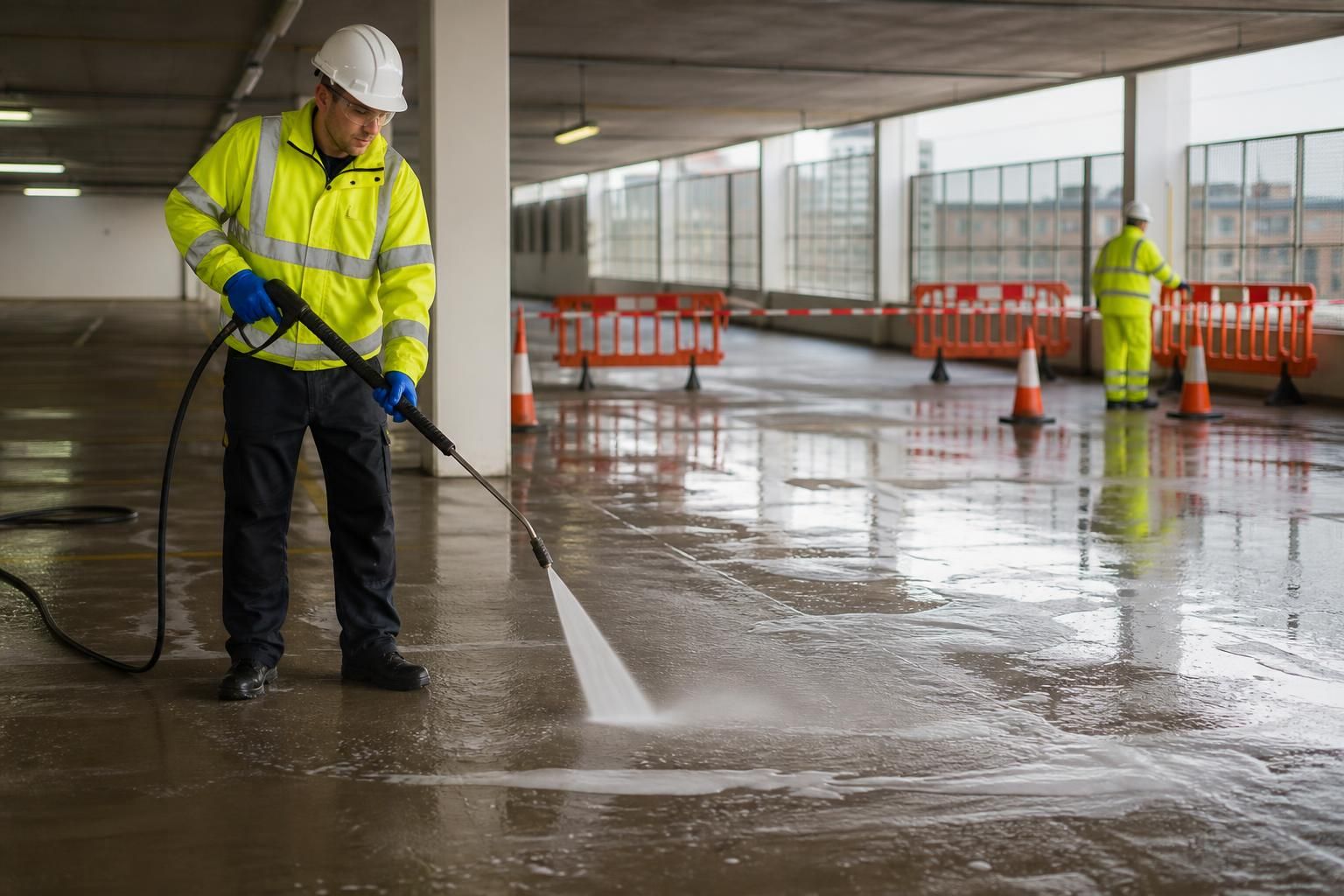
Work zones are established to separate cleaning activity from people and vehicles. Cones, barriers, warning signs and exclusion areas can be used to prevent access to wet surfaces, hoses, machinery and high-pressure spray. On active sites, cleaning may be scheduled in quieter periods, with sections closed progressively rather than leaving the whole car park or forecourt unavailable. Where vehicle movements cannot be stopped, a suitable traffic management arrangement is agreed before work begins.
Pedestrian routes are kept clear wherever possible, and operatives remain alert to customers, staff, delivery drivers and members of the public entering the area. A banksman or other agreed communication system may be required where vehicles need to move close to the work zone. Cleaning is paused if an unexpected person or vehicle enters an unsafe area.
Operatives wear PPE appropriate to the task and the site conditions. This may include waterproof protective clothing, gloves, eye or face protection, slip-resistant safety footwear, hearing protection and high-visibility clothing. Additional PPE or controls may be needed where the surface contains oil, fuel, biological contamination, chemical residues or other substances that could create a health risk.
Jet washing equipment is operated by trained personnel and checked before use. Hoses, trigger guns, lances, couplings and connections are inspected for damage, while machinery is positioned on stable ground away from vehicle routes where practicable. Operatives maintain control of the lance, avoid directing spray towards people, vehicles, glazing, vents or vulnerable building components, and never leave pressurised equipment unattended. The equipment is isolated or depressurised before adjustments, clearing blockages or moving between work areas.
Water pressure, temperature and the choice of nozzle are matched to the surface and the type of soiling. Excessive pressure can damage jointing, coatings, paintwork, asphalt, concrete, block paving, drainage covers and building entrances. Operatives use controlled settings and test a discreet area where the surface or finish is uncertain. Particular care is taken around expansion joints, cracked paving, loose materials, line markings, resin-bound surfaces and areas where water could enter a building.
Hoses are routed to reduce trip hazards and are not left across unprotected pedestrian routes or positioned where vehicles can run over them. Where a hose must cross a route, that crossing is controlled or protected. Operatives also manage spray drift so that water does not create an unexpected hazard for passing pedestrians, obscure drivers’ visibility or affect neighbouring property.
Runoff is controlled as part of the cleaning process. Silt, oil, detergents and contaminated water should not be allowed to enter surface-water drains without suitable consideration and controls. Drainage points may be protected or isolated where necessary, and wastewater can be collected, vacuumed or directed to an appropriate foul-water connection in accordance with site requirements and applicable environmental controls. Spillages and displaced contaminants are dealt with promptly rather than being left on the surface.
Forecourts and other areas with fuel, oil or chemical residues require particular care. The team considers ignition sources, ventilation, drainage, absorbent materials and the cleaning products being used. Chemicals are selected and handled in accordance with their safety information, and they are not mixed unless the manufacturer’s instructions expressly permit it. If contamination presents a risk beyond the agreed cleaning scope, work is stopped and the issue is referred to the responsible site contact.
Electrical risks are also assessed. Portable electrical equipment, cables and connections are kept away from standing water wherever possible, and equipment is used in accordance with its intended conditions. Operatives avoid directing water towards electrical installations, charging points, lighting, control panels, roller shutters and building openings. Any exposed or damaged electrical equipment is reported before cleaning proceeds nearby.
Weather and site conditions can affect safety. High winds may increase spray drift, while freezing temperatures can create an icy surface after cleaning. Poor visibility, heavy rain and inadequate lighting can also make traffic and pedestrian control more difficult. The work may therefore be adapted, postponed or stopped until the area can be cleaned and reopened safely.
After cleaning, the area is checked for standing water, loose debris, remaining contamination, displaced covers, damaged surfaces and any equipment or barriers left behind. Wet areas remain controlled until they are safe for normal use, and the client’s site contact is informed of any defect or condition that needs attention. Where necessary, the work area is reopened in sections after the team has confirmed that access routes, drainage and surrounding property are secure.
These precautions work together: risk assessment identifies the hazards, site controls keep people away from them, PPE provides personal protection, and careful equipment and wastewater management protects the property and the environment. The precise measures are confirmed before each project because a retail forecourt, multi-storey car park, construction site and public-sector facility can present very different operating risks.
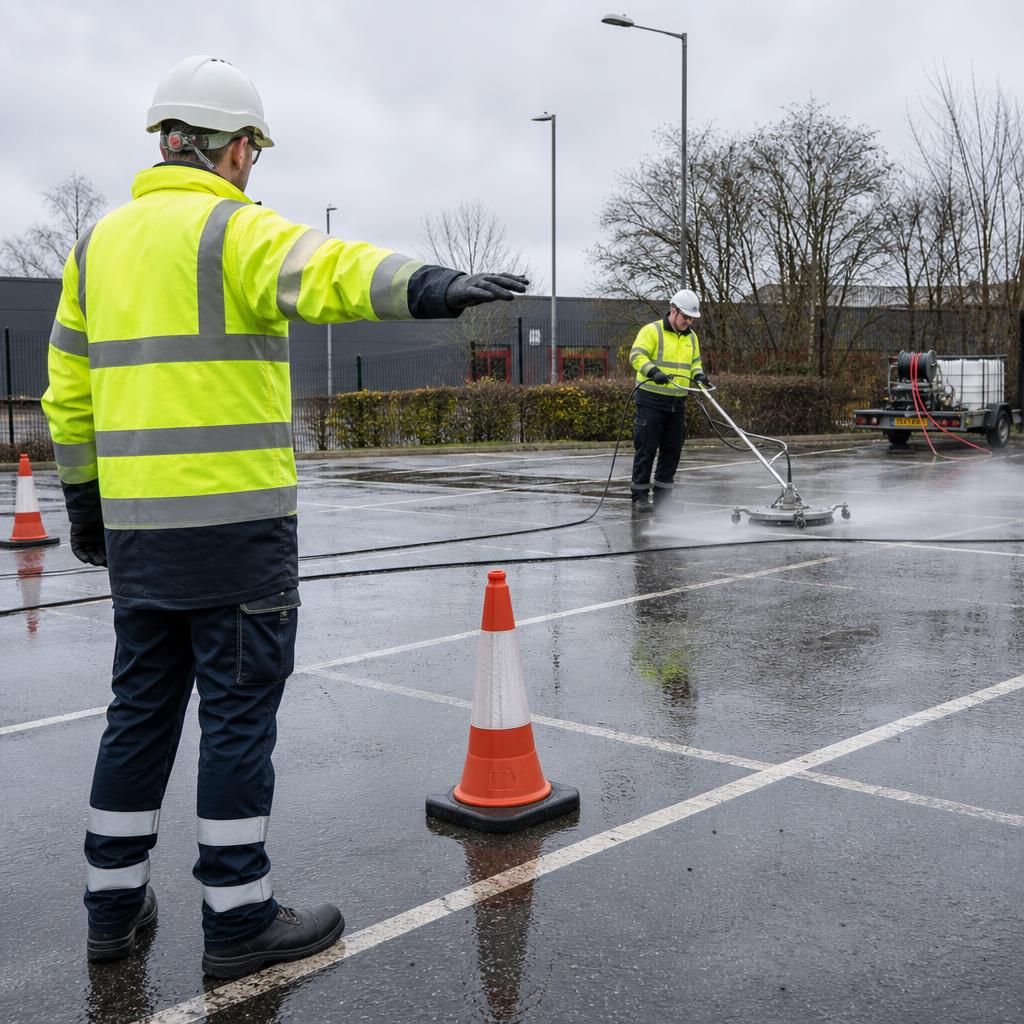
Traffic and pedestrian management keeps people away from active jet washing equipment, pressurised spray and wet surfaces. Before cleaning begins, the team agrees the work zone, access routes and vehicle controls with the site contact, using barriers, cones and warning signs where required.
Cleaning is completed in controlled sections wherever possible, with hoses routed away from walkways and vehicle paths. Operatives monitor the area throughout the work and pause the equipment if a pedestrian, customer or vehicle enters the exclusion zone. The section remains restricted until standing water, equipment and slip hazards have been dealt with.