
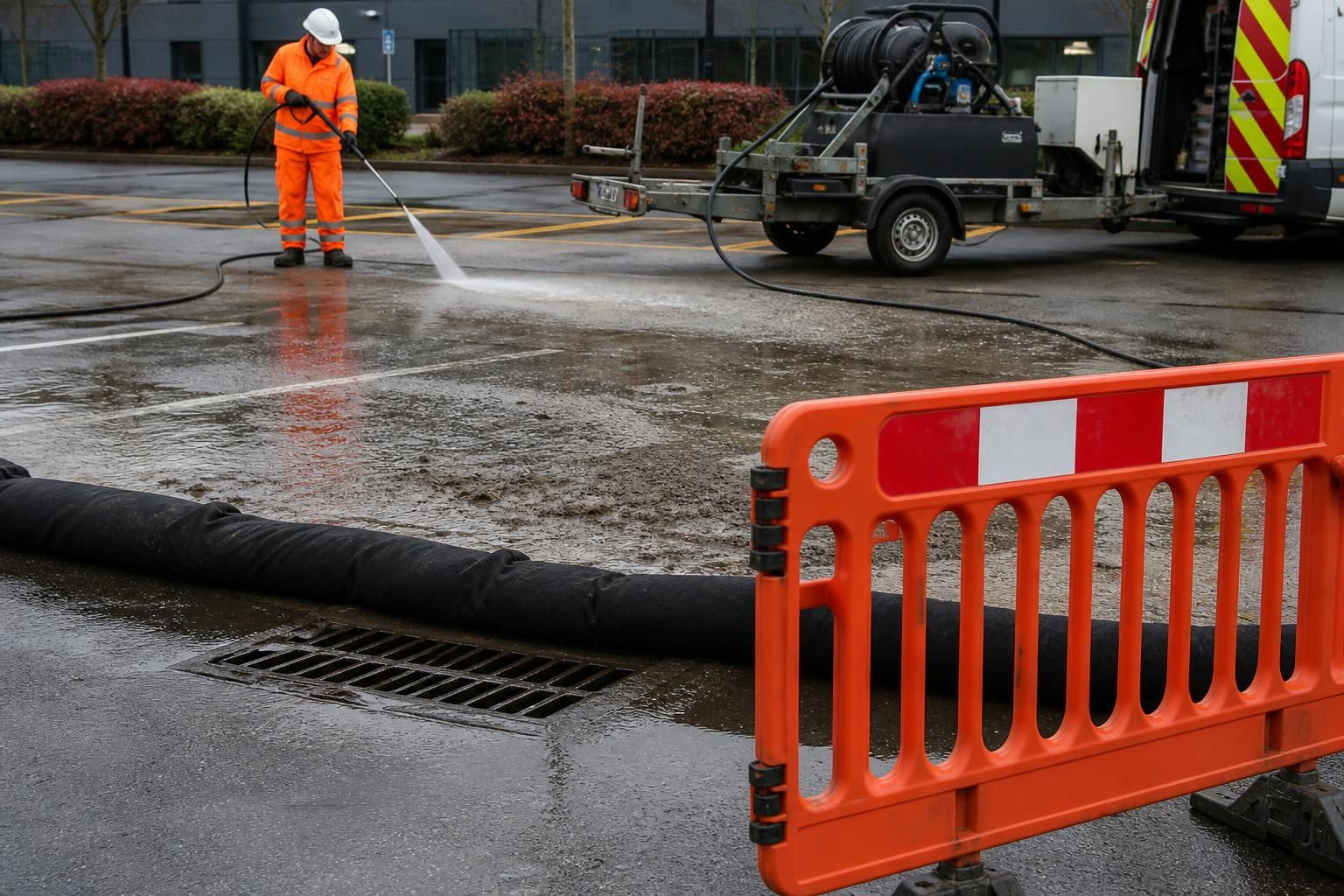
What measures does the company take to ensure environmental responsibility during the jet washing of car parks and forecourts?
We support environmental responsibility during car park and forecourt jet washing by using water-efficient equipment, selecting cleaning methods and products appropriate to the surface, and controlling runoff so contaminated water does not enter surface drains or soil. We also collect and dispose of wastewater and cleaning residues responsibly, while planning each job to avoid unnecessary water use and protect surrounding areas.
Environmental responsibility during jet washing means preventing contaminated water, detergents, oils and surface debris from entering drains, soil or nearby watercourses, while using only the water and cleaning products needed to achieve the required result. Before work starts, we assess the car park or forecourt, identify drainage routes and pollution risks, and select a cleaning and wastewater-management method suited to the site.
Our main environmental controls include:
- Planning the work carefully: We inspect the surface, levels, drainage points, nearby planting, watercourses and vulnerable areas before setting up. This helps us identify where fuel, oil, grease, silt, chewing gum, traffic film or other contaminants may be present and determine how runoff must be contained.
- Controlling runoff: We use suitable drain covers, bunds, booms, barriers or temporary containment where necessary to stop dirty water reaching surface-water drains, soil or landscaping. Surface-water drainage commonly leads towards watercourses, so it is not treated as a suitable disposal route for contaminated wash water.
- Recovering wastewater: Where the wash water contains pollutants, we use wet vacuums, pumps or other recovery equipment to collect it rather than allowing it to flow away uncontrolled. The recovered water is then managed in accordance with the site arrangements and applicable disposal requirements.
- Using water efficiently: Pressure washing and steam-cleaning equipment can remove dirt effectively with a controlled flow, reducing unnecessary water use compared with leaving hoses running or repeatedly rinsing the surface. We adjust pressure, flow and cleaning technique to the condition and material of the area being treated.
- Selecting products responsibly: We use cleaning products only where they provide a practical benefit, choosing the least aggressive suitable option for the contamination and surface. Products are assessed for their intended use and handled in line with the relevant safety and environmental information. Overdosing is avoided because stronger chemical use does not automatically produce a better clean.
- Protecting surrounding areas: Doors, wall bases, planted areas, stored materials, vehicles and sensitive surfaces are protected from overspray and displaced debris. Any loose litter, sediment or solid contamination removed during cleaning is gathered rather than being washed into drainage systems.
- Managing oils and fuel residues: Forecourts and parking areas can contain hydrocarbons that require particular care. We avoid spreading these contaminants across a wider area and use appropriate containment and recovery procedures. Where an interceptor or other pollution-control system is present, its condition and capacity are considered as part of the site plan.
- Disposing of waste correctly: Sludge, collected debris, spent absorbents and recovered wastewater are not abandoned on site or discharged to ground. They are handled and disposed of through suitable arrangements, with any required permissions or trade-effluent controls confirmed by the responsible site operator or disposal provider.
We also consider weather and site conditions. Cleaning is planned to avoid heavy rain, strong winds or conditions that could carry spray, sediment or contaminated water beyond the controlled work area. If conditions change during the job, we can pause, increase containment or revise the method rather than allow pollution to occur.
Environmental controls are coordinated with the same risk assessment and method statement used for safe site operation. The team works to the agreed drainage plan, keeps chemicals and equipment secure, and checks the area during and after cleaning. Final checks confirm that drains, access routes, planted areas and adjacent surfaces have not been affected by uncontrolled runoff or displaced waste.
Responsibility is shared with the site operator where disposal depends on existing drainage infrastructure. Before work begins, we may need information about interceptor capacity, foul-drain access, trade-effluent arrangements, known contamination and any restrictions imposed by the landlord, water company or local authority. If contaminated water cannot be discharged lawfully or safely, it must be recovered and removed through an appropriate waste route instead.
This approach allows car parks and forecourts to be cleaned thoroughly without treating water, chemicals and removed contaminants as ordinary surface runoff. The precise controls depend on the size and condition of the area, the type of contamination, the drainage layout and the surrounding environment, so these details are confirmed during the site assessment and included in the agreed cleaning plan.
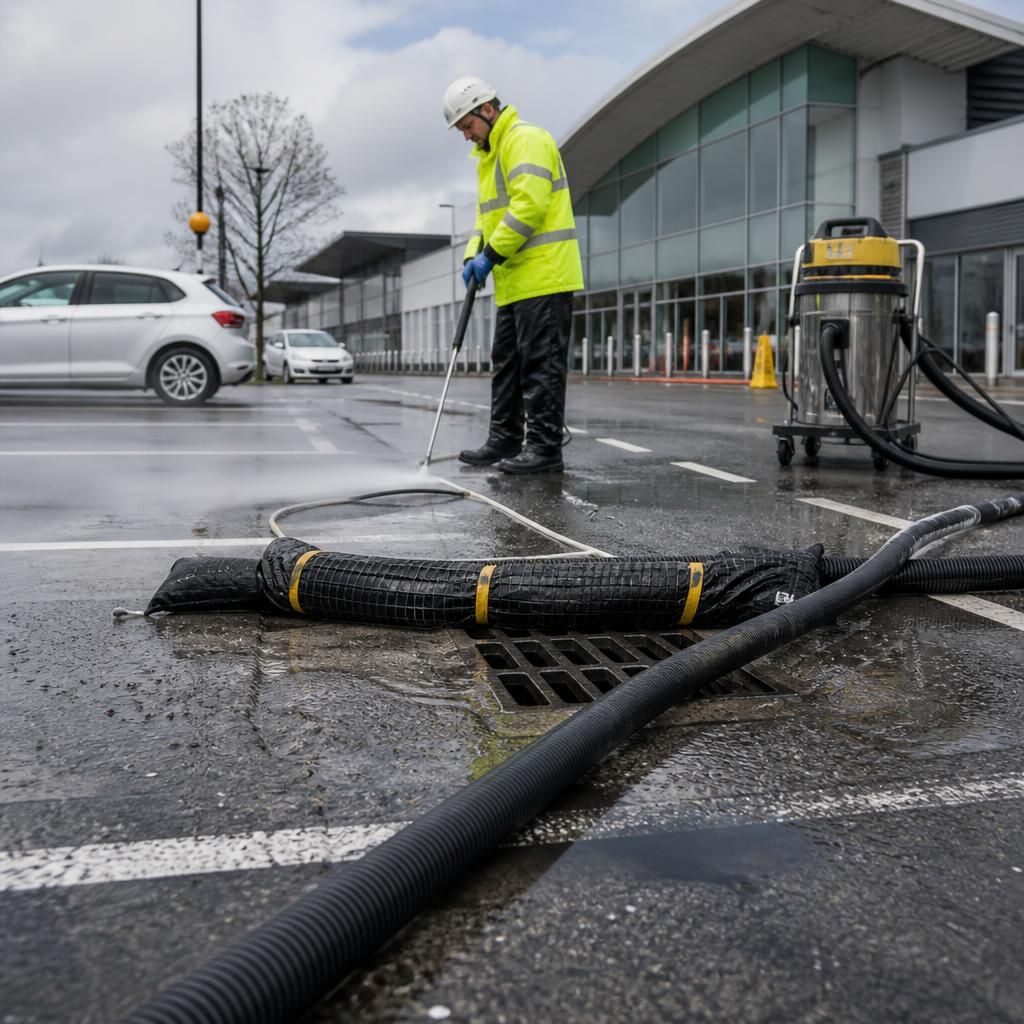
Runoff control is a key environmental measure during car park and forecourt jet washing. Dirty water can contain oil, fuel, detergents, silt and other contaminants, so it must not be allowed to enter surface-water drains, soil or nearby planting.
Before cleaning, we assess the drainage layout and identify areas where water could escape. Where required, we use drain covers, barriers and temporary bunding to contain the wash water. Wet vacuums or pumps can then recover contaminated water for suitable disposal, rather than allowing it to flow away uncontrolled. Loose debris and oily residues are collected separately, and the completed area is checked to confirm that no waste or polluted water has been displaced beyond the work zone.
Arrange an environmentally responsible car park jet washing assessment
Arrange an environmentally responsible assessment of your car park or forecourt to review drainage, runoff risks, water use and suitable wastewater controls before cleaning begins. Contact Encanto Exterior Cleaning to discuss your requirements and request a quote.