
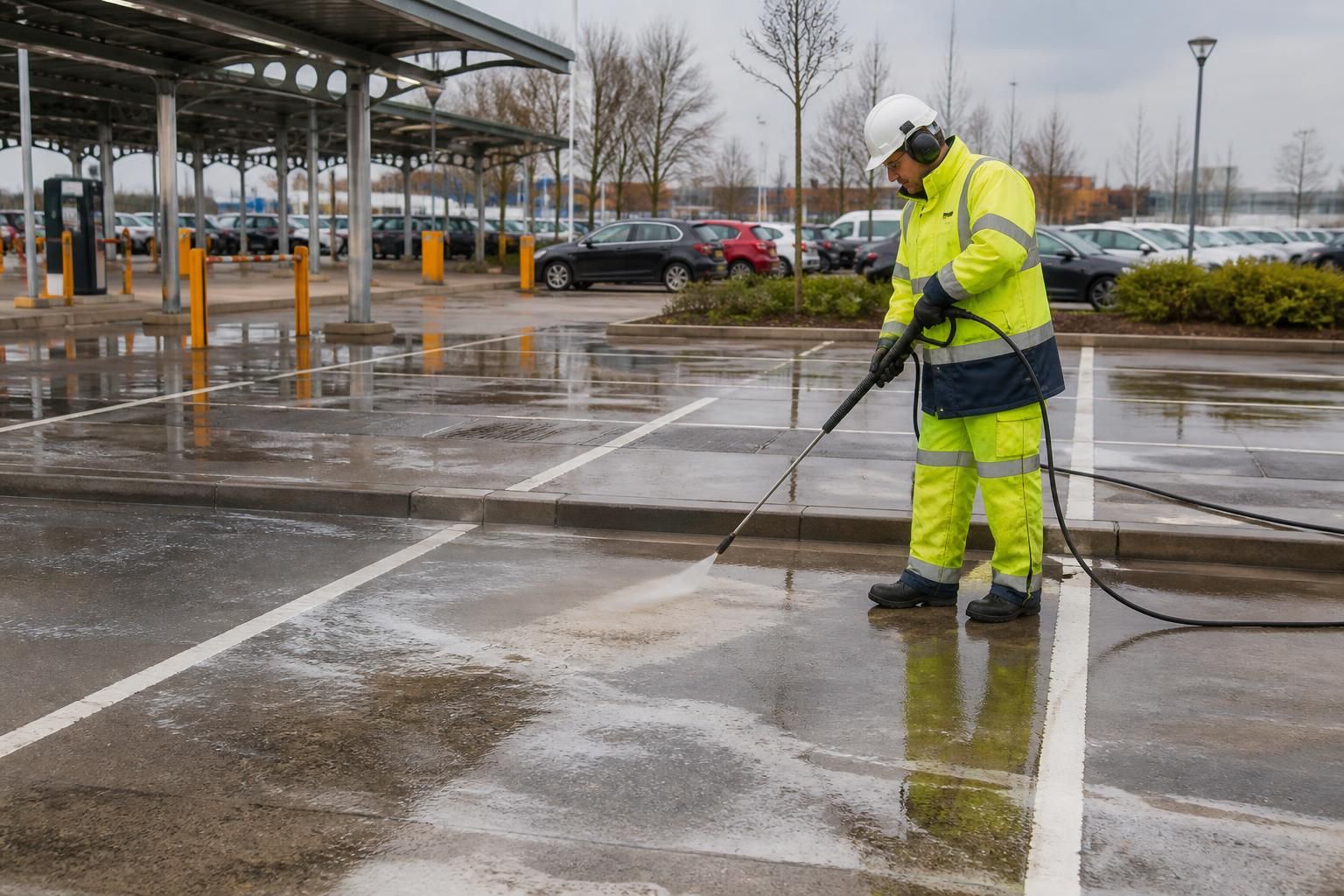
What factors should be considered when choosing a jet washing service for car parks and forecourts?
When choosing a jet washing service for car parks and forecourts, consider the contractor’s experience with commercial sites, cleaning methods, equipment, health and safety procedures, environmental controls, insurance and ability to work around your operating requirements.
Ask how they will assess the surface, manage contaminated runoff, protect vehicles and surrounding property, minimise disruption and provide a clear scope of work and quotation.
Choosing a jet washing service for car parks and forecourts requires more than comparing the quoted price. The contractor should have relevant experience with large commercial areas, use methods and equipment suited to the surface, control dirty water and cleaning chemicals responsibly, and provide clear arrangements for safety, access, traffic management and business continuity.
Relevant commercial experience
Car parks and forecourts present different challenges from domestic driveways. They may include extensive paved areas, concrete, tarmac, block paving, line markings, kerbs, drainage channels, loading zones, fuel residues, chewing gum, oil deposits and areas subject to frequent vehicle movements. Choose a contractor that can demonstrate experience in comparable commercial or industrial environments and understands how to clean efficiently without damaging surfaces or disrupting site operations.
It is also useful to establish whether the contractor has worked with sites similar to yours, such as retail parks, petrol forecourts, office developments, distribution facilities, housing developments or council-owned car parks. Experience with the relevant site type helps the contractor anticipate access restrictions, pedestrian movements, drainage arrangements and the need to phase the work.
Pre-cleaning survey and method statement
A responsible service should assess the site before work begins, either through a visit or by obtaining sufficient information about the area and its condition. The assessment should consider:
- the type, age and condition of the surface;
- oil, fuel, food, chewing gum, algae, moss, tyre marks and other deposits;
- cracked, loose or poorly bonded paving and damaged joints;
- drainage points, surface water flow and nearby watercourses;
- parked vehicles, pedestrian routes, entrances, exits and delivery areas;
- street furniture, barriers, signage, lighting columns and building façades;
- the operating hours and access requirements of the site; and
- any areas requiring specialist treatment rather than standard pressure washing.
The contractor should then provide a suitable method statement or work plan. This should explain the proposed cleaning process, equipment, detergents where required, expected drying arrangements, runoff controls, access requirements and measures for protecting people and property. A generic approach may not be appropriate where surfaces, contamination levels or drainage arrangements vary across the site.
Suitable cleaning methods and equipment
Pressure washing is effective for removing general dirt and surface deposits, but pressure alone is not suitable for every situation. The contractor should be able to adjust water pressure, temperature, nozzle selection and cleaning technique to suit the material and level of soiling. Excessive pressure can damage pointing, loosen block paving, expose aggregate, strip coatings or force water into vulnerable areas.
Hot-water pressure washing or steam cleaning may be appropriate for ingrained oil, grease, chewing gum and other stubborn contamination. Rotary surface cleaners can help produce a more even finish across broad paved areas and reduce overspray when used correctly. Recovery equipment may be required where dirty water cannot be allowed to enter surface-water drains. The key consideration is not the number of machines available, but whether the equipment is appropriate for the surface, contamination and site conditions.
Ask how the contractor will deal with delicate features such as line markings, resin-bound surfaces, expansion joints, drainage covers, painted kerbs and fuel-station equipment. A small test area can be useful where the surface or coating is particularly sensitive.
Runoff, detergents and environmental controls
Jet washing can mobilise oil, sediment, chemical residues and other pollutants. Runoff should therefore be controlled rather than allowed to flow indiscriminately into surface-water drains or neighbouring land. The contractor should identify the drainage system, prevent contaminated water from reaching unsuitable outlets and use water recovery, containment or other appropriate controls where necessary.
Where detergents or degreasers are needed, confirm that they will be used only where appropriate and in accordance with the product instructions and site requirements. The contractor should explain how recovered water, sludge and contaminated materials will be handled and disposed of. This is particularly important on forecourts, industrial premises and sites where fuel or chemical residues may be present.
Health and safety arrangements
Commercial jet washing involves high-pressure water, wet surfaces, electrical equipment, vehicles and members of the public. The service should have documented risk assessments and method statements, appropriate personal protective equipment and a clear system for controlling the work area.
Confirm how the contractor will manage:
- pedestrians and moving vehicles;
- temporary closures, barriers, cones and warning signs;
- slips caused by water, detergent or loosened contamination;
- hoses and cables across access routes;
- work near electrical installations, fuel pumps or other hazards;
- visibility and lighting during early or late working;
- plant movement and equipment loading; and
- unexpected hazards identified during the work.
Ask whether the team is trained for the equipment and working conditions involved, and whether site-specific induction or permit arrangements will be followed. A professional contractor should also have suitable public liability insurance and be able to provide evidence of relevant insurance, training and risk-control documentation when requested.
Protection of property and vehicles
The work plan should address nearby buildings, doors, vents, signage, displays, parked vehicles, landscaping and equipment. Water and spray can enter vulnerable openings or spread dirt onto freshly cleaned areas if the work is not sequenced properly. The contractor should explain how these risks will be reduced and how any items that need moving or isolating will be dealt with.
On a forecourt, particular care may be needed around fuel dispensers, drainage channels, underground service covers and areas where flammable or hazardous residues could be present. The cleaning team should follow the site operator’s instructions and stop to reassess the work if unexpected contamination or damage is discovered.
Ability to minimise disruption
A suitable contractor should be able to work around opening hours, deliveries, peak traffic and customer access. This may involve cleaning in sections, scheduling quieter periods, using temporary pedestrian routes or coordinating with the site manager before each phase begins.
Discuss the expected working sequence, access requirements, water and power arrangements, drying time and arrangements for reopening each area. The quotation should make clear whether traffic management, recovery of wastewater, preparation, moving obstructions and return visits are included. Clear coordination is particularly important where the car park or forecourt must remain partially operational throughout the work.
Scope of work and quotation
Compare quotations on the basis of what will actually be delivered, not just the total price. A useful quotation should identify the areas included, the cleaning method, the treatment of specific stains, any exclusions, access assumptions, preparation requirements and the expected standard of completion.
Clarify whether line markings, oil treatment, chewing-gum removal, gum removal from kerbs, drain cleaning, wastewater recovery and post-clean inspection are included or priced separately. If the contractor has identified damaged paving, failed joints or permanent staining, this should be explained before work starts rather than presented as an unexpected issue afterwards.
Inspection and ongoing maintenance
Effective cleaning should be followed by an inspection to identify missed areas, remaining staining, surface defects or drainage concerns. Ask how completion will be checked and how any agreed remedial work will be recorded.
For busy car parks and forecourts, a one-off clean may not provide the most practical maintenance solution. Consider whether the contractor can recommend a suitable cleaning interval based on traffic, weather, contamination and the required appearance and safety standard. A planned maintenance schedule can help prevent deposits becoming heavily ingrained and may make future work easier to organise.
Before appointing a service, request a clear written proposal and confirm the contractor’s experience, insurance, safety arrangements, environmental controls, equipment, availability and communication process. The best choice is the contractor that can demonstrate a controlled, surface-appropriate and transparent approach from the initial assessment through to completion, rather than simply offering the lowest price.
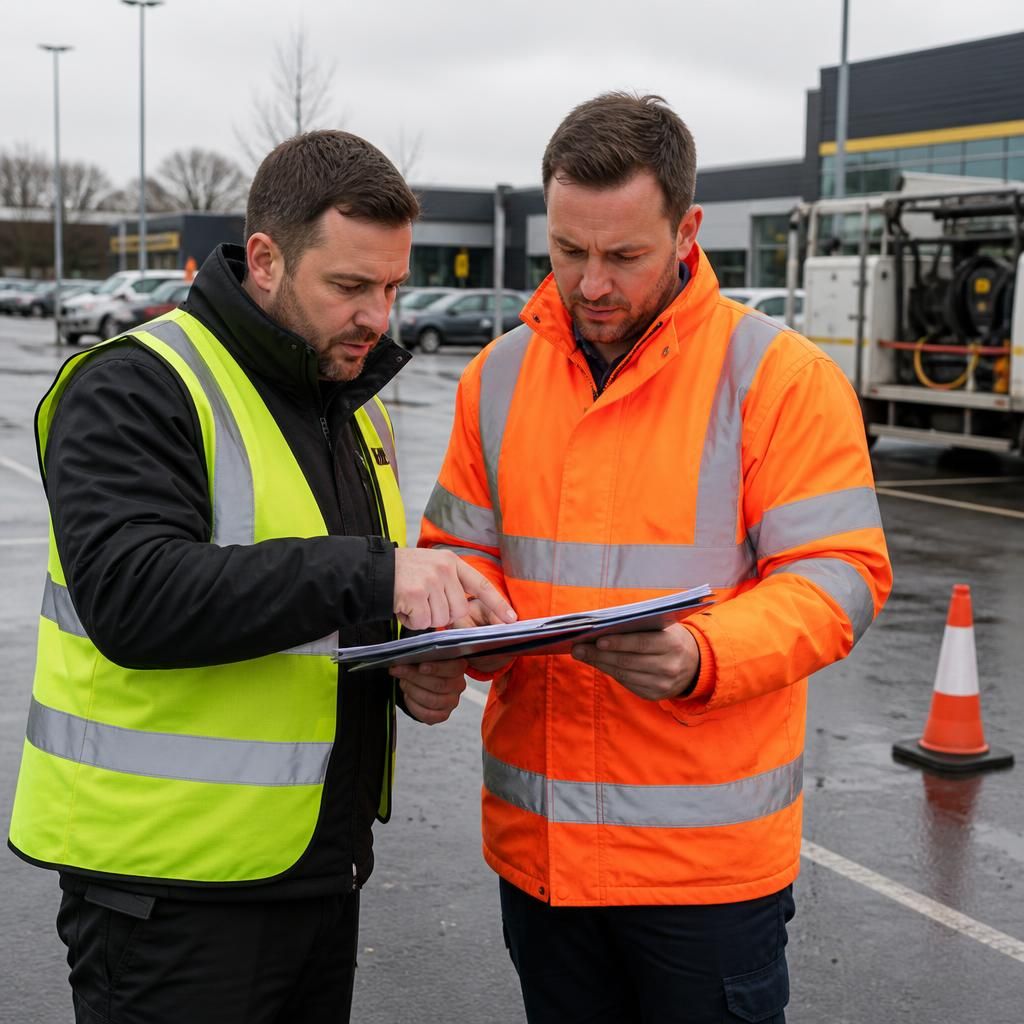
A pre-cleaning survey and written method statement are essential when selecting a jet washing service for car parks and forecourts. They show that the contractor has considered the surface type, contamination, drainage, nearby vehicles, pedestrian routes and the site’s operating requirements before work begins.
The method statement should explain the proposed equipment and cleaning agents, pressure and temperature settings, protection for vulnerable areas, wastewater controls and arrangements for keeping people and vehicles away from active work areas. This site-specific approach is preferable to a standard pressure-washing package, particularly where oil, fuel residues, damaged paving, line markings or sensitive drainage systems are present.
Discuss your car park and forecourt cleaning requirements
Discuss your car park or forecourt cleaning requirements with our team, including the surface type, contamination, access arrangements and preferred working times. We can help plan a suitable jet washing service around your site’s operational and safety needs.