
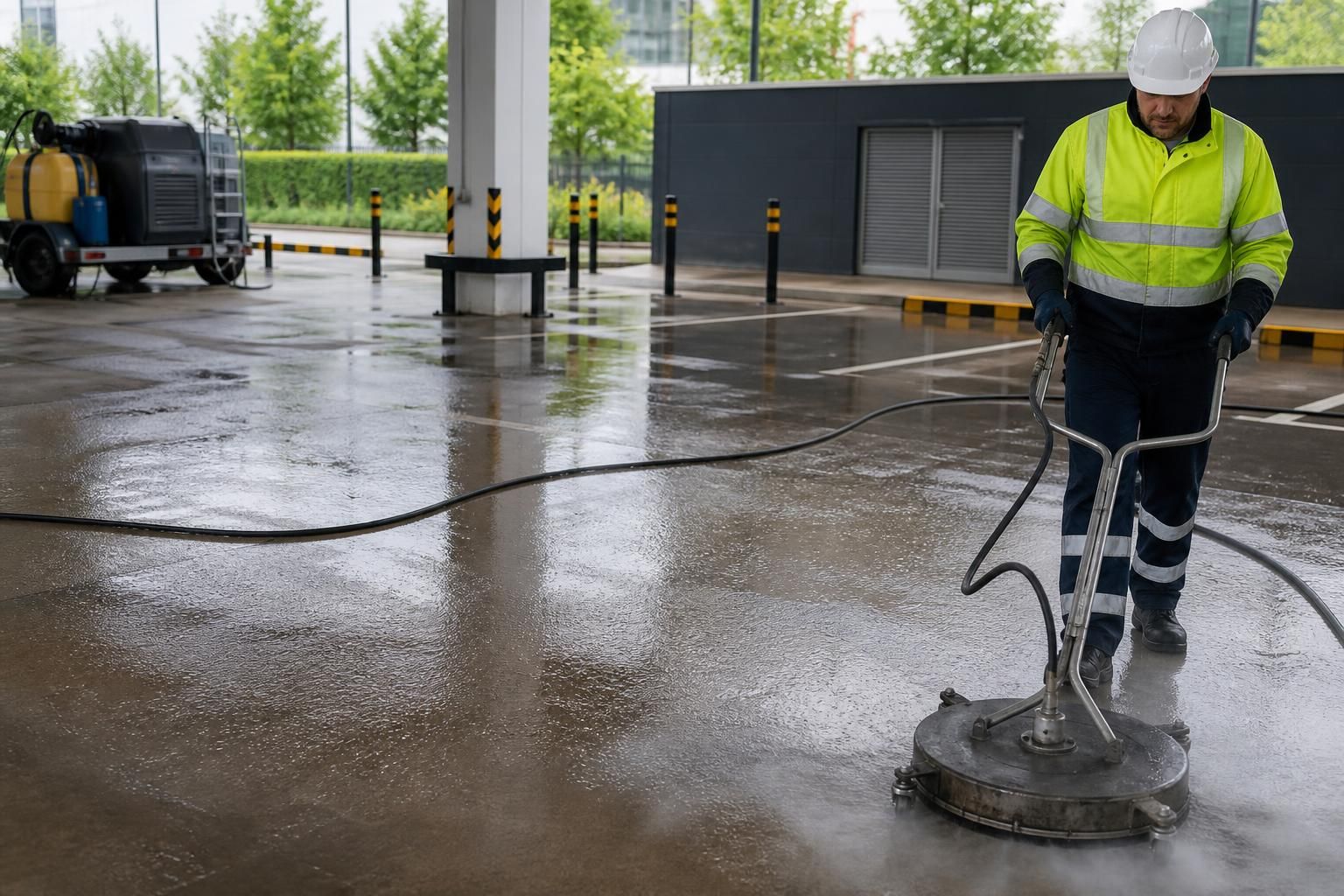
What environmental considerations are involved in the jet washing of car parks and forecourts?
Environmental considerations include using water efficiently, selecting suitable low-impact cleaning products, and preventing contaminated runoff—such as oil, fuel, detergents and silt—from entering surface-water drains. Responsible jet washing also involves controlling and recovering wastewater where required, disposing of it through approved routes, and protecting nearby soil, planting and watercourses.
Environmentally responsible jet washing of car parks and forecourts means controlling water use, cleaning chemicals and contaminated runoff from the start of the work through to wastewater disposal. These surfaces can contain oil, fuel, traffic film, rubber deposits, silt, litter and other pollutants, so wash water must not be allowed to enter surface-water drains, soil, planting areas or nearby watercourses without appropriate control and authorisation.
Runoff assessment and drain protection
Before cleaning begins, the site should be assessed to identify the direction of falls, drainage points, interceptors, gullies, kerbs, landscaped areas and any nearby watercourses. Surface-water drains commonly discharge to the environment with little or no treatment, making them unsuitable for contaminated wash water. Drain covers, temporary bunds, drain mats and other containment measures can be used to prevent polluted water escaping while the work is carried out.
Forecourts require particular care because fuel residues, oils and vehicle fluids may be present. Existing oil separators or interceptors should not automatically be treated as a complete solution: their condition, capacity and suitability for the proposed cleaning operation need to be considered. Any spillages or heavily contaminated areas may require separate treatment rather than simply being diluted and washed into the drainage system.
Water-efficient cleaning methods
Jet washing can use substantial quantities of water if equipment is operated without a plan. Responsible practice involves selecting the appropriate pressure, flow rate, nozzle and cleaning method for the surface and level of soiling. Dry removal of loose litter, silt and debris before washing reduces the amount of water needed and prevents solid material from being carried into drainage systems.
Where suitable for the site and the required finish, water recovery equipment can collect wastewater as it is generated. Recovered water may then be filtered or otherwise treated for reuse or controlled disposal, depending on its contamination and the equipment available. This reduces freshwater demand and helps keep pollutants within a managed system.
Choice and control of cleaning products
Cleaning chemicals should be selected according to the surface, contaminant and drainage arrangements. Products with a lower environmental impact may be appropriate, but the term “eco-friendly” does not mean that a product can be discharged without controls. Biodegradable detergents can still affect aquatic environments, particularly when used in excessive quantities or combined with oil, fuel and other contaminants.
Product instructions, safety data sheets and COSHH requirements should be followed. Chemicals should be stored securely, diluted accurately and applied only where necessary. Over-application increases both the pollutant load in the wastewater and the amount of rinsing required. Strong acids, solvents and other unsuitable products should not be used merely to accelerate cleaning, as they can damage surfaces, drainage infrastructure and the surrounding environment.
Wastewater recovery, treatment and disposal
Collected wastewater should be assessed according to what it contains. Water contaminated with oil, fuel, detergents, silt or other substances must be managed through an appropriate route rather than discharged onto the ground or into an unapproved drain. Depending on the site and local requirements, this may involve filtration, separation, temporary storage, discharge to the foul sewer with the relevant trade effluent consent, or removal by an authorised waste contractor.
Discharge arrangements should be agreed before work starts. Permission to use a foul drain is not automatically granted, and a site owner’s approval does not replace any consent required from the relevant sewerage undertaker or regulator. If wastewater is removed from site, transfer documentation and waste records should be retained where applicable. The classification of the waste depends on its contents, so particularly oily or chemically contaminated water may need more stringent handling.
Protection of soil, planting and watercourses
Wash water, detergents and sediment should be kept away from grass, borders, trees, permeable paving and exposed soil. Pollutants can soak into the ground, damage vegetation and migrate towards groundwater or surface water. Access routes and equipment should also be positioned to avoid unnecessary damage to planted areas and to prevent vehicles or hoses from disturbing contaminated soil.
Where a car park or forecourt is close to a stream, pond, ditch or other watercourse, the containment plan should include additional precautions. Work may need to be phased, carried out during suitable weather, or supported by enhanced recovery measures. Heavy rain can overwhelm temporary controls and spread pollutants, so weather conditions should be considered when planning the cleaning schedule.
Responsible use of equipment and fuel
Well-maintained pressure washers, vacuum recovery systems, pumps and water treatment equipment operate more efficiently and are less likely to leak fuel, oil or cleaning solution. Hoses, tanks, couplings and collection units should be checked before use. Any fuel-powered equipment should be refuelled in a controlled area away from drains and watercourses, with spill materials available in case of a leak.
Electric equipment can reduce local exhaust emissions and noise where the site infrastructure allows it, although the overall environmental impact still depends on how the equipment is powered, transported and operated. Selecting equipment that matches the scale of the work avoids unnecessary water, energy and chemical use.
Waste and debris management
Loose litter, leaves, silt, chewing gum residue and other solids should be collected rather than flushed into drainage systems. Waste must be kept separate where practical and stored so that rain cannot wash contaminants away. Oily absorbents, contaminated filters and other materials used during spill response may require separate handling from ordinary site waste.
At the end of the work, drains, interceptors, collection tanks and surrounding areas should be checked. The site should be left free from visible residue, pooled contaminated water and displaced debris. Where required, records of the work, wastewater route, waste transfer and any incidents should be provided to the client for their environmental and site-management records.
For a commercial car park or forecourt, the correct approach depends on the surface, drainage layout, contaminants, local discharge arrangements and proximity to sensitive areas. Reviewing these factors before jet washing allows the cleaning method to be matched to the site and helps ensure that water, chemicals and waste are controlled in accordance with applicable UK environmental requirements.
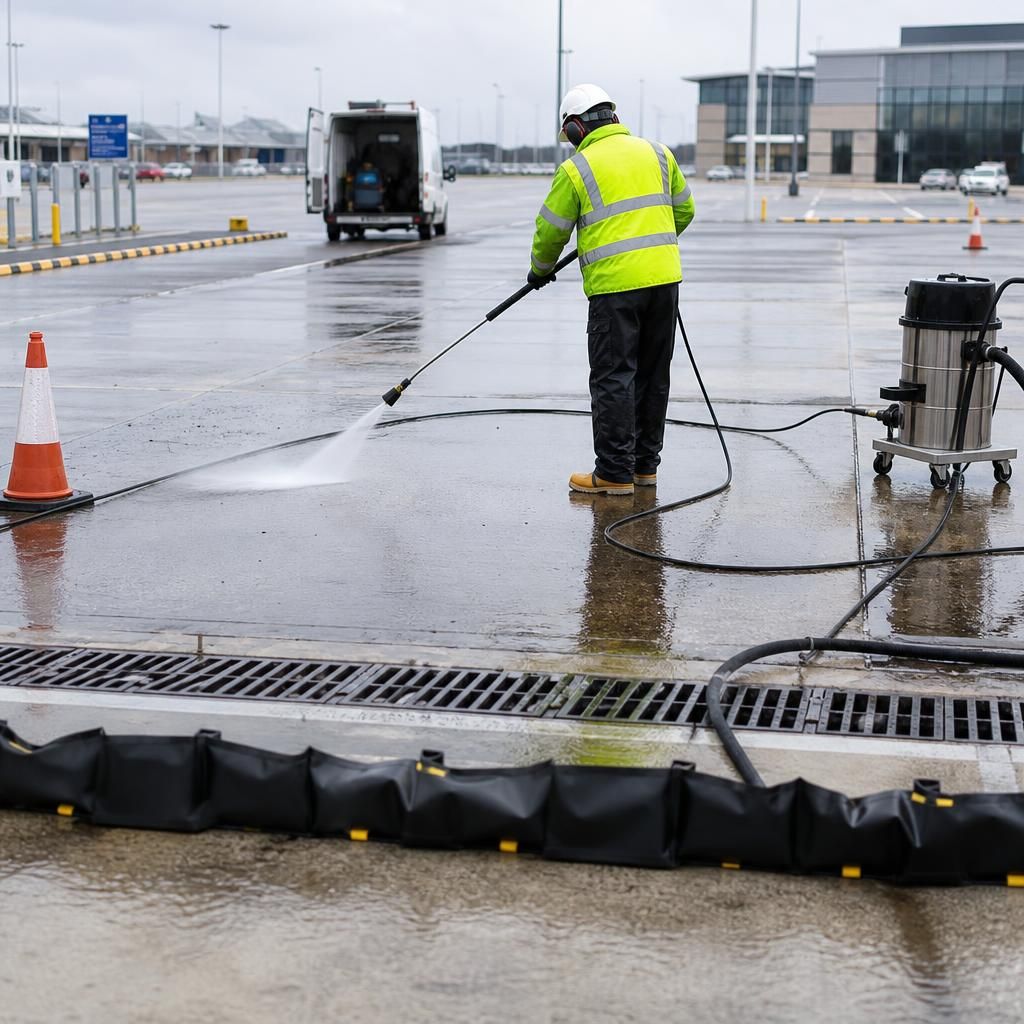
Controlling contaminated runoff is one of the most important environmental considerations when jet washing a car park or forecourt. Wash water can contain oil, fuel, detergents, silt and vehicle residues, so it should not be allowed to flow into surface-water drains, planting areas, soil or nearby watercourses.
Before work begins, the drainage layout and direction of surface falls should be checked. Drain mats, temporary bunds and vacuum recovery equipment can help contain and collect wastewater. The collected water must then be managed through an appropriate route, such as approved treatment, an authorised foul-sewer discharge where applicable, or removal by a suitable waste contractor. Existing oil interceptors should be assessed rather than assumed to provide sufficient protection.