
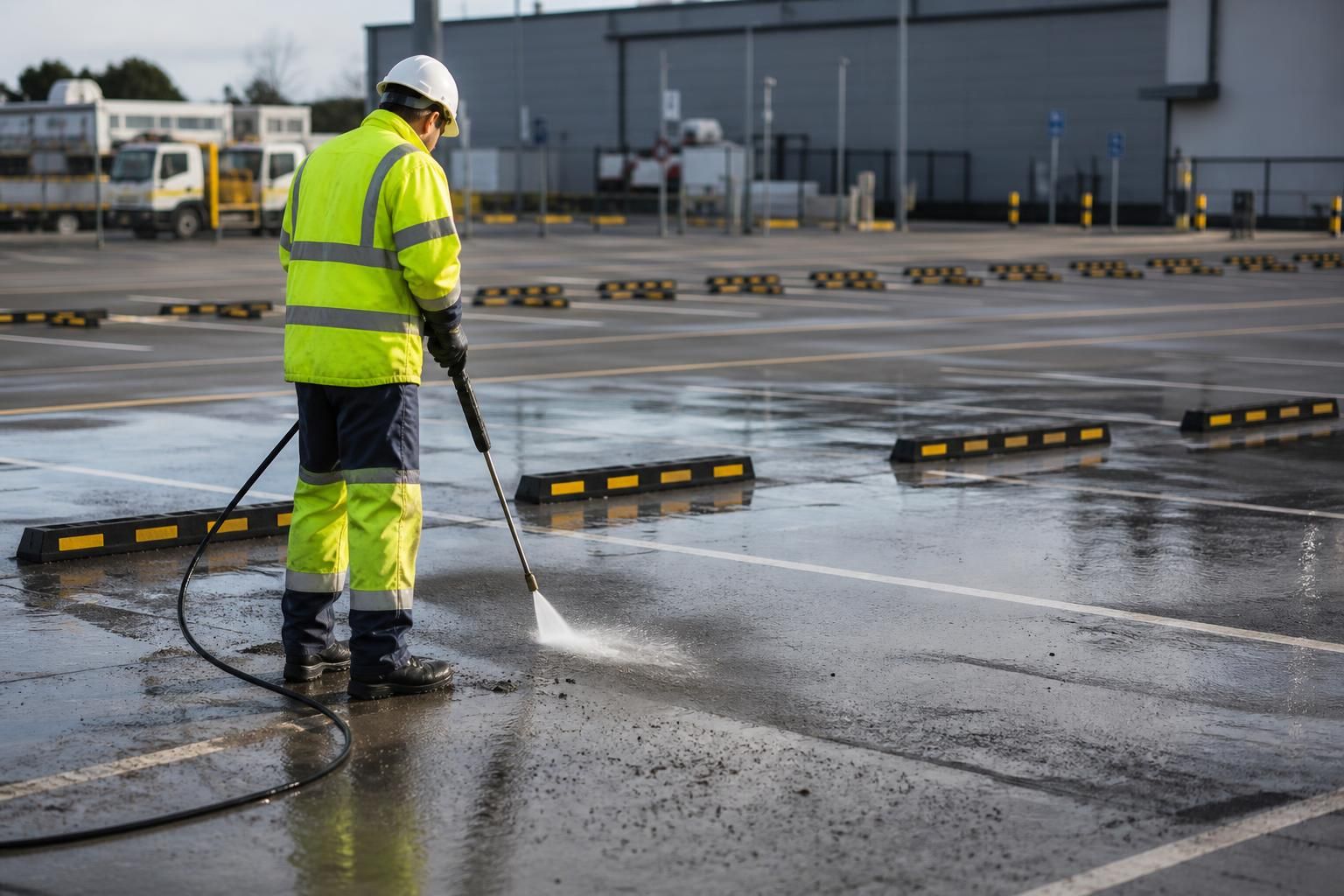
What are the advantages of using jet washing over traditional cleaning methods for car parks and forecourts?
Jet washing removes ingrained oil, mud, algae, tyre marks and general grime from car parks and forecourts more quickly and thoroughly than traditional sweeping or manual scrubbing. It improves surface safety and appearance, helps protect paving and drainage areas from build-up, and can reduce disruption by cleaning large areas efficiently.
Jet washing provides a faster, deeper and more consistent clean for car parks and forecourts than traditional sweeping or manual scrubbing. Using controlled water pressure, and where appropriate heated water or steam, it removes ingrained dirt, oil residues, algae, tyre marks, mud and other deposits from hard surfaces. This improves the appearance of the site while also addressing contamination that routine brushing cannot remove effectively.
Traditional cleaning methods are useful for loose litter and light surface dust, but they have limited impact on bonded or oily contamination. Sweeping can leave dirt in textured paving, joints and surface imperfections, while manual scrubbing is labour-intensive and difficult to apply consistently across a large area. Jet washing directs water into these recesses and lifts contamination from the surface, allowing it to be collected and managed correctly.
The main advantages for commercial car parks and forecourts include:
- More thorough removal of ingrained contamination: Pressure washing can remove deposits that ordinary brushes cannot shift, including oil staining, fuel residues, rubber marks, algae, moss, silt and compacted mud. Hot-water cleaning can be particularly useful where grease or oil has bonded to concrete, block paving or other hard surfaces.
- Improved slip resistance: Algae, moss, oily films and general grime can make pedestrian routes, parking bays and forecourt surfaces slippery, especially when wet. Removing these deposits helps restore the texture of the surface and reduces avoidable slip hazards. Cleaning does not replace repairs, drainage improvements or other risk controls, but it is an important part of routine site maintenance.
- Better presentation of the premises: Clean access roads, parking areas, loading zones and fuel forecourts create a more orderly appearance for visitors, staff, tenants and customers. Jet washing also makes line markings, kerbs, paving patterns and surface defects easier to see, helping the site remain presentable and easier to manage.
- Greater efficiency across large areas: A professional pressure-washing system can cover extensive hard-standing areas more efficiently than hand scrubbing. This is especially beneficial for property managers, retail sites, industrial premises, transport facilities and public-sector locations where cleaning must be completed to a consistent standard.
- More consistent results: Manual cleaning can vary according to the operator, the tools used and the time available. With suitable equipment and an appropriate method, jet washing applies a more even cleaning action across the surface. Professional operators can adjust pressure, flow, temperature and cleaning products to suit the material and type of contamination.
- Protection of surfaces through planned maintenance: Dirt, organic growth, oil and grit can hold moisture against paving and concrete. Over time, this may contribute to staining, deterioration of joints or the spread of moss and algae. Regular, correctly specified cleaning helps limit this build-up and can support the longer-term condition of the surface. It cannot repair cracked concrete, failed pointing, potholes or damaged drainage, so defects identified during cleaning should be assessed separately.
- Reduced disruption to operations: Large areas can often be cleaned in planned sections, outside peak trading or traffic periods. This allows entrances, pedestrian routes and parking areas to be managed progressively rather than relying on prolonged manual work. A suitable method statement and traffic-management plan help maintain safe access while cleaning is under way.
- More effective treatment of oil and grease: Cold water and brushing may spread oily contamination rather than remove it. Professional cleaning can combine controlled pressure with a suitable degreasing treatment and hot water where necessary. The resulting wastewater must be contained and disposed of in accordance with applicable requirements rather than allowed to enter surface-water drains.
Jet washing is also more versatile than basic cleaning equipment. Different attachments and techniques can be used for concrete, tarmac, block paving, stone, metal-edged areas and other hard surfaces. Rotary surface cleaners can help produce an even finish over broad areas, while focused lances may be used for kerbs, joints, corners and difficult deposits. Steam cleaning or lower-pressure washing may be more appropriate for sensitive surfaces, delicate coatings or areas where water use needs to be controlled.
The method still needs to be selected carefully. Excessive pressure, an unsuitable nozzle or prolonged application can damage pointing, remove surface coatings, etch softer materials or force water into vulnerable joints. A competent contractor will inspect the surface first, identify drainage routes and contamination types, test a discreet area where appropriate, and set the equipment accordingly. Cleaning around fuel pumps, electrical installations, walls, doors and drainage channels also requires particular care.
Environmental control is another advantage of professional jet washing over informal cleaning. Sweeping can leave contaminated dust to become airborne or wash into drains during rainfall. A managed washing process allows debris, detergents and contaminated water to be controlled more effectively. Water use should be proportionate to the task, cleaning products should be selected for the surface and contamination, and run-off should be prevented from entering unsuitable drainage systems. Where oil, fuel or other hazardous residues are present, the waste should be handled through an appropriate disposal route.
For best results, jet washing should form part of a planned maintenance programme rather than being used only when surfaces look heavily soiled. The appropriate frequency depends on traffic levels, vehicle type, exposure to weather, nearby vegetation, drainage performance, fuel or oil contamination and the standard required at the premises. Regular inspections help identify early build-up and allow cleaning to be scheduled before surfaces become more difficult or disruptive to treat.
In summary, jet washing offers deeper cleaning, improved safety, better visual standards, more efficient coverage and more controlled removal of grease and organic growth than traditional sweeping or manual scrubbing. Its benefits depend on using the correct pressure, temperature, cleaning agents, access arrangements and wastewater controls for the site. When those factors are assessed properly, it provides a practical way to maintain commercial car parks and forecourts without compromising the surface, surrounding property or day-to-day operations.
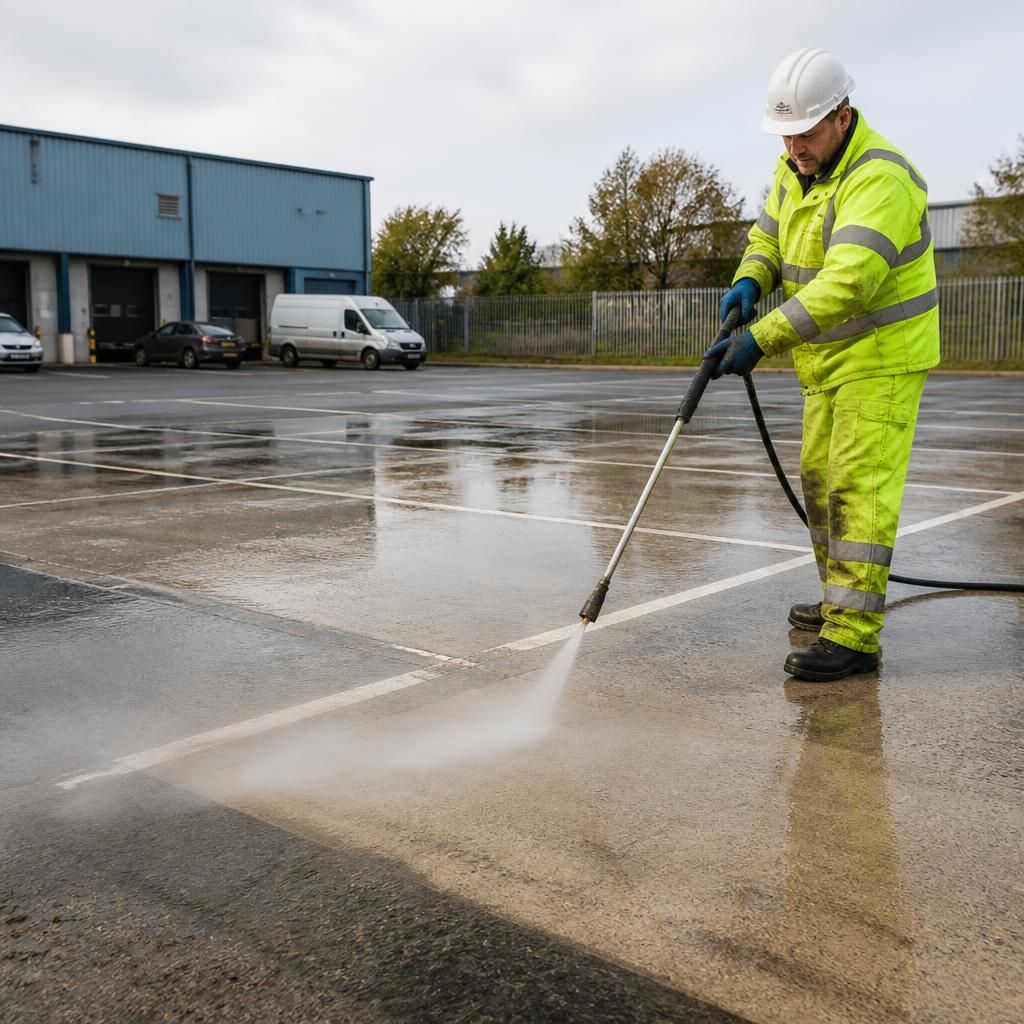
Jet washing removes bonded contamination that traditional sweeping and light manual cleaning often leave behind. Controlled water pressure, combined with heated water or an appropriate cleaning agent where necessary, can lift oil residue, tyre marks, algae, moss, compacted mud and silt from concrete, tarmac and block paving.
This deeper cleaning helps restore surface texture and can reduce slip risks caused by oily films or organic growth. It also improves the appearance of parking bays, pedestrian routes, kerbs and forecourt areas. Pressure must be matched to the surface, however, as excessive force can damage pointing, coatings or vulnerable materials. A professional assessment ensures the cleaning method is effective without causing avoidable surface damage.