
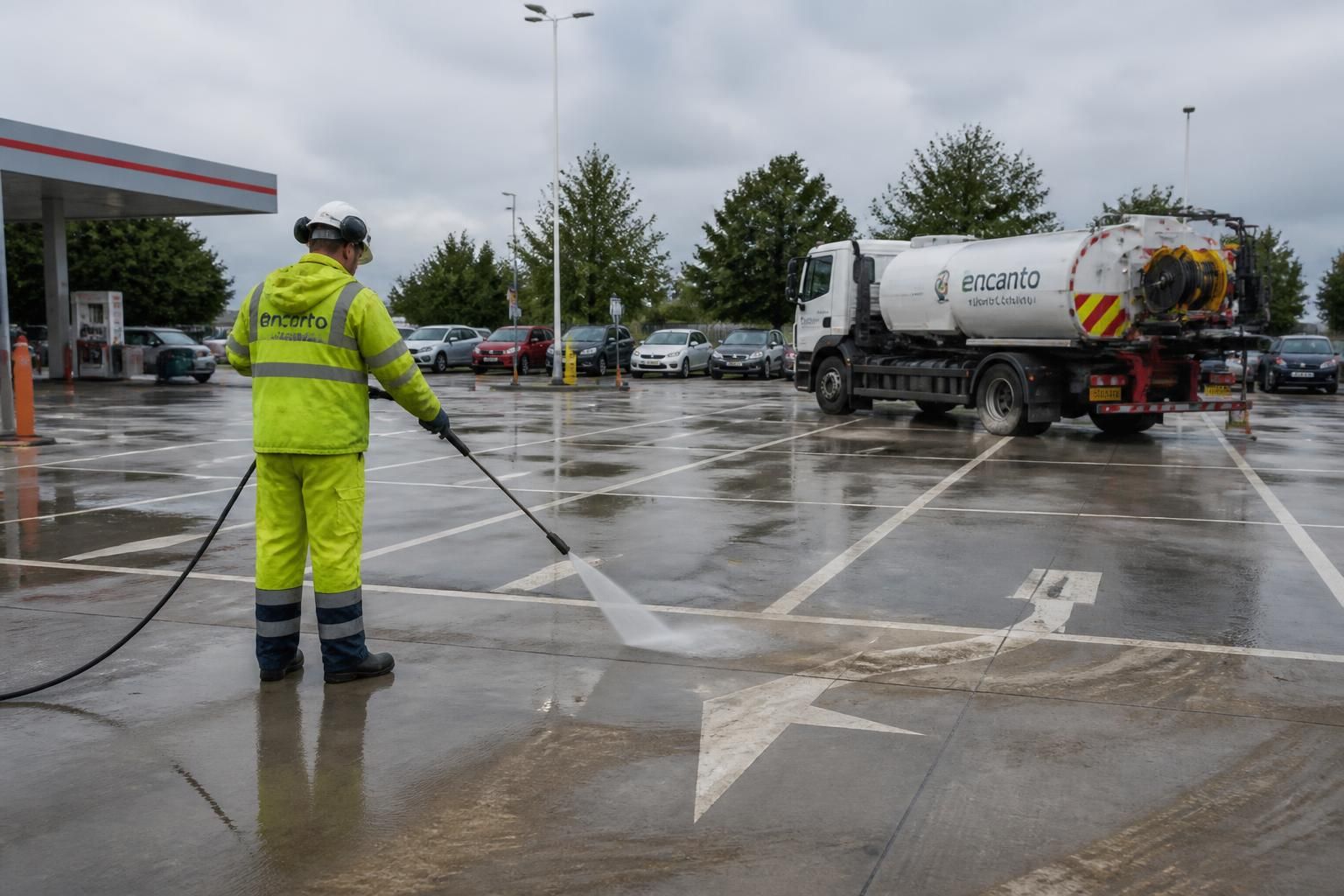
How often should car parks and forecourts be jet washed for optimal maintenance and safety?
Car parks and forecourts should be jet washed as part of a planned maintenance schedule, with frequency based on traffic levels, surface type, weather, spill risk and the amount of dirt or staining present. High-use sites may need more frequent cleaning, while oil, fuel, algae or other slip hazards should be treated promptly rather than waiting for the next scheduled wash.
Car parks and forecourts should usually be jet washed as part of a planned maintenance schedule, with the exact frequency determined by traffic, surface condition, contamination and safety risk. A lightly used car park may only require periodic deep cleaning, while a busy retail, commercial or fuel forecourt may need regular washing alongside frequent inspections and spot treatment. Oil, diesel, grease, algae, chewing gum and other slip hazards should be removed promptly rather than left until the next scheduled clean.
As a general maintenance guide:
- Busy forecourts, service areas and heavily trafficked car parks often benefit from weekly or fortnightly cleaning of high-risk areas, with a more comprehensive wash scheduled as required.
- Medium-use commercial car parks commonly need a planned clean every few months, adjusted for staining, weather and vehicle movements.
- Lightly used or low-contamination areas may only need periodic jet washing, provided inspections confirm that the surface remains safe, presentable and free from damaging deposits.
These intervals are starting points rather than fixed rules. A site assessment is needed to establish whether the required work is a light maintenance wash, targeted degreasing, gum removal, algae treatment or a full clean of the entire surface.
Traffic and use of the site
Vehicle movements bring in soil, grit, road salt, oil and other contaminants. Turning areas, entrances, payment points, loading bays, pedestrian crossings and parking spaces used by commercial vehicles normally deteriorate faster than quieter sections. Forecourts can require more frequent attention because fuel residues and lubricants present a direct slip risk and can become more difficult to remove when weathered into the surface.
It is useful to divide a site into risk zones rather than applying one frequency to every square metre. High-use or high-risk areas can be cleaned more often, while wider areas can be included in a periodic deep-clean programme. This approach helps maintain safety without carrying out unnecessary intensive washing where it is not needed.
Weather and seasonal conditions
Rain can spread oil and dirt across a larger area, while prolonged damp conditions encourage algae, moss and slippery organic growth, particularly on shaded paving and concrete. Frost can make contamination and surface defects harder to identify, and road salt can leave deposits that should be removed before they contribute to surface deterioration or corrosion of nearby metalwork.
After periods of heavy rain, winter weather, flooding or prolonged damp, the site should be inspected for displaced silt, standing water, algae and contaminated runoff. A spring clean is often appropriate after winter, while additional washing may be needed during wetter months or wherever organic growth returns quickly.
Contamination should be dealt with promptly
Routine jet washing removes general dirt, dust and surface deposits, but some contaminants need a quicker and more targeted response. Fresh oil, diesel, hydraulic fluid, food waste and other spills can create an immediate hazard and may penetrate porous concrete or paving if left untreated. The affected area should be isolated where necessary, the spill contained, and the correct cleaning treatment applied as soon as practicable.
Jet washing alone may not remove established oil staining. A suitable degreaser, controlled agitation, hot-water or steam cleaning may be needed, depending on the surface and contamination. Cleaning methods should be selected carefully so that stains are treated effectively without damaging jointing, coatings, paint markings or drainage infrastructure.
Surface type and condition also affect frequency
Concrete, tarmac, block paving, resin-bound surfaces and coated floors respond differently to pressure and cleaning chemicals. Older or damaged surfaces may have loose aggregate, open joints, failed sealant or areas of subsidence that need attention before intensive washing. Block paving can require jointing sand to be reinstated, while coated surfaces may need lower pressure and a compatible cleaning solution.
Frequent high-pressure cleaning is not automatically better. Excessive pressure, incorrect nozzle selection or holding the lance too close to the surface can cause etching, surface loss, damaged pointing, streaking or premature wear. The cleaning frequency should therefore be combined with an appropriate method, pressure, temperature and recovery process.
Inspections should take place more often than jet washing
A planned cleaning programme should include regular visual checks, particularly at busy sites. Inspections can identify oil films, algae, chewing gum, litter, blocked drains, standing water, damaged surfaces and faded line markings before they become more serious problems. Cleaning should be brought forward when a contamination issue presents a slip, trip, visibility or environmental risk.
Site teams should record the areas inspected, the condition found, any incidents or spills, and the action taken. These records help establish a realistic long-term frequency and provide evidence that maintenance has been managed systematically.
Coordinate cleaning with site operations
Car parks and forecourts are normally best cleaned during quieter operating periods, with sections managed in phases where the site cannot be closed. The programme should allow enough time for cleaning, surface drying, inspection and safe reopening. Weather forecasts, drainage capacity, access arrangements, customer movements and nearby building entrances should all be considered before work begins.
Runoff must be controlled so that oil, silt, detergents and other contaminants do not enter surface water drains or adjacent land. Depending on the site, this may involve drain protection, collection and recovery equipment, suitable treatment products and agreed disposal arrangements. Environmental controls can affect the practical timing and frequency of cleaning, particularly on sites with a history of fuel or oil contamination.
The most reliable approach is a risk-based maintenance plan: inspect the site routinely, clean high-risk areas more frequently, carry out prompt spot treatment for spills and organic growth, and schedule a wider jet wash before dirt and staining become established. The programme should then be reviewed after seasonal changes, alterations in traffic or any recurring contamination problem so that the cleaning frequency continues to match the actual condition of the car park or forecourt.
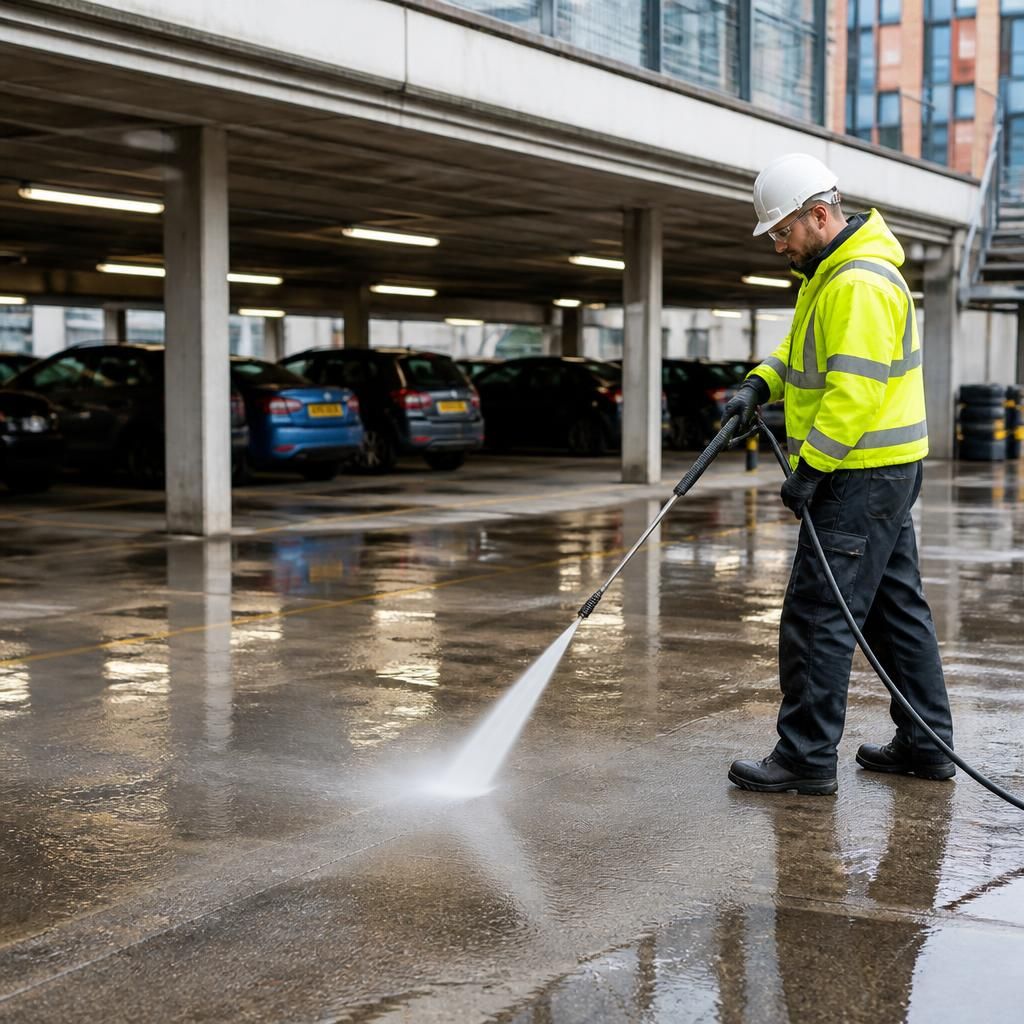
Car parks and forecourts should be inspected more often than they are jet washed. Regular checks identify oil, fuel, algae, standing water, blocked drains and surface damage early, allowing high-risk areas to be cleaned before they create a slip, trip or environmental hazard.
A risk-based schedule is more effective than washing every part of a site at the same interval. Entrances, turning areas, loading bays, payment points, pedestrian crossings and fuel dispensing areas usually need closer monitoring and targeted cleaning, while lower-use sections can be included in a wider periodic wash.
- Record contamination, surface condition and any remedial action.
- Bring forward cleaning after spills, heavy rain, flooding or prolonged damp weather.
- Allow time for safe runoff control, drying and inspection before reopening cleaned areas.