
How does the commercial jet washing process differ for various surface materials?
Commercial jet washing is adjusted to suit each material’s strength, porosity, coating and condition. Concrete and paving may tolerate higher pressure, while brick, render, painted cladding, roofing and other sensitive surfaces usually require lower pressure, controlled water flow, suitable detergents and careful testing to prevent damage.
Commercial jet washing is tailored to the material being cleaned rather than applied as a single standard process. The operator assesses the surface’s hardness, porosity, coating, age, joints and existing defects, then selects suitable water pressure, flow rate, temperature, nozzle, cleaning solution and working distance. Robust concrete may accept more intensive cleaning, whereas brick, render, painted cladding, roofing and other sensitive materials normally require lower pressure and tighter control to prevent marking, water ingress, coating failure or surface erosion.
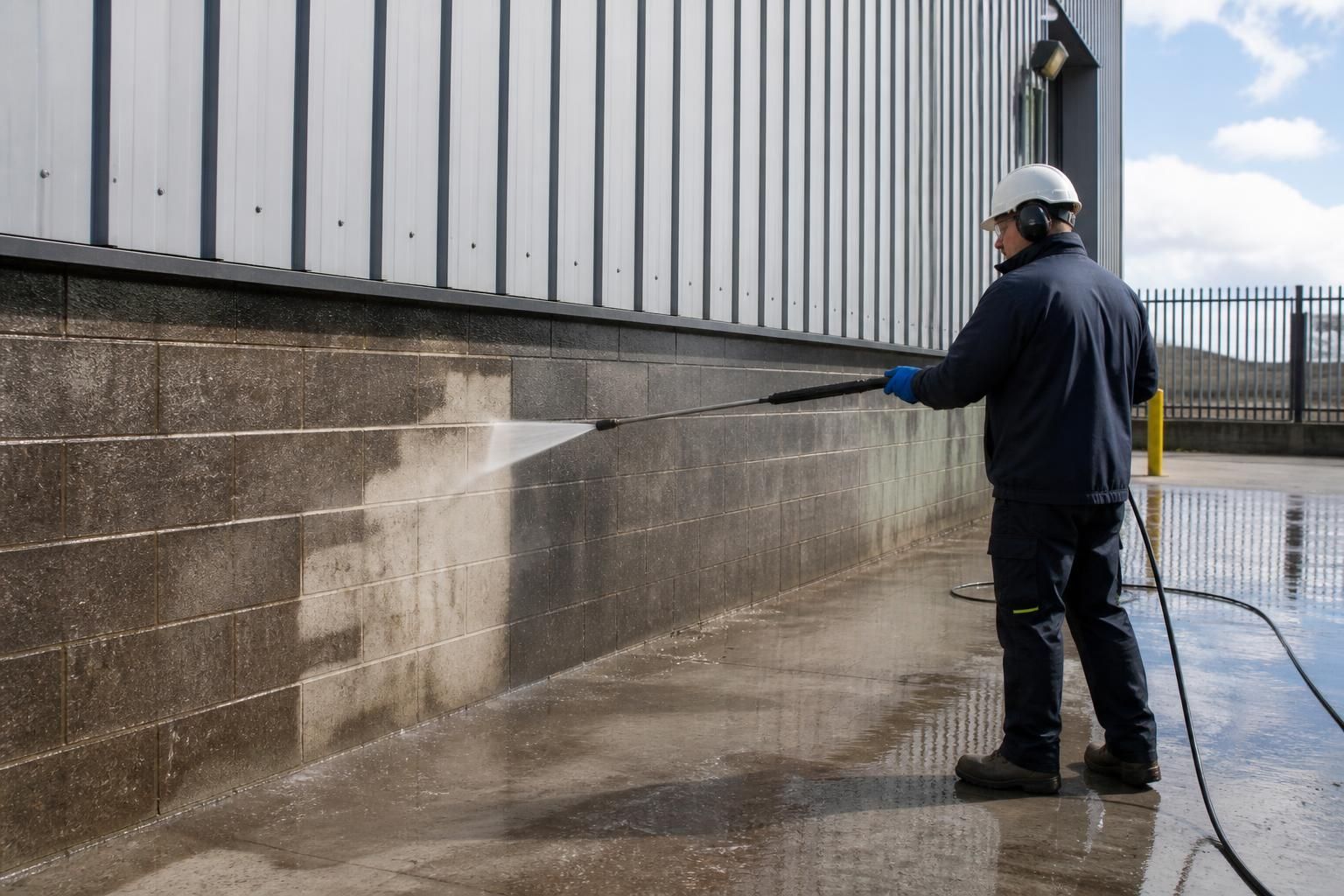
The process starts with a surface assessment. Before cleaning, the area is inspected for cracks, loose pointing, failed sealants, open joints, damaged coatings, corrosion, biological growth and previous repairs. The substrate, drainage arrangements and nearby vulnerable features are also considered. A small test area is normally cleaned first, allowing the method to be checked for colour change, etching, paint loss, mortar damage and the effectiveness of the detergent before work proceeds across the full surface.
Pressure is only one part of the method. Higher pressure does not automatically produce a better result. The cleaning effect is also influenced by water flow, temperature, nozzle pattern, the operator’s distance from the surface and the speed of movement. A broad fan nozzle and controlled passes are often safer than a concentrated jet. For delicate materials, steam cleaning, soft washing or a lower-pressure detergent application may be more appropriate than conventional high-pressure jet washing.
Concrete and hardstanding are generally among the more resilient commercial surfaces, particularly where the concrete is sound and uncoated. Jet washing can remove traffic film, dirt, moss, algae, tyre marks and some oil-related contamination. However, the operator still needs to identify weak or weathered concrete, exposed aggregate, decorative finishes and previous sealants. Excessive pressure or a concentrated nozzle can expose aggregate, create visible cleaning lines, roughen the surface or enlarge existing defects. Oil and grease may need a compatible degreaser and dwell time before rinsing. Run-off should be controlled so contaminated water does not enter unsuitable drains.
Block paving and concrete paving require attention to both the paving units and the joints between them. Cleaning can remove weeds, organic growth and ingrained dirt, but aggressive jetting may displace jointing sand, damage the edges of blocks or expose unstable areas. The cleaning pattern should be consistent to avoid patchy results. Once the surface has dried and its condition has been confirmed, re-sanding or sealing may be recommended where it forms part of the agreed maintenance specification. Loose or rocking units should be reported rather than treated as a cleaning problem.
Brickwork and masonry are more variable than they appear. Dense engineering brick may withstand a controlled wash, while soft, handmade, historic or frost-damaged brick can absorb water and lose its face under excessive pressure. Mortar joints may be weaker than the bricks, so the nozzle should not be directed aggressively along open or crumbling joints. Suitable masonry detergents, low-pressure rinsing and gradual working are often preferable. Efflorescence, paint, carbon deposits and biological staining each require a different approach, and stubborn marks should not be removed by simply increasing pressure.
Natural stone must be assessed by type and finish. Granite and some dense stone finishes are comparatively hard, but limestone, sandstone and other porous materials can be vulnerable to erosion, discolouration, trapped moisture and chemical damage. Polished, honed, textured and weathered finishes will also respond differently. A compatible detergent and gentle rinse may be required, with particular care around joints, carved details and vulnerable edges. Acidic or strongly alkaline products should not be used unless their suitability for that specific stone has been established.
Render, stucco and painted façades generally need lower pressure and a wider spray pattern. The operator checks for hollow areas, hairline cracking, loose sections, failing paint and exposed reinforcement before cleaning. Water forced behind render or through cracks can worsen detachment and damp-related problems. Soft washing or steam cleaning can often remove organic growth and atmospheric dirt with less mechanical impact. Cleaning may reveal existing differences in colour or weathering, so the test area is particularly important on large elevations.
Metal cladding and coated panels can usually be cleaned efficiently, but the coating and panel joints are critical. Painted, powder-coated, plastisol and other finishes may be marked by abrasive methods, unsuitable chemicals or excessive heat. The wash should be compatible with the coating, applied evenly and rinsed thoroughly. Seams, laps, fixings, vents and penetrations should not be targeted in a way that drives water behind the cladding. Corrosion, chalking, fading and coating failure should be recorded before work begins, as cleaning cannot restore a defective finish.
Glass, glazed surfaces and windows need a controlled method that avoids scratching, seal damage and spotting. Loose grit should be removed before any wiping or close-range cleaning. Water quality, detergent selection and rinsing are important where a clear, mark-free finish is required. Frames, gaskets, mastic joints and adjacent cladding should be checked because high-pressure water can enter through failed seals or vulnerable interfaces.
Roofs, canopies and membranes require a different risk assessment from ground-level paving. The operator considers the roof covering, pitch, age, drainage, access route and the possibility of water entering the building. Tiles, slate, metal sheets, coated panels and single-ply membranes do not have the same tolerance for pressure or foot traffic. Loose coverings, aged coatings and fragile membranes may require soft washing or specialist low-pressure cleaning instead. Gutters and outlets need protection from displaced debris, and the completed roof should be checked for blocked drainage and areas where water has been forced beneath the covering.
Asphalt and tarmac can be cleaned using controlled pressure, but aged or poorly bonded surfaces may break up under aggressive treatment. Oil, fuel and rubber deposits should be treated according to the contaminant and the condition of the binder. Care is needed around repaired sections, road markings, line paint, ironwork and edges. A consistent technique helps prevent a visibly cleaner patch surrounding an untreated area.
Resin-bound, painted and specialist flooring needs particular caution. Resin-bound aggregate, line markings, anti-slip coatings and warehouse or car park paints may be damaged by a concentrated jet or incompatible chemical. The cleaning plan should identify whether the surface is bonded, coated, sealed or loose-laid, and should avoid undermining edges or lifting decorative aggregate. Where the finish is important for safety or presentation, the test clean should confirm both cleanliness and retention of slip resistance.
Detergents and temperature are adjusted alongside pressure. Organic growth may respond to a biocidal or suitable soft-wash treatment, while grease, food residue, traffic film, mineral deposits and chewing gum require different treatments. The product must be compatible with the substrate, surrounding vegetation, drainage system and any coating. Heated water or steam can improve the removal of grease and biological contamination, but heat may soften coatings, affect sealants or damage some plastics. Products should be used at the correct dilution and allowed the appropriate dwell time rather than left to dry on the surface.
Site controls form part of the cleaning method. Commercial work may require barriers, pedestrian diversions, traffic management, protection for doors and vents, and coordination with building occupants. Electrical equipment, vehicles, stock and sensitive landscaping should be protected from water and cleaning chemicals. Wastewater and solid debris must be managed in accordance with the site’s drainage arrangements and environmental requirements. On elevated or difficult-to-reach surfaces, access equipment and fall-protection measures must be selected for the task rather than relying on unsafe reach from ground level.
The finished surface is inspected before the area is handed back. The operator should check for missed contamination, streaking, chemical residue, displaced jointing material, blocked outlets and any changes identified during the test clean. Some stains, aged coatings, rust, oil migration and permanent discolouration may not be removable without damaging the substrate; these limitations should be explained rather than concealed by excessive pressure. Photographic records and recommendations for sealing, repairs, periodic washing or biological treatment can help maintain the result.
- Concrete and sound paving: controlled medium-to-higher pressure may be suitable, with care around joints, coatings and oil contamination.
- Brick, stone and masonry: use a tested, gentler method matched to porosity, mortar condition and the type of deposit.
- Render and painted finishes: favour low pressure, compatible detergents and careful rinsing to protect the surface film.
- Cladding, glass and coated metal: avoid abrasive action, excessive heat and water penetration at joints or seals.
- Roofs and membranes: prioritise access safety, drainage and protection against water ingress, with pressure selected for the covering.
The correct commercial jet washing process therefore depends on the substrate and its condition, not simply on how much dirt is present. A competent method combines inspection, test cleaning, controlled equipment settings, compatible chemicals, safe access and responsible wastewater management. This approach removes contamination effectively while reducing the risk of damage to the building fabric, finishes and surrounding site.
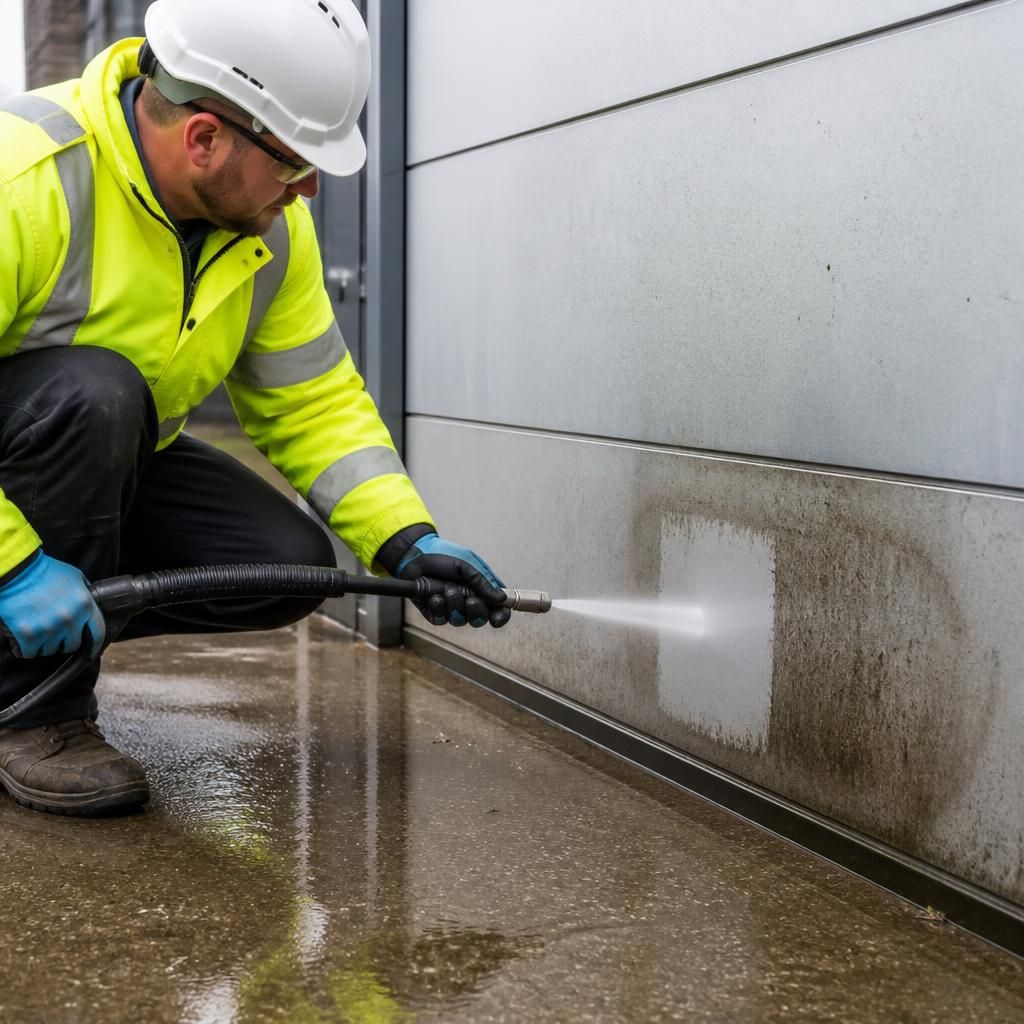
Commercial jet washing must be tested on a small, representative area before full-scale cleaning begins. This confirms whether the selected pressure, nozzle, temperature and detergent are suitable for the material and its existing finish. It can reveal problems such as mortar erosion, coating loss, etching, colour change or water entering through open joints before they affect a larger area.
The method can then be adjusted to suit the surface. Sound concrete may accept a more intensive wash, while brick, render, painted cladding, glass and roofing usually need lower pressure, wider spray patterns or soft washing. A controlled test also helps identify stains that are permanent or would require damaging treatment to remove, allowing the agreed cleaning outcome to remain realistic and safe.
Discuss your commercial jet washing requirements
Discuss your commercial jet washing requirements with Encanto Exterior Cleaning so we can assess the surface materials, cleaning risks and access arrangements involved. We can recommend a suitable method for your site and agree the required preparation, protection and aftercare.