
How does commercial jet washing help in maintaining the longevity of building materials?
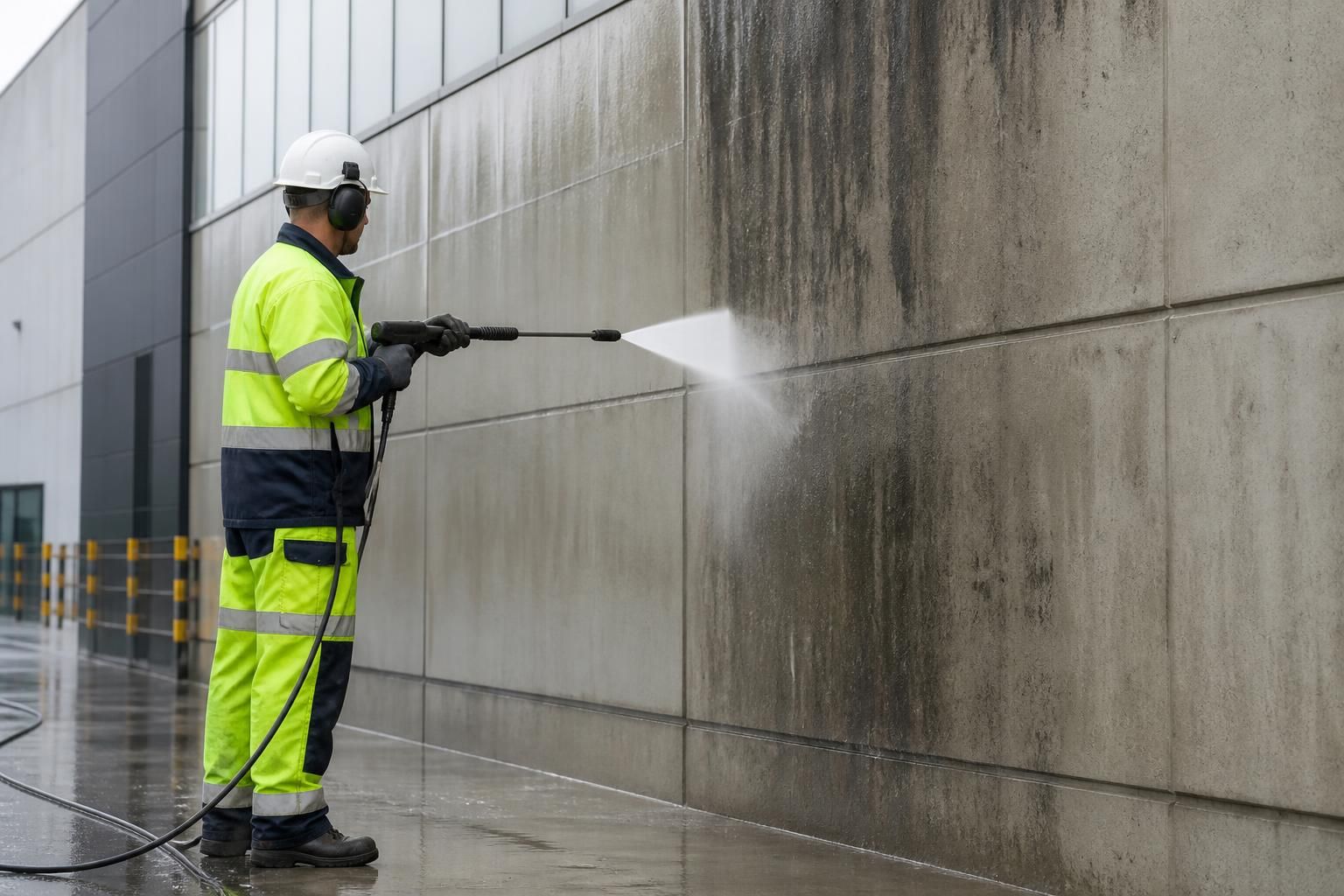
Commercial jet washing helps extend the life of building materials by removing grime, algae, moss, oil, pollutants and other contaminants that can retain moisture and accelerate surface deterioration. When the pressure, temperature and cleaning method are matched to the material, regular cleaning helps protect façades, cladding, roofs, paving and other external surfaces while identifying early signs of damage.
Commercial jet washing helps maintain the longevity of building materials by removing contaminants that hold moisture, encourage biological growth and contribute to surface breakdown. Cleaning façades, cladding, roofs, paving, car parks and canopies reduces the exposure of these surfaces to grime, algae, moss, oils, traffic deposits and atmospheric pollutants. When the pressure, temperature, water flow and cleaning products are selected for the material, the process supports preventative maintenance without causing unnecessary wear.
How contamination causes deterioration
External materials are continually exposed to rain, wind, pollution, vehicle emissions, de-icing residues and organic matter. Dirt is not only a cosmetic issue. Deposits can remain damp against a surface, block drainage routes and provide a suitable environment for algae, moss, lichen and mould. Over time, this may lead to staining, biological growth, corrosion, surface discolouration and the breakdown of protective coatings.
On paved areas, oil and fuel deposits can soften or stain some surfaces and create slip risks. On roofs and canopies, moss and accumulated debris can retain water around joints, edges and drainage points. On façades and cladding, pollutants can settle into textured finishes and coatings, making the surface harder to inspect and potentially accelerating degradation. Removing these deposits allows the material to dry more effectively and makes defects easier to identify.
Benefits for different building materials
- Brickwork and masonry: Carefully controlled washing can remove atmospheric soiling, algae and surface deposits without eroding the face of the brick or damaging mortar joints. Keeping joints and drainage details clear helps limit prolonged damp conditions. Older, softer or already weathered masonry may require low-pressure washing, steam cleaning or another gentler method rather than aggressive jetting.
- Concrete: Removing dirt, organic growth, oils and de-icing residues helps maintain appearance and reduces contamination around cracks, joints and porous areas. Cleaning also makes it easier to monitor spalling, exposed reinforcement and other signs of deterioration. Excessive pressure can damage the cement matrix, so the setting must reflect the concrete’s age and condition.
- Render and painted façades: Cleaning can remove staining and biological growth before it becomes established within the finish. The coating must be assessed first, as high pressure or unsuitable chemicals can lift paint, expose the substrate or leave visible cleaning patterns. Soft washing or steam may be more appropriate for delicate finishes.
- Metal cladding: Removing pollutants and deposits helps preserve the appearance of coated or finished panels. It can also expose early signs of coating failure, oxidation, corrosion around fixings and damaged sealants. Nozzles should not be directed aggressively at laps, joints, vents or seals, and cleaning products must be compatible with the coating.
- Roofs and canopies: Clearing moss, algae, bird fouling and general debris helps keep water paths and drainage points operational. It can reduce the time that moisture remains against roof coverings and makes defects such as failed flashings, damaged membranes or blocked outlets easier to spot. Roof cleaning must account for the covering, its age, the fall, access requirements and the risk of driving water beneath laps or seals.
- Block paving, concrete paving and tarmac: Removing soil, organic growth, chewing gum, oil and traffic grime improves cleanliness and can reduce slip hazards. Cleaning can also prevent weeds and moss from becoming established in joints. Re-sanding or other aftercare may be needed where jointing material has been displaced, while tarmac requires particular care because excessive pressure or heat can disturb the surface.
- Natural stone: Stone varies considerably in hardness, porosity and chemical sensitivity. A suitable method can remove staining while protecting the surface, but aggressive pressure or acidic products may etch, pit or discolour certain stones. Testing and material-specific chemical selection are essential.
Cleaning helps identify problems at an early stage
A heavily soiled surface can conceal cracks, failed sealant, open joints, corrosion, loose coatings, blocked outlets and damaged render. Once deposits have been removed, these issues are more visible during inspection. This does not mean jet washing repairs the underlying defect; it provides a clearer condition assessment so that repairs can be planned before water ingress or structural deterioration becomes more extensive.
For managed commercial premises, cleaning records can support planned maintenance. Before-and-after observations can identify recurring contamination, areas that remain damp, drainage problems and locations where protective coatings or pointing may need attention. This allows cleaning intervals and repair priorities to be based on the condition of the building rather than on appearance alone.
Why the method matters as much as the cleaning itself
Jet washing is not a single fixed process. The operator should select the method after considering the substrate, coating, age, condition, contamination and surrounding construction details. Pressure, water temperature, flow rate, nozzle type, working distance and the direction of the spray all affect the result. Steam cleaning or a lower-pressure approach may remove deposits effectively while reducing the risk of abrasion and water penetration.
A competent operator will normally carry out a visual assessment and, where appropriate, a small test area before starting the main work. This helps confirm whether the proposed pressure and cleaning agent are suitable and whether the result will be consistent across the surface. Windows, vents, electrical equipment, seals, joints and vulnerable finishes should be protected, and runoff should be controlled in line with site and environmental requirements.
Using excessive pressure can shorten material life rather than extend it. Possible consequences include etched concrete, damaged mortar, stripped coatings, dislodged pointing, opened joints, fractured paving and water forced behind cladding or roof coverings. Chemical misuse can also cause staining, corrosion or harm to adjacent materials. Thorough preparation and controlled application are therefore central to safe, durable cleaning.
The role of regular maintenance
Periodic commercial jet washing is most effective as part of a wider external maintenance plan. The appropriate interval depends on the building’s exposure, surrounding traffic, nearby vegetation, use of the site, drainage performance and the type of surface. High-traffic forecourts, shaded elevations and areas beneath trees may need closer monitoring than sheltered façades.
After cleaning, the site should be checked for remaining contamination, displaced jointing, blocked outlets, damaged finishes and any defects revealed by the work. Depending on the material, useful aftercare may include clearing gutters and drainage channels, removing loose debris, applying a compatible treatment for recurring biological growth, reinstating jointing material or arranging repairs to failed coatings and seals. Any treatment should be specified for the substrate rather than applied as a standard product.
In practical terms, commercial jet washing extends material life by reducing contaminant-related deterioration, preserving protective finishes and improving the visibility of maintenance issues. It is most beneficial when planned before deposits become deeply established and delivered with equipment and techniques suited to each surface. Cleaning should be treated as preventative fabric maintenance, not simply as cosmetic pressure washing.
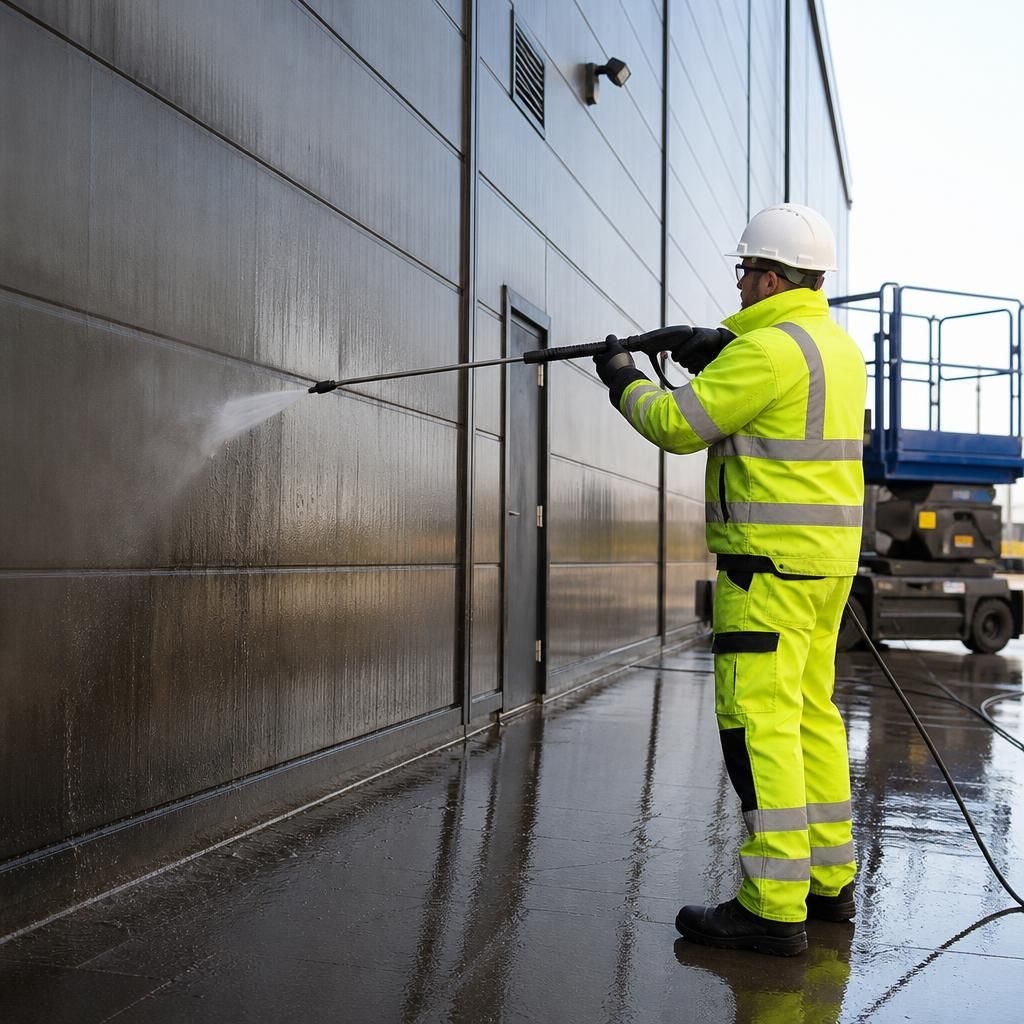
Commercial jet washing helps extend building material life by removing moisture-retaining dirt, algae, moss, oils and atmospheric pollutants before they contribute to staining, corrosion, blocked drainage or surface breakdown. The cleaning method must be matched to the material, coating and condition of the surface.
Controlled pressure, suitable water temperature, the correct nozzle and an appropriate working distance can remove contamination without unnecessarily eroding masonry, dislodging pointing, lifting coatings or forcing water behind cladding and roof coverings. Where surfaces are delicate or weathered, low-pressure washing or steam cleaning may be safer than aggressive jetting.
A pre-cleaning assessment and small test area help confirm the safest approach. Once deposits are removed, defects such as cracked joints, failed sealants, corrosion and damaged coatings are easier to identify and address through planned maintenance.
Protect Your Building Materials with Commercial Jet Washing
Arrange a commercial jet washing assessment with Encanto Exterior Cleaning to identify contamination, surface risks and suitable maintenance requirements. Contact our team to plan cleaning that helps protect your building materials and extend their service life.