
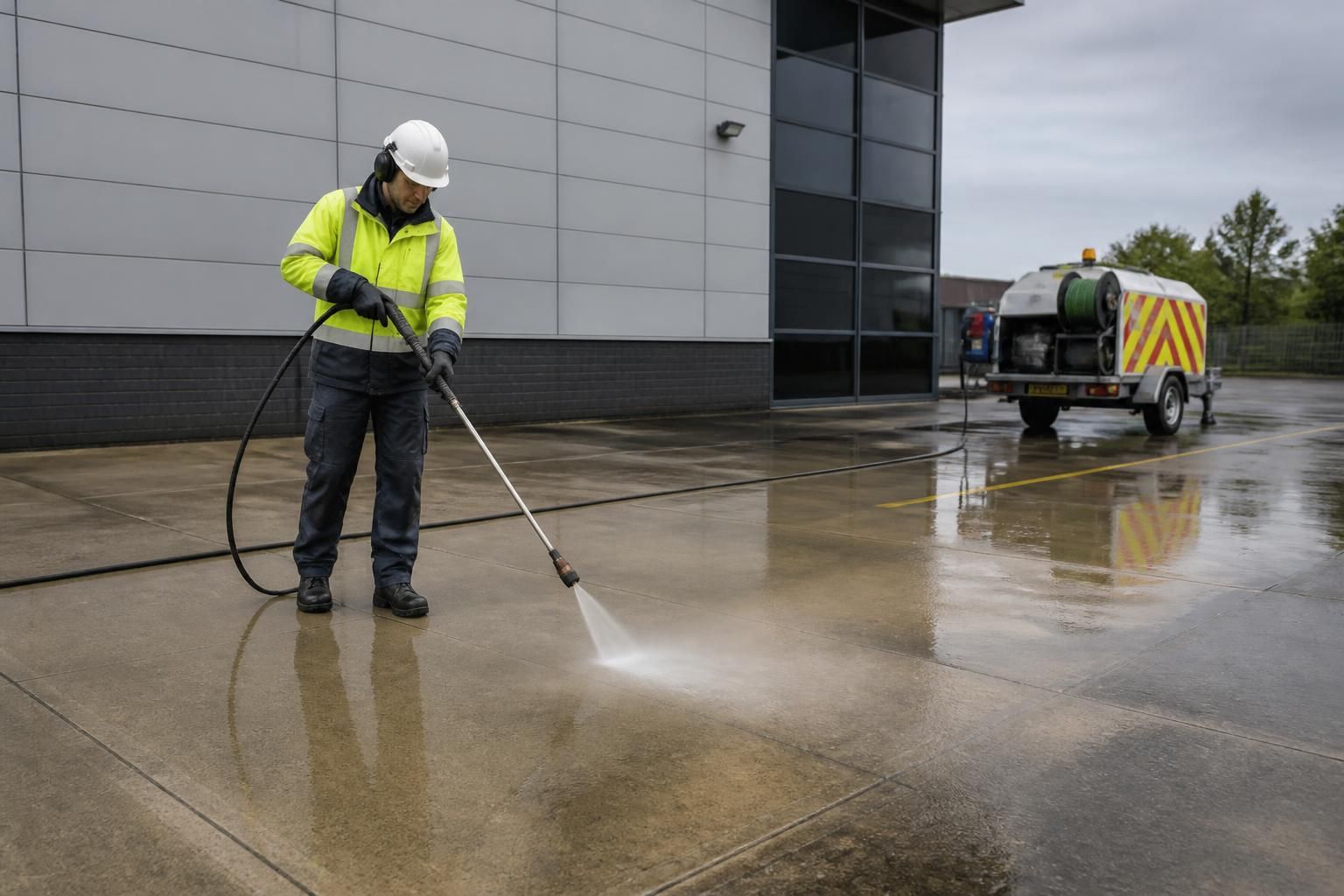
What surfaces can be effectively cleaned with commercial jet washing?
Commercial jet washing can effectively clean durable surfaces such as concrete, block paving, tarmac, car parks, loading bays, brickwork, façades, cladding and some roof coverings. The correct pressure, temperature and cleaning method depend on the material, its condition and the type of dirt or contamination present.
Commercial jet washing can effectively clean many hard, weather-resistant surfaces, including concrete, block paving, tarmac, loading bays, brickwork, façades, cladding, car parks and selected roof coverings. The appropriate pressure, water temperature, nozzle, cleaning product and recovery method depend on the material, its condition and the type of contamination present.
Concrete and reinforced concrete
Concrete is well suited to commercial jet washing because its dense surface can withstand controlled water pressure. Cleaning can remove traffic film, oil residues, algae, moss, mud, tyre marks and general dirt from yards, walkways, service areas, plant rooms and loading zones. More heavily soiled concrete may require hot water, a suitable pre-treatment or rotary surface-cleaning equipment.
Technicians must still account for damaged, cracked or friable concrete. Excessive pressure can widen defects, expose aggregate or drive water into joints. Where oil or chemical contamination is present, the wash water may need to be contained, treated and disposed of in accordance with environmental requirements.
Block paving and concrete paving slabs
Block paving, concrete slabs and many other manufactured paving products can usually be cleaned effectively with commercial equipment. Jet washing removes embedded dirt, organic growth, tyre marks, chewing gum residue and atmospheric soiling from pedestrian areas, courtyards, forecourts and car parks.
Cleaning needs to be controlled around joints. High pressure can remove jointing sand, loosen unstable blocks or disturb an existing sealant. A professional method may include pre-treatment, a rotary cleaner, localised rinsing and re-sanding or resealing where this has been agreed as part of the work. Uneven or settled paving should be assessed before cleaning rather than treated as a simple surface-washing task.
Tarmac and asphalt
Tarmac and asphalt can be cleaned to improve the appearance and usability of roads, car parks, access routes, service yards and pedestrian areas. Commercial jet washing is useful for removing mud, moss, algae, loose debris, tyre deposits and surface grime.
These materials are more sensitive to heat and pressure than sound concrete. Poorly bonded aggregate, worn areas, open joints and previous patch repairs can be damaged by aggressive cleaning. The cleaning specification should therefore reflect the age and condition of the surface. Oil contamination may also need a degreasing treatment and controlled wastewater collection rather than water pressure alone.
Brickwork and masonry
Sound brickwork, engineering brick and some types of masonry can be cleaned with carefully controlled pressure washing or steam cleaning. Typical applications include external walls, boundary walls, commercial buildings, retaining walls and areas affected by algae, atmospheric dirt, bird fouling or cement staining.
Brick and mortar vary considerably in hardness and porosity. Old, soft, hand-made or weathered brick can suffer from surface erosion, spalling or mortar loss if cleaned too aggressively. The method should be selected after inspecting the brick type, pointing, previous repairs and the nature of the staining. A test area is particularly important where the building is historic, listed or constructed from delicate masonry.
Building façades and rendered surfaces
Commercial jet washing can clean many external façades, including robust rendered walls, concrete panels, brick elevations and some stone cladding. It can remove traffic film, algae, moss, bird fouling, dust and other atmospheric deposits that affect the appearance of commercial premises.
Façade cleaning is not simply a matter of applying the highest available pressure. Render may be textured, painted, insulated or poorly bonded, while stone can be porous or vulnerable to chemical attack. Lower-pressure washing, steam cleaning or a compatible detergent may be more appropriate than standard jet washing. Windows, seals, vents, electrical fittings and vulnerable coatings must also be protected during the process.
Metal and composite cladding
Many metal cladding systems, including coated steel and aluminium panels, can be cleaned effectively using low- to moderate-pressure washing with a suitable detergent. This is commonly used on warehouses, industrial units, retail premises, offices and distribution facilities to remove dust, traffic film, algae and bird fouling.
Cladding panels should be checked for damaged coatings, exposed fixings, open laps and failed sealant. Water directed into joints, vents or service penetrations can enter the building or affect insulation. Abrasive methods and unsuitable chemicals may dull the coating, alter its colour or accelerate corrosion, so the cleaning system must be compatible with the panel finish.
Car parks, service yards and loading bays
Car parks and loading areas are often cleaned as complete surface systems rather than as isolated stains. Jet washing can remove accumulated mud, rubber deposits, oil film, algae, litter residue and general traffic grime from concrete, tarmac, paving and related kerbs.
Commercial cleaning plans should consider vehicle and pedestrian access, drainage, parked vehicles, loading schedules and the containment of dirty water. Spillages from fuels, oils or chemicals may require specialist treatment. Cleaning alone may improve the surface but will not repair potholes, failed drainage, cracked surfacing or structural defects.
Roofs and roof coverings
Selected roof coverings can be cleaned, but roof cleaning requires more caution than ground-level surface washing. Some concrete tiles, robust metal roofs and suitable industrial roof systems may be cleaned using controlled pressure or steam to remove moss, algae, lichen, dirt and bird fouling.
High-pressure washing is not suitable for every roof. It can damage fragile tiles, strip protective coatings, force water beneath laps, dislodge pointing or affect roof membranes and insulation. The roof construction, age, access arrangements, weather conditions and potential water ingress must be assessed before work starts. In some cases, soft washing or steam cleaning is safer and more effective than conventional jet washing.
Other surfaces that may be suitable
- Kerbs, steps, ramps and hard-standing areas made from sound concrete or paving.
- Industrial flooring and external plant areas, subject to the manufacturer’s requirements.
- Stone paving and walls where the stone is sufficiently robust and the cleaning method has been tested.
- Some resin-bound or resin-bonded surfaces, using low pressure and avoiding damage to the binder or aggregate.
- Steelwork, shutters, gates and external equipment where the coating and electrical components are protected.
Surfaces requiring special care or an alternative method
Jet washing is not automatically suitable for painted surfaces, soft timber, fragile render, old brick, natural stone, roof membranes, loose coatings, damaged asphalt or surfaces with exposed electrical components. Some stains also need a different treatment. Rust, efflorescence, paint, chewing gum, oil and cement residues may require specialist products, steam, abrasion or controlled mechanical removal.
Before cleaning, the surface should be inspected for cracks, loose material, failed joints, staining depth, drainage limitations and signs of previous damage. A small test area can confirm whether the chosen pressure, temperature and chemical treatment provide the required result without harming the substrate.
For commercial premises, the specification should also cover access equipment, protection of doors and vents, segregation of work areas, slip hazards, wastewater management and any restrictions on discharge to surface-water drains. Cleaning the right surface with the wrong method can cause more damage than the original contamination, whereas a material-led approach provides a safer and more predictable result.
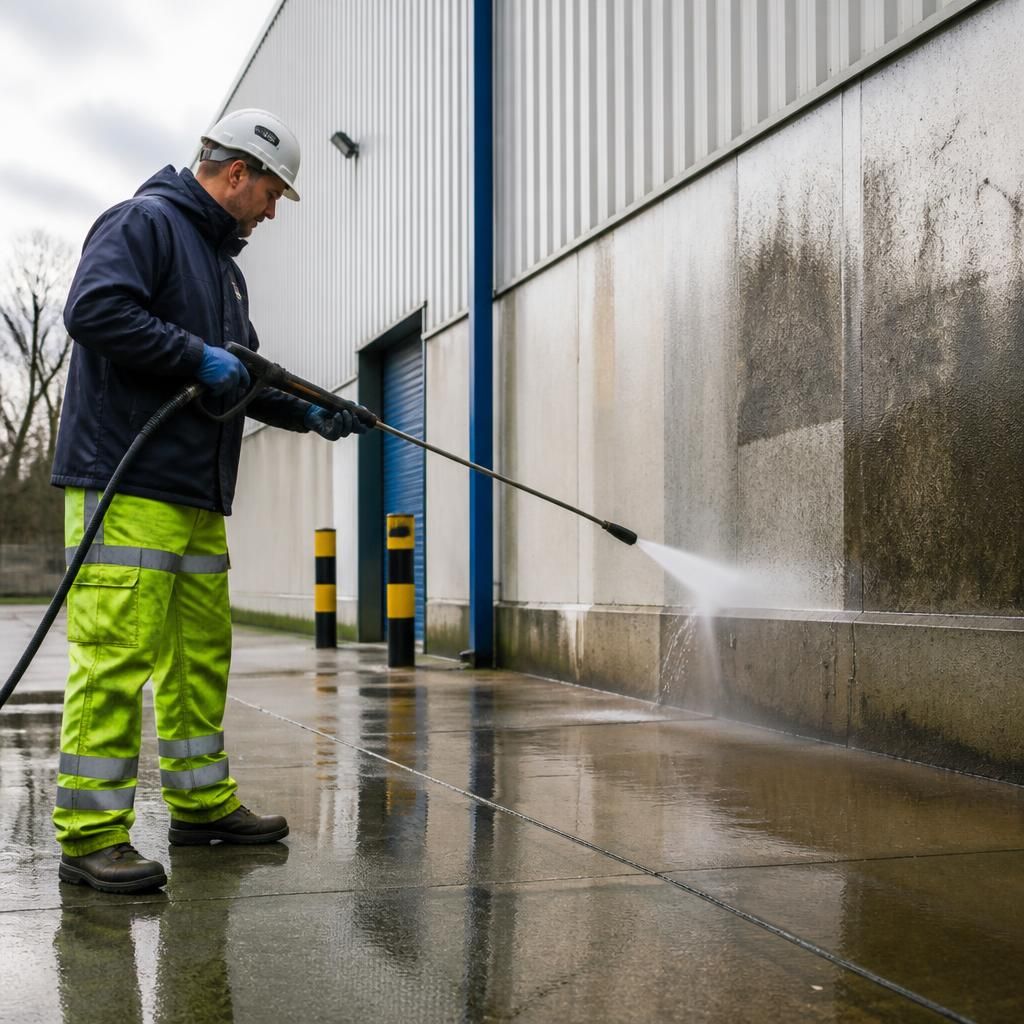
Commercial jet washing is effective on durable surfaces such as concrete, paving, tarmac, brickwork, cladding and some roof coverings, provided the cleaning method matches the material. Pressure, water temperature, nozzle selection and any cleaning products should be adjusted to remove contamination without damaging the surface.
Before work begins, the surface should be checked for cracks, loose coatings, failed joints, fragile areas and drainage restrictions. For example, sound concrete may tolerate controlled high-pressure cleaning, while old brickwork, coated cladding or roof membranes may require low-pressure washing or steam cleaning instead. A small test area helps confirm that the selected method is safe and effective.
Request a Commercial Jet Washing Surface Assessment
Request a commercial jet washing surface assessment so we can confirm the most suitable cleaning method for your building, paving, cladding, car park or roof covering. We will consider the material, condition, contamination and wastewater requirements before work begins.