
What safety measures are in place to protect both technicians and property during the commercial jet washing process?
Commercial jet washing is carried out using site-specific risk assessments, trained technicians, appropriate PPE, controlled water pressure and equipment suited to the surface being cleaned. Access routes, vulnerable materials, nearby people, vehicles and water run-off are managed through exclusion zones, protective measures and careful site supervision.
Commercial jet washing is managed through a site-specific risk assessment, trained technicians, suitable personal protective equipment (PPE), controlled water pressure and equipment selected for the surface and location. Before work starts, the team considers risks to people, vehicles, buildings, landscaping, drainage systems and nearby operations, then puts controls in place and supervises the work accordingly.
Site assessment and method planning
A pre-work assessment identifies the condition of the surfaces, access requirements, water and power arrangements, drainage, traffic movements and any vulnerable features. The cleaning method is then selected around the site rather than applying the same pressure or temperature everywhere. Where appropriate, the work plan will address:
- Fragile, poorly bonded, cracked or weathered surfaces
- Glazing, seals, vents, electrical equipment, signage and painted finishes
- Pedestrian routes, vehicle access and occupied areas
- Work at height and the use of mobile access equipment
- Water run-off, surface contaminants and nearby drains or watercourses
- Weather conditions, visibility and any restrictions imposed by the client or site operator
Technicians review the planned controls before starting and adapt them if conditions on site differ from the original assessment. A method statement or site-specific work plan can also be shared with the responsible person where the project requires formal coordination.
Technician protection and safe working practices
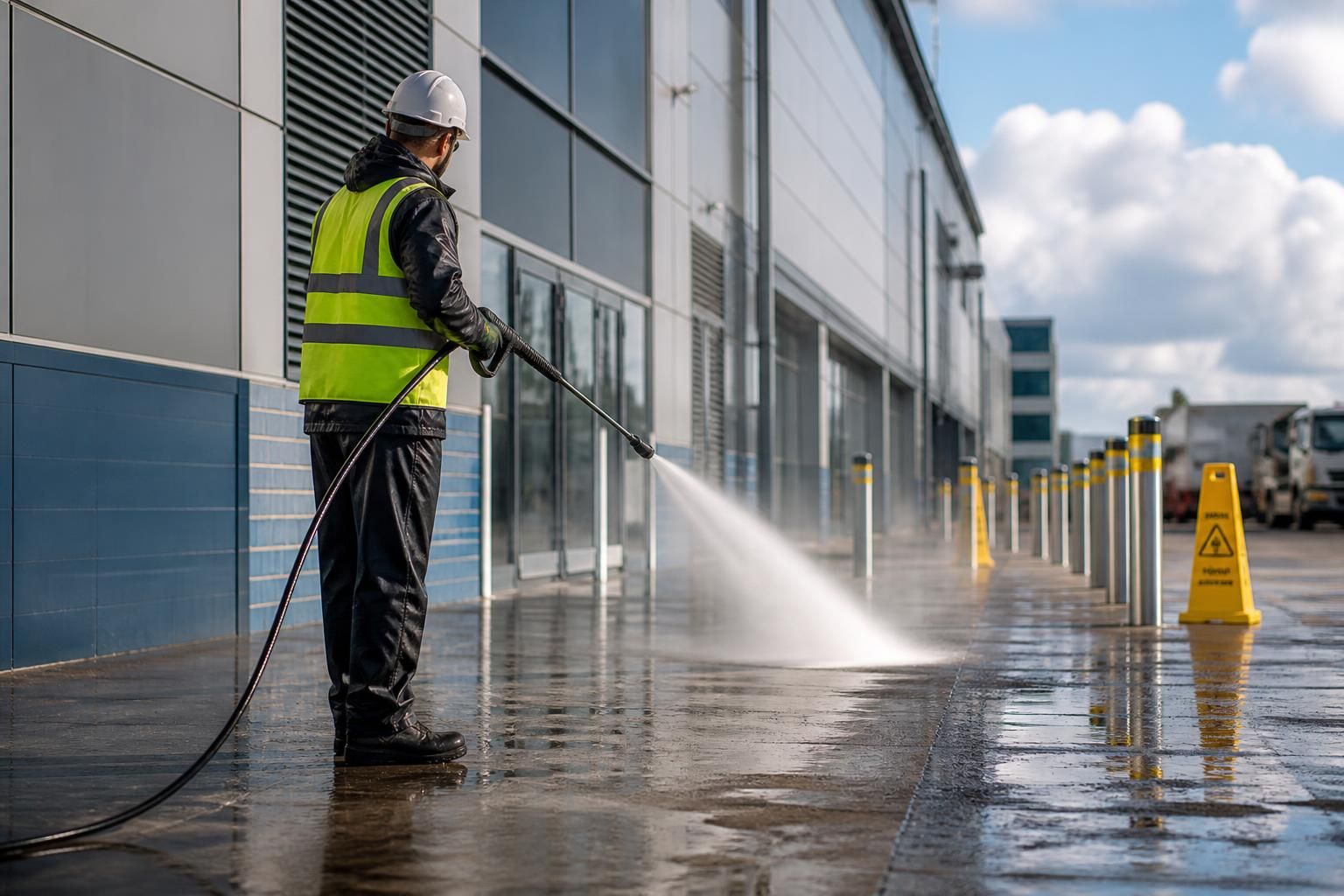
Jet washing creates high-pressure water, spray, noise, slippery surfaces and, in some applications, contaminated splash-back. PPE is selected for the task and may include waterproof protective clothing, gloves, safety footwear with suitable slip resistance, eye or face protection and hearing protection. Respiratory protection may be required for particular contaminants or cleaning products, subject to the relevant assessment.
Technicians are also expected to maintain a stable stance, keep the lance under control, avoid directing water towards people or unprotected equipment and isolate the equipment before making adjustments. Hoses are routed to reduce trip hazards, and work areas are kept orderly so that access and escape routes remain usable.
Controlled pressure, temperature and chemical use
Pressure, flow rate, water temperature, nozzle type and working distance are adjusted to suit the material. A lower-impact setting is used where a surface, joint, coating or fitting could be damaged by excessive force. Technicians normally test an inconspicuous area first, particularly on painted, rendered, timber, masonry or aged surfaces, and inspect the result before continuing.
Hot water and cleaning products are used only where they are suitable for the substrate and the contamination. Product information and control measures are followed, and chemicals are stored, diluted and applied in a controlled manner. This helps prevent burns, unwanted chemical reactions, staining and damage to vegetation or drainage infrastructure.
Protecting the building and surrounding property
Before cleaning, vulnerable items may be covered, screened, isolated or removed. Particular care is taken around doors, windows, vents, cable entries, lighting, alarms, painted surfaces, loose pointing and areas where water could enter the building. Water is not directed into openings or towards equipment that is not designed to be wet.
Where access equipment is needed, the ground condition, available clearance and positioning of the equipment are checked. Equipment is used in accordance with the manufacturer’s instructions, with suitable controls for nearby structures, overhead obstructions and public access. Vehicles, plant, stock and external furniture are moved or protected where necessary.
Exclusion zones and communication
Barriers, cones, signs or a banksman may be used to separate the work area from pedestrians and moving vehicles. The arrangement depends on the site layout and the level of public or staff access. Technicians communicate with the client’s nominated contact before starting, explain any temporary restrictions and stop the operation if an unauthorised person enters an unsafe area.
For commercial premises that remain operational during cleaning, work may be phased around deliveries, customer access, staff movements or other contractors. Clear communication reduces the risk of someone walking into spray, wet paving, trailing hoses or an area affected by falling dirt.
Run-off, contamination and slip controls
Dirty water and loosened deposits are managed rather than allowed to spread uncontrolled. Drain covers, bunding, wet vacuums, collection systems or other measures may be used where needed, particularly when oil, algae, paint, detergents or other contaminants are present. Run-off is assessed against the site’s drainage arrangements and applicable environmental requirements.
Wet surfaces can remain slippery during and immediately after cleaning, so treated areas are controlled until they are safe to reopen. Residue, silt and debris are removed where necessary, and the work area is checked before barriers are taken down.
Equipment checks and emergency arrangements
Hoses, lances, nozzles, connections, guards, cables and access equipment are checked before use, with defects addressed before the equipment is operated. The team also confirms that suitable water and power supplies are available and that equipment can be isolated quickly if a problem occurs.
Site arrangements include a clear way to stop work, report damage or an injury and contact the relevant responsible person. If a previously hidden defect, unstable material, hazardous substance or unsafe access condition is discovered, cleaning is paused and the issue is assessed before work continues. On completion, the technician carries out a visual check of the cleaned surfaces, surrounding property, access routes and drainage points, reporting any relevant observations to the client.
These measures do not remove every site risk, but they ensure that commercial jet washing is carried out as a controlled maintenance activity. The most important safeguards are accurate information about the premises, an appropriate cleaning method, competent supervision and active communication with the client throughout the work.
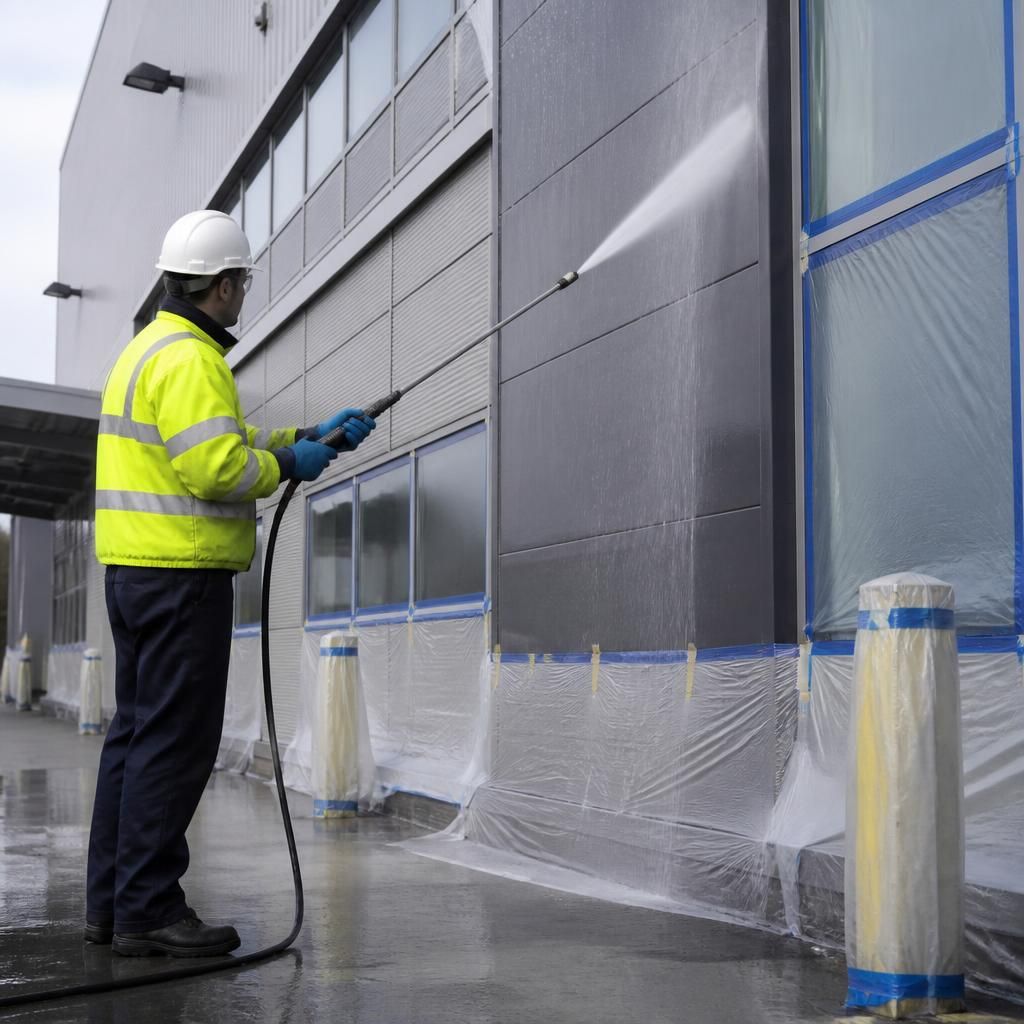
Protecting the property during commercial jet washing starts with selecting the correct pressure, temperature, nozzle and working distance for each surface. Technicians inspect the material and test an inconspicuous area before cleaning fully, reducing the risk of lifting coatings, damaging pointing or forcing water behind seals.
Vulnerable features such as glazing, vents, doors, electrical equipment, signage and painted finishes are shielded or avoided where necessary. Water is controlled around openings and access routes, while nearby vehicles, stock, furniture and landscaping are moved or protected before work begins.