
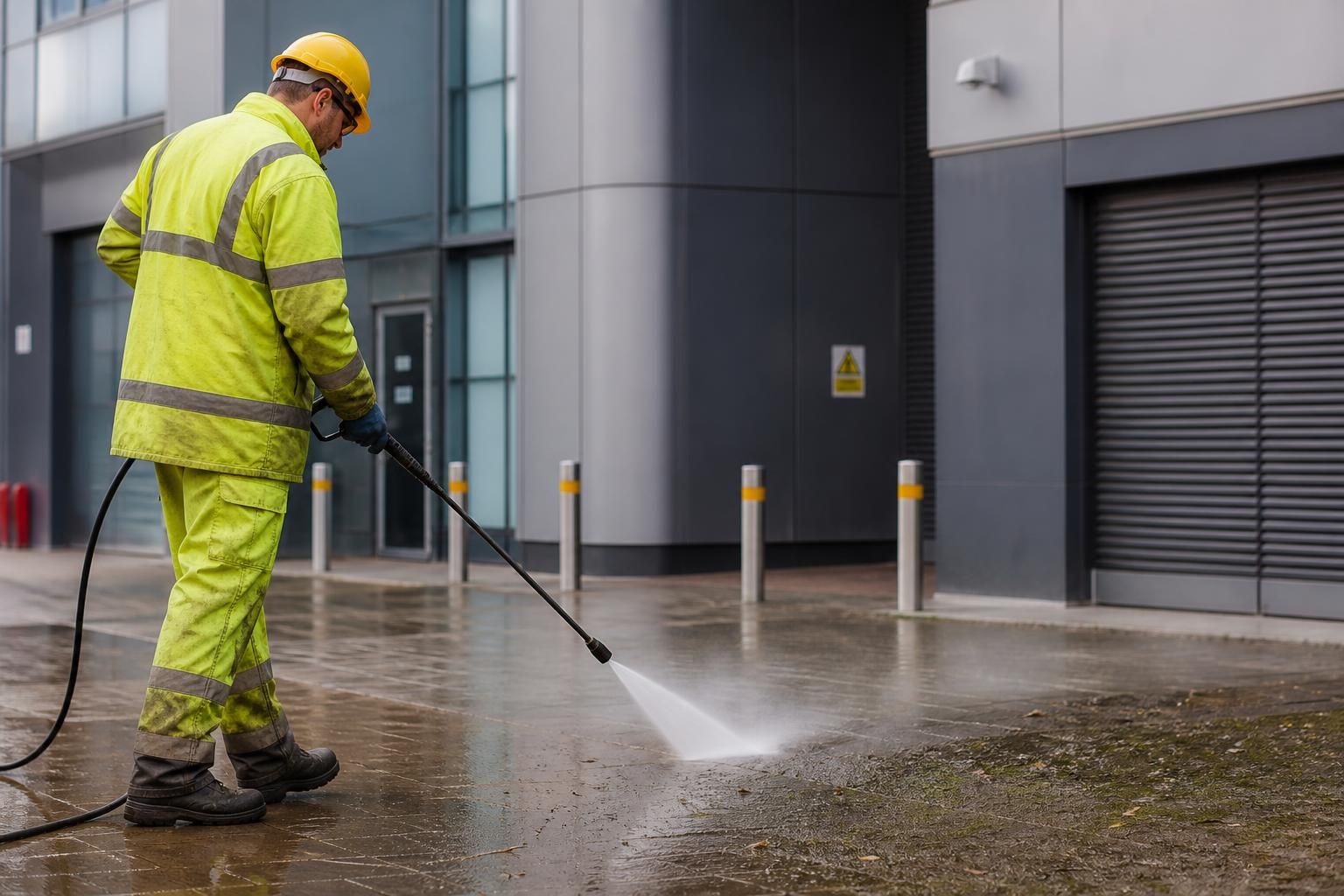
What is the difference between cold water and hot water jet washing in commercial applications?
Cold water jet washing uses pressure alone to remove dirt, debris and loose surface contamination, while hot water jet washing combines pressure with heated water to dissolve oils, grease, biological growth and ingrained grime more effectively. For commercial applications, the best option depends on the type of contamination, the surface material, environmental requirements and the scale of the cleaning work.
Cold water jet washing relies on pressure and the mechanical action of the water stream to remove dirt, dust, loose coatings and surface debris. Hot water jet washing uses the same pressure but adds heated water, allowing it to dissolve and lift oils, grease, traffic film, biological contamination and other ingrained residues more effectively. In commercial applications, the correct choice depends on the type of contamination, the surface being cleaned, the required finish, site conditions and any environmental controls.
How cold water jet washing works
Cold water equipment is effective where contamination is loose, water-soluble or primarily held on the surface by mechanical adhesion. Pressure dislodges material from paving, concrete, masonry, cladding and other suitable substrates. It is commonly used for removing general dirt, mud, dust, loose moss, algae, surface debris and some forms of staining.
Cold water cleaning is often appropriate for routine maintenance, preparation before other work and large areas where the main requirement is to remove general soiling efficiently. It can also be preferable where heat could damage a coating, soften a material or create a risk to sensitive finishes.
How hot water jet washing works
Hot water improves the cleaning process by reducing the viscosity of oils and grease and helping to break down the bonds between contamination and the surface. This means that residues can often be removed with less agitation, fewer cleaning passes or a lower chemical concentration, although the method still has to be selected and controlled by a trained operator.
Hot water is particularly useful for commercial and industrial areas affected by hydraulic oil, fuel residue, food grease, heavy traffic film, chewing gum, oily deposits and deeply embedded grime. It is also valuable where a site needs a more thorough clean without relying solely on high pressure.
Typical commercial applications
- Car parks and service yards: Cold water can remove general dirt and loose debris, while hot water is usually more effective against oil spots, tyre marks and vehicle-related deposits.
- Loading bays and industrial floors: Hot water helps loosen grease, product residue and ingrained contamination. Drainage, recovery and wastewater controls must be considered before work begins.
- Retail and public access areas: Cold water may be sufficient for routine paving maintenance. Hot water can provide better results around food outlets, bin stores and areas exposed to greasy foot traffic.
- Building façades and cladding: The method must be matched to the material, coating and condition. Cold, low-pressure cleaning may be safer for delicate finishes, while controlled hot water can assist with certain organic or oily deposits.
- Graffiti and adhesive residue: Hot water can soften some paints, stickers and residues, but the temperature, pressure and any detergent must be carefully controlled to avoid spreading contamination or damaging the substrate.
- Roofing and external structures: Temperature is only one consideration. Roof coverings, membranes, sealants and coatings may require a low-pressure approach or a different cleaning method altogether.
Cold water versus hot water: the main practical differences
- Cleaning action: Cold water depends more heavily on pressure, dwell time, agitation and detergents. Hot water adds thermal action, which helps dissolve and release greasy or oily contamination.
- Contamination type: Cold water is suitable for loose dirt and general soiling. Hot water is generally better for fats, oils, grease, traffic film and residues that have bonded to the surface.
- Surface risk: Both methods can damage a surface if the pressure, nozzle, temperature or technique is unsuitable. Hot water requires additional care around heat-sensitive coatings, plastics, sealants and painted finishes.
- Cleaning speed and consistency: Hot water may reduce the effort required to remove stubborn contamination, whereas cold water can be an efficient option for straightforward, large-area maintenance.
- Equipment and operating requirements: Hot water systems include a heating element and therefore require suitable fuel, ventilation, servicing and operator controls. Cold water systems are generally simpler where heating is unnecessary.
- Water and chemical use: The most efficient option is not determined by temperature alone. Pressure, flow rate, nozzle selection, pre-treatment, recovery arrangements and operator technique all affect resource use.
Surface suitability is essential
Heat should not automatically be treated as a stronger or safer cleaning option. A competent assessment considers the substrate, its age, existing damage, coatings, joints, sealants and previous repairs. Concrete, robust paving and some industrial surfaces may tolerate controlled hot water well, but painted cladding, plastics, decorative masonry, render, timber, membranes and aged coatings may require lower pressure, cooler water or an alternative process.
Pressure also needs to be controlled. Excessive pressure can etch concrete, remove jointing material, drive water into the building envelope, strip protective coatings or damage pointing. Operators should use test areas where appropriate and adjust the temperature, pressure, flow, nozzle distance and cleaning solution to suit the surface.
Does hot water always produce a better result?
No. Hot water is better suited to particular types of contamination, not to every commercial cleaning task. Using heat where it is unnecessary can add operating complexity and may increase the risk of damage to heat-sensitive materials. Conversely, using cold water on heavy oil or grease can result in repeated passes, greater agitation or increased reliance on detergents.
In some cases, a combined approach is most appropriate. For example, loose debris may be removed with controlled cold water, followed by a targeted hot water treatment on oily areas. A suitable detergent or degreaser may also be used, provided it is compatible with the surface and managed in accordance with the product instructions and site requirements.
Environmental and wastewater considerations
The cleaning temperature does not remove the need for responsible wastewater management. Run-off may contain oil, detergents, sediment, paint fragments, biological material or other pollutants. It must not be allowed to enter surface water drains or watercourses without appropriate controls. Before work starts, the drainage layout, discharge arrangements, containment requirements and any recovery or filtration measures should be assessed.
Hot water can assist with removing grease, but it may also mobilise contaminants more quickly. This makes capture, containment and disposal particularly important on industrial sites, forecourts, car parks, service yards and areas near drainage channels. Weather, public access, nearby vehicles and sensitive landscaping should also be considered when planning the work.
How the method is selected for a commercial site
- Identify the contamination and determine whether it is loose, organic, oily, chemical, biological or bonded to the surface.
- Inspect the substrate, coating, joints, drainage and any visible defects.
- Decide whether pressure alone is appropriate or whether controlled heat, detergent, steam or another process is more suitable.
- Carry out a test clean where the surface or contamination presents uncertainty.
- Set the pressure, temperature, flow, nozzle and working distance to achieve the required result without unnecessary force.
- Plan access, pedestrian and vehicle segregation, run-off control, wastewater collection and post-cleaning inspections.
For most commercial maintenance programmes, cold water is a practical choice for general dirt and routine surface cleaning, while hot water is usually the more effective option for grease, oils, traffic film and heavily ingrained residues. The decision should be based on a site assessment rather than temperature alone. Matching the equipment and technique to the contamination and substrate helps achieve a consistent clean while protecting the property, controlling wastewater and avoiding unnecessary use of pressure, heat or chemicals.
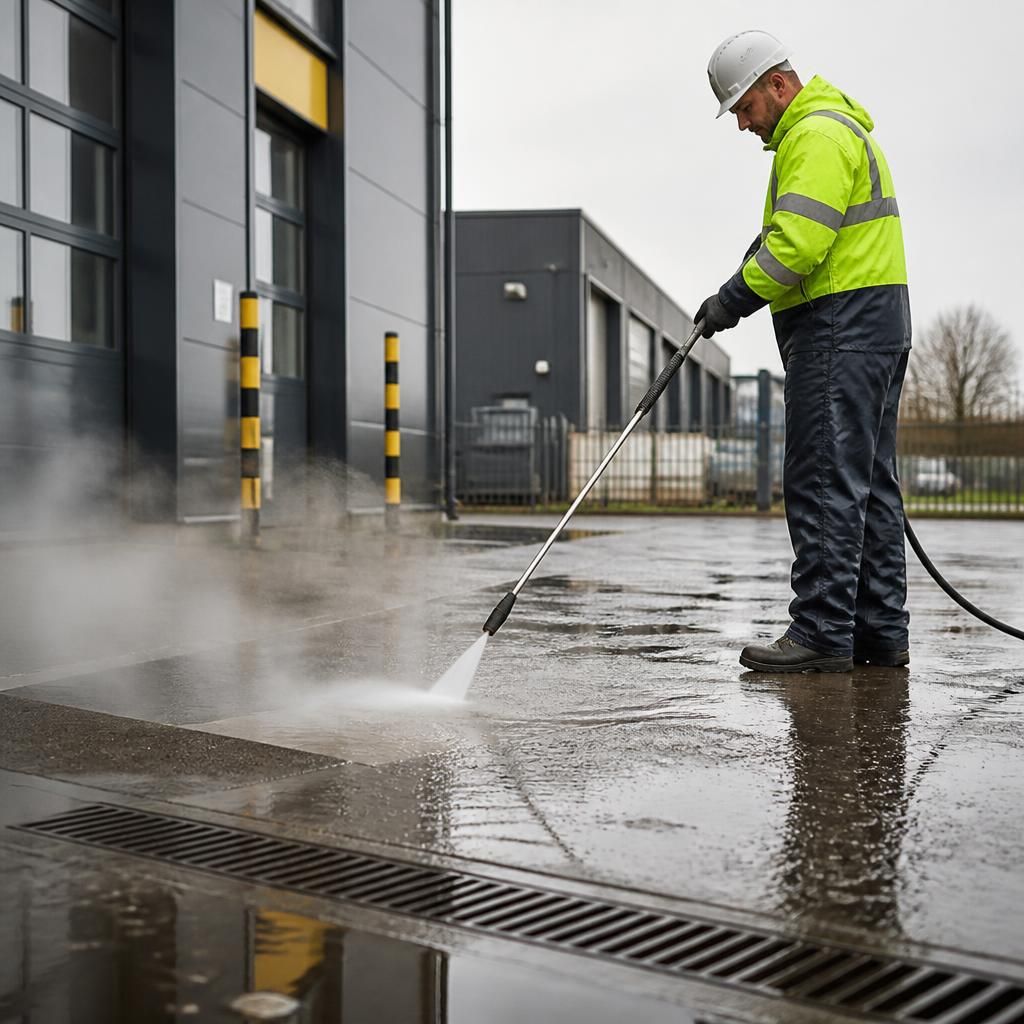
Cold water jet washing uses pressure to remove loose dirt and surface debris, while hot water adds heat to soften and dissolve oils, grease, traffic film and ingrained residues. For commercial sites, hot water is often useful on car parks, loading bays and service yards, whereas cold water is usually sufficient for routine cleaning of suitable paving, concrete and other robust surfaces.
The choice must also account for the substrate, coatings, joints and drainage. Heat and pressure can damage painted finishes, plastics, sealants or aged surfaces if poorly controlled, and hot water can mobilise pollutants more quickly. A site assessment and, where necessary, a test clean help determine the safest and most effective method.