
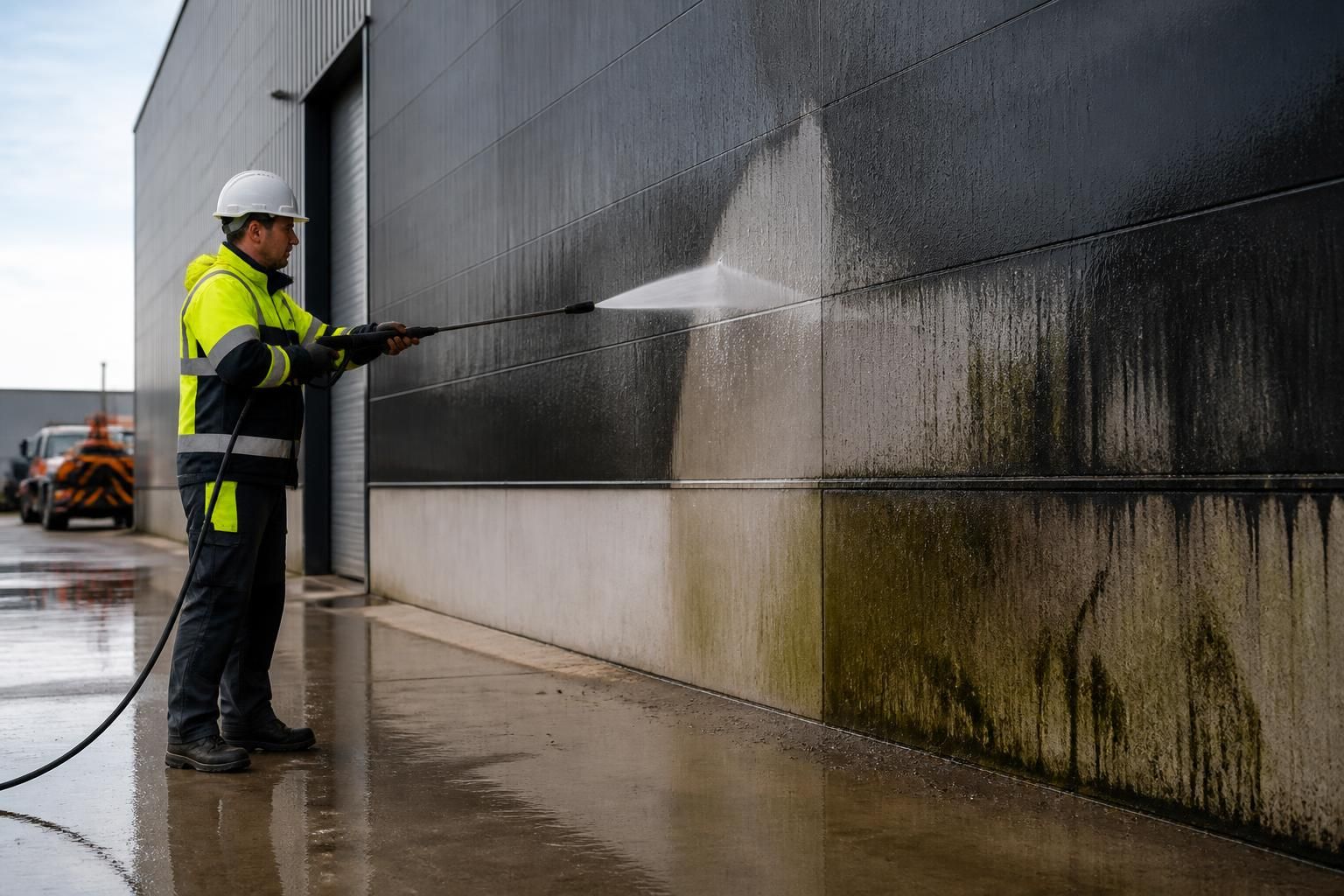
What factors should I consider when assessing the cost-effectiveness of commercial jet washing services for my business?
Assess the cost-effectiveness of commercial jet washing by comparing the full service cost with the time saved, cleaning quality, reduced maintenance needs, improved safety and protection of your property. Consider the contractor’s equipment, access requirements, water and waste-management methods, insurance, experience and the likely frequency of future cleaning, rather than choosing on the lowest quotation alone.
Commercial jet washing is cost-effective when the total service cost is justified by the time saved, cleaning result, reduced maintenance requirements, improved safety and protection of the property. Assess the whole-life value of the work rather than comparing quotations on price alone. The most reliable assessment considers the condition and size of the site, required equipment, access arrangements, water and waste handling, cleaning frequency, contractor competence and the potential cost of leaving the work untreated.
Start by defining the required outcome
A meaningful cost comparison depends on specifying what the cleaning must achieve. A light maintenance wash of a relatively accessible hard surface will have different labour, equipment and preparation requirements from the removal of oil, ingrained traffic film, chewing gum, algae, moss, construction residue or graffiti. Consider whether the objective is:
- Routine presentation and general dirt removal
- Removal of a particular contaminant or safety hazard
- Preparation before painting, sealing, refurbishment or handover
- Restoration of façades, cladding, roofs, paving or car parks
- Compliance with a tenancy, facilities-management or local-authority requirement
A clear scope helps contractors recommend the right method and prevents the quotation from omitting preparation, protection, rinsing or waste-management work.
Compare the full cost, not just the quoted day rate
The quoted price should be considered alongside all activities needed to complete the work safely and properly. Depending on the site, the total may include surveying, mobilisation, traffic or pedestrian management, access equipment, surface protection, detergent, water provision, wastewater collection and disposal, post-cleaning inspection and making good any temporary protections.
Ask whether these items are included, charged separately or dependent on site conditions. A lower initial quotation may not represent better value if it excludes access arrangements, difficult stain treatment or compliant disposal of contaminated runoff.
Assess the labour and time saving
Using an experienced contractor can release your employees from cleaning duties and reduce disruption to normal operations. The relevant comparison is not only the contractor’s invoice against an internal wage cost. Include supervision, equipment purchase or hire, training, preparation, storage, maintenance, insurance and the time required to manage the work.
Also consider operational disruption. Cleaning completed efficiently and at an agreed time may reduce blocked entrances, restricted parking, interrupted deliveries or access limitations for tenants and visitors. Where the work is carried out outside normal operating hours, confirm whether additional charges apply and whether the arrangement genuinely reduces disruption.
Consider the cleaning method and equipment
Jet washing is not a single standard process. Cold-water pressure washing may be appropriate for general soil, while hot-water cleaning or steam cleaning can be more effective for grease, oil and certain biological deposits. Surface cleaners, rotary equipment, low-pressure systems, detergents or specialist access equipment may improve productivity and reduce the risk of uneven results.
The most powerful setting is not automatically the most economical or suitable. Excessive pressure, heat or unsuitable chemicals can damage mortar joints, coatings, render, soft stone, timber, seals or painted surfaces. A contractor that selects the method according to the material can help prevent repair costs and premature replacement.
Include access and site logistics in the assessment
Access can materially affect the cost of commercial work. Review the height, layout and condition of the surfaces, as well as the availability of suitable parking, water, drainage and electrical supplies. Restricted areas may require a telescopic system, mobile elevated work platform, scaffold, water-fed equipment or other access solution.
Ask how the contractor will protect vehicles, stock, doors, vents, electrical equipment, landscaping and nearby pedestrians. A properly planned method may cost more than an informal wash, but it reduces the likelihood of damage, delays and claims.
Account for water use and wastewater management
Water supply and drainage arrangements should form part of the value assessment. Some sites have limited water availability or drainage that cannot accept contaminated runoff. Oil, chemicals, paint residues, heavy sediment and other pollutants may require containment, recovery and appropriate disposal rather than discharge into surface-water drains.
Confirm how the contractor will control runoff, protect drains and manage recovered water. Responsible waste handling helps avoid clean-up costs, enforcement issues and disruption to neighbouring premises. It may also be necessary for sites with environmental policies or specific landlord, facilities-management or local-authority requirements.
Measure the effect on maintenance and asset life
Regular removal of organic growth, pollutants and accumulated grime can support the condition of external surfaces and identify defects before they become more expensive. Cleaning does not replace planned repairs or specialist treatments, but it can make cracks, failed sealant, damaged coatings, blocked drainage and surface deterioration easier to inspect.
When comparing a one-off clean with a planned maintenance programme, consider the likely effect on future cleaning effort and repair requirements. The correct interval depends on the surface, exposure, use of the site, local conditions and the type of contamination. Cleaning too infrequently may allow deposits to become harder to remove; cleaning unnecessarily often may add cost without a corresponding benefit.
Evaluate safety and compliance value
Slippery algae, moss, oil and accumulated debris can create risks on walkways, loading areas, stairs, car parks and other trafficked surfaces. Façades, roofs and elevated areas also present access and falling-object hazards. Professional work should include a suitable risk assessment, method statement, exclusion zones, appropriate personal protective equipment and controls for water, electricity, chemicals and nearby occupants.
These measures are part of the service value, not merely administrative additions. A quotation should be assessed against the potential cost of an accident, property damage, operational interruption or non-compliant discharge. Check that the contractor has appropriate public liability and employers’ liability insurance, competent technicians and procedures suited to the site.
Check the contractor’s experience and quotation quality
A cost-effective service should be delivered by a contractor capable of achieving the required result without avoidable rework. Review whether the quotation explains the proposed equipment, pressure or temperature approach, detergents, access method, protection measures, working hours, exclusions and completion standard.
Relevant experience with similar surfaces and commercial environments is important. Ask how the contractor will test unfamiliar materials, deal with delicate finishes and respond if the surface condition differs from the initial assessment. Clear records, photographs where appropriate and a post-work inspection can help confirm that the agreed scope has been completed.
Compare quotations on a like-for-like basis
Before selecting a service, place quotations side by side and check:
- The exact areas and surfaces included
- The cleaning standard and any stain-removal limitations
- Preparation, protection, rinsing and final inspection
- Access equipment, traffic management and out-of-hours working
- Water, detergents and wastewater handling
- Insurance, safety controls and environmental responsibilities
- Any exclusions, provisional items or additional charges
- The proposed timescale and likely effect on site operations
- Whether a maintenance recommendation or follow-up visit is included
A transparent quotation makes it easier to identify genuine efficiency rather than selecting a low price that depends on omitted tasks.
Calculate value using a practical business comparison
For an internal review, compare the contractor’s total cost with the estimated cost of doing the work in-house, the value of staff time released, avoided equipment and training costs, reduced disruption, likely repair avoidance and the benefit of maintaining a safe, presentable site. Include any loss of trading time or restricted access associated with either option.
The result does not need to be expressed as a precise financial return when some benefits are operational or risk-related. A written comparison of cost, scope, risk and expected service life is often more useful than an assumed saving based only on labour hours.
When a planned contract may provide better value
For large premises, multi-site portfolios, car parks, industrial yards and frequently occupied buildings, planned cleaning can be more cost-effective than repeated reactive call-outs. A schedule allows access, water supply, traffic management and tenant communications to be arranged in advance. It can also help maintain consistent standards across sites and identify defects during routine inspections.
For a smaller or infrequently used area, a one-off clean may be appropriate. The decision should be based on contamination, exposure, safety requirements and the consequences of deterioration rather than applying the same frequency to every property.
In practice, commercial jet washing represents good value when the method is suitable for the surface, the scope includes all necessary work, risks and wastewater are controlled, and the result supports the site’s operational and maintenance objectives. A detailed site assessment and transparent quotation provide the strongest basis for deciding whether the service delivers an acceptable return for your business.
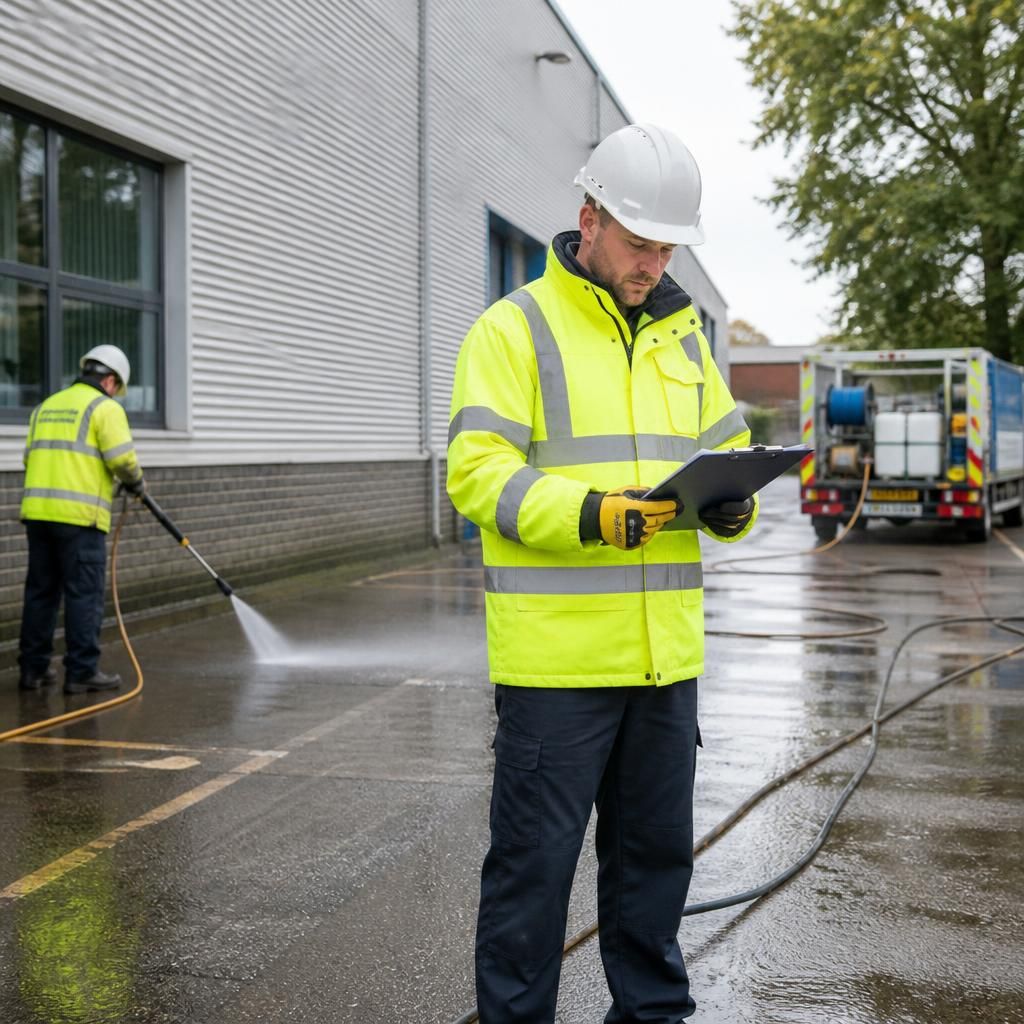
Assessing a commercial jet washing quotation means comparing the complete scope of work, not simply the lowest headline price. Confirm that each quotation covers the same surfaces, cleaning standard, preparation, protection, access arrangements, water use, wastewater management and final inspection.
Check whether difficult stains, specialist equipment, traffic management, out-of-hours work or contaminated runoff disposal are included or charged separately. A transparent quotation makes it easier to identify genuine value and reduces the risk of additional costs, incomplete cleaning or disruption during the work.
Request a commercial jet washing quotation
Contact Encanto Exterior Cleaning to discuss your site requirements and request a clear, tailored commercial jet washing quotation. We can assess the surfaces, access arrangements, cleaning method and wastewater controls so the proposed scope reflects the work your business actually needs.