
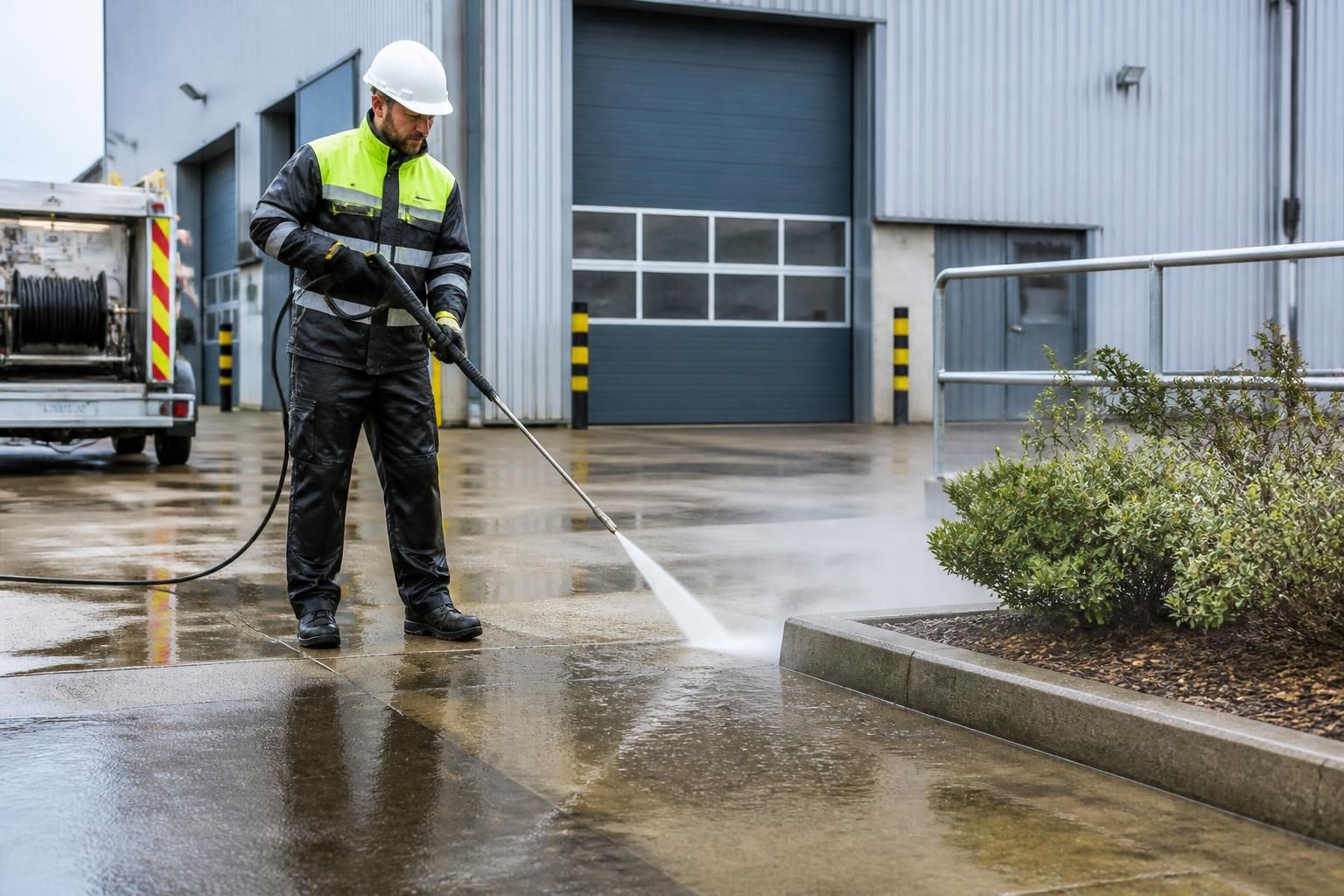
What environmental considerations should be taken into account with commercial jet washing?
Commercial jet washing should account for water consumption, wastewater runoff, cleaning chemicals, energy use and the protection of surrounding surfaces, people and habitats. Responsible work uses only the water and detergents required, prevents contaminated runoff entering drains or watercourses, and follows relevant environmental and waste-disposal requirements.
Commercial jet washing should be planned around water use, wastewater containment, cleaning chemicals, energy consumption and protection of nearby people, surfaces and habitats. The objective is not simply to remove dirt, but to complete the work without allowing contaminated runoff, debris or chemicals to enter surface water drains, watercourses or surrounding ground.
A responsible contractor assesses the site before starting and selects the least resource-intensive method that will achieve the required result. This may involve pressure washing, hot-water cleaning, steam cleaning, soft washing or a combination of methods. The choice should reflect the surface, the type of contamination, the required standard of cleanliness and the sensitivity of the surrounding environment.
Water consumption and efficiency
Jet washing can use substantial volumes of water, particularly on large façades, yards, car parks and industrial surfaces. Water use should therefore be controlled through suitable equipment, correctly selected pressure and flow settings, and a method that avoids repeated passes. Operators should pre-sweep loose debris and use targeted cleaning rather than washing unnecessary areas.
Water recycling or recovery may be appropriate for some large projects, although the system must be suitable for the type of contamination being removed. Recovered water should not be reused in a way that spreads oil, chemicals, biological contamination or other pollutants. Where mains water is used, hoses, connections and equipment should be checked to prevent leaks and unnecessary discharge.
Runoff and drainage protection
Runoff is often the most important environmental issue in commercial jet washing. Water from a hardstanding, loading area, plant room or building façade may contain oils, fuel residues, detergents, paint particles, heavy metals, organic matter or other contaminants. It should not be allowed to flow into surface water drains, open ground or a nearby watercourse without appropriate assessment and control.
Before cleaning, the drainage layout should be identified and the work area should be inspected for low points, gullies, channels and connections to foul or surface water systems. Drain covers, bunding, temporary barriers, collection points, wet vacuums and other containment measures can help prevent uncontrolled discharge. Where runoff may be contaminated, it should be collected and disposed of through an appropriate route rather than released to the environment.
Discharge to a foul sewer may require the permission of the relevant water company or a trade effluent agreement. Surface water drainage is generally intended for uncontaminated rainwater, not dirty wash water. A contractor should confirm the site’s drainage arrangements and any required permissions before work begins, rather than assuming that a convenient drain is suitable.
Detergents and chemical selection
Detergents, degreasers, biocides and other treatments should be used only where necessary and in the lowest effective concentration. The product must be compatible with the surface and the intended discharge arrangements. Over-application can increase the pollutant load in wastewater, damage vegetation and create avoidable disposal requirements.
Product labels and safety data should be reviewed before use, including information on environmental hazards, dilution, storage, handling and disposal. Chemicals should never be mixed unless the manufacturer specifically permits it. Particular care is needed around planted areas, ponds, watercourses, drainage channels, porous paving and surfaces that could retain treatment residues.
Where a detergent is required, a product with an appropriate environmental profile may reduce risk, but it is not automatically safe to discharge. Biodegradable does not mean harmless in every location or suitable for release into a watercourse. The chemical’s instructions and the site’s wastewater controls remain important.
Oil, fuel, paint and other hazardous contamination
Cleaning an oil-stained car park, workshop, forecourt or industrial yard requires more control than removing ordinary dust and weathering. Oil, fuel, solvents, paint residues and similar substances may be hazardous or difficult to remove from wastewater. Jet washing can also spread contamination if the area is treated without containment.
These areas should be assessed before work starts, with absorbent materials, spill equipment and suitable recovery methods available. Loose contaminated solids, sludge and recovered wastewater should be treated as controlled waste where applicable. Waste should be stored securely, kept separate from clean materials and transferred using an appropriate disposal route. Waste transfer documentation should be retained when required.
Protection of buildings, landscaping and habitats
Environmental protection also includes preventing avoidable damage to the property and its surroundings. Excessive pressure, heat or unsuitable chemicals can remove coatings, damage pointing, strip protective finishes, erode jointing compounds and harm delicate cladding or roofing materials. Damaged surfaces may then require additional materials and repairs, increasing the overall environmental impact.
Nearby trees, planted areas, grass, ponds and habitats should be protected from overspray, chemical drift, contaminated runoff and physical damage. Work may need to be adjusted where birds, bats or other protected species could be present, particularly around roofs, eaves, façades and structures that provide nesting or roosting opportunities. If a site presents a potential wildlife issue, the work should be paused for appropriate advice rather than proceeding by assumption.
Operators should also control spray mist and overspray near occupied buildings, ventilation intakes, vehicles, public areas and neighbouring premises. This protects people and property while reducing the risk of cleaning residues being deposited outside the work area.
Energy use, noise and air quality
Hot-water jet washing generally requires more energy than cold-water cleaning because fuel or electricity is used to heat the water. The most efficient option depends on the contamination: hot water can remove grease and oils more effectively, potentially reducing cleaning time and chemical use, while cold water may be adequate for loose dirt and general weathering. Equipment should be selected according to the task rather than using maximum heat or pressure as a default.
Well-maintained machinery operates more efficiently and is less likely to leak fuel, oil or hydraulic fluid. Engines, burners, hoses and recovery equipment should be checked before use. On occupied or densely populated sites, the timing and method of work should also take account of noise, fumes and disruption, particularly near offices, hospitals, schools, residential areas and public spaces.
Legal and site-specific compliance
Environmental requirements vary according to the location, the substance being removed, the proposed discharge route and the nature of the site. Commercial cleaning may involve duties relating to pollution prevention, waste classification, hazardous substances, trade effluent, watercourse protection and contaminated land. Local authority requirements, the water company’s conditions and site-specific environmental procedures may all be relevant.
A suitable method statement should explain how water will be used, how drains will be protected, how runoff will be collected or discharged, which products will be applied and how waste will be handled. For higher-risk work, the site may also require an environmental risk assessment, COSHH assessment, spill response arrangements and evidence that the disposal contractor is authorised to accept the waste.
Practical controls to confirm before work starts
- Inspect the surface, surrounding ground and drainage layout.
- Identify oil, fuel, paint, chemical, biological or other potentially hazardous contamination.
- Choose the least intensive effective cleaning method and avoid unnecessary chemical use.
- Protect surface water drains, gullies, planted areas, watercourses and sensitive equipment.
- Contain, recover and filter dirty water where the site or contamination requires it.
- Confirm whether discharge to a foul sewer needs consent or other approval.
- Store chemicals, fuel and recovered waste securely and prevent spills.
- Use authorised waste and wastewater disposal routes, retaining relevant records.
- Check weather conditions so rain does not carry residues beyond the controlled work area.
- Inspect the area after cleaning and remove temporary containment only when the risk of uncontrolled discharge has passed.
For commercial projects, these considerations should be agreed during the site survey rather than left until the equipment arrives. Providing details of the surface, contamination, drainage, access restrictions and any environmental procedures allows the cleaning plan to include the right recovery and protection measures from the outset.
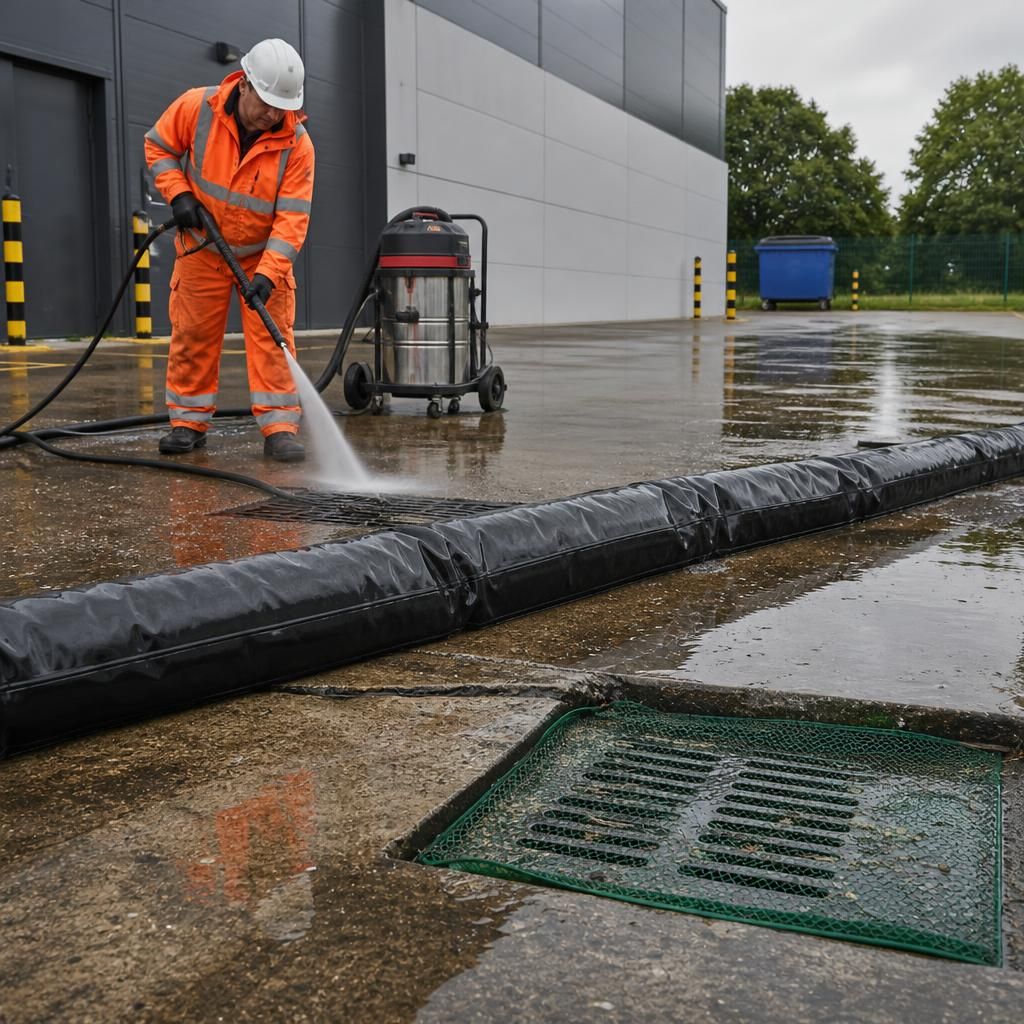
Runoff control is a central environmental consideration in commercial jet washing. Wash water from car parks, loading bays, workshops and industrial surfaces can carry oil, fuel residues, detergents, paint particles and other contaminants. It should not be allowed to enter surface-water drains, open ground or nearby watercourses without suitable assessment and control.
Before cleaning begins, the drainage layout and low points should be checked. Drain covers, temporary bunds, barriers, wet vacuums and collection systems can help contain dirty water where discharge could create a pollution risk. If wastewater is potentially contaminated, it should be recovered and sent through an appropriate disposal route. Discharge to a foul sewer may also require approval from the relevant water company, so this should be confirmed during the site survey rather than assumed on the day.