
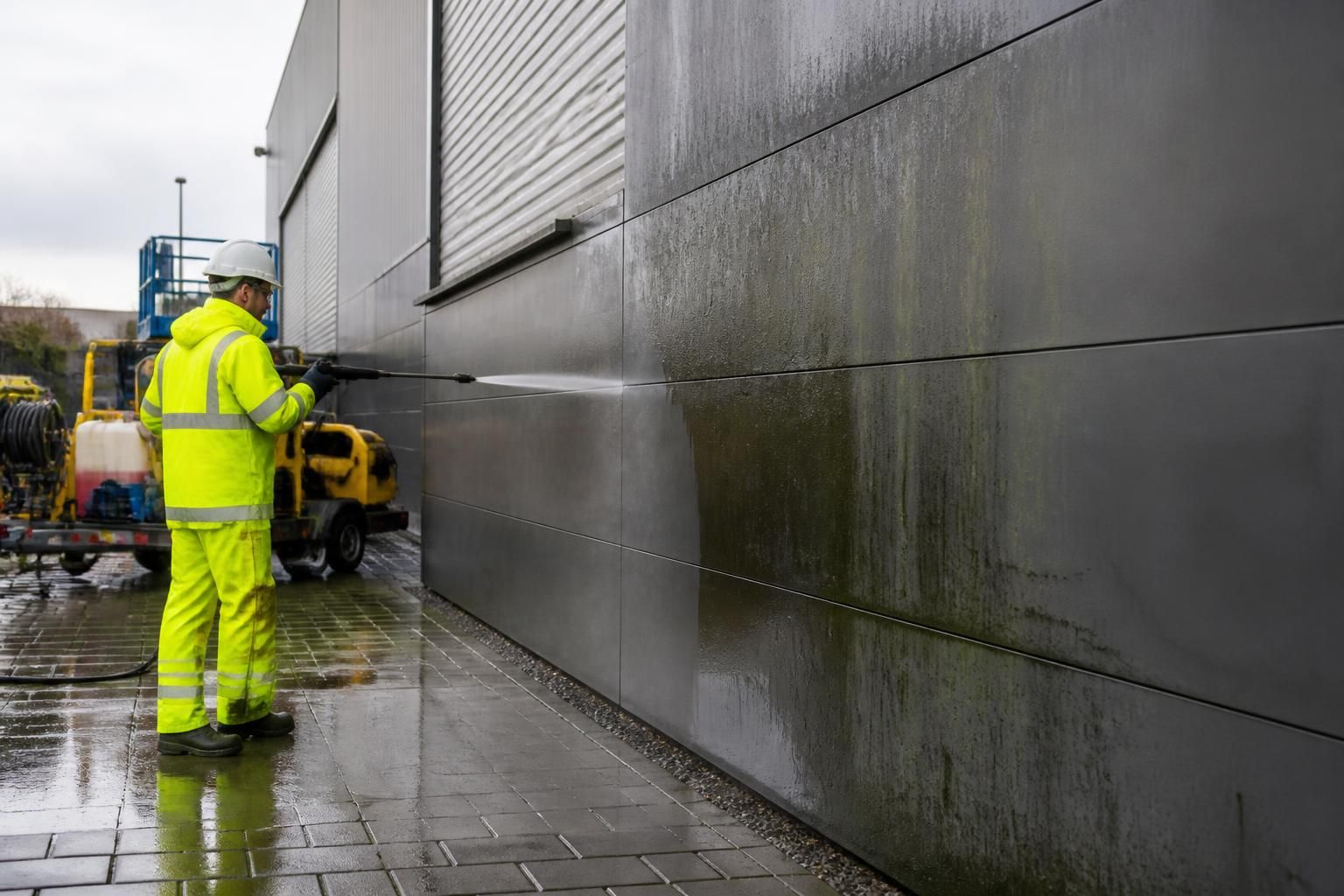
What certifications or training do your technicians hold to ensure the quality and safety of commercial jet washing services?
Our technicians are trained in commercial pressure washing, steam cleaning, chemical handling, risk assessment, PPE, equipment operation and safe working practices, including work around access equipment and occupied sites. Training and any required competency certifications are matched to the equipment, access method and site risks for each project, supporting consistent results and safe, compliant delivery.
Commercial jet washing technicians require practical competency in pressure-washing equipment, surface assessment, chemical handling, risk control and safe site operations. There is no single universal UK licence covering every form of jet washing, so the relevant training and certification depend on the equipment used, cleaning method, access arrangements and risks identified for each site.
Core cleaning and equipment training
Technicians are trained to set up and operate commercial pressure-washing and steam-cleaning equipment safely. This includes selecting suitable pressure, flow, temperature and nozzle settings; checking hoses, lances, couplings and guards; controlling spray direction and working distance; and recognising when a surface may be damaged by excessive heat, pressure or chemical action.
Training also covers the differences between cold-water, hot-water and steam systems. The correct method depends on the material, contamination and drainage arrangements. For example, painted surfaces, delicate masonry, cladding and jointed paving may need lower-pressure cleaning, while oil, grease and embedded deposits may require controlled hot-water treatment or an approved cleaning chemical.
Health and safety training
Technicians receive instruction in risk assessment, method statements, personal protective equipment and safe working practices. Before work starts, the team considers hazards such as high-pressure injection injuries, slips, falling debris, electrical equipment, vehicle movements, public access, overhead services, traffic and nearby building occupants.
- Pressure-washing equipment, hoses and accessories are checked before use.
- Suitable eye, face, hearing, hand, foot and body protection is selected for the task.
- Safe exclusion zones and warning signage are established where spray, debris or wet surfaces could affect others.
- Technicians are trained to stop work if conditions change or controls are no longer effective.
- Emergency procedures cover equipment faults, injuries, chemical exposure, spills and unexpected public access.
Personal protective equipment supports safe working but is not a substitute for planning. The main controls should come from the risk assessment, including equipment selection, isolation of hazards, access control and suitable supervision.
Chemical and environmental competence
Where detergents, biocides, degreasers or other treatment products are needed, technicians are trained in product-specific handling, dilution, storage, application and disposal. They use the relevant safety data and COSHH controls to identify exposure risks and required PPE. Chemicals are not applied automatically: the product must be suitable for the surface, contamination and surrounding environment.
Drainage and run-off are assessed before cleaning begins. Technicians take reasonable steps to prevent contaminated water, sediment, oils or chemicals entering surface-water drains or sensitive areas. Depending on the site, controls may include drain protection, containment, recovery of wastewater and agreed disposal arrangements.
Access equipment and working at height
Where façades, roofs, high-level cladding or other elevated areas are involved, training is matched to the access method. This can include safe use of ladders and towers where appropriate, mobile elevating work platforms, scaffold access or other specialist systems. Operators of powered access equipment must hold the relevant competency certification for the type of machine being used, where required by the equipment and site arrangements.
Working-at-height training covers inspection of access equipment, ground conditions, edge protection, exclusion zones, weather limitations, emergency lowering and rescue planning. Equipment used for lifting people or loads is subject to appropriate inspection and examination requirements, including the principles associated with PUWER and LOLER where applicable. Access arrangements are confirmed in the site-specific risk assessment rather than assumed from a previous job.
Site and task-specific requirements
Some commercial sites require additional evidence before allowing contractors to work. Depending on the client, location and scope, this may include a site induction, asbestos awareness where relevant, traffic management training, first-aid provision, construction-site competency cards or recognised access-equipment training. These requirements are reviewed before mobilisation so the personnel, equipment and documentation are suitable for the contract.
Training is supported by supervision, equipment checks and documented RAMS. Method statements explain the proposed cleaning process, access arrangements, protective controls, run-off measures and sequence of work. Toolbox talks or on-site briefings are used where the work involves unusual materials, restricted access, occupied premises or changing conditions.
How competence is maintained
Competence is not treated as a one-off certificate. Technicians receive ongoing instruction and practical guidance when equipment, chemicals, access systems or site risks change. Their work is monitored for safe operating technique, surface protection, control of spray and consistent cleaning results. Any required refresher training or additional certification is identified through equipment changes, supervision, incident reviews and project-specific risk assessments.
For a particular contract, we can confirm the training, competency records and site documentation relevant to the proposed method. This allows the cleaning process to be checked against the surfaces, access equipment, chemical controls and safety requirements of your premises rather than relying on a generic qualification list.
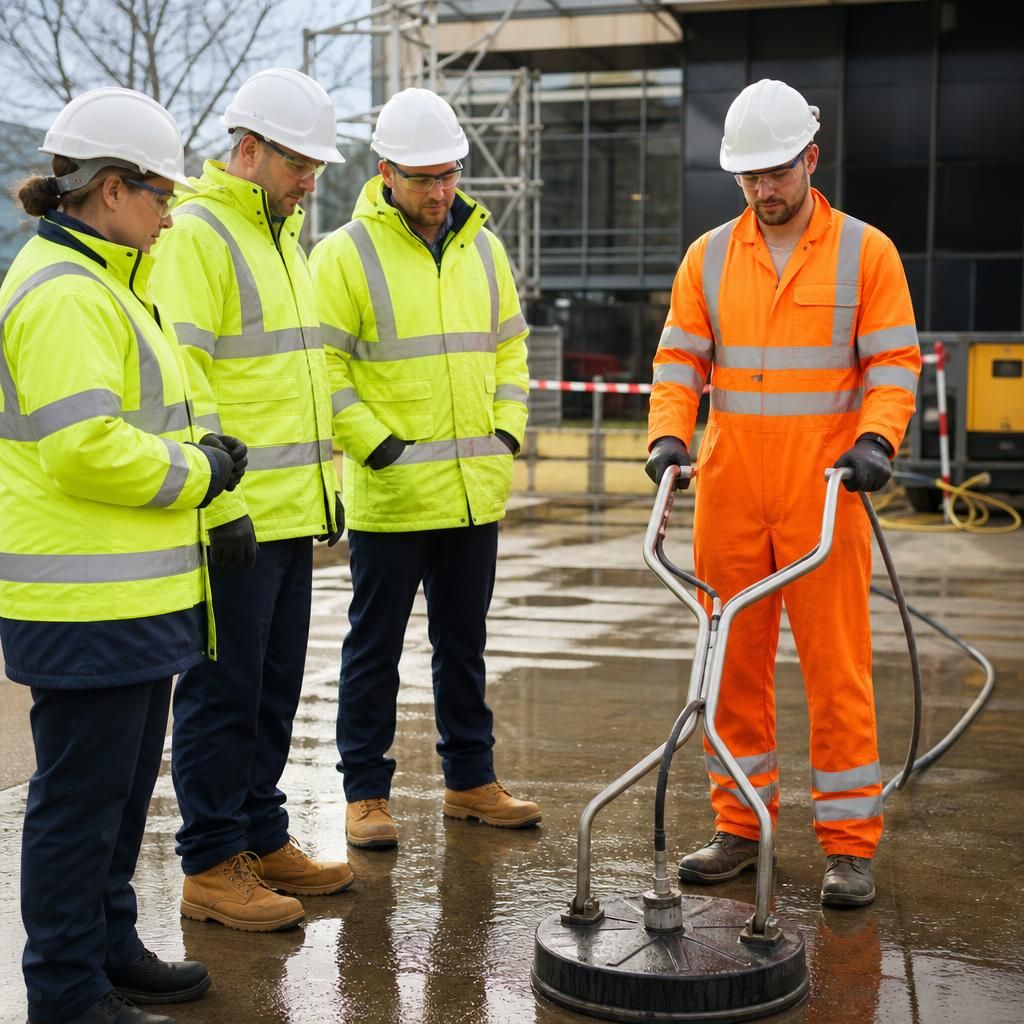
Commercial jet washing competence is matched to the equipment, cleaning method, access arrangements and risks of each site. There is no single UK licence covering every type of pressure washing, so technicians may require practical equipment training, chemical handling and COSHH awareness, risk assessment, PPE and working-at-height or powered-access competence where relevant.
Before work begins, these requirements are recorded in the project’s risk assessment and method statement. Equipment checks, exclusion zones, surface protection, drainage controls and emergency procedures are then briefed to the team, helping ensure that the cleaning is carried out safely without relying on a generic certificate alone.