
What are the typical surfaces and materials that can be effectively cleaned with commercial jet washing services?
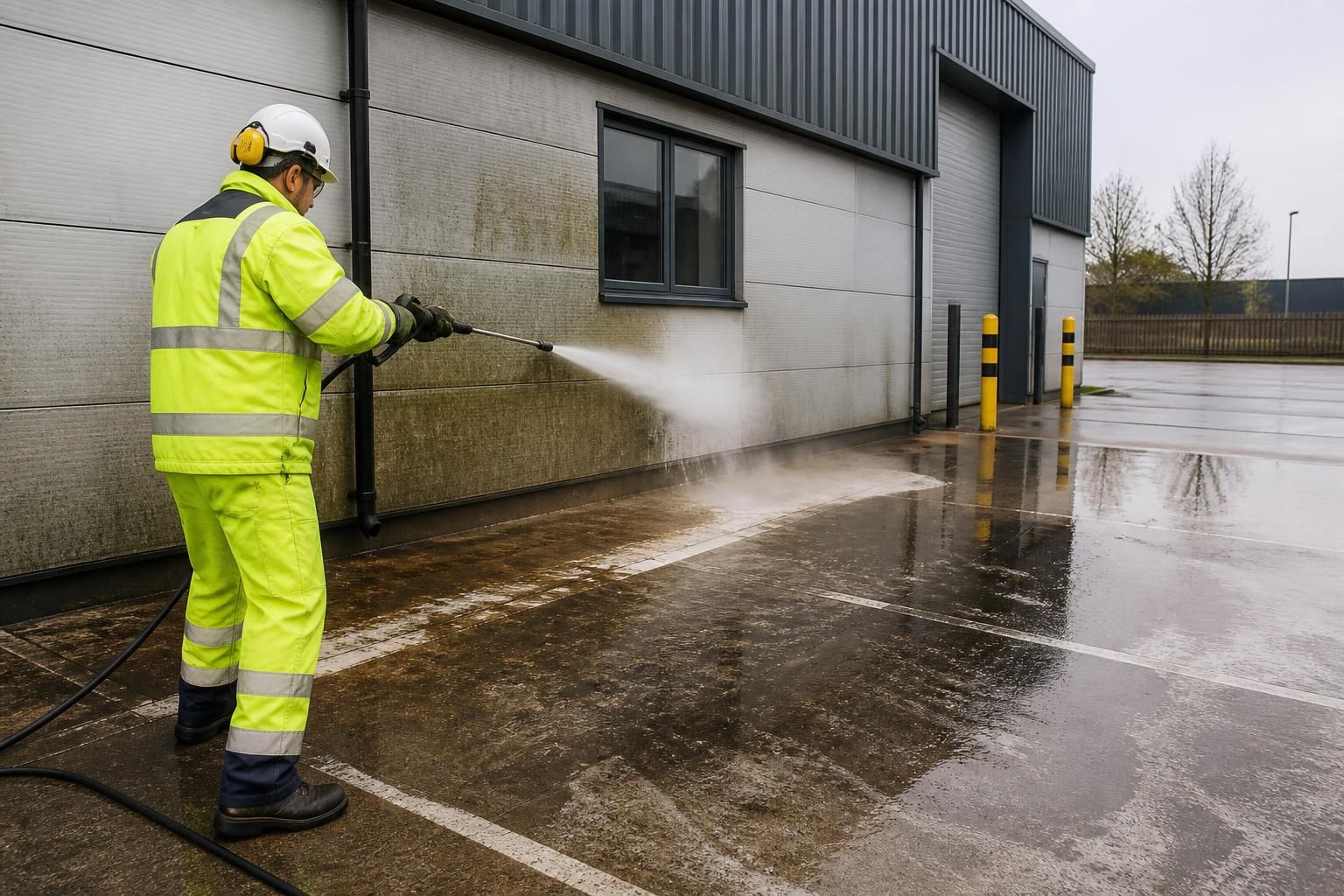
Commercial jet washing can effectively clean many durable exterior surfaces, including concrete, block paving, tarmac, brickwork, façades, cladding, roofs, loading areas, car parks and industrial flooring. The correct pressure, water temperature and cleaning method depend on the material, its condition and the type of dirt or staining present, so delicate surfaces require careful assessment before cleaning.
Commercial jet washing can effectively clean many durable exterior surfaces and materials, including concrete, block paving, tarmac, brickwork, stone, façades, cladding, roofs, car parks, loading areas and industrial flooring. The appropriate method depends on the material, its condition, the type of contamination and the surrounding environment. Pressure, water flow, temperature, nozzle selection and cleaning products must be adjusted to remove contamination without damaging the substrate.
Concrete and concrete paving
Concrete is commonly cleaned with commercial jet washing equipment because its relatively hard, porous surface can hold dirt, algae, moss, oil residues, tyre marks and general traffic grime. Cleaning is suitable for yards, forecourts, walkways, service areas, loading bays, car parks and industrial floors. Heavily soiled or oil-contaminated concrete may require hot water, a suitable treatment agent and recovery of the resulting wastewater rather than pressure alone.
Older or weathered concrete should be assessed before work begins. High pressure can expose aggregate, worsen surface erosion or leave visible cleaning patterns where the surface has deteriorated unevenly. Where appropriate, controlled cleaning and a post-cleaning treatment can help reduce rapid recontamination.
Block paving and concrete slabs
Block paving, paving slabs and concrete flags can usually be cleaned effectively to remove moss, algae, weeds, soil deposits and atmospheric soiling. The joints need particular care, as aggressive cleaning can displace jointing material or loosen damaged blocks. A suitable process may include controlled pressure washing, re-sanding or other remedial work where the existing joints have been eroded.
Before cleaning, loose or unstable blocks should be identified. Jet washing will not correct subsidence, cracked paving or failed drainage, although it can make these defects easier to inspect.
Tarmac and asphalt
Tarmac and asphalt surfaces such as access roads, car parks, footways and service yards can be cleaned to remove dirt, moss, algae, tyre marks and some surface deposits. These materials are more vulnerable to damage than sound concrete, particularly when they are aged, loose, brittle or affected by previous repairs. Excessive pressure or heat can disturb the surface, loosen aggregate or soften bitumen.
Cleaning should therefore be carried out with controlled settings and a suitable nozzle. Oil staining may need a targeted degreasing process, but deeply absorbed stains may not disappear completely without affecting the surrounding material.
Brickwork and masonry
Sound brickwork, engineering brick and some masonry can be cleaned with low- to moderate-pressure washing, particularly where the problem is general atmospheric dirt, algae or biological growth. Brick type, age, mortar condition and previous repairs all affect the safe cleaning method. Soft, handmade, historic or highly porous bricks can suffer from surface erosion, spalling or water penetration if treated too aggressively.
Mortar joints are often more vulnerable than the brick faces. A trial area should be used to confirm that the proposed method will not remove friable mortar, expose the brick core or create an inconsistent appearance. Paint, cement staining and carbon deposits may require a different system from routine jet washing.
Building façades and render
Commercial façades can include masonry, concrete, render, glazed finishes and composite panels. Jet washing can remove traffic film, dust, algae, bird fouling and other external soiling from suitable façade materials. However, façade cleaning requires close control because water can enter through failed sealants, open joints, cracked render, vents or defective windows.
Rendered and coated surfaces should not automatically be treated like concrete. Excessive pressure can strip coatings, mark the finish or drive water behind the render. Low-pressure washing, soft washing or steam cleaning may be more appropriate where the surface is delicate or where biological growth needs to be treated rather than simply blasted away.
Metal, composite and coated cladding
Steel, aluminium, coated metal, composite panels and certain plastic cladding systems can generally be cleaned of dust, road film, algae, bird fouling and light industrial deposits. The condition of the coating is important: chalking, corrosion, flaking paint, exposed fixings and damaged sealants can make high-pressure cleaning unsuitable.
A controlled rinse and compatible detergent are often preferable to maximum pressure. Particular care is needed around panel joints, vents, louvres, electrical fittings, signage and insulation systems. A test section can confirm whether the finish changes colour, loses gloss or shows water ingress.
Roofs and roof-level surfaces
Commercial roof coverings such as concrete tiles, some slate, coated metal and certain membrane systems may be cleaned to remove moss, algae, lichen, dirt and bird fouling. Roof cleaning is not simply a matter of applying the highest available pressure. The age and condition of the covering, fixing method, roof pitch, waterproofing details and safe access arrangements must be considered.
High-pressure cleaning can damage fragile tiles, remove protective coatings, force water beneath laps or dislodge materials. In many cases, a lower-pressure treatment, steam cleaning or a soft-washing approach is safer. Roof drainage should also be protected from blockages, and removed moss or debris should not be allowed to enter gutters or surface-water systems.
Car parks, loading areas and industrial flooring
Commercial jet washing is suitable for hard-standing areas where vehicle and pedestrian traffic creates accumulated grime. This includes car parks, delivery yards, loading docks, warehouse approaches, plant areas, workshops and distribution premises. Common contaminants include tyre marks, diesel and oil residues, food or liquid spillages, mud, chewing gum, algae and general traffic film.
Cleaning an operational site requires planning around vehicles, pedestrians, deliveries and drainage. Where oils, chemicals or other pollutants are present, the wash water may need to be contained, collected and disposed of in accordance with applicable requirements. Cleaning alone does not repair failed drainage, damaged coatings or worn floor surfaces.
Stone and hard landscaping
Natural stone, cast stone, kerbs, steps, retaining walls and other hard landscaping can often be cleaned, but stone varies considerably in hardness, porosity and chemical sensitivity. Granite and some dense stone may tolerate controlled jet washing, while soft limestone, sandstone and weathered surfaces can be etched or eroded.
Pressure should be selected for the particular stone rather than the appearance of the staining. Acid-sensitive materials and surfaces with historic or decorative finishes may require specialist cleaning methods. Efflorescence, rust, paint and biological growth may each need a different treatment, and a test patch is important where the finish or colour must be preserved.
Graffiti, chewing gum and localised deposits
Jet washing can help remove graffiti, chewing gum, bird fouling and other isolated deposits from compatible masonry, concrete, paving and some cladding. Hot water or steam can improve results on greasy deposits and chewing gum, while graffiti removal may require a surface-compatible remover followed by controlled rinsing. The objective is to remove the contaminant without creating a lighter or rougher patch around it.
Surfaces requiring additional care
Jet washing is not automatically suitable for every exterior material. Painted surfaces, timber, old or friable brick, weak mortar, delicate render, damaged coatings, asphalt in poor condition, fragile roof coverings and surfaces near vulnerable electrical or mechanical equipment need a specific assessment. Glass, seals and ventilation openings also require protection from direct high-pressure spray.
A professional assessment normally considers the substrate, contamination, access, drainage, nearby finishes and the consequences of water entering the building. A small test area can establish the lowest effective pressure and whether hot water, steam, detergent, soft washing or another method is more suitable. This approach helps achieve a consistent clean while reducing the risk of marking, erosion, coating failure and unnecessary water use.
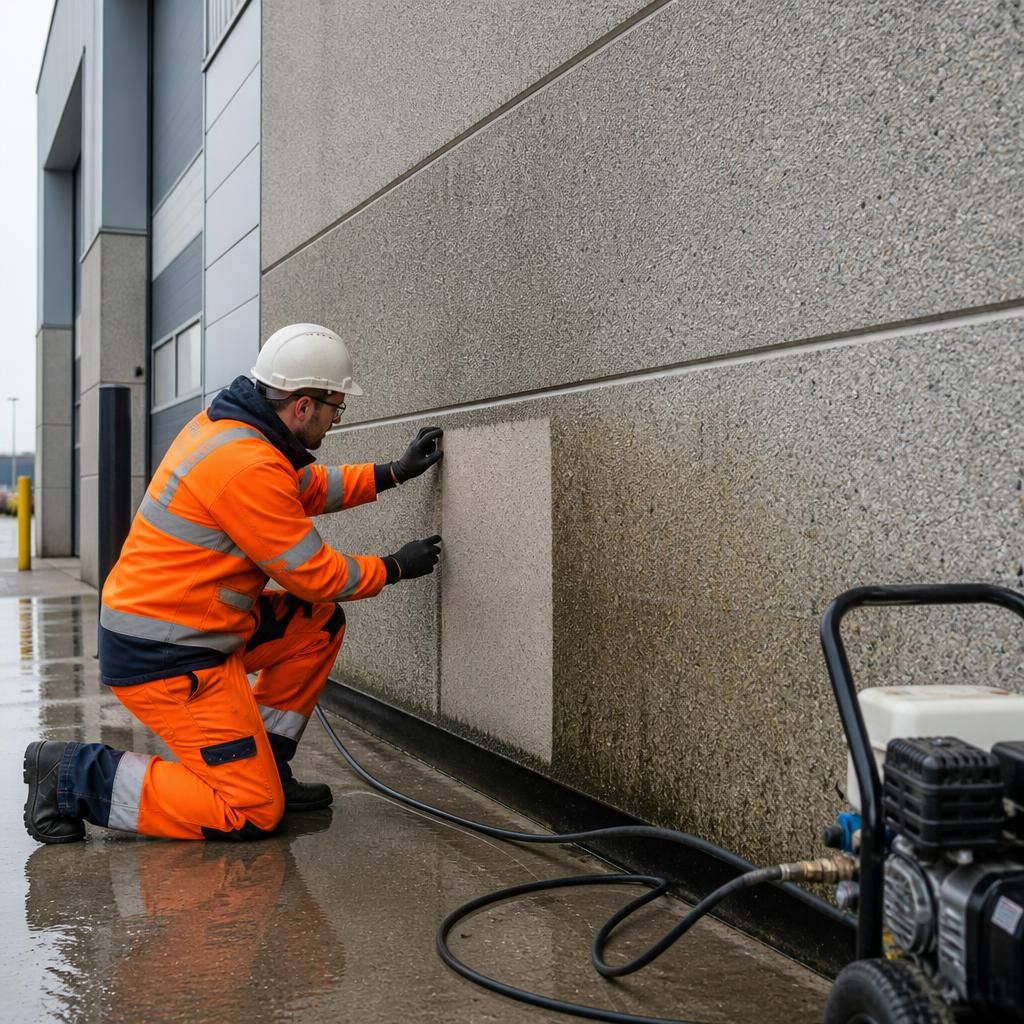
Commercial jet washing is effective only when the pressure, temperature and cleaning method are matched to the surface. A small test area should be cleaned first, particularly on aged brickwork, render, natural stone, coated cladding, tarmac or roof coverings. This confirms that the process removes the contamination without eroding the substrate, disturbing joints, stripping coatings or altering the appearance.
The assessment should also consider drainage, access, nearby glazing, seals, vents and electrical equipment. Where high-pressure water is unsuitable, controlled low-pressure washing, hot water, steam cleaning or a compatible treatment may provide a safer and more consistent result.