
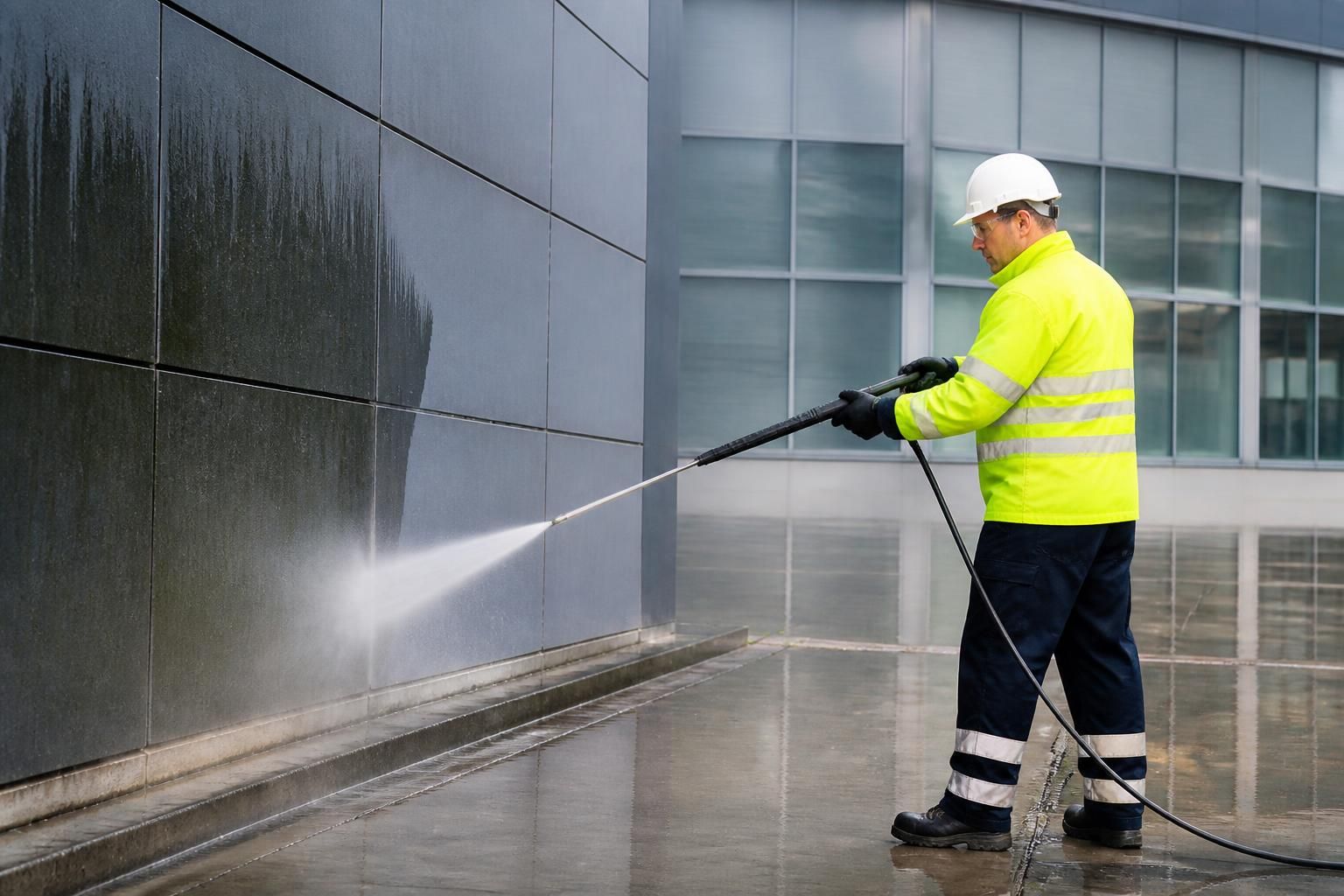
What are the benefits of using professional commercial jet washing services over DIY methods?
Professional commercial jet washing services provide safer, more consistent and more effective results than DIY cleaning by combining trained technicians, suitable pressure settings, specialist equipment and controlled methods. This helps protect surfaces and people, reduce disruption, manage wastewater responsibly and maintain a clean, professional appearance across commercial premises.
Professional commercial jet washing services use trained technicians, commercial-grade equipment and controlled cleaning methods to remove dirt, oil, algae, traffic film, staining and other deposits more safely and consistently than most DIY methods. For businesses, the main benefits are better control of pressure and temperature, reduced risk of surface damage, improved health and safety, responsible wastewater management and less disruption to normal operations.
More appropriate equipment and cleaning methods
Domestic pressure washers are designed for relatively small, straightforward tasks. Commercial cleaning often involves large areas, ingrained contamination, specialist surfaces and difficult access. Professional contractors can select equipment according to the material, type of deposit and site conditions, including high-pressure, low-pressure, hot-water or steam-cleaning systems.
This equipment may also include rotary surface cleaners, recovery systems, telescopic tools and access equipment. Using the right combination helps produce an even finish across façades, cladding, paving, car parks, loading areas, roofs and other external surfaces. It also reduces the temptation to compensate for unsuitable equipment by increasing the pressure, which can cause avoidable damage.
Lower risk of surface damage
Jet washing is not simply a case of applying the highest available pressure. Different materials tolerate different levels of pressure, heat, chemical treatment and agitation. Excessive pressure can strip coatings, loosen pointing, force water behind cladding, damage jointing or mark softer stone and concrete. Timber, painted surfaces and some roofing materials require particularly careful treatment.
Experienced technicians assess the surface before cleaning and select a suitable method. They can test a discreet area, adjust the working distance and pressure, use appropriate detergents where necessary and change techniques as the surface changes. This is especially important when cleaning mixed materials across a commercial property, where one setting may not be suitable for every area.
Improved safety for people and property
Commercial jet washing creates risks that are easy to underestimate. High-pressure water can cause injury, dislodge debris, create slippery overspray and affect nearby electrical equipment, vehicles or building occupants. Work at height, near roads or around active pedestrian areas introduces further hazards.
A professional service should begin with a site assessment and method statement where appropriate. The team can identify access limitations, protect vulnerable features, establish exclusion zones and plan how pedestrians, vehicles and other contractors will be managed. Suitable personal protective equipment, safe equipment handling and controlled working practices help reduce the likelihood of accidents and property damage.
Professional planning is also valuable on occupied commercial sites. Cleaning can be scheduled outside trading hours or coordinated with the client’s site team to reduce interaction with staff, visitors, residents and deliveries.
More consistent and complete results
DIY cleaning often produces uneven results because of inconsistent pressure, overlapping passes, unsuitable nozzles or incomplete preparation. Areas that are difficult to reach may be missed, while heavily contaminated sections may receive excessive treatment. A professional team follows a defined process covering inspection, preparation, cleaning, rinsing and final checks.
This approach is particularly useful for large premises, where a consistent appearance matters across elevations, entrances, pedestrian routes and parking areas. It also makes it easier to identify underlying issues such as failed sealant, damaged pointing, blocked drainage or deteriorating coatings before they become more serious maintenance concerns.
Less time and disruption for your business
Using employees or site staff to carry out jet washing can take them away from their normal responsibilities. Hiring and transporting equipment, sourcing accessories, setting up the work area and dealing with cleaning residues can also make a seemingly simple task considerably more time-consuming.
A commercial contractor brings the necessary equipment and labour, plans the sequence of work and manages the practical requirements of the clean. Large areas can be treated systematically, with access arrangements and working times agreed in advance. This helps businesses maintain access wherever possible and reduces disruption to customers, tenants, employees and site operations.
Better treatment of oil, grease and other stubborn contamination
Cold water may be suitable for loose dirt, dust and some organic growth, but oil, grease, chewing gum, traffic film and certain industrial residues often need heat, detergents, steam or additional mechanical action. Selecting an unsuitable method can spread contamination rather than remove it, particularly on porous paving and concrete.
Professional technicians can determine whether hot-water jet washing, steam cleaning, a surface cleaner or a controlled cleaning solution is more appropriate. Any detergent should be selected for the surface and contamination, applied at the correct concentration and rinsed or recovered in accordance with the site requirements.
More responsible wastewater and run-off control
Commercial cleaning can mobilise oil, silt, detergents, paint particles, organic matter and other pollutants. Allowing dirty water to flow into surface-water drains or neighbouring land can create environmental and compliance problems. DIY users may not have the equipment or knowledge to identify the correct drainage arrangements.
Professional planning considers where water will go before work starts. Depending on the site, this may involve drain protection, bunding, collection, vacuum recovery, filtration or arrangements for appropriate disposal. The exact controls depend on the contaminants, drainage system and local requirements, but the principle is the same: wastewater should be managed rather than allowed to escape uncontrolled.
Reduced risk of failed or repeated work
A DIY clean may appear less expensive because it avoids a contractor’s charge, but the overall cost can increase if equipment must be hired, surfaces are damaged, contamination returns quickly or the work has to be repeated. There may also be costs associated with staff time, access arrangements, water use, cleaning products and waste handling.
Professional cleaning does not remove every maintenance cost, but it can make the scope of work clearer and reduce avoidable rework. A contractor can advise whether jet washing is suitable, explain any limitations and identify repairs or treatments that should be completed before cleaning. This supports better maintenance planning rather than treating the visible dirt without addressing contributing problems.
More suitable documentation for commercial sites
Property managers, facilities teams, construction companies and local authorities may need evidence that external cleaning has been planned and carried out responsibly. Depending on the project, useful records can include the site assessment, risk controls, method statement, equipment checks, waste arrangements and before-and-after observations.
These records help communicate the work to clients, landlords, tenants, principal contractors and site managers. They can also support planned maintenance records and provide a clear reference if further cleaning or remedial work is required.
When DIY cleaning may be appropriate
DIY pressure washing can be suitable for a small, low-risk area where the surface is known, contamination is light and there are no significant drainage, access or public safety concerns. Even then, the operator should follow the equipment instructions, use appropriate protective equipment, keep people away from the spray area and avoid directing water towards electrical components, vents, joints or vulnerable finishes.
Professional commercial jet washing is generally the safer and more practical choice where the work involves large areas, oil or chemical contamination, occupied premises, public access, work at height, sensitive materials, restricted drainage or a requirement for a consistent documented result. Encanto Exterior Cleaning can assess the site, recommend an appropriate cleaning method and plan the work around the operational and environmental requirements of the premises.
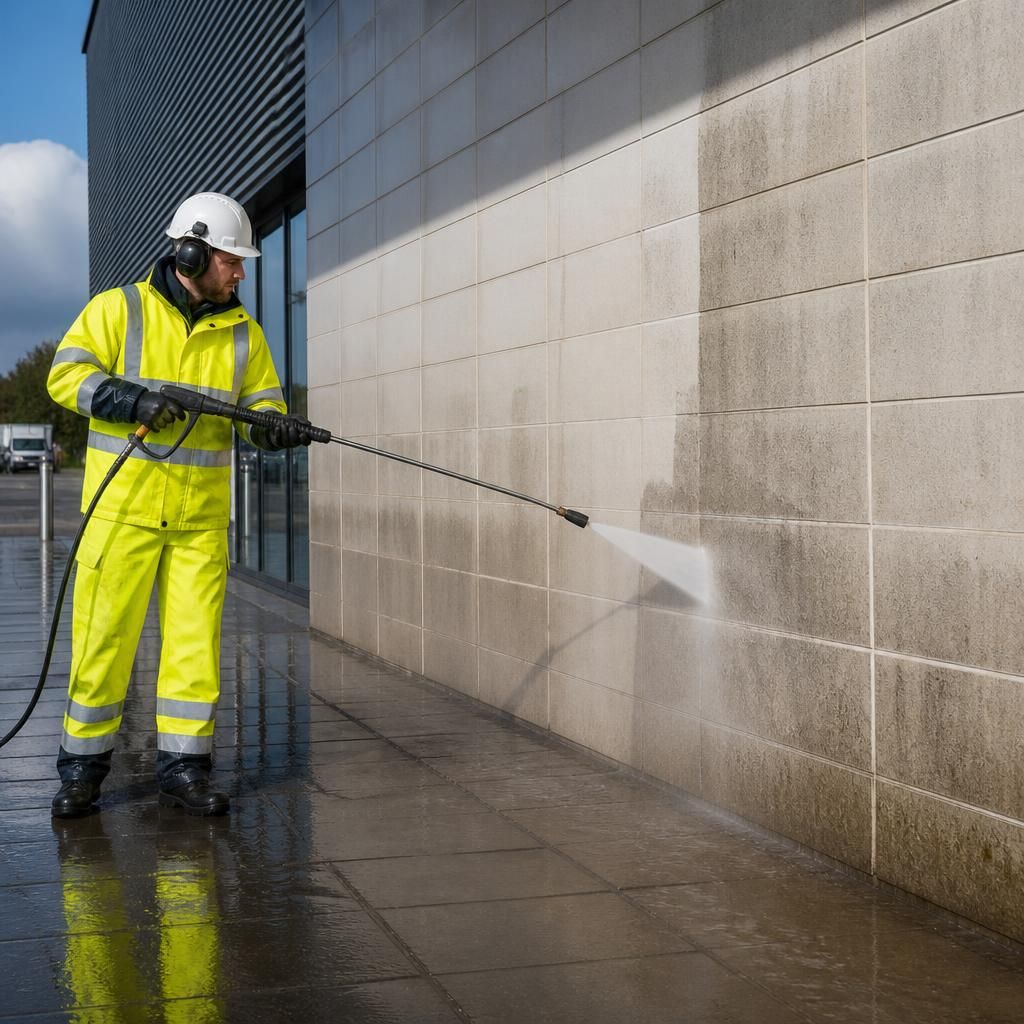
Professional commercial jet washing reduces the risk of damaging surfaces because technicians match the pressure, temperature, nozzle, cleaning solution and working distance to the material and contamination. This is important on façades, cladding, paving, roofs and painted finishes, where excessive pressure can remove coatings, disturb jointing, force water behind panels or mark softer surfaces.
A professional clean also includes site preparation and controlled working practices. Technicians can protect vulnerable features, establish exclusion zones, manage overspray and plan around pedestrians, vehicles, deliveries and drainage. The result is a more consistent clean with less disruption and a lower likelihood of injury, property damage or costly repeat work than using unsuitable DIY equipment.
Arrange a professional commercial jet washing assessment
Arrange a professional commercial jet washing assessment with Encanto Exterior Cleaning to identify the most suitable cleaning method, access requirements and wastewater controls for your site. Contact us to discuss your premises and request a quote.