
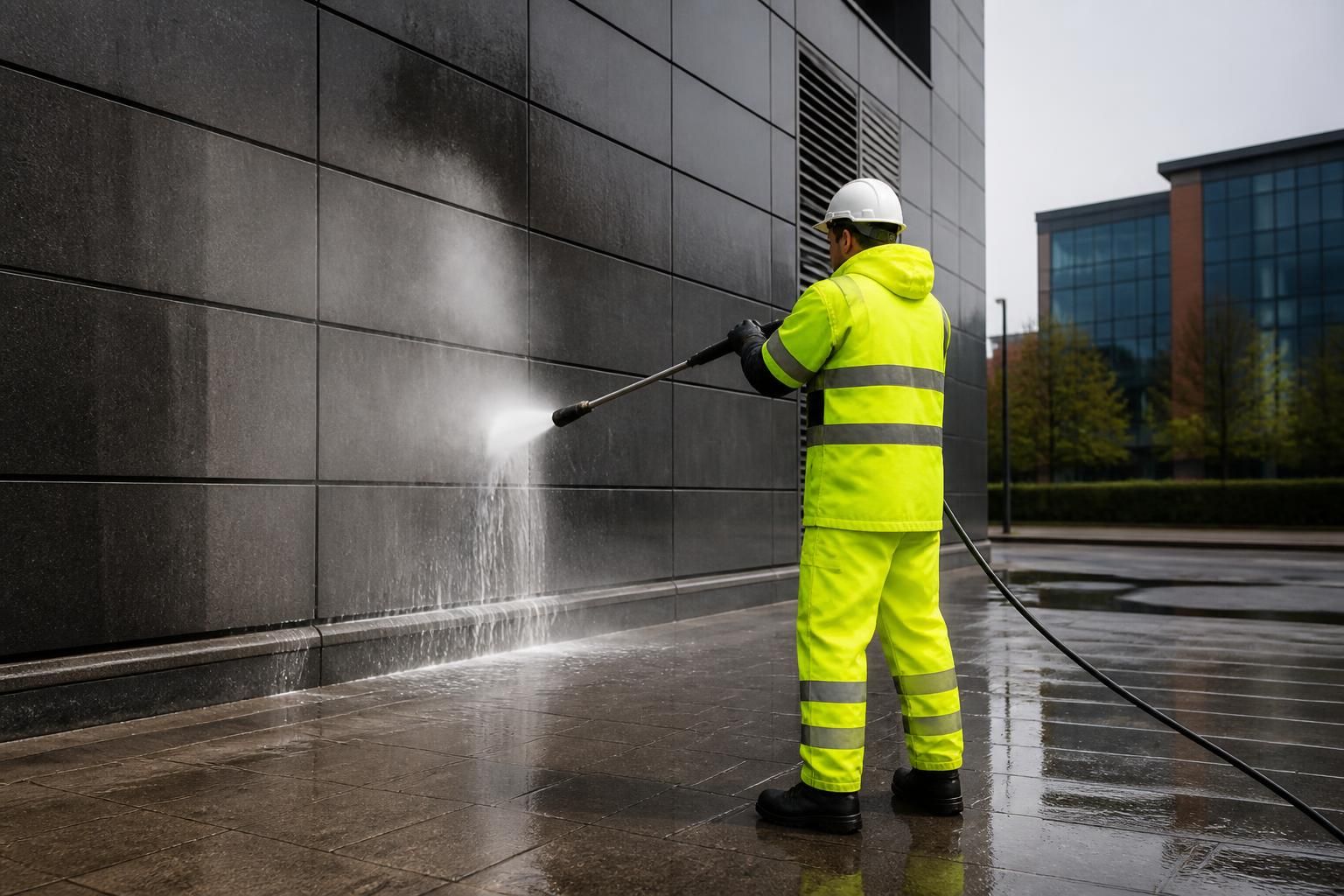
How often should businesses schedule commercial jet washing services?
Businesses should schedule commercial jet washing according to footfall, surface type, weather exposure, pollution levels and site-specific safety requirements. Many premises benefit from planned annual or seasonal cleaning, while high-traffic sites, loading areas and sites exposed to heavy soiling may require more frequent servicing.
Businesses should schedule commercial jet washing according to how quickly surfaces become soiled and whether build-up creates a safety, operational or presentation risk. A planned annual or seasonal clean is suitable for many commercial premises, but high-traffic sites, loading areas, food-related premises, car parks and properties exposed to heavy pollution or organic growth may require quarterly, monthly or event-led cleaning.
The right frequency is best established through a site assessment rather than a fixed calendar. The assessment should consider the surface material, level of footfall and vehicle use, drainage arrangements, surrounding environment, previous cleaning results and the standards the premises must maintain. A cleaning programme can then combine routine maintenance with more intensive jet washing when conditions require it.
Typical starting points for commercial sites
- Annual cleaning: Suitable for lower-traffic façades, paved areas and external surfaces that accumulate mainly general dirt, weathering and light organic growth.
- Seasonal cleaning: Often appropriate where autumn leaves, winter grime, algae or spring pollen affect slip resistance and appearance. A spring clean can remove winter deposits, while an autumn visit can help manage organic debris before wetter weather.
- Quarterly cleaning: Commonly considered for busy entrances, shared commercial developments, retail forecourts, communal paths and sites where appearance must remain consistent throughout the year.
- More frequent maintenance: Loading bays, service yards, refuse areas, transport facilities and heavily trafficked car parks may need regular cleaning because of oil, tyre marks, mud, food residue and vehicle-related deposits.
- Reactive or event-led cleaning: A visit may be needed after construction work, flooding, a spill, graffiti, severe weather or a high-profile event, regardless of the normal maintenance schedule.
Footfall and vehicle use are usually the most visible influences on cleaning frequency. Frequent pedestrian traffic transfers grit and dirt onto entrances and paving, while vehicles introduce oil, rubber residue, mud and road salt. Turning areas, ramps and bays used by delivery vehicles can become soiled faster than less-used parts of the same site. These areas should be inspected separately rather than assigning one frequency to the entire property.
Surface type also matters. Concrete, block paving, tarmac, brickwork, stone, cladding and rendered façades have different cleaning tolerances and different ways of showing soiling. Some surfaces retain moisture and encourage algae or moss; others show oil, tyre marks or atmospheric deposits more readily. Pressure, temperature, nozzle selection and cleaning agents should be chosen for the material. Cleaning too aggressively or too often can damage joints, coatings, pointing or vulnerable finishes, so the programme should be based on effective cleaning with the least appropriate force.
Local exposure can shorten the interval between visits. Premises beside busy roads, industrial areas, construction activity, mature trees, coastal air or open fields may collect traffic film, dust, pollen, leaves or biological growth more quickly. Shaded elevations and areas with poor water run-off often remain damp for longer and may need closer inspection. Birmingham and West Midlands sites can also experience rapidly changing weather, making condition-based checks useful between planned visits.
Safety should take priority over appearance. Algae, moss, grease, accumulated mud and spilled substances can reduce traction on paths, steps, ramps and service areas. These surfaces should be cleaned when deposits begin to affect safe access, not simply when the next routine appointment is due. Businesses should also review areas around entrances, pedestrian crossings, disabled access routes, fire exits and delivery points after periods of wet weather or heavy use.
A practical maintenance plan normally includes the following steps:
- Inspect the site and divide it into areas with different levels of use, contamination and risk.
- Record the surface types and identify any coatings, joints, drainage limitations or vulnerable features.
- Set an initial cleaning interval for each area, with more frequent attention given to high-risk or high-use zones.
- Review the results after each visit, including how quickly soiling returns and whether any safety or drainage issues remain.
- Adjust the schedule seasonally or when the site’s use, surroundings or operational requirements change.
Jet washing should not be used as a substitute for daily housekeeping. Removing litter, leaves, spillages and loose debris promptly reduces the amount of ingrained contamination and can extend the period between intensive cleaning visits. Staff should report oil leaks, blocked gullies, graffiti and newly damaged surfaces so that these issues can be assessed before cleaning begins.
Planned cleaning is generally more effective than waiting until surfaces have become heavily contaminated. It can reduce the need for aggressive treatment, make access arrangements easier and allow work to be scheduled around deliveries, trading hours and pedestrian movements. For larger sites, a phased programme may be more practical than cleaning every elevation or external area on the same day.
Before each service, the cleaning method should be reviewed against weather conditions, water run-off and the type of contamination present. Cleaning may need to be postponed during unsuitable conditions, particularly where freezing temperatures could create an immediate slip hazard or where rain would interfere with containment and recovery of dirty water. Drainage and discharge arrangements should also be considered so that wash water, detergents and removed contaminants are handled responsibly.
For most businesses, the best approach is to begin with a professional inspection and establish a planned annual, seasonal or quarterly programme, then increase the frequency for areas that soil quickly or present a safety risk. The schedule should remain flexible: a well-maintained commercial site is cleaned when inspection shows that deposits are returning, not simply because a fixed date has arrived.
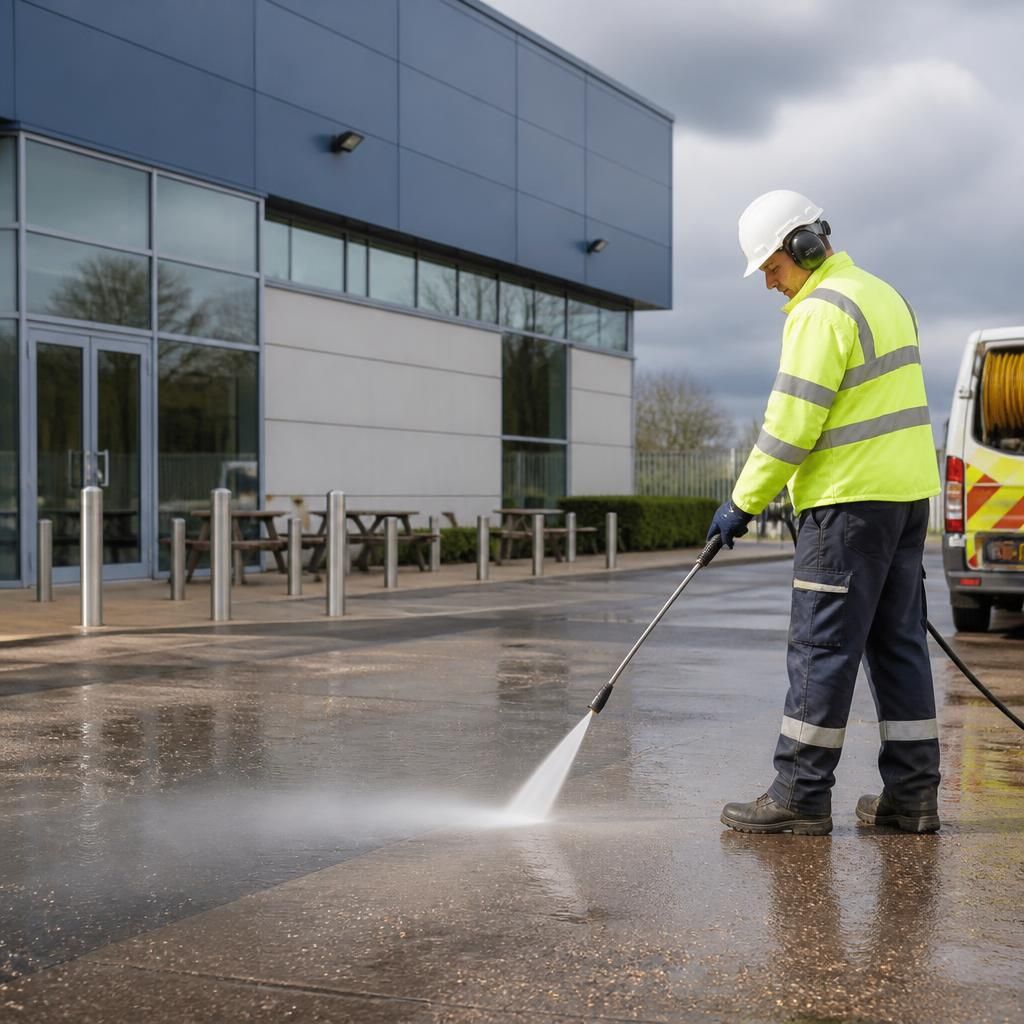
Commercial jet washing should be scheduled according to how quickly each area becomes soiled and whether the build-up creates a safety, operational or presentation risk. A fixed annual clean may suit a lightly used façade, but entrances, loading bays, service yards and busy car parks often need more frequent inspection and cleaning.
Divide the premises into zones rather than applying one interval to the whole site. Review footfall, vehicle movements, surface type, drainage, shade, pollution and organic growth after each visit. This makes it possible to increase cleaning where deposits return quickly while avoiding unnecessary treatment of areas that remain clean. Any grease, algae, mud or spillages affecting traction should be addressed promptly rather than left until the next planned service.