
How do you ensure environmental compliance during the jet washing process?
We ensure environmental compliance during jet washing by controlling runoff, preventing contaminated water and cleaning chemicals from entering surface-water drains or watercourses, and disposing of recovered waste responsibly. Our technicians assess the site beforehand and select suitable pressure, temperature, detergents, containment and wastewater-recovery methods for the surface and location.
Environmental compliance during jet washing is achieved by preventing contaminated water, silt, detergents and debris from entering surface-water drains, watercourses or the ground, while recovering and disposing of wastewater through an appropriate route. Before work starts, we assess the site, identify drainage arrangements and pollution risks, then select suitable pressure, temperature, cleaning products, containment and wastewater-recovery methods for the surface and location.
Site and drainage assessment
Every commercial or industrial jet washing project should begin with a site assessment. This identifies surface-water and foul-water drains, nearby rivers, ponds, soakaways, unsealed ground, loading areas and other sensitive locations. Surface-water drainage commonly discharges directly to a watercourse without treatment, so wastewater from cleaning must not be allowed to enter it unless the relevant authority has specifically confirmed that this is acceptable.
We also consider the material being removed. Oil, fuel, cement residue, paint, algae, bird fouling, heavy metals, traffic film and other contaminants can change the classification and disposal requirements for the wastewater. The surrounding environment, weather conditions and the condition of the surface are assessed as part of the same process.
Runoff containment and wastewater recovery
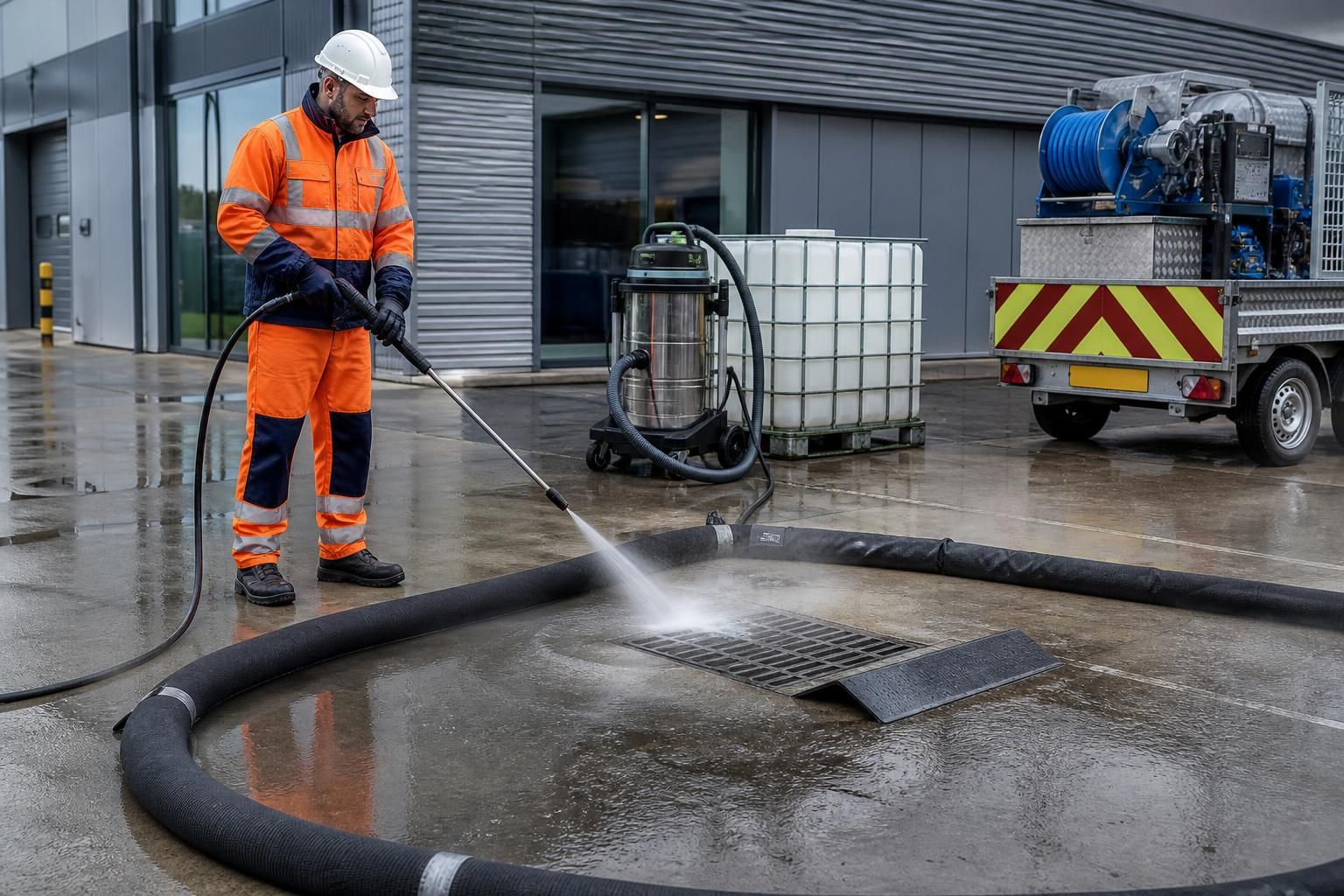
Where runoff could reach a surface-water drain or sensitive area, we use suitable controls such as drain covers, drain mats, temporary bunds, booms, absorbent materials and contained washing zones. These controls are selected according to the site layout and the likely volume and contamination of the wastewater; they are not a substitute for careful work planning or active monitoring.
Recovered water can be collected using wet vacuums, suction equipment, portable tanks or other appropriate recovery systems. The work area is checked throughout the clean to ensure that containment remains effective, particularly on sloping surfaces, around kerbs and where water could travel beneath gates or across adjoining areas. If a control fails or conditions change, jet washing is paused until the risk has been addressed.
Correct disposal of wastewater and solid waste
Wastewater is not simply released onto the ground or into the nearest drain. Its disposal route depends on its contents, the site drainage system and the requirements of the relevant water and environmental authorities. Discharge to a foul sewer may require permission or trade effluent consent from the sewerage undertaker. In other situations, wastewater must be removed from site by an appropriately authorised waste contractor for treatment or disposal.
Sludge, silt, paint flakes, oil residues, used absorbents and other collected solids are kept separate where necessary and handled as controlled waste. Waste is transferred using the appropriate documentation, with records retained to demonstrate what was removed, by whom and where it was taken. We do not assume that a waste material is harmless simply because it has been diluted by wash water.
Selection and control of cleaning chemicals
Pressure and temperature are selected to achieve the required result without using unnecessary detergent or creating excessive runoff. Where water alone is suitable, it avoids introducing additional chemicals into the waste stream. If a cleaning agent is required, we choose a product appropriate for the surface and contamination, follow its instructions and use the lowest effective concentration.
Technicians follow the relevant safety data sheet and control measures for each product. This includes suitable storage, labelling, handling, personal protective equipment and spill response. Chemicals are kept away from drains and watercourses, and incompatible products are not mixed. A product being described as biodegradable does not mean that it can be discharged without controls; the complete wastewater and contamination risk still has to be considered.
Pollution prevention during the work
Good environmental practice also depends on how the equipment is operated. Technicians use only the pressure and flow needed for the substrate, avoid directing spray into drainage systems and monitor overspray near neighbouring properties, vehicles and planting. Loose debris is removed where practical before washing so that it does not become contaminated runoff. Oil or chemical spills are isolated promptly using suitable spill materials, and contaminated absorbents are dealt with as waste rather than washed away.
Weather is considered before and during the work. Heavy rain can overwhelm containment, spread pollutants and make wastewater recovery unreliable, while strong wind can carry spray beyond the working area. Work may therefore need to be postponed or adapted if the conditions create an unacceptable pollution risk.
Legal and operational controls
Environmental compliance is supported by following applicable UK environmental protection, waste management and water discharge requirements, together with site-specific rules imposed by the client, landlord, local authority or water company. The precise requirements vary according to the location, drainage arrangements, contaminants and disposal method. Where a permit, consent or specialist waste route is needed, this is established before cleaning begins rather than treated as an afterthought.
Project records can include the site assessment, drainage plan, method statement, risk assessment, COSHH information, waste transfer documentation, disposal records, equipment checks and details of any incident or corrective action. These records provide an auditable account of how runoff and waste were controlled and help inform future maintenance visits.
For clients, the most useful checks are whether the contractor has identified the drainage route, explained how wastewater will be contained and removed, confirmed the suitability of any cleaning chemicals, and provided waste documentation where applicable. A compliant jet washing process protects watercourses, the public, technicians and the cleaned property while reducing the risk of pollution incidents, enforcement action and unexpected disposal problems.
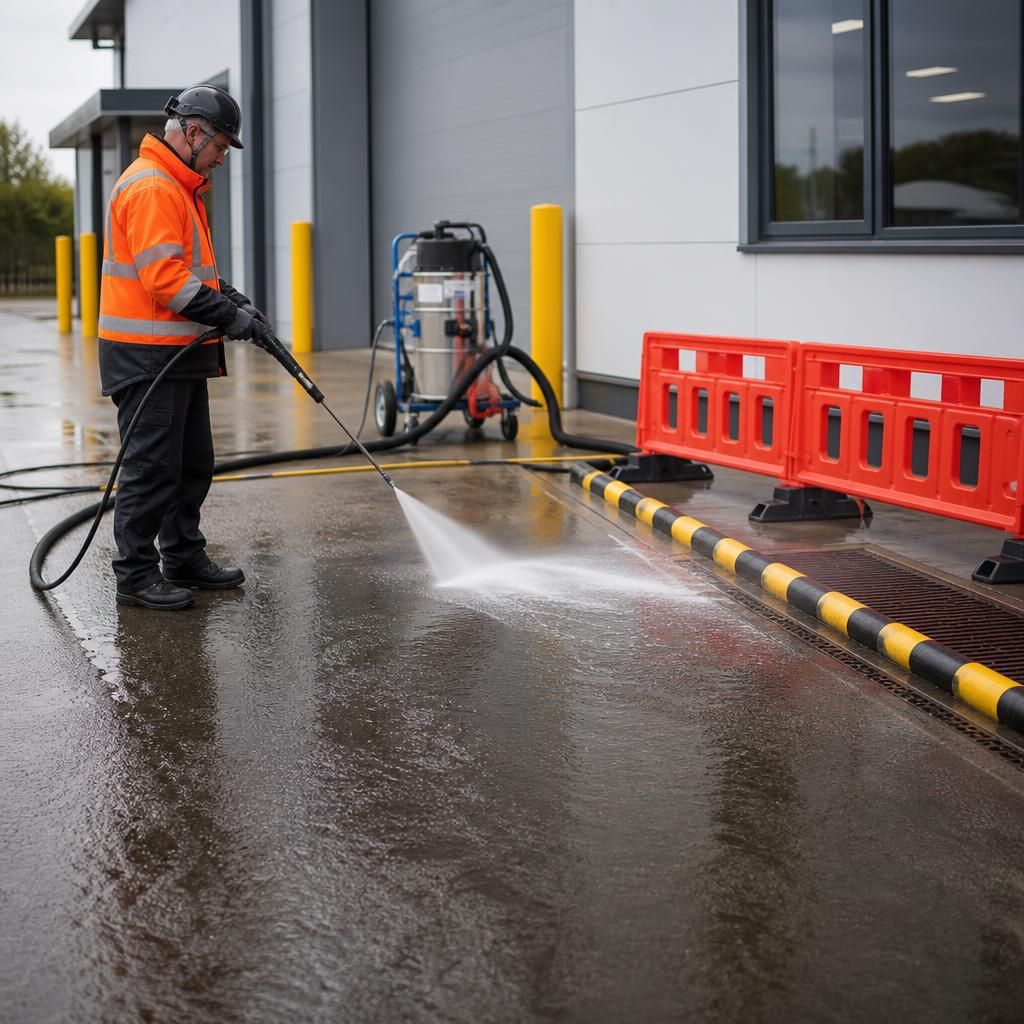
Environmental compliance during jet washing depends on controlling contaminated runoff before it reaches surface-water drains, watercourses or unsealed ground. Before cleaning begins, we identify the drainage layout and use suitable measures such as drain covers, temporary bunds and wet-vacuum recovery where required.
Recovered wastewater is assessed according to its contents, which may include oil, silt, detergents, paint residue or other contaminants. It is then discharged only through an appropriate authorised route or removed by a suitably authorised waste contractor, with disposal records retained where applicable. This approach helps protect the surrounding environment while providing a clear audit trail for the site owner.